LOCAL GROUP / GALAXY DOSSIER

Barnard’s Galaxy

NGC 6822 · An irregular Local Group neighbor
EXPLORE THE INSTRUMENTS
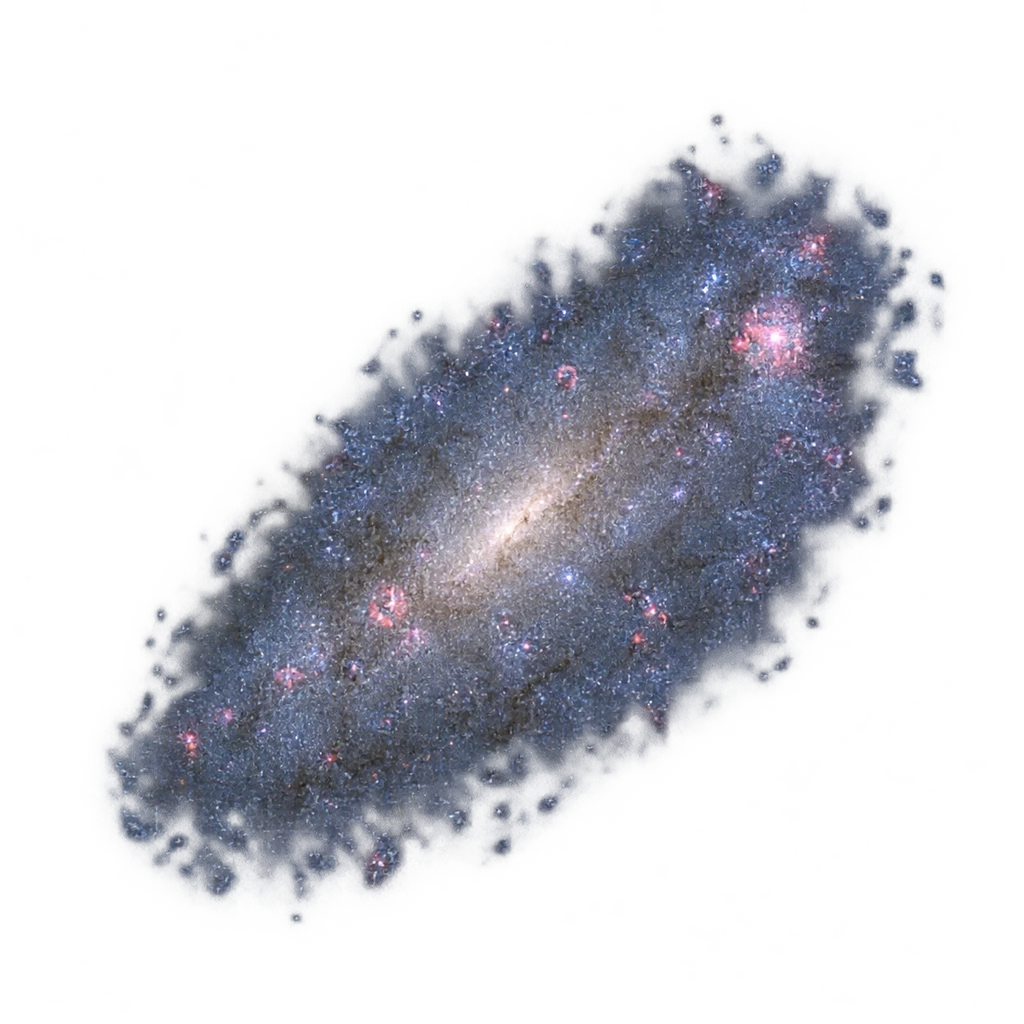
Artist’s reconstruction of Barnard’s Galaxy
IRREGULAR DWARF GALAXYARTIST’S RECONSTRUCTION
Light between galaxies ↗

03
MILKY WAYNGC 6822LIGHT IN TRANSIT →
1.6 million yearsLIGHT TRAVEL TIME

Stellar scale ↗

04
MILKY WAYNGC 6822≈ 100,000 ly≈ 10,000 lySTELLAR EXTENT · SHARED DIAMETER SCALE
SELECT A LAYER · SCHEMATIC
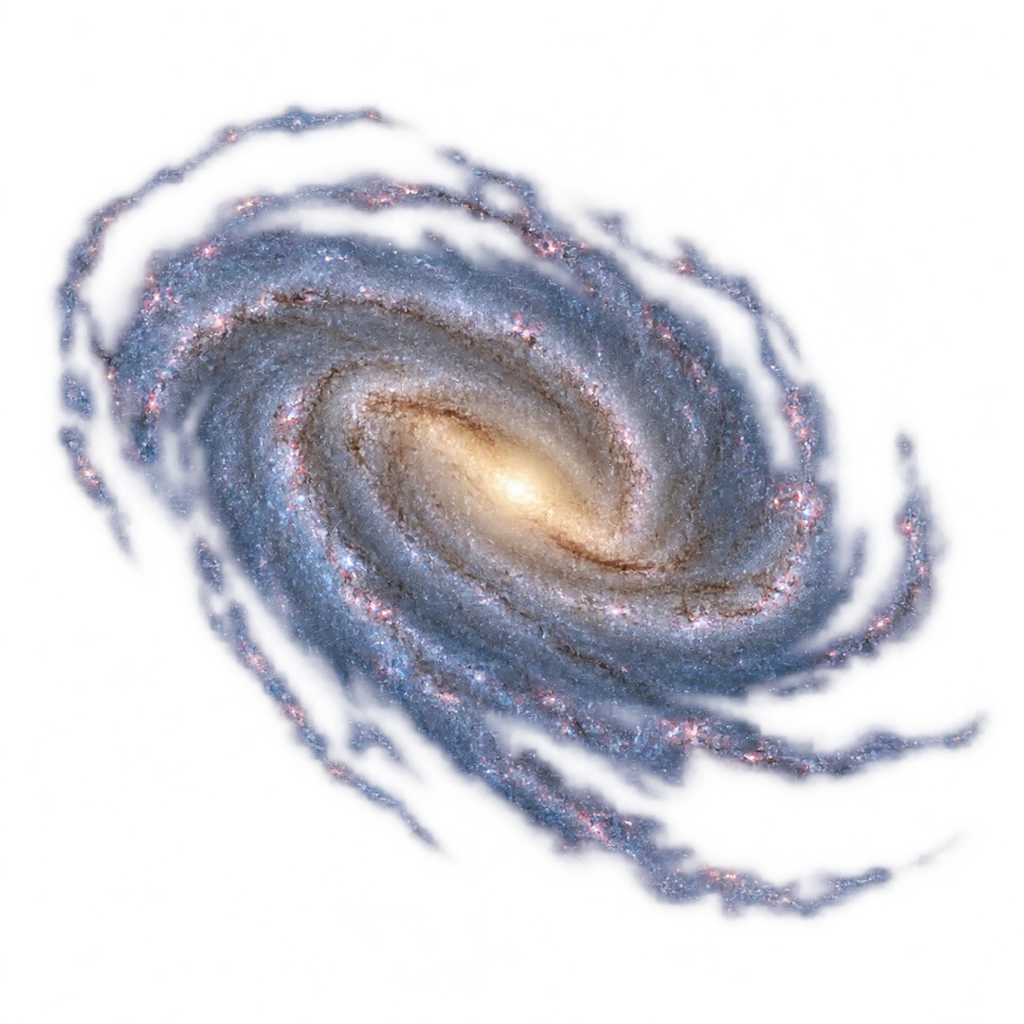
BARNARD’S GALAXY

Instrument detail

Artist’s reconstruction of Barnard’s Galaxy

Small galaxy, bright stellar nurseries.

A loose island of stars and glowing gas, with an irregular shape and active star formation.

Research-informed artistic reconstruction. Shape, colour and viewing angle are illustrative.

NGC 6822 · An irregular Local Group neighbor

Barnard’s Galaxy lies roughly 1.6 million light-years away, following ESO’s overview. It is a nearby member of the Local Group, separate from the Milky Way’s Magellanic companions.

The moving dashes represent light travelling between galaxies. Their speed and the spacing of the galaxy icons are illustrative.

Find Barnard’s Galaxy in the Universe view ↗

≈ 10,000 light-years across.

This rough reference is one tenth of the 100,000-light-year Milky Way baseline, following ESO’s size comparison. It describes the visible stellar body for orientation, not a sharp outer boundary or the full gas envelope.

The overview compares this galaxy with a rounded Milky Way reference of 100,000 light-years on one linear scale. These luminous extents do not represent sharp physical edges.

MODEL VIEW
BARNARD’S GALAXY / SPATIAL SCHEMATICOblique model view · depth and proportions are illustrative

SELECT A LAYER · SCHEMATIC

Explore the stellar volume from different directions; this model has no single disk plane. These are illustrative viewpoints, not the galaxy’s measured orientation or a simulation of its motion.

Scattered stars, luminous gas

Barnard’s Galaxy lacks the orderly arms of a large spiral. Young stars light up gas clouds, and energetic stellar winds carve cavities into surrounding material. The model lets you highlight the irregular stellar body and glowing gas separately.

Select Stars or Gas to highlight the irregular stellar body and star-forming clouds. Pulsing light is illustrative, not a physical change in brightness.

One of the smaller islands

NGC 6822 belongs to the Local Group, alongside the Milky Way, Andromeda and numerous dwarf galaxies. Its modest size makes its stellar nurseries particularly useful for studying star formation in a different galactic environment.

Explore galaxies in the atlas ↗
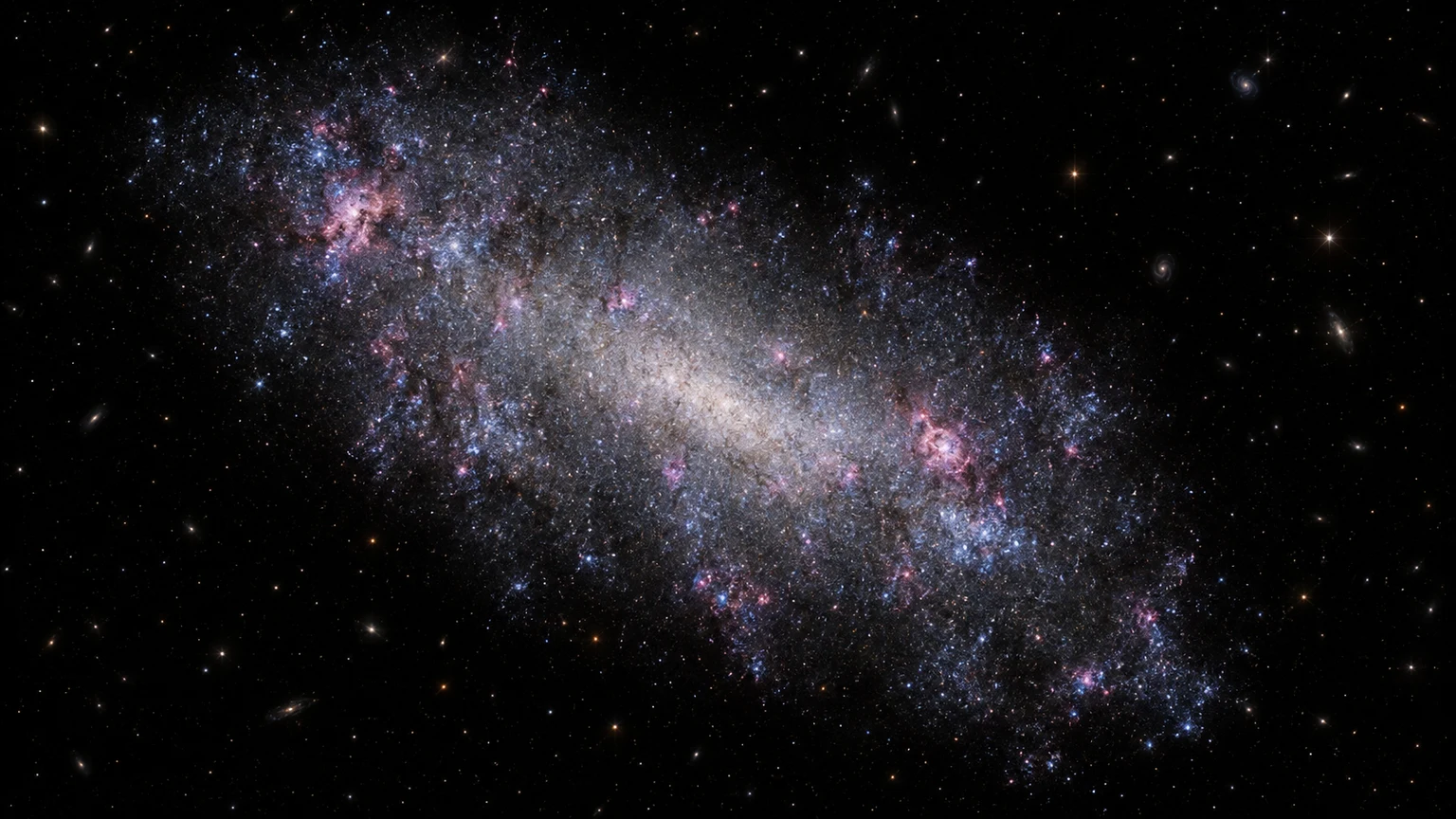
Artist’s reconstruction of Barnard’s Galaxy: irregular star clouds and scattered gas regions. Not a telescope photograph.

The scattered island

Artist’s reconstruction of Barnard’s Galaxy: irregular star clouds and scattered gas regions. Not a telescope photograph.

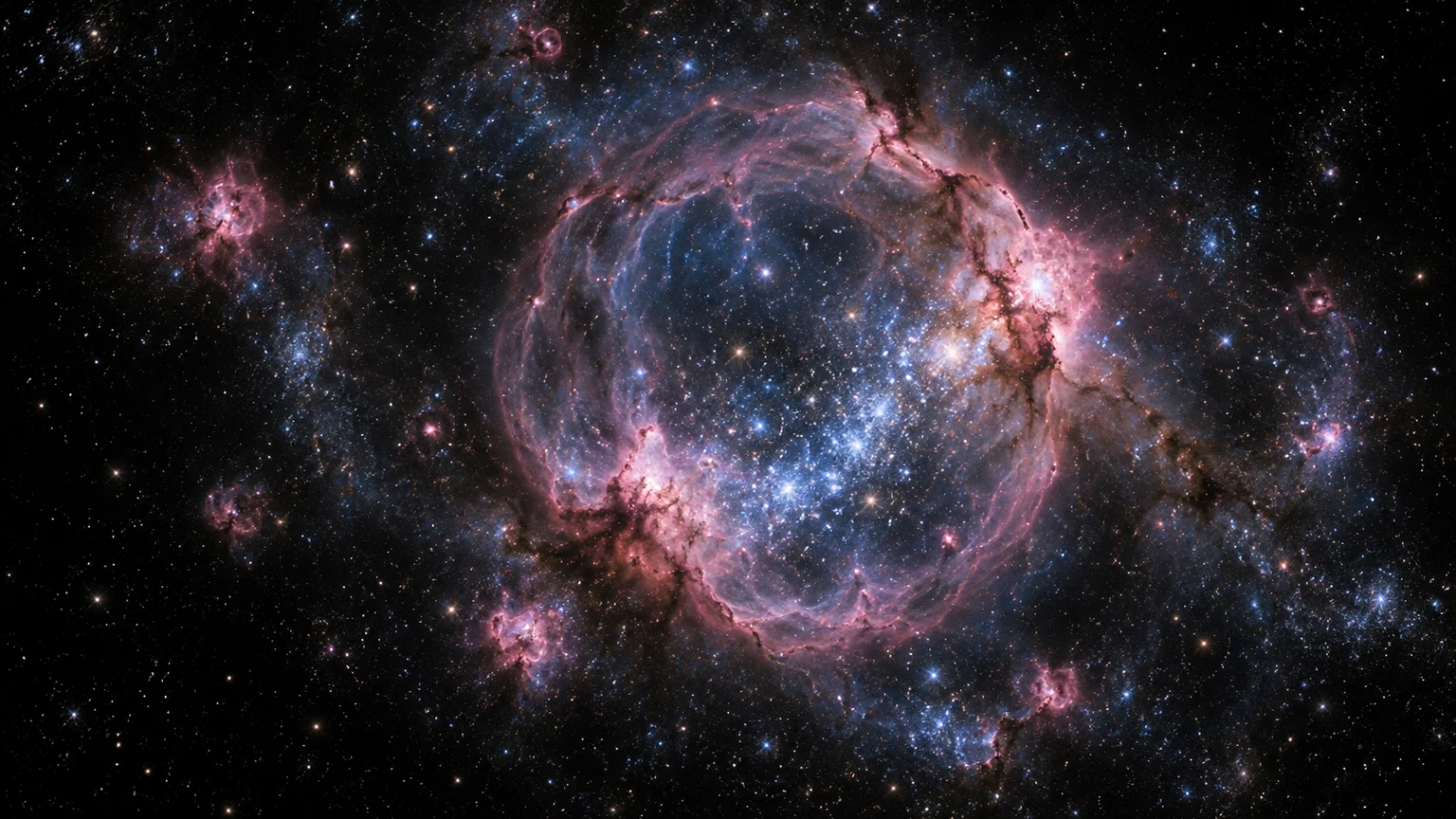
Artistic study inspired by a star-forming region in NGC 6822. The glowing cavity and stellar arrangement are illustrative.

A glowing stellar nursery

Artistic study inspired by a star-forming region in NGC 6822. The glowing cavity and stellar arrangement are illustrative.

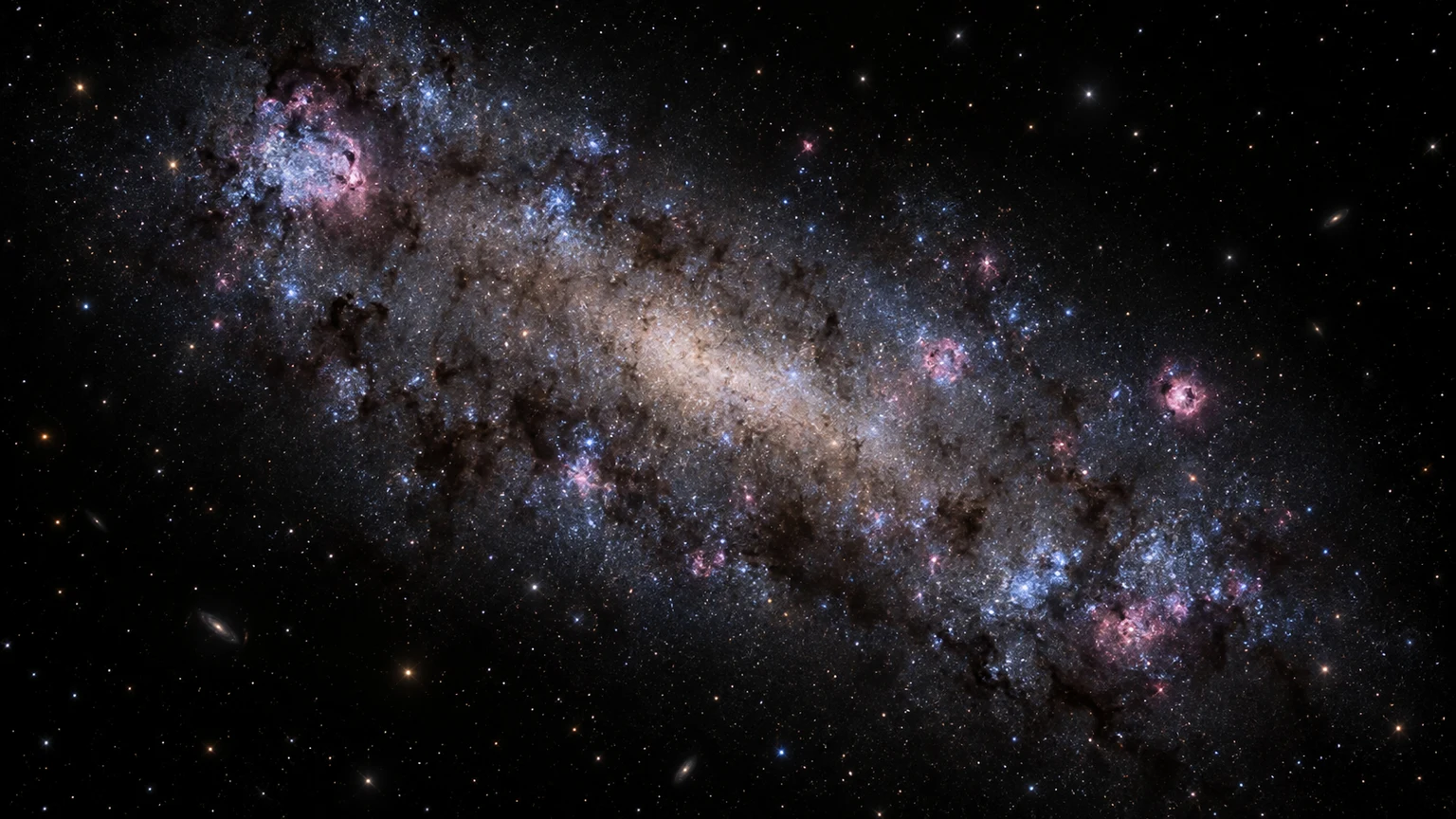
Hypothetical oblique view through the diffuse stellar body and young stellar associations. An artistic reconstruction.

Across the stellar bar

Hypothetical oblique view through the diffuse stellar body and young stellar associations. An artistic reconstruction.