CANCER DIRECTION / GALAXY DOSSIER

NGC 2623

Arp 243 · A merger with a shared nucleus
EXPLORE THE INSTRUMENTS
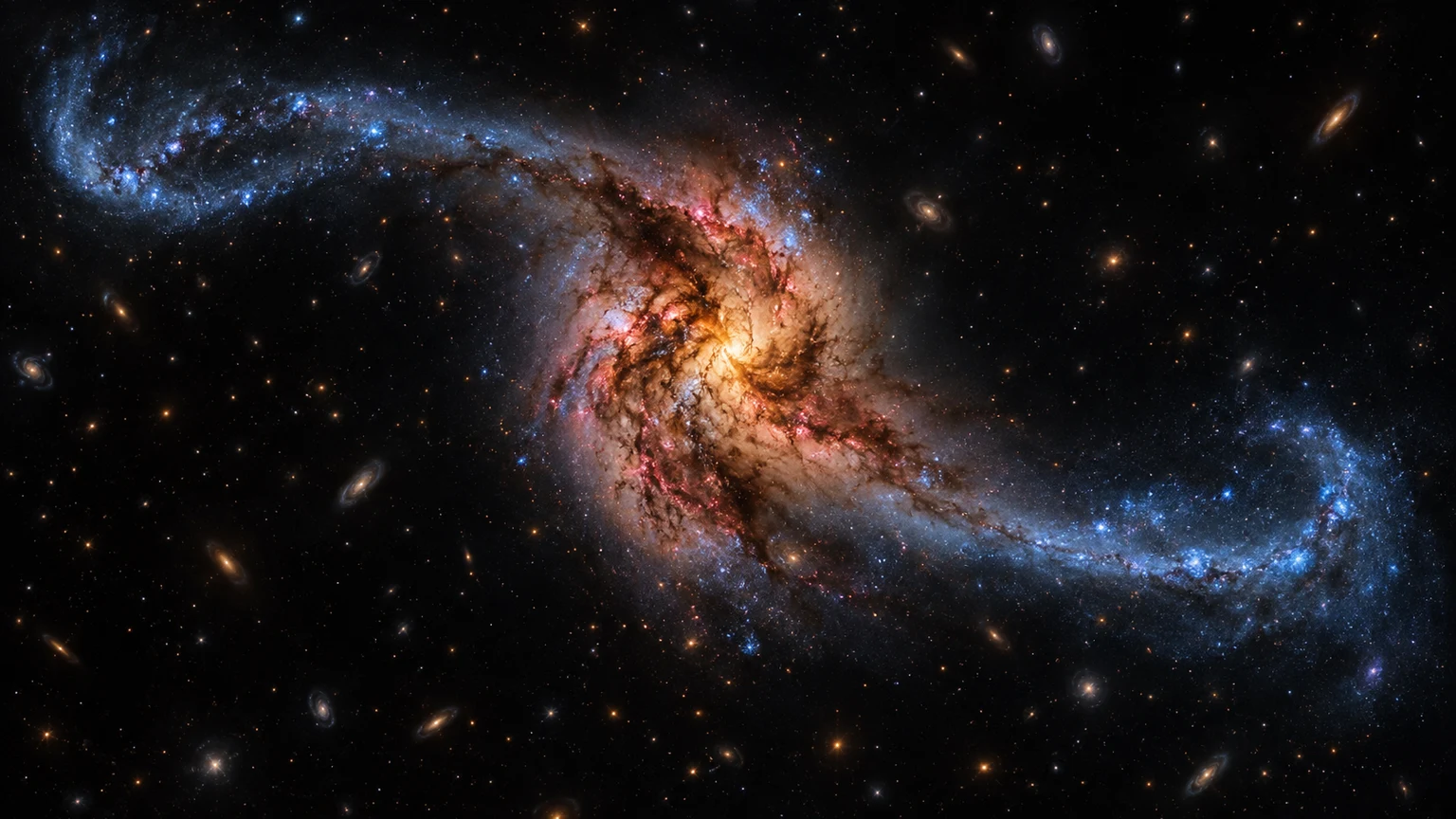
Artist’s reconstruction of NGC 2623
LATE-STAGE GALAXY MERGERARTIST’S RECONSTRUCTION
Light between galaxies ↗

03
MILKY WAYNGC 2623LIGHT IN TRANSIT →
250 million yearsLIGHT TRAVEL TIME

Stellar scale ↗

04
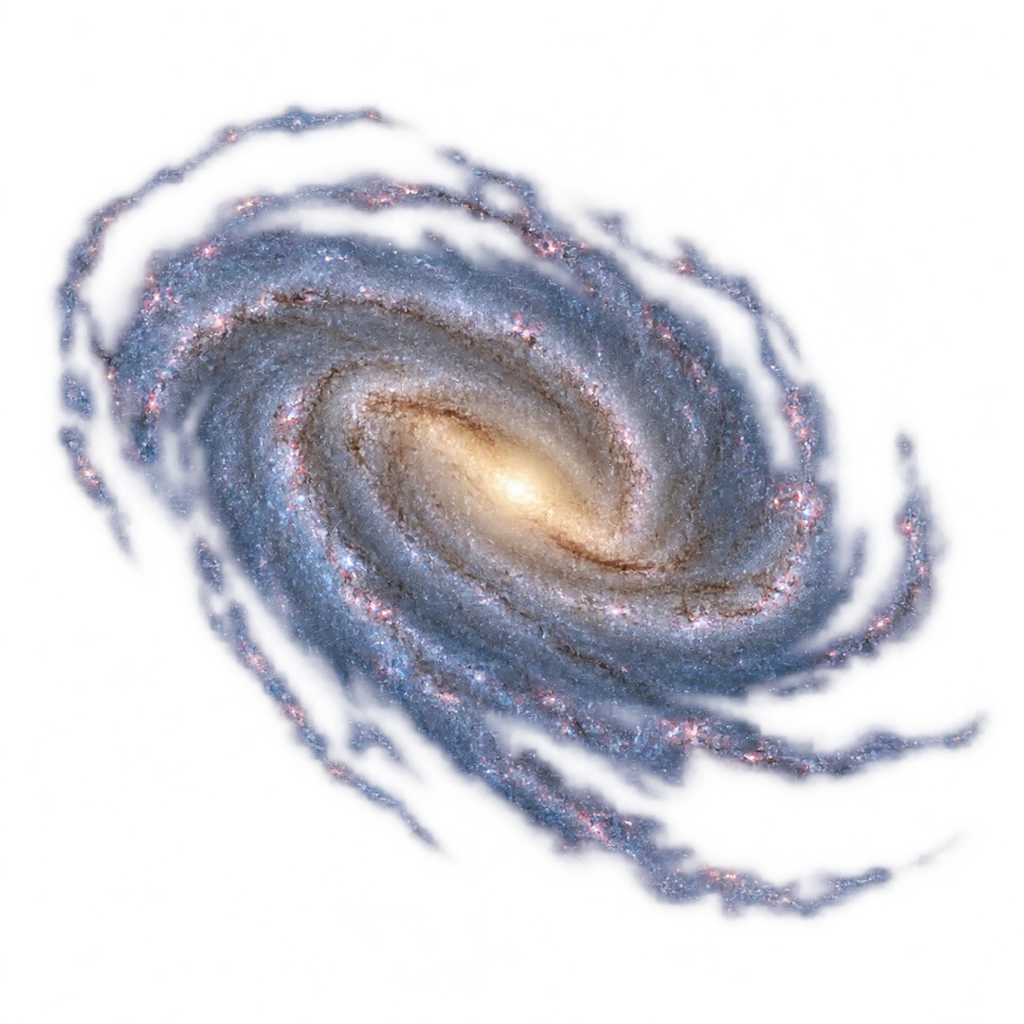
MILKY WAYNGC 2623≈ 100,000 ly≈ 50,000 lySTELLAR EXTENT · SHARED DIAMETER SCALE
SELECT A LAYER · SCHEMATIC
NGC 2623

Instrument detail

Artist’s reconstruction of NGC 2623

Two galaxies, one tangled heart.

Two sweeping tidal tails stretch from a dusty shared nucleus, preserving the history of a galactic merger.

Research-informed artistic reconstruction. Shape, colour and viewing angle are illustrative.

Arp 243 · A merger with a shared nucleus

NGC 2623 lies approximately 250 million light-years away toward Cancer. The route and light-travel display use this rounded distance from NASA’s Hubble overview.

The moving dashes represent light travelling between galaxies. Their speed and the spacing of the galaxy icons are illustrative.

Find NGC 2623 in the Universe view ↗

≈ 50,000 light-years across.

NASA’s APOD describes NGC 2623 as spanning about 50,000 light-years. This rounded visible extent is a reference for the disturbed system, not the diameter of a settled disk; tidal debris fades into its surroundings.

The overview compares this galaxy with a rounded Milky Way reference of 100,000 light-years on one linear scale. These luminous extents do not represent sharp physical edges.

MODEL VIEW
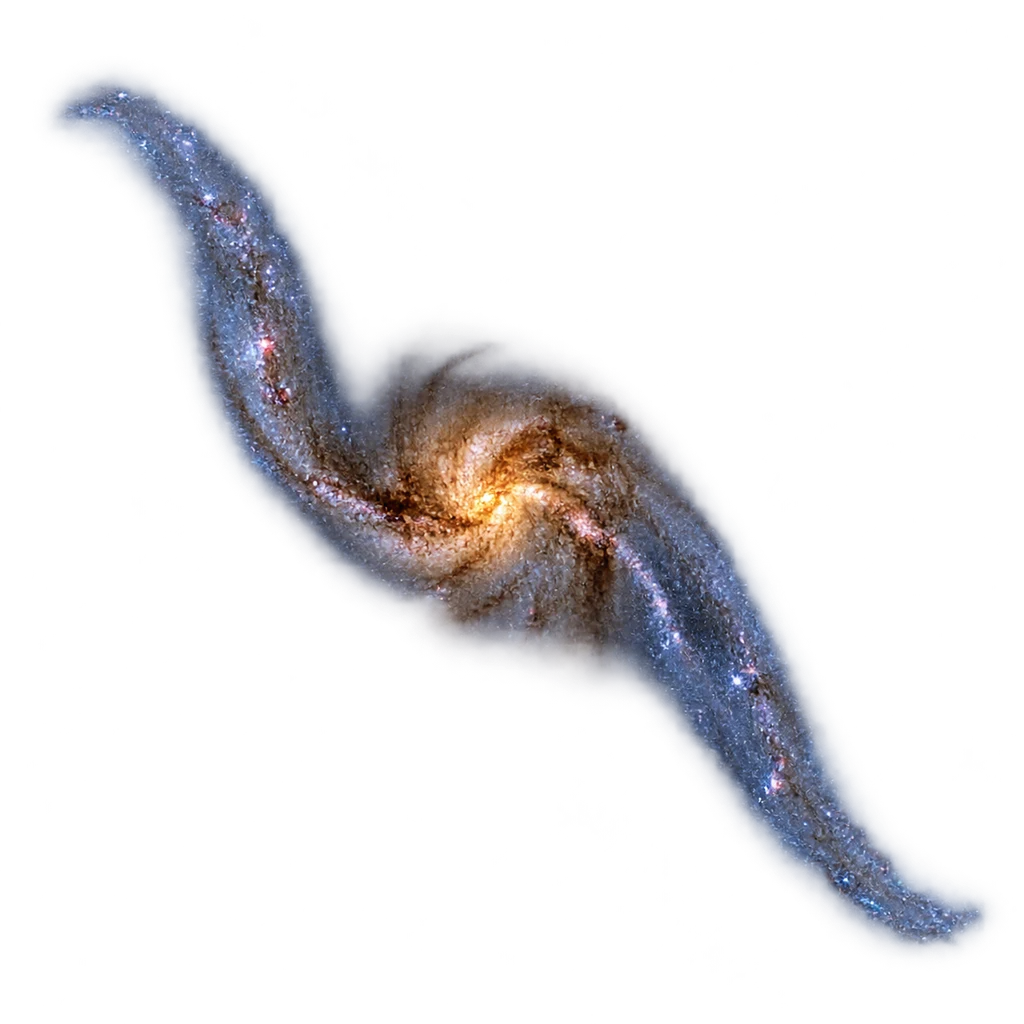
NGC 2623 / SPATIAL SCHEMATICOblique model view · depth and proportions are illustrative

SELECT A LAYER · SCHEMATIC

Explore the stellar volume from different directions; this model has no single disk plane. These are illustrative viewpoints, not the galaxy’s measured orientation or a simulation of its motion.

A single nucleus and two tails

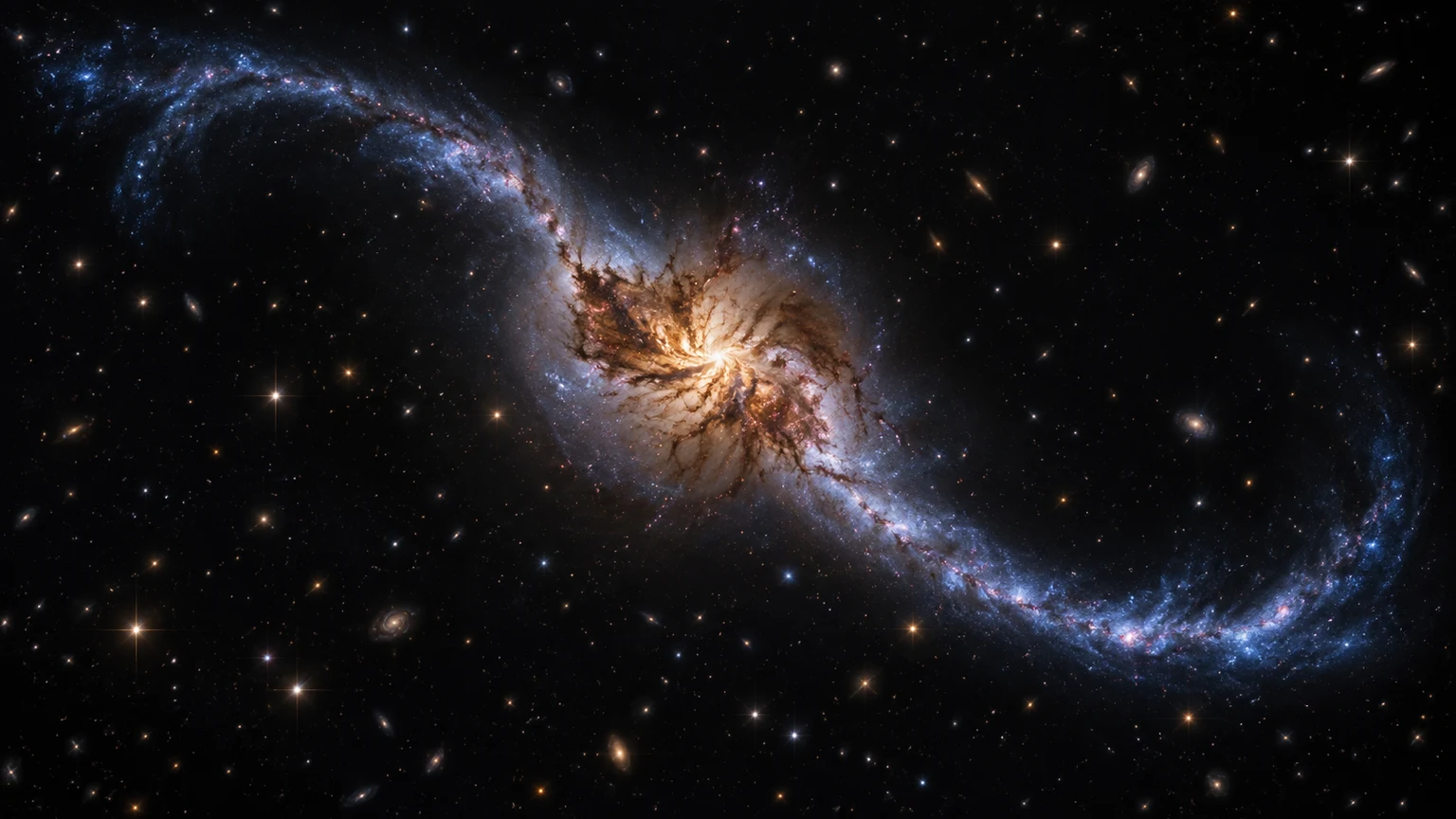
The original galaxy centers have merged into a shared nucleus. Gravitational interactions drew out long tidal tails and triggered star formation. The diagram highlights one central remnant and two curved tails, rather than two separate cores.

Select Nucleus or Tails to explore the shared remnant and the material stretched away from it. This is not a physical simulation.

A later stage of a merger

Compared with the Antennae, whose two centers remain distinct, NGC 2623 illustrates a later stage of the merger process. The animations show structure rather than a reconstruction of the event’s timing or orbital path.

Explore galaxies in the atlas ↗
AI-generated artistic study inspired by NGC 2623. Shape, brightness, star positions and viewpoint are illustrative; not a telescope photograph or observational map.

The merged remnant

AI-generated artistic study inspired by NGC 2623. Shape, brightness, star positions and viewpoint are illustrative; not a telescope photograph or observational map.

AI-generated artistic study inspired by NGC 2623. Shape, brightness, star positions and viewpoint are illustrative; not a telescope photograph or observational map.

Inside the tangled nucleus

AI-generated artistic study inspired by NGC 2623. Shape, brightness, star positions and viewpoint are illustrative; not a telescope photograph or observational map.

AI-generated artistic study inspired by NGC 2623. Shape, brightness, star positions and viewpoint are illustrative; not a telescope photograph or observational map.

Along a tidal tail

AI-generated artistic study inspired by NGC 2623. Shape, brightness, star positions and viewpoint are illustrative; not a telescope photograph or observational map.