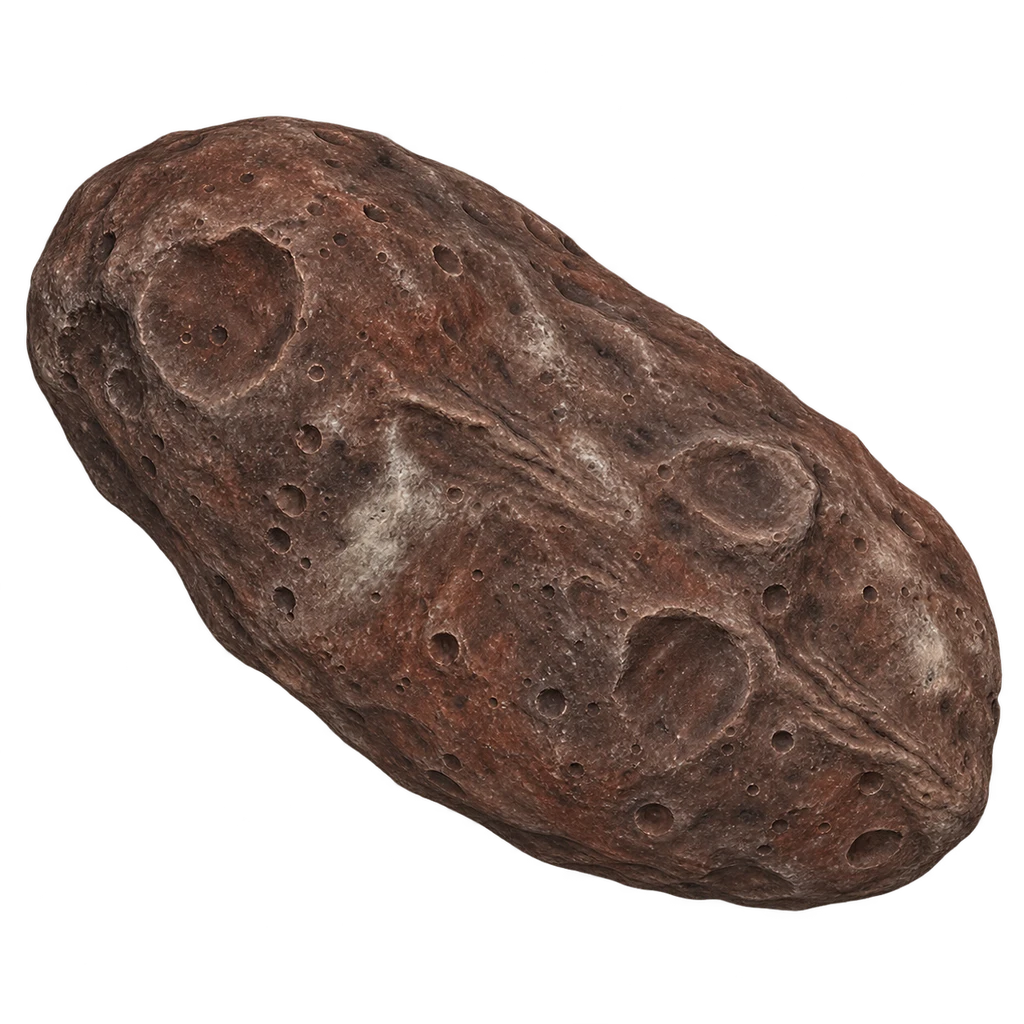
A red moon with an uneven outline.
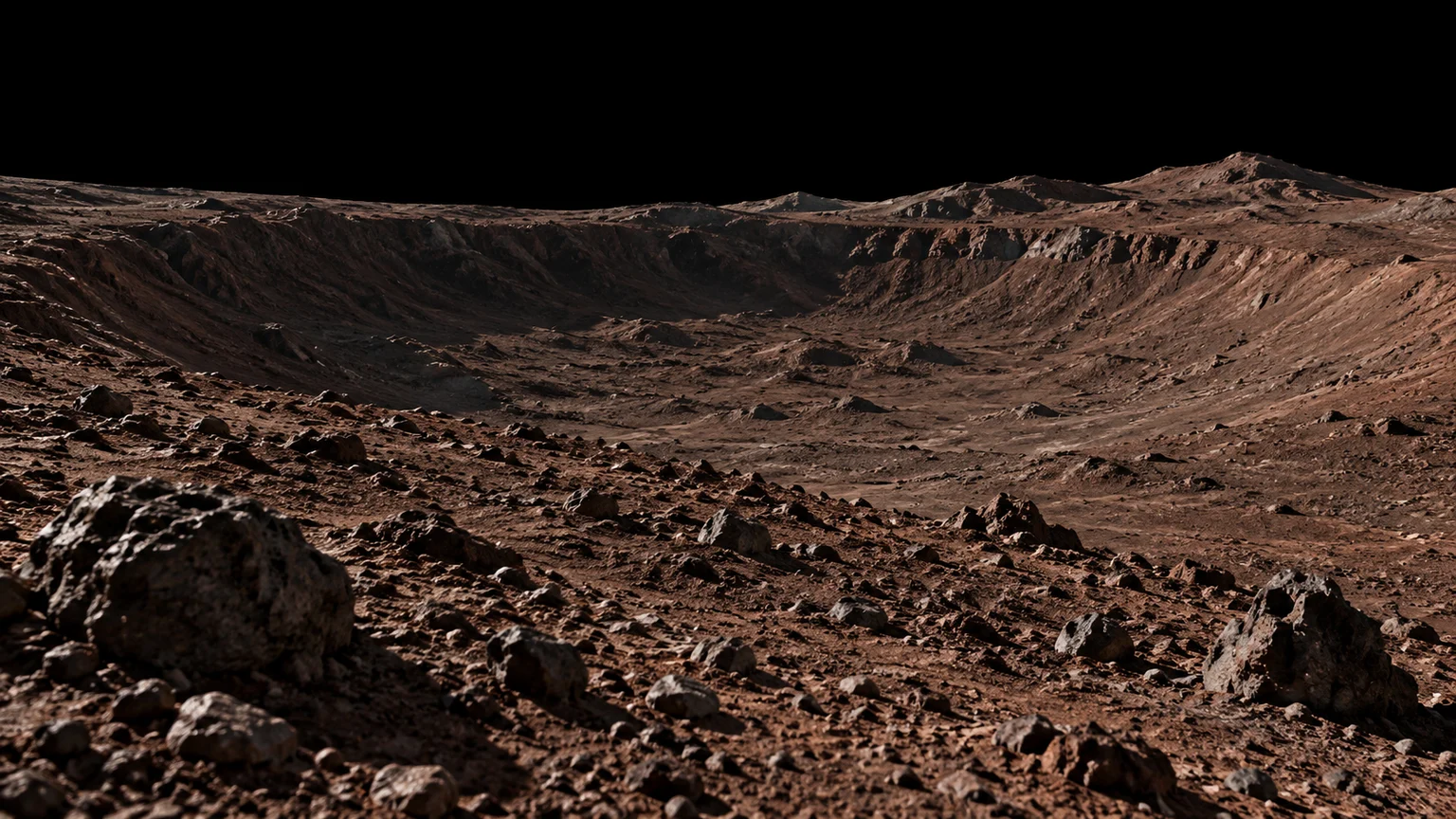
Amalthea is the largest of Jupiter’s four small inner moons. Spacecraft images show craters, hills and valleys across an elongated body. Its dark reddish surface has a few brighter markings; the portrait captures that broad character rather than reproducing a complete surface map.
More space between the pieces.
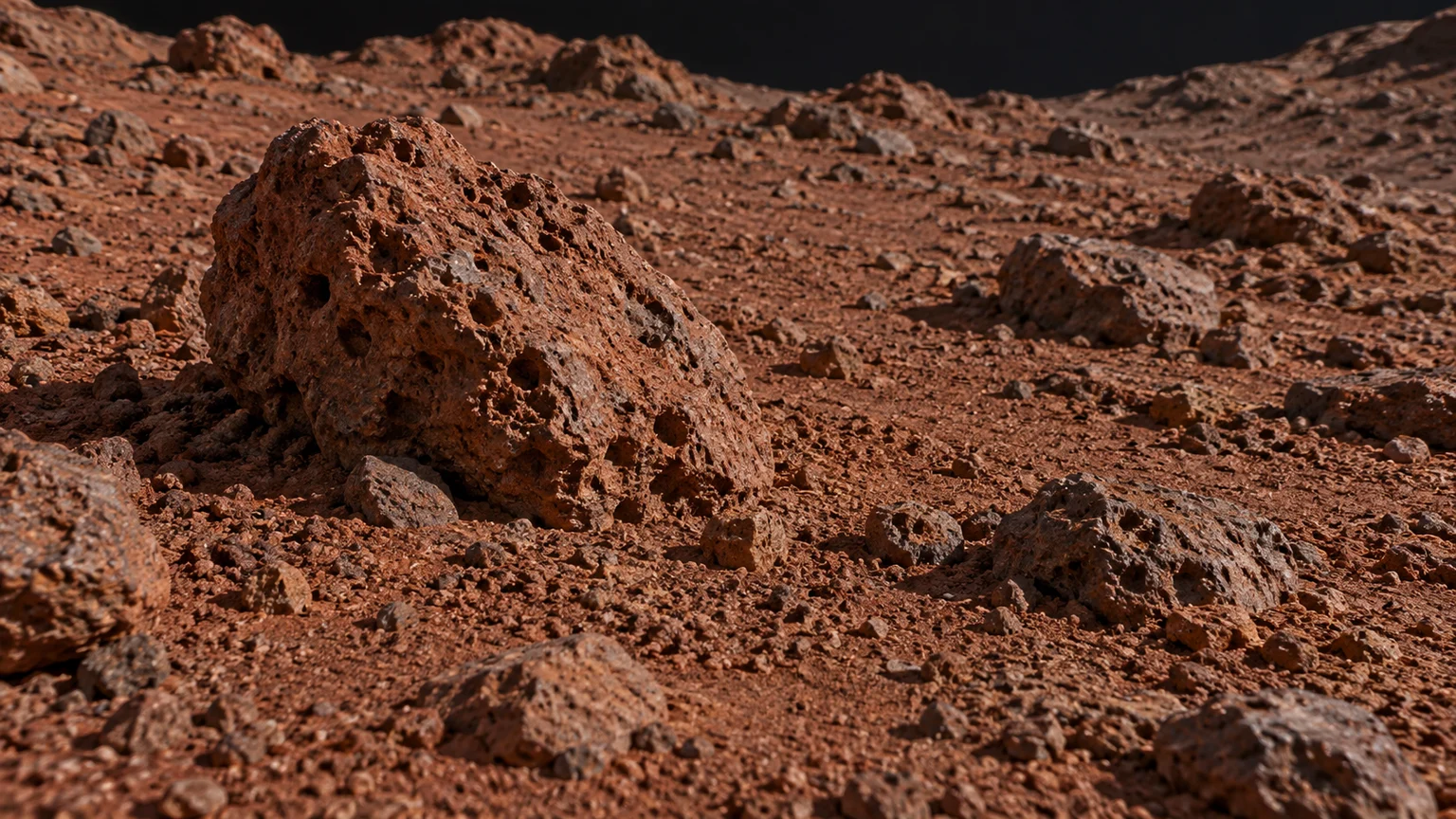
Galileo’s close encounter revealed a surprisingly low density. A porous mixture containing water ice and rocky material can explain the measurements. The balance between ice and empty space remains uncertain, and no sharply defined core or ocean is established.
A small source for a faint ring.
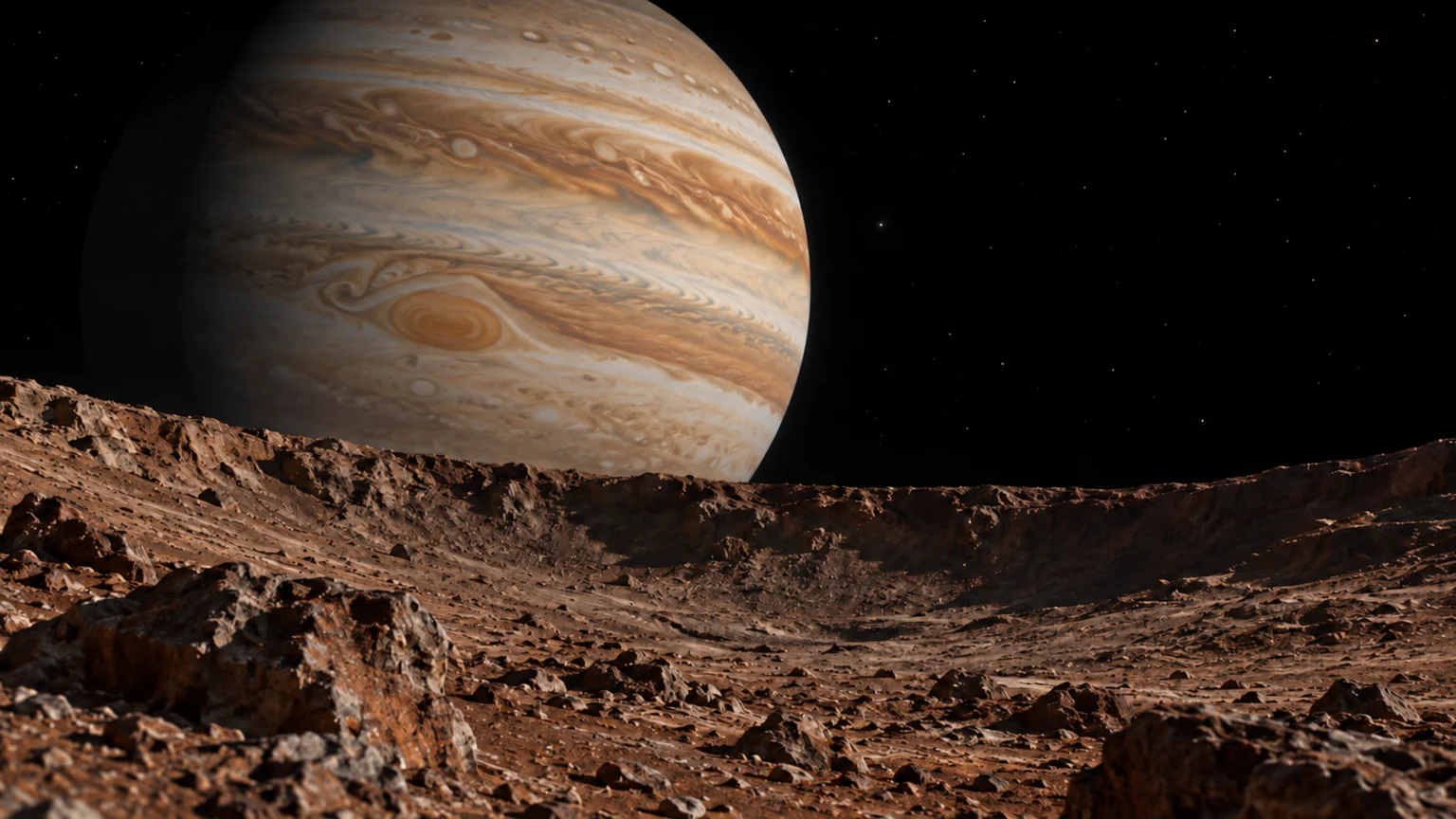
Material from Amalthea contributes to Jupiter’s faint gossamer ring system. The moon belongs to a much smaller inner family than Io, Europa, Ganymede and Callisto, yet it still helps shape the environment around the giant planet.
One circuit in about twelve hours.
The adopted mean orbit lies about 181,400 kilometers from Jupiter’s center and takes 0.499918 Earth days. Amalthea is synchronously rotating, keeping approximately the same face toward Jupiter. Local gravity also depends on its irregular shape, rotation and the nearby planet; the instrument is a spherical approximation.