URANUS SYSTEM / SATELLITE DOSSIER

Cordelia

Cordelia is Uranus’s innermost known moon, helping confine the inner edge of the planet’s bright Epsilon ring.
DIAMETER / EARTH0.0032×
EARTHCORDELIA
ATMOSPHERE
No substantial atmosphere detectedEffectively airless
SURFACE TEMPERATURE
Cold exposed surface
SURFACE PRESSURE
Effectively airless
HABITABILITYNo life detected
UNPROTECTED HUMANSNot survivable

Interior ↗

03
Cordelia interiorCordelia's internal structure is unresolved.Unresolved

Moon system ↗

04
Uranus moon orbitsSelected moons, ordered outward. Orbit sizes and positions are schematic; relative periods are preserved.URANUSCORDELIAOPHELIABIANCACRESSIDADESDEMONAJULIETPORTIAROSALINDCUPIDBELINDAPERDITAPUCKMABMIRANDAARIELUMBRIELTITANIAOBERON
CORDELIA

Instrument detail

THE SKY FROM CORDELIA

Uranus, in perspective.

SHARED ANGULAR SCALE
Uranus compared with Luna in Earth's skyAt semimajor-axis distance, Uranus spans approximately 61.85 degrees, 119.42 times the apparent diameter of Luna at its mean distance from Earth. Both disks share one angular scale.URANUSOUR MOON≈ 0.52°
Idealized size study · full disks · decorative lighting · rings excluded
ANGULAR DIAMETER
61.85°
OUR MOON'S APPARENT DIAMETER
119.42 ×
CENTER-TO-CENTER DISTANCE
49,755 km

The viewpoint is on Cordelia’s nominal spherical surface, directly facing Uranus. The reference is Luna seen from Earth’s center at its mean distance. The reference distance is the orbit’s semimajor axis. Rounded body diameters and orbital elements set the disk sizes; terrain, phases, rings and the actual sky position are not modeled.

Explore Uranus ↗
Cordelia orbitElliptical orbit viewed along the orbital axis, relative to Uranus. Motion is accelerated, not a live position. Distances are center to center.URANUSCORDELIA≈ 49,755 km
ONE ORBIT0.3347 Earth days around Uranus
Closest to Uranus
49,755 km
Farthest from Uranus
49,755 km

Cordelia circles Uranus. Distances are measured between the centers of the two bodies.

This URA184 mean-element path omits inclination, precession, ring dynamics and perturbations. It is not a live position prediction.

Cordelia rotation compared with EarthThe markers follow equal elapsed time on both worlds. Equal elapsed time and sidereal rotation rates. Polar schematic: sizes, axial tilt and seasons are not shown. Illumination uses a circular mean orbit, not a live sky prediction.SAME ELAPSED TIME · POLAR SCHEMATICCORDELIA8.0 hoursSIDEREAL ROTATIONRetrograde spinEARTH23.9 hoursSIDEREAL ROTATION≈ 24 h · solar day
Marked longitude · equal time on both worlds
ONE SIDEREAL ROTATION8.0 hours

An approximately synchronous model

The standard orientation model is approximately synchronous, with one turn per orbit in the direction of Uranus’s rotation. This rate comparison omits axial tilt and small orientation variations.

0 Earth hoursShared clock

Spin comparison only; no solar day is inferred. Sizes and starting longitudes are schematic, not live positions.

Satellite atlasMoons
Uranus moon orbitsSelected moons, ordered outward. Orbit sizes and positions are schematic; relative periods are preserved.URANUSCORDELIAOPHELIABIANCACRESSIDADESDEMONAJULIETPORTIAROSALINDCUPIDBELINDAPERDITAPUCKMABMIRANDAARIELUMBRIELTITANIAOBERON
FEATURED MOONS18
  1. 01Cordelia0.3347 days
  2. 02Ophelia ↗0.3764 days
  3. 03Bianca ↗0.4347 days
  4. 04Cressida ↗0.4639 days
  5. 05Desdemona ↗0.4736 days
  6. 06Juliet ↗0.4931 days
  7. 07Portia ↗0.5132 days
  8. 08Rosalind ↗0.5583 days
  9. 09Cupid ↗0.6125 days
  10. 10Belinda ↗0.6236 days
  11. 11Perdita ↗0.6382 days
  12. 12Puck ↗0.761833 days
  13. 13Mab ↗0.9229 days
  14. 14Miranda ↗1.41 days
  15. 15Ariel ↗2.5204 days
  16. 16Umbriel ↗4.1442 days
  17. 17Titania ↗8.7059 days
  18. 18Oberon ↗13.4632 days

Faint rings and a family of moons surround Uranus. Many of those moons take their names from characters in Shakespeare and Alexander Pope. One journey around the Sun lasts about 84 Earth years.

Cordelia gravityEqual launches at 2 m/s; shared metre scale; air resistance ignored.0 m100 m200 m300 mEARTH9.80 m/s²CORDELIA0.01 m/s²NOMINAL ESTIMATE
CORDELIA / EARTH GRAVITY0.0010 ×

Nominal spherical GM/r² estimate. Ring-based GM = 0.00406 ± 0.00038 km³/s²; uncertain shape, rotation and Uranus’s tides affect local gravity.

Same push, different gravity

Both balls launch at 2 m/s, using the same height and time scales. Weaker gravity gives a higher jump and a longer time in the air. Air resistance is ignored. This idealized comparison uses constant spherical gravity GM/r²; local terrain, tides and rotation are excluded. Playback runs 34× faster for both balls.

Earth · height / airtime
0.20 m / 0.41 s
Cordelia · height / airtime
199.02 m / 398.04 s
Cordelia interiorCordelia's internal structure is unresolved.Unresolved

Beyond the surface

Cordelia’s interior remains unresolved. The available observations do not establish distinct layers or a present-day ocean.

    Artist’s impression of Cordelia

    A faint companion in Voyager’s images.

    Cordelia was discovered on January 20, 1986 in Voyager 2 images. The brief Uranus encounter revealed a small body close to the planet, among a family of previously unseen satellites.

    Gravity at the inner boundary.

    Cordelia and Ophelia flank the Epsilon ring. Their gravitational influence helps keep its material confined. The orbital illustration follows the moon alone; it does not calculate the motions or collisions of individual ring particles.

    A shape estimate, not a terrain map.

    The adopted equivalent diameter is about 40 kilometers. Its irregular outline and uncertain dimensions limit any spherical comparison. All local craters and ridges in these landscape studies are imagined.

    Around Uranus in roughly eight hours.

    The adopted mean orbit lies 49,755 kilometers from Uranus’s center and takes 0.3347 Earth days. Eccentricity rounds to zero in the source table. The simple path omits inclination and ring interactions.

    DIAMETER / EARTH0.0032×
    EARTHCORDELIA
    EARTH
    12,742 km
    CORDELIA
    40.2 km
    Mean diameters · circles share one scale

    Approximately 40.2 km, derived from the ellipsoidal volume in French et al. (2024), Table 3; not the longest dimension.

    ATMOSPHERE
    No substantial atmosphere detectedEffectively airless

    Cordelia is effectively airless. No substantial atmosphere is known.

    SURFACE TEMPERATURE
    Cold exposed surface
    SURFACE PRESSURE
    Effectively airless
    HABITABILITYNo life detected

    No life has been detected, and a habitable environment has not been established.

    UNPROTECTED HUMANSNot survivable

    The exposed surface requires oxygen, pressure protection and thermal control.

    Planet and landscape images are artistic interpretations.

    • NASA ↗
      • Classification and orbital data
      • Rotation and internal structure constraints
      • Natural conditions and human survival
      • Discovery
      • Rings
    • NASA ↗
      • Parent-body diameter for the angular sky comparison
    • arxiv.org ↗
      • GM and mean radius; spherical gravity estimate GM/r²
      • Size, physical data and atmospheric constraints
      • Scale
    • NASA / JPL ↗
      • Mean orbital dimensions; distances from parent center
      • Orbit
    • naif.jpl.nasa.gov ↗
      • Rotation model and synchronous or independent spin
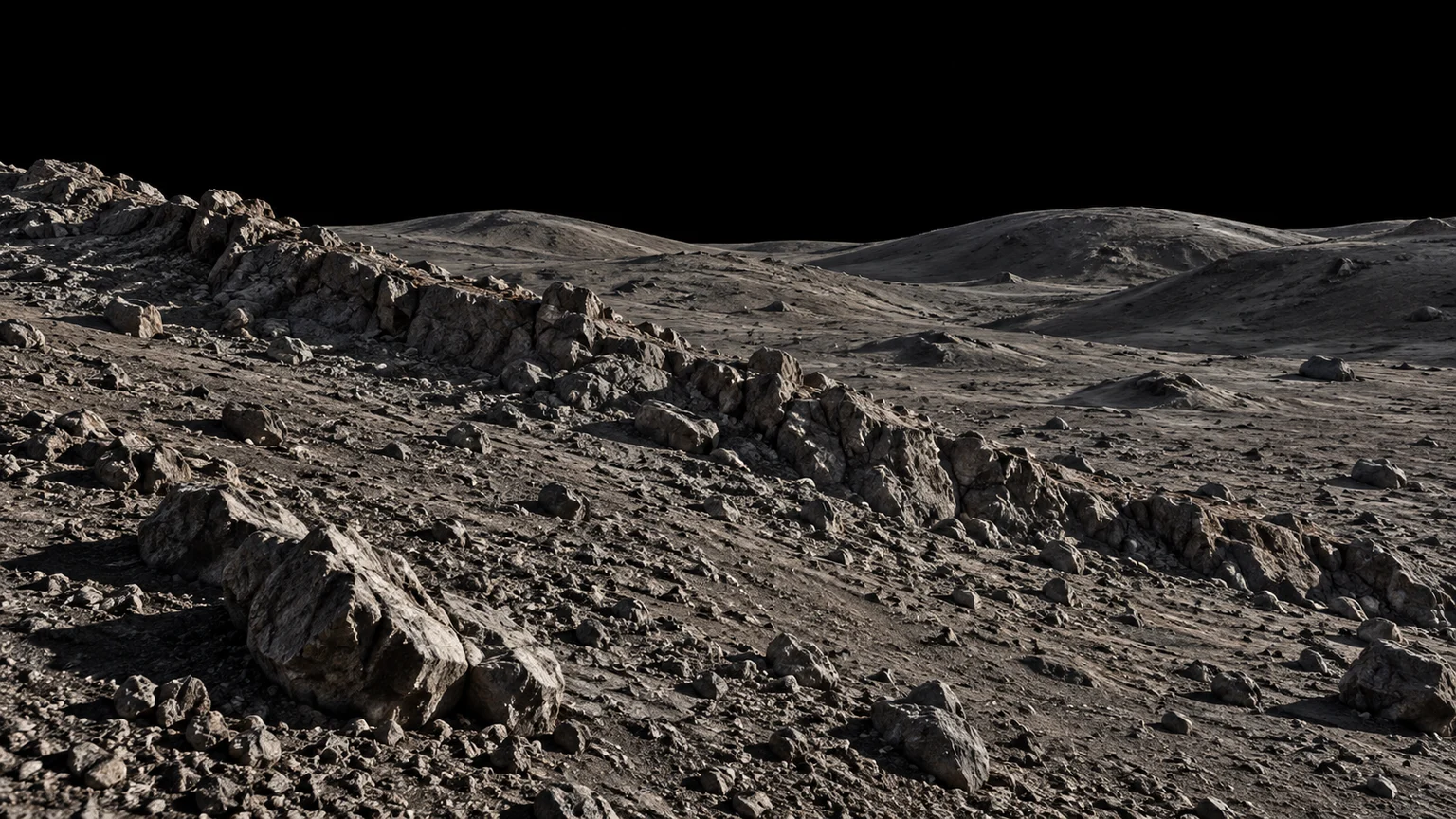
    A speculative ground-level view on Cordelia. The fragments, depressions and distant relief are artistic reconstructions.

    Across an imagined hollow

    A speculative ground-level view on Cordelia. The fragments, depressions and distant relief are artistic reconstructions.

    An imagined landscape on Cordelia. Neither local terrain nor illumination reproduces a spacecraft panorama.

    Along a low rise

    An imagined landscape on Cordelia. Neither local terrain nor illumination reproduces a spacecraft panorama.

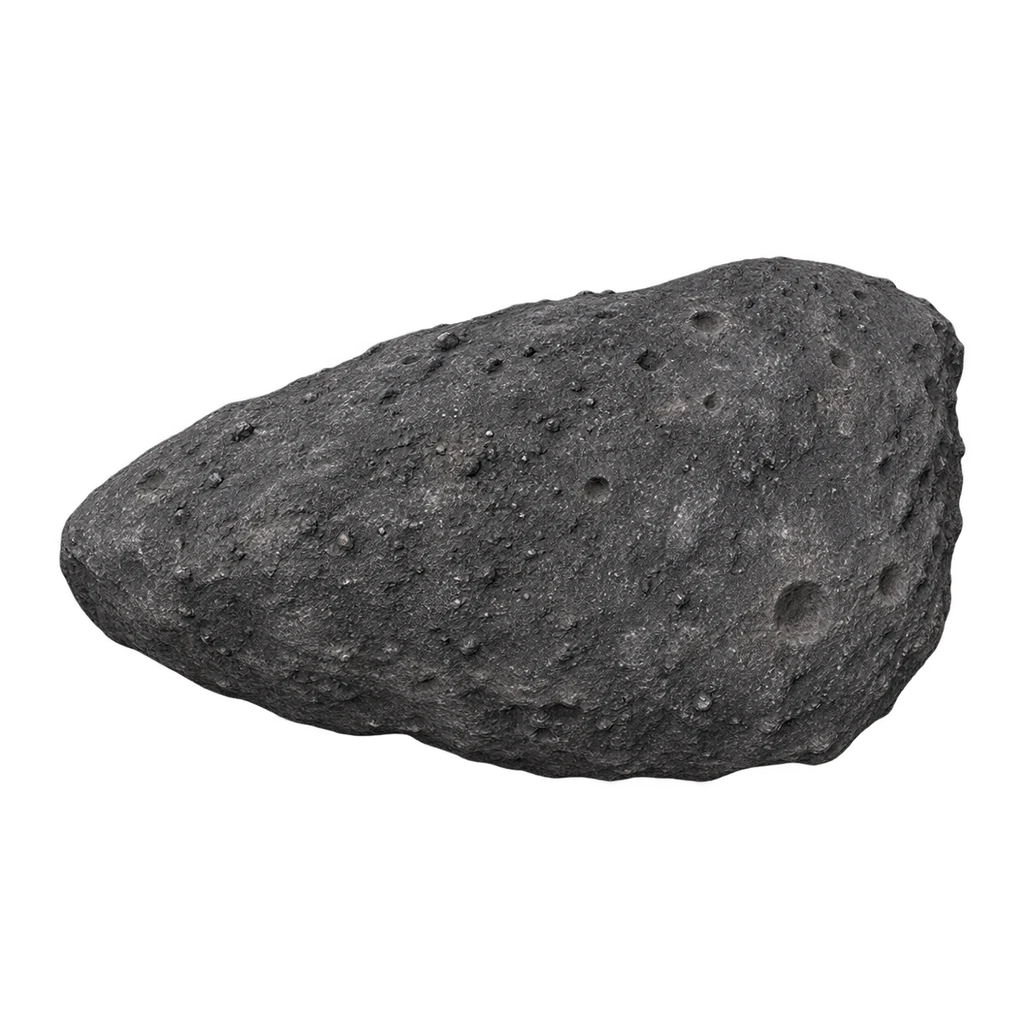
    A small dark angular boulder casting a diagonal crisp shadow across fine grains. An artistic reconstruction of Cordelia; local detail, lighting and viewpoint are imagined.

    Surface fragments in close view

    A small dark angular boulder casting a diagonal crisp shadow across fine grains. An artistic reconstruction of Cordelia; local detail, lighting and viewpoint are imagined.