URANUS SYSTEM / SATELLITE DOSSIER

Cupid

Cupid is a tiny inner moon of Uranus, discovered with Hubble after escaping detection during Voyager 2’s flyby.

DIAMETER / EARTH0.0014×
EARTHCUPID
ATMOSPHERE
No substantial atmosphere detectedEffectively airless
SURFACE TEMPERATURE
Cold exposed surface
SURFACE PRESSURE
Effectively airless
HABITABILITYNo life detected
UNPROTECTED HUMANSNot survivable
Interior ↗

03
Cupid interiorCupid's internal structure is unresolved.Unresolved

Moon system ↗

04
Uranus moon orbitsSelected moons, ordered outward. Orbit sizes and positions are schematic; relative periods are preserved.URANUSCORDELIAOPHELIABIANCACRESSIDADESDEMONAJULIETPORTIAROSALINDCUPIDBELINDAPERDITAPUCKMABMIRANDAARIELUMBRIELTITANIAOBERON
CUPID

Instrument detail

THE SKY FROM CUPID

Uranus, in perspective.

SHARED ANGULAR SCALE
Uranus compared with Luna in Earth's skyAt semimajor-axis distance, Uranus spans approximately 40.19 degrees, 77.6 times the apparent diameter of Luna at its mean distance from Earth. Both disks share one angular scale.URANUSOUR MOON≈ 0.52°
Idealized size study · full disks · decorative lighting · rings excluded
ANGULAR DIAMETER
40.19°
OUR MOON'S APPARENT DIAMETER
77.6 ×
CENTER-TO-CENTER DISTANCE
74,396 km

The viewpoint is on Cupid’s nominal spherical surface, directly facing Uranus. The reference is Luna seen from Earth’s center at its mean distance. The reference distance is the orbit’s semimajor axis. Rounded body diameters and orbital elements set the disk sizes; terrain, phases, rings and the actual sky position are not modeled.

Explore Uranus ↗
Cupid orbitElliptical orbit viewed along the orbital axis, relative to Uranus. Motion is accelerated, not a live position. Distances are center to center.URANUSCUPID≈ 74,396 km
ONE ORBIT0.6125 Earth days around Uranus
Closest to Uranus
73,875 km
Farthest from Uranus
74,917 km

Cupid circles Uranus. Distances are measured between the centers of the two bodies.

This JPL mean-element path omits inclination, precession and perturbations. It is not a live position prediction.

Cupid rotationThe rotation period is unresolved. Static portrait, not an orientation prediction.PERIOD UNCERTAINNO UNIQUE PERIOD ADOPTED
ROTATION STATEUncertain

Rotation remains uncertain

The cited overview gives no measured spin period. This static portrait assumes no fixed rate or orientation; uncertainty alone does not imply chaotic tumbling.

Satellite atlasMoons
Uranus moon orbitsSelected moons, ordered outward. Orbit sizes and positions are schematic; relative periods are preserved.URANUSCORDELIAOPHELIABIANCACRESSIDADESDEMONAJULIETPORTIAROSALINDCUPIDBELINDAPERDITAPUCKMABMIRANDAARIELUMBRIELTITANIAOBERON
FEATURED MOONS18
  1. 01Cordelia ↗0.3347 days
  2. 02Ophelia ↗0.3764 days
  3. 03Bianca ↗0.4347 days
  4. 04Cressida ↗0.4639 days
  5. 05Desdemona ↗0.4736 days
  6. 06Juliet ↗0.4931 days
  7. 07Portia ↗0.5132 days
  8. 08Rosalind ↗0.5583 days
  9. 09Cupid0.6125 days
  10. 10Belinda ↗0.6236 days
  11. 11Perdita ↗0.6382 days
  12. 12Puck ↗0.761833 days
  13. 13Mab ↗0.9229 days
  14. 14Miranda ↗1.41 days
  15. 15Ariel ↗2.5204 days
  16. 16Umbriel ↗4.1442 days
  17. 17Titania ↗8.7059 days
  18. 18Oberon ↗13.4632 days

Faint rings and a family of moons surround Uranus. Many of those moons take their names from characters in Shakespeare and Alexander Pope. One journey around the Sun lasts about 84 Earth years.

GRAVITY UNKNOWNMASS UNCERTAIN
SURFACE GRAVITYUnknown

Mass remains uncertain

No measured mass is adopted. A numerical gravity comparison would require additional assumptions and is omitted.

Cupid interiorCupid's internal structure is unresolved.Unresolved

Beyond the surface

Cupid’s interior remains unresolved. The available observations do not establish distinct layers or a present-day ocean.

    Artist’s impression of Cupid

    A moon too faint for Voyager.

    Mark Showalter and Jack Lissauer discovered Cupid using the Hubble Space Telescope in August 2003. Its small size and dark surface had kept it hidden during Voyager 2’s encounter.

    A size inferred from faint light.

    The adopted diameter is about 18 kilometers. This estimate depends on assumptions about reflectivity; French and Showalter list a radius of 9 ± 2 kilometers. Neither a detailed shape nor local geology is resolved.

    A close neighbor in a crowded system.

    Cupid travels just inside Belinda. The adopted mean orbital scale is 74,396 kilometers and the period is 0.6125 Earth days. This simplified ellipse does not model the moons’ mutual perturbations.

    Love among Uranus’s literary moons.

    Originally designated S/2003 U2, Cupid takes its name from the Roman god of love, who appears in Shakespeare’s Timon of Athens.

    DIAMETER / EARTH0.0014×
    EARTHCUPID
    EARTH
    12,742 km
    CUPID
    18 km
    Mean diameters · circles share one scale

    Nominal diameter 18 km; inferred from brightness and assumed reflectivity, following French and Showalter (2012), Table 1.

    ATMOSPHERE
    No substantial atmosphere detectedEffectively airless

    Cupid is effectively airless. No substantial atmosphere is known.

    SURFACE TEMPERATURE
    Cold exposed surface
    SURFACE PRESSURE
    Effectively airless
    HABITABILITYNo life detected

    No life has been detected, and a habitable environment has not been established.

    UNPROTECTED HUMANSNot survivable

    The exposed surface requires oxygen, pressure protection and thermal control.

    Planet and landscape images are artistic interpretations.

    • NASA ↗
      • Classification and orbital data
      • Rotation model and synchronous or independent spin
      • Rotation and internal structure constraints
      • Natural conditions and human survival
      • Discovery
      • Name
    • NASA ↗
      • Parent-body diameter for the angular sky comparison
    • www.rfrench.org ↗
      • Mass and gravity constraints
      • Size, physical data and atmospheric constraints
      • Scale
    • NASA / JPL ↗
      • Mean orbital dimensions; distances from parent center
      • Orbit
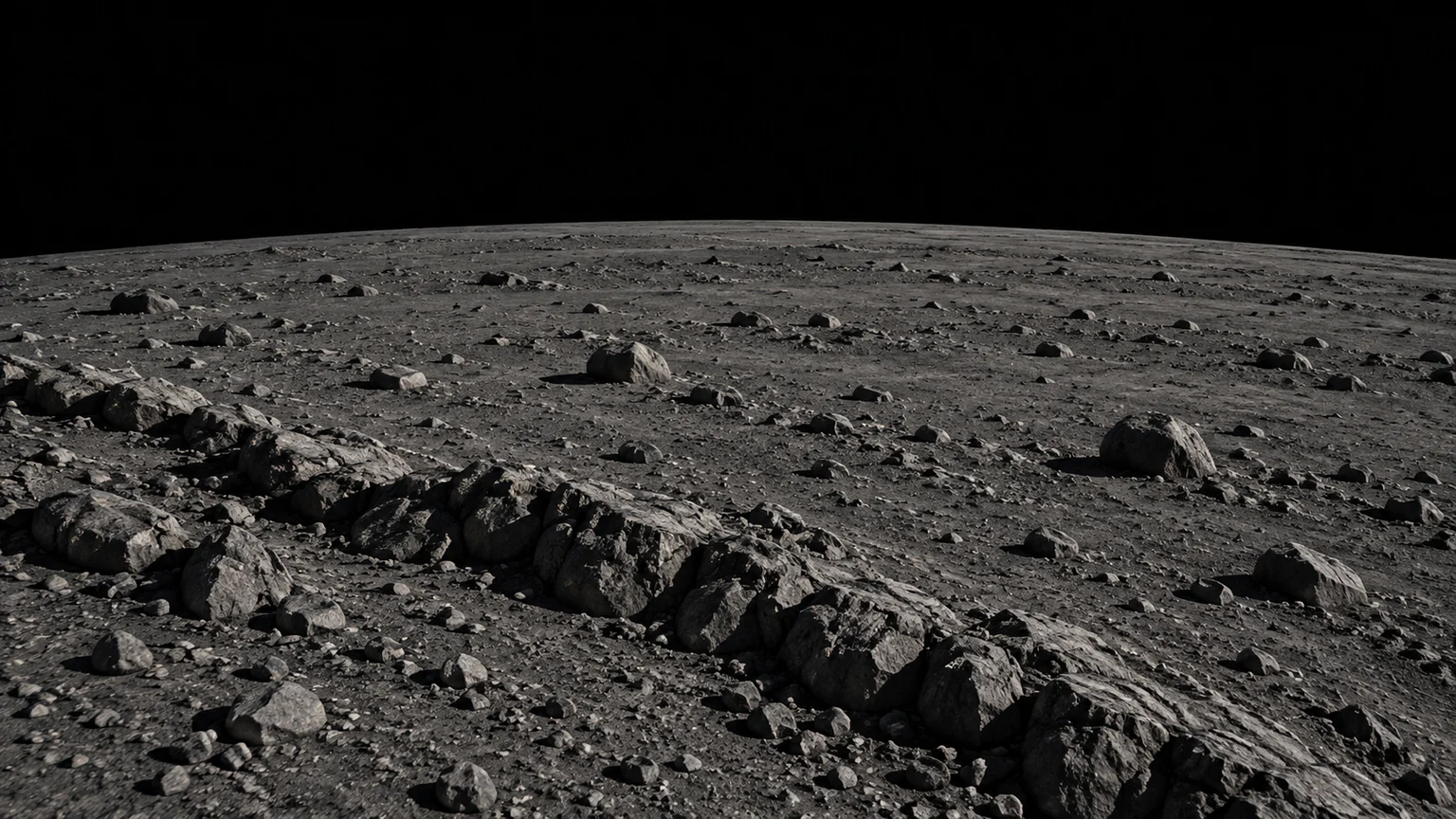
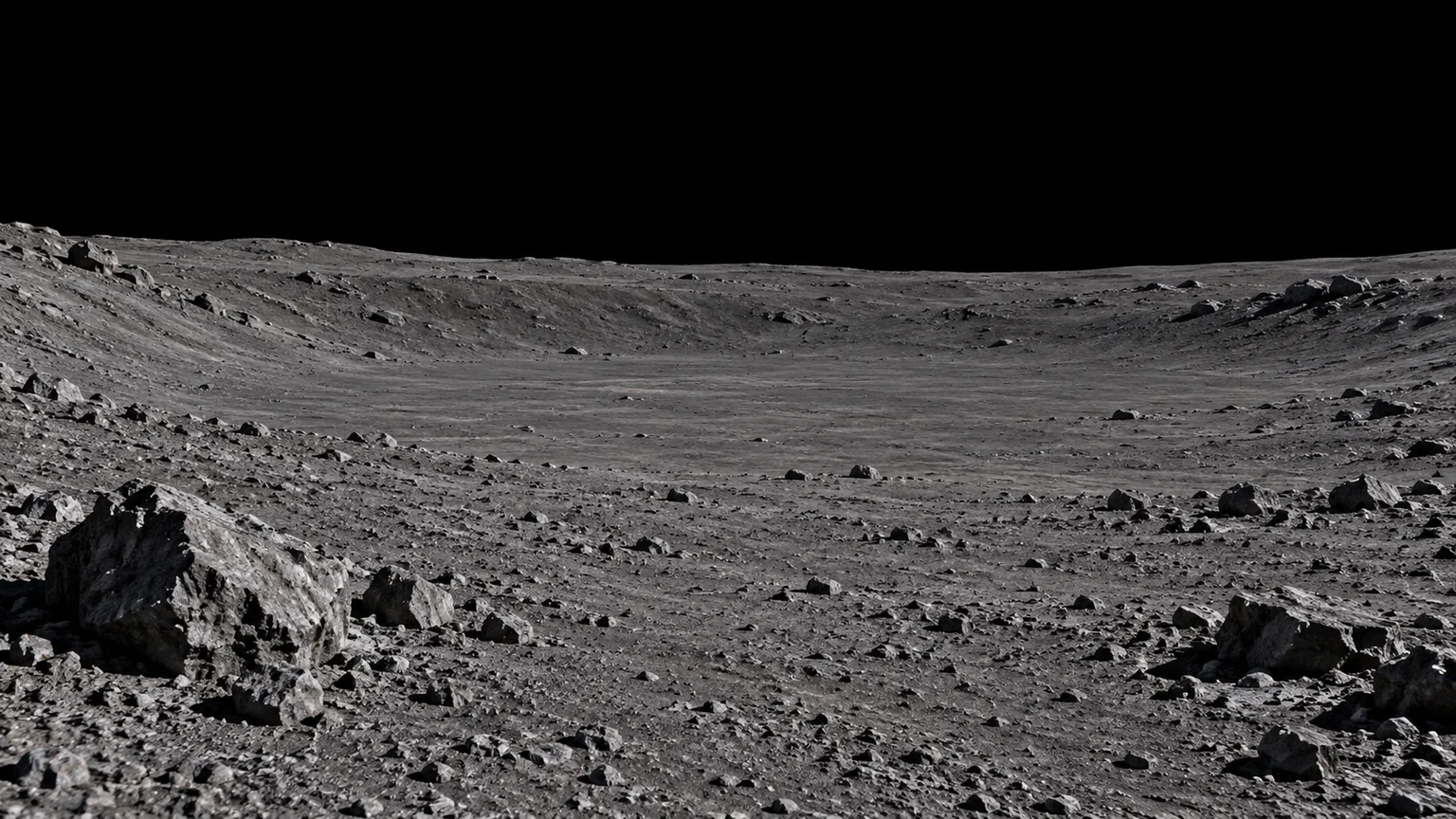
    A speculative ground-level view on Cupid. The depressions, fragments and horizon are artistic interpretations.

    Across an imagined hollow

    A speculative ground-level view on Cupid. The depressions, fragments and horizon are artistic interpretations.

    An imagined landscape on Cupid. No resolved surface map supports these local details.

    Along a low rise

    An imagined landscape on Cupid. No resolved surface map supports these local details.

    Tiny charcoal-gray fragments clustered around a shallow dusty pocket. An artistic reconstruction of Cupid; local detail, lighting and viewpoint are imagined.

    Surface fragments in close view

    Tiny charcoal-gray fragments clustered around a shallow dusty pocket. An artistic reconstruction of Cupid; local detail, lighting and viewpoint are imagined.