An old surface with softened edges.
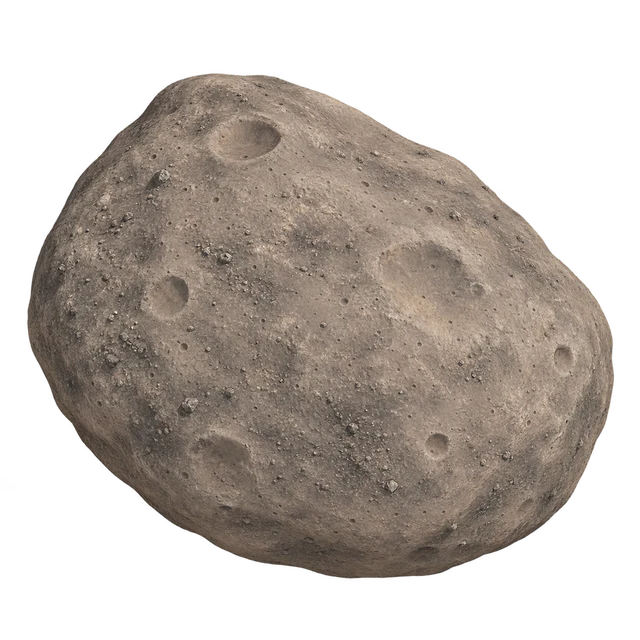
Deimos is roughly 15 by 12 by 11 kilometers across. Its irregular outline encloses a surface whose impact craters are partly buried by loose material. Compared with Phobos, the terrain appears smoother and lacks its striking networks of grooves.
The outer track around Mars.
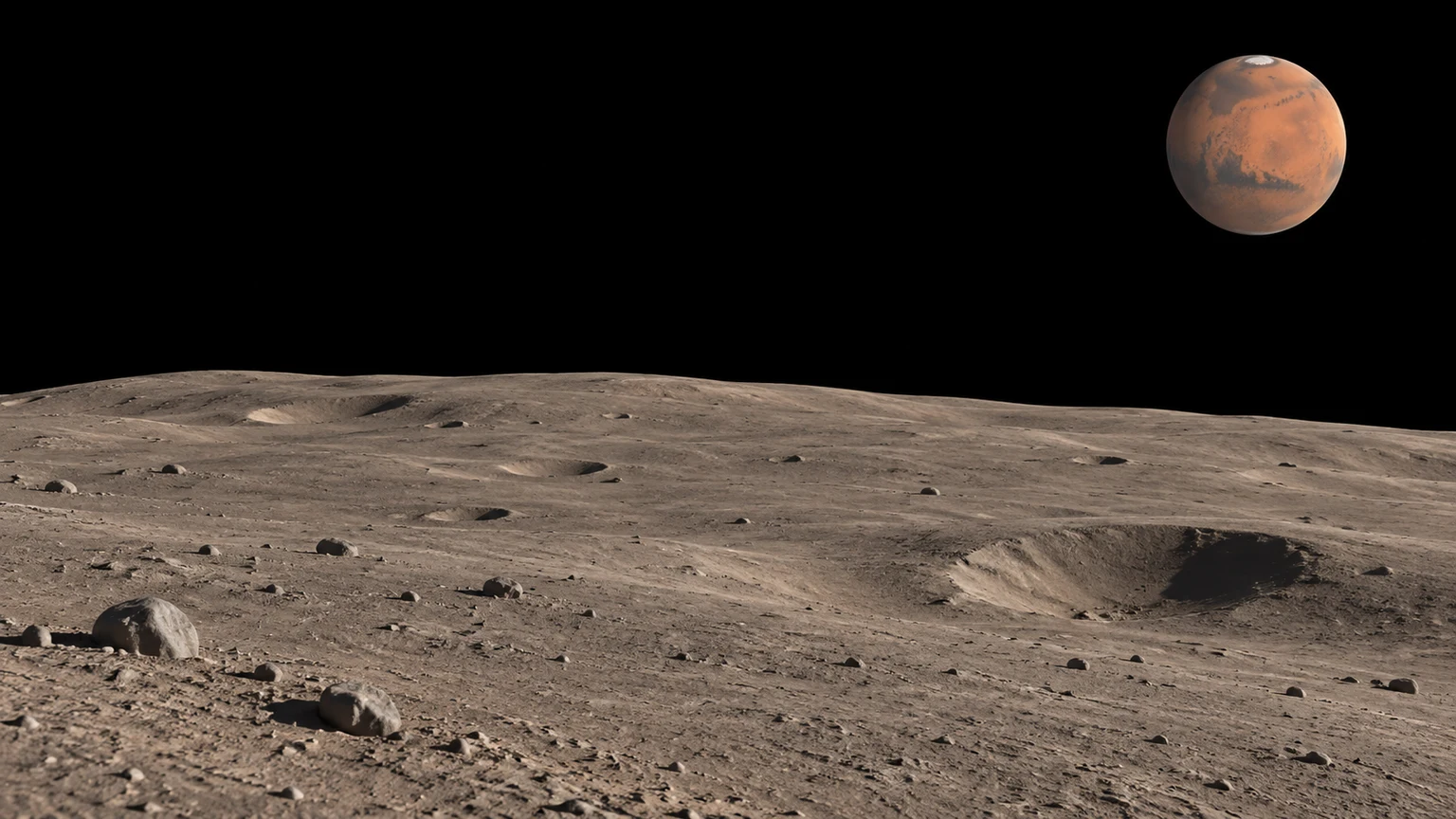
Deimos travels about 23,457 kilometers from the center of Mars on a nearly circular orbit. One circuit takes 1.2625 Earth days, approximately 30 hours and 18 minutes. It lies well beyond Phobos and takes longer to orbit than Mars takes to rotate.
A landscape made from broken rock.
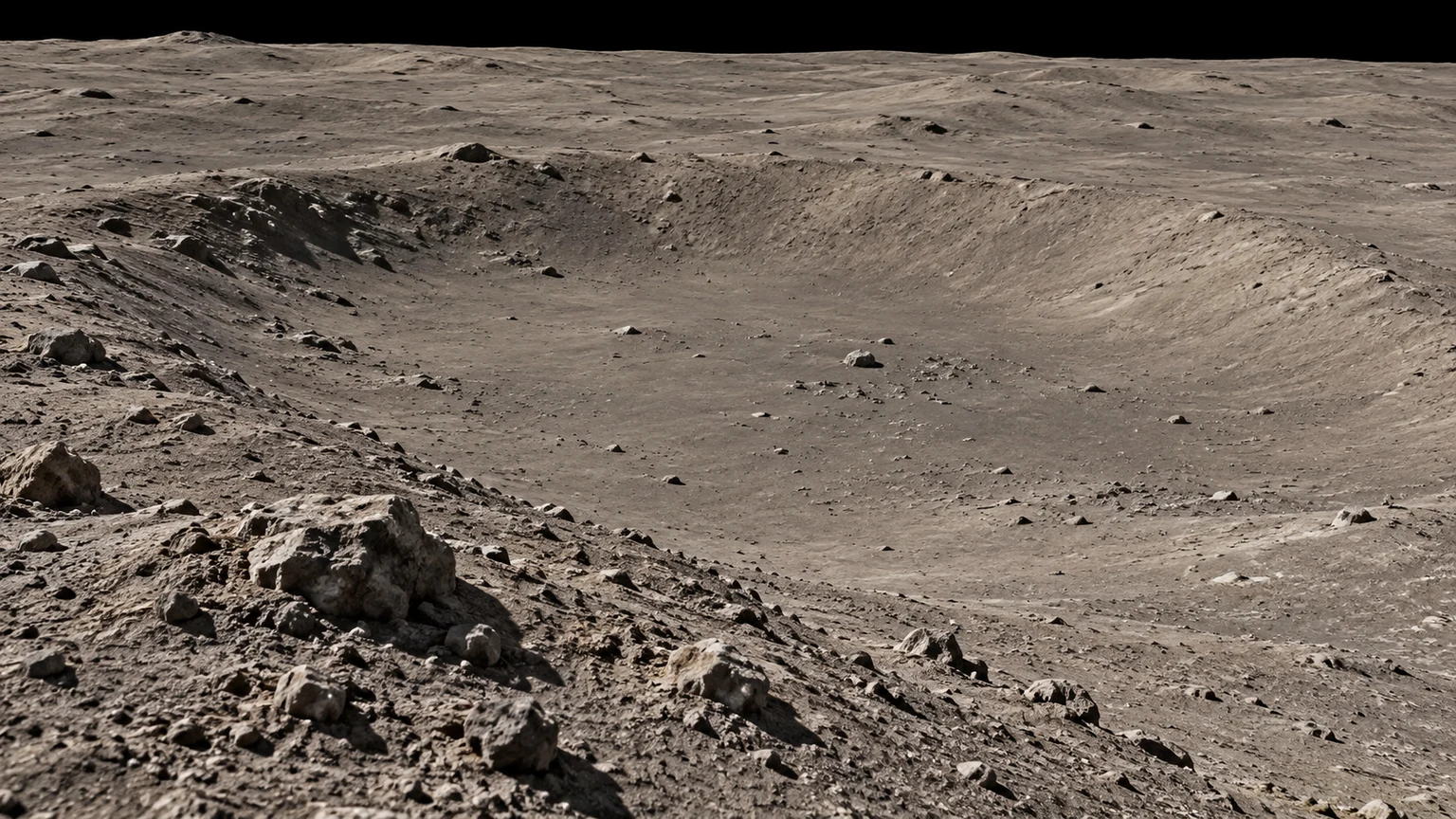
Impacts have crushed surface material into a mantle of regolith. This loose covering softens older crater rims and fills depressions. A smooth-looking patch is not evidence of wind or flowing water: debris can hide the roughness beneath it.
Two moons, one open question.
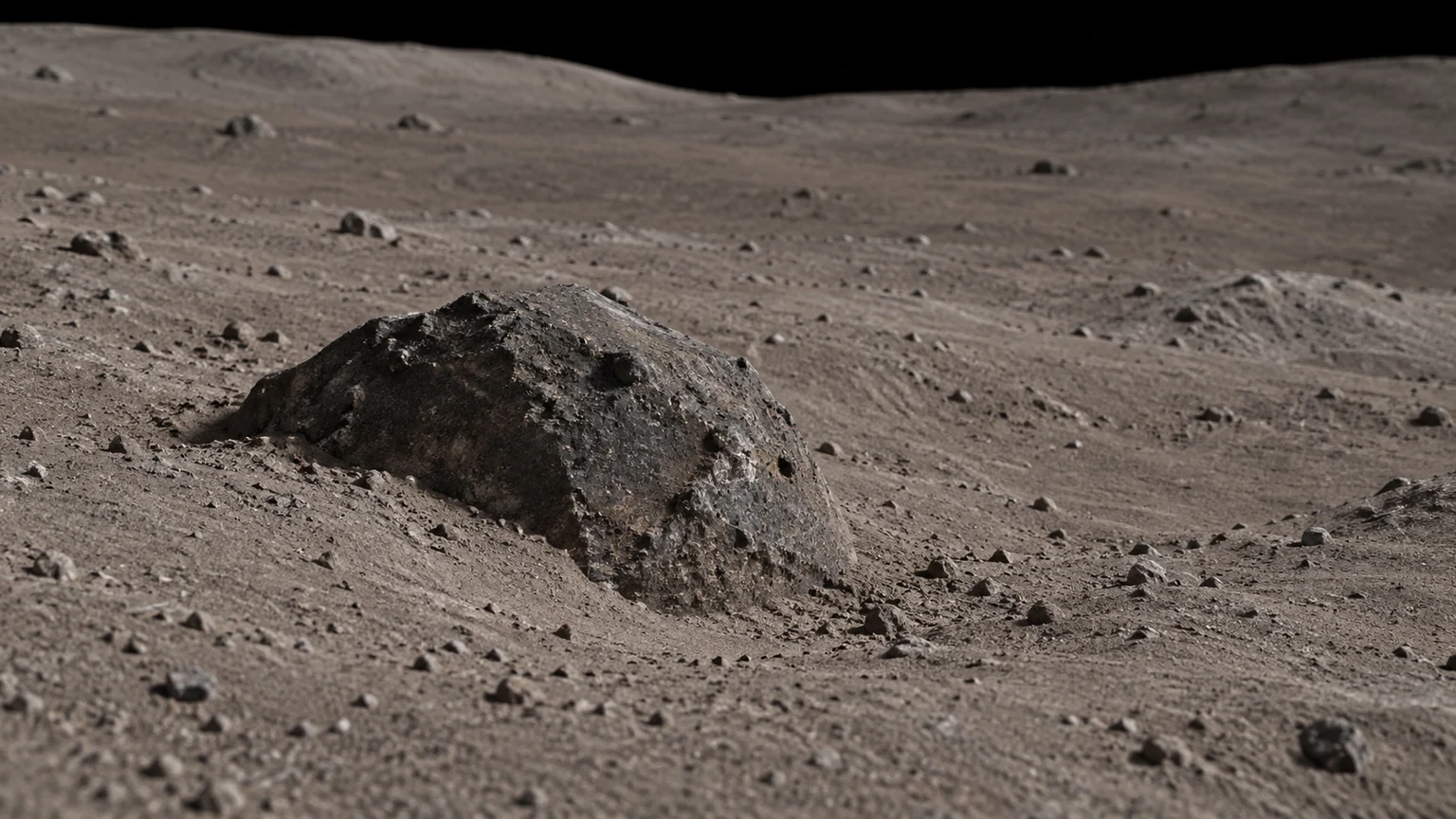
Deimos and Phobos resemble small asteroids, but their beginnings remain unresolved. Proposed explanations include capture and formation from debris after an impact on Mars. Surface appearance alone cannot tell us which history produced these two companions.