JUPITER SYSTEM / SATELLITE DOSSIER

Elara

Elara is a distant prograde moon of Jupiter, part of a family thought to preserve fragments of a captured parent body.
DIAMETER / EARTH0.0067×
EARTHELARA
ATMOSPHERE
No substantial atmosphere detectedEffectively airless
SURFACE TEMPERATURE
Cold exposed surface
SURFACE PRESSURE
Effectively airless
HABITABILITYNo life detected
UNPROTECTED HUMANSNot survivable
Interior ↗

03
Elara interiorElara's internal structure is unresolved.Unresolved

Moon system ↗

04
Jupiter moon orbitsSelected moons, ordered outward. Orbit sizes and positions are schematic; relative periods are preserved.JUPITERMETISADRASTEAAMALTHEATHEBEIOEUROPAGANYMEDECALLISTOLEDAHIMALIALYSITHEAELARA
ELARA

Instrument detail

THE SKY FROM ELARA

Jupiter, in perspective.

SHARED ANGULAR SCALE
Jupiter compared with Luna in Earth's skyAt semimajor-axis distance, Jupiter spans approximately 0.68 degrees, 1.32 times the apparent diameter of Luna at its mean distance from Earth. Both disks share one angular scale.JUPITEROUR MOON≈ 0.52°
Idealized size study · full disks · decorative lighting · rings excluded
ANGULAR DIAMETER
0.68°
OUR MOON'S APPARENT DIAMETER
1.32 ×
CENTER-TO-CENTER DISTANCE
11,710,700 km

The viewpoint is on Elara’s nominal spherical surface, directly facing Jupiter. The reference is Luna seen from Earth’s center at its mean distance. The reference distance is the orbit’s semimajor axis. Rounded body diameters and orbital elements set the disk sizes; terrain, phases, rings and the actual sky position are not modeled.

Explore Jupiter ↗
Elara orbitElliptical orbit viewed along the orbital axis, relative to Jupiter. Motion is accelerated, not a live position. Distances are center to center.JUPITERELARA≈ 11,710,700 km
ONE ORBIT258.8861 Earth days around Jupiter
Closest to Jupiter
9,228,032 km
Farthest from Jupiter
14,193,368 km

Elara circles Jupiter. Distances are measured between the centers of the two bodies.

This JPL mean-element path omits inclination, precession and perturbations. It is not a live position prediction.

Elara rotationThe rotation period is unresolved. Static portrait, not an orientation prediction.PERIOD UNCERTAINNO UNIQUE PERIOD ADOPTED
ROTATION STATEUncertain

Rotation remains uncertain

The cited overview gives no measured spin period. This static portrait assumes no fixed rate or orientation; uncertainty alone does not imply chaotic tumbling.

Satellite atlasMoons
Jupiter moon orbitsSelected moons, ordered outward. Orbit sizes and positions are schematic; relative periods are preserved.JUPITERMETISADRASTEAAMALTHEATHEBEIOEUROPAGANYMEDECALLISTOLEDAHIMALIALYSITHEAELARA
FEATURED MOONS12
  1. 01Metis ↗0.294779 days
  2. 02Adrastea ↗0.29826 days
  3. 03Amalthea ↗0.499918 days
  4. 04Thebe ↗0.676105 days
  5. 05Io ↗1.77 days
  6. 06Europa ↗3.55 days
  7. 07Ganymede ↗7.15 days
  8. 08Callisto ↗16.69 days
  9. 09Leda ↗240.3264 days
  10. 10Himalia ↗249.909 days
  11. 11Lysithea ↗258.5035 days
  12. 12Elara258.8861 days

Io is volcanic, while the other Galilean moons are icy worlds that may conceal oceans. Each has its own environment; Jupiter’s atmospheric conditions do not describe its moons.

GRAVITY UNKNOWNMASS UNCERTAIN
SURFACE GRAVITYUnknown

Mass remains uncertain

No measured mass is adopted. A numerical gravity comparison would require additional assumptions and is omitted.

Elara interiorElara's internal structure is unresolved.Unresolved

Beyond the surface

Elara’s interior remains unresolved. The available observations do not establish distinct layers or a present-day ocean.

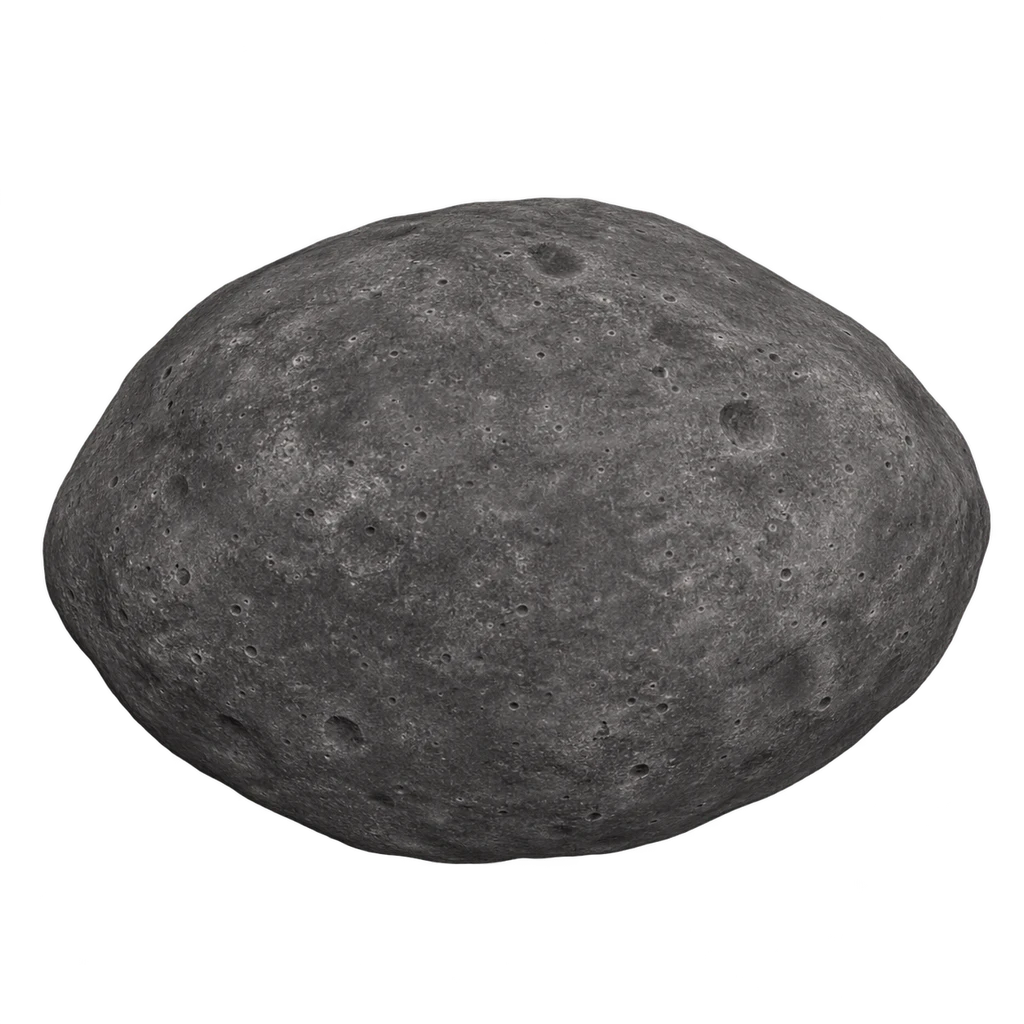
    Artist’s impression of Elara

    A faint point on photographic plates.

    Charles Dillon Perrine discovered Elara in January 1905 using photographs from the Crossley reflector at Lick Observatory. Its distant orbit places it far beyond the four large Galilean moons.

    A dark body seen from afar.

    The adopted diameter is approximately 86 kilometers, using NASA’s radius estimate and assumed reflectivity of four percent. This is an approximate size rather than a resolved shape model; the illustrated terrain is imagined.

    A possible shared origin with Himalia.

    Similar orbits and appearances link Elara with the Himalia group. A disrupted asteroid captured by Jupiter offers one explanation for the family. That history remains a hypothesis, not a directly observed event.

    A long, eccentric circuit.

    The adopted JPL mean elements give a scale of 11,710,700 kilometers, eccentricity 0.212 and period 258.8861 Earth days. The two-dimensional display omits orbital inclination, precession and perturbations.

    DIAMETER / EARTH0.0067×
    EARTHELARA
    EARTH
    12,742 km
    ELARA
    86 km
    Mean diameters · circles share one scale

    Approximate diameter 86 km, using NASA’s nominal radius with an assumed albedo of 0.04; not a resolved shape model.

    ATMOSPHERE
    No substantial atmosphere detectedEffectively airless

    Elara is effectively airless. No substantial atmosphere is known.

    SURFACE TEMPERATURE
    Cold exposed surface
    SURFACE PRESSURE
    Effectively airless
    HABITABILITYNo life detected

    No life has been detected, and a habitable environment has not been established.

    UNPROTECTED HUMANSNot survivable

    The exposed surface requires oxygen, pressure protection and thermal control.

    Planet and landscape images are artistic interpretations.

    • NASA ↗
      • Classification and orbital data
      • Mass and gravity constraints
      • Rotation model and synchronous or independent spin
      • Rotation and internal structure constraints
      • Size, physical data and atmospheric constraints
      • Natural conditions and human survival
      • Discovery
      • Scale
      • Family
    • NASA ↗
      • Parent-body diameter for the angular sky comparison
    • NASA / JPL ↗
      • Mean orbital dimensions; distances from parent center
      • Orbit
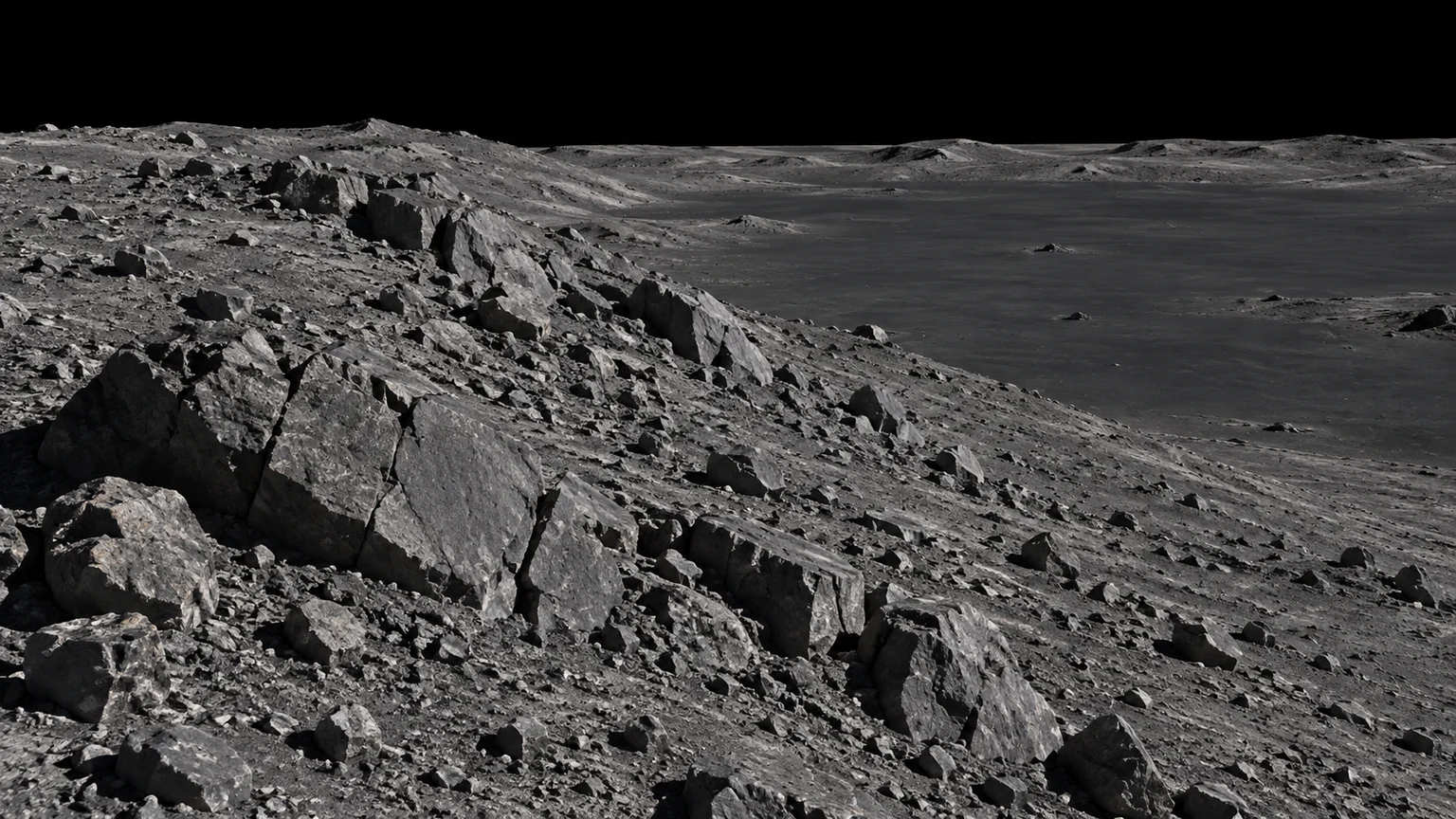
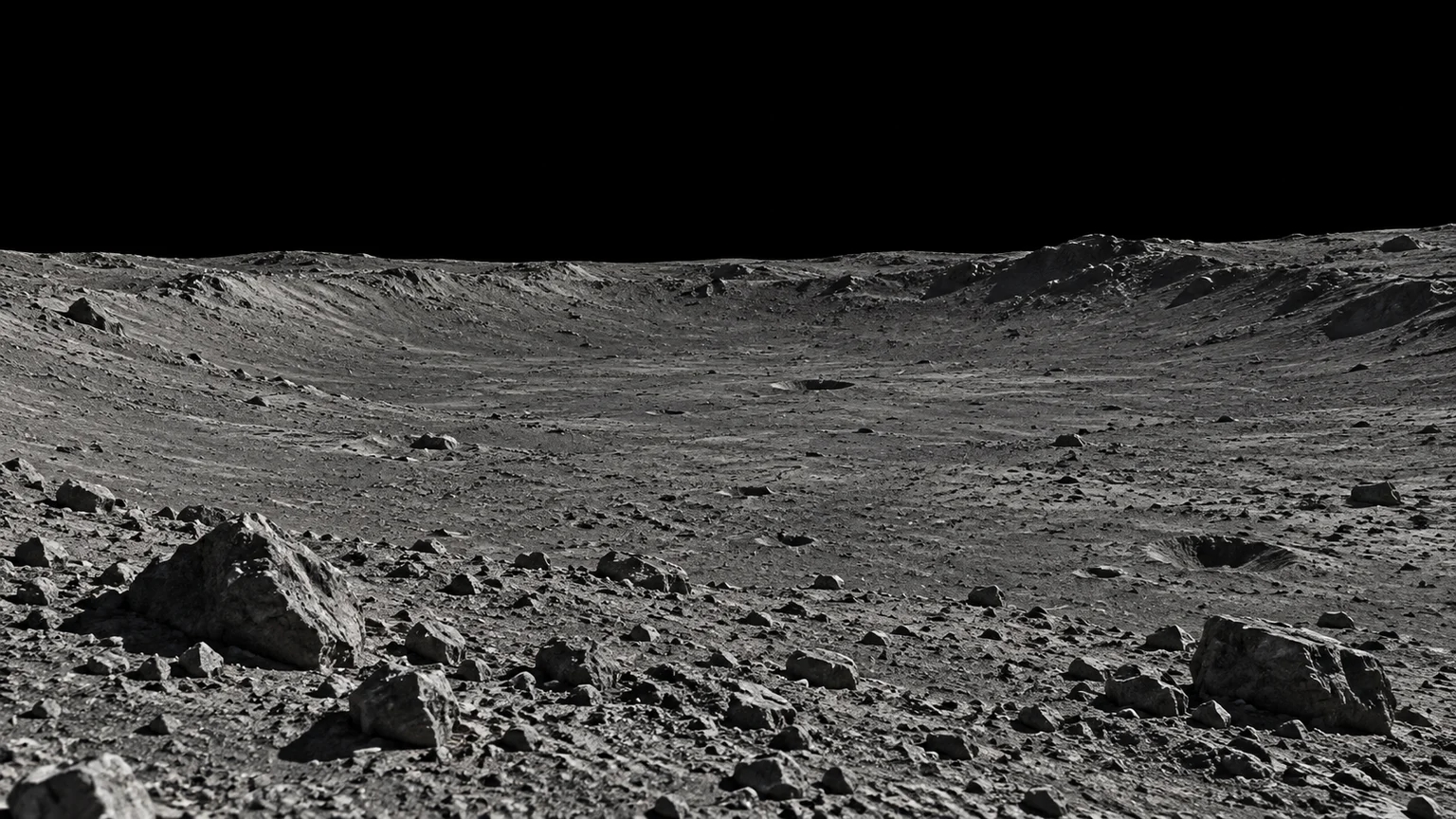
    A speculative ground-level view on Elara. The depressions, fragments and horizon are artistic interpretations.

    Across an imagined hollow

    A speculative ground-level view on Elara. The depressions, fragments and horizon are artistic interpretations.

    An imagined landscape on Elara. No resolved surface map supports these local details.

    Along a low rise

    An imagined landscape on Elara. No resolved surface map supports these local details.

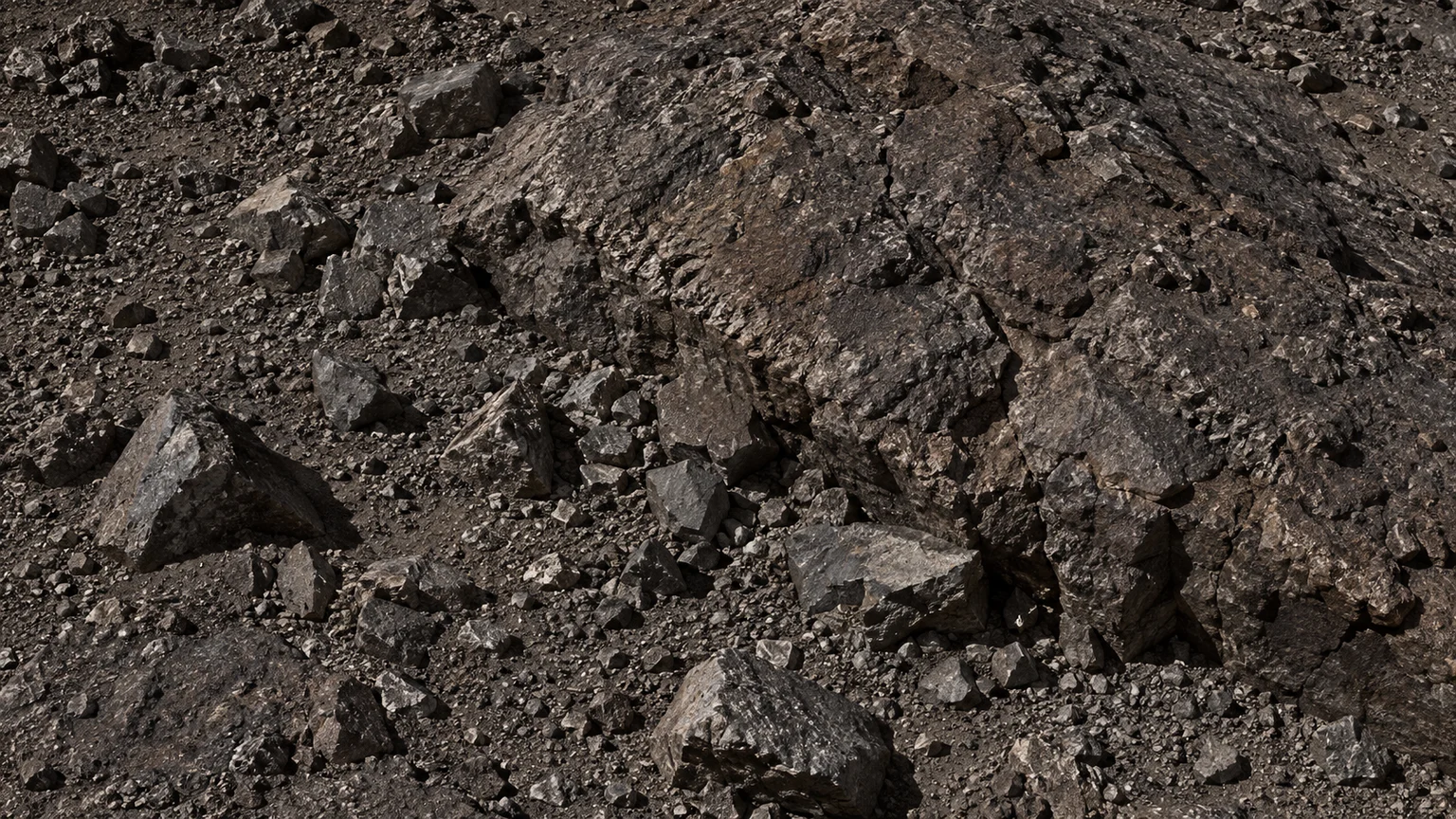
    A dark brown-gray coarse outcrop with angular fragments beneath it. An artistic reconstruction of Elara; local detail, lighting and viewpoint are imagined.

    Surface fragments in close view

    A dark brown-gray coarse outcrop with angular fragments beneath it. An artistic reconstruction of Elara; local detail, lighting and viewpoint are imagined.