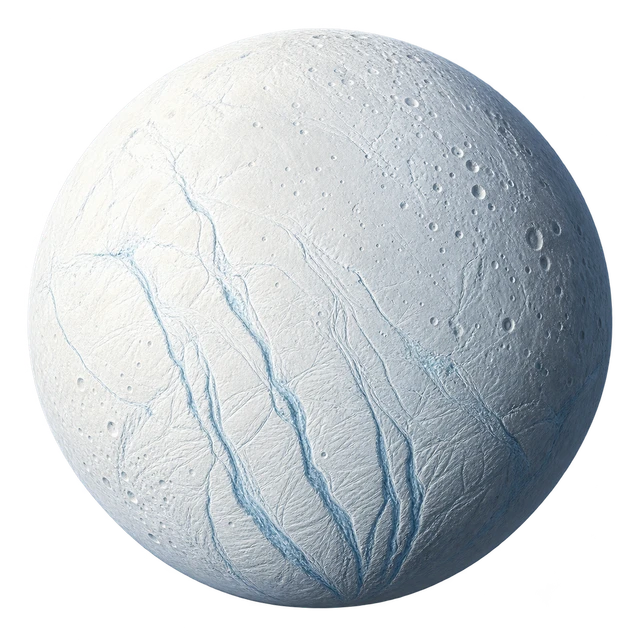
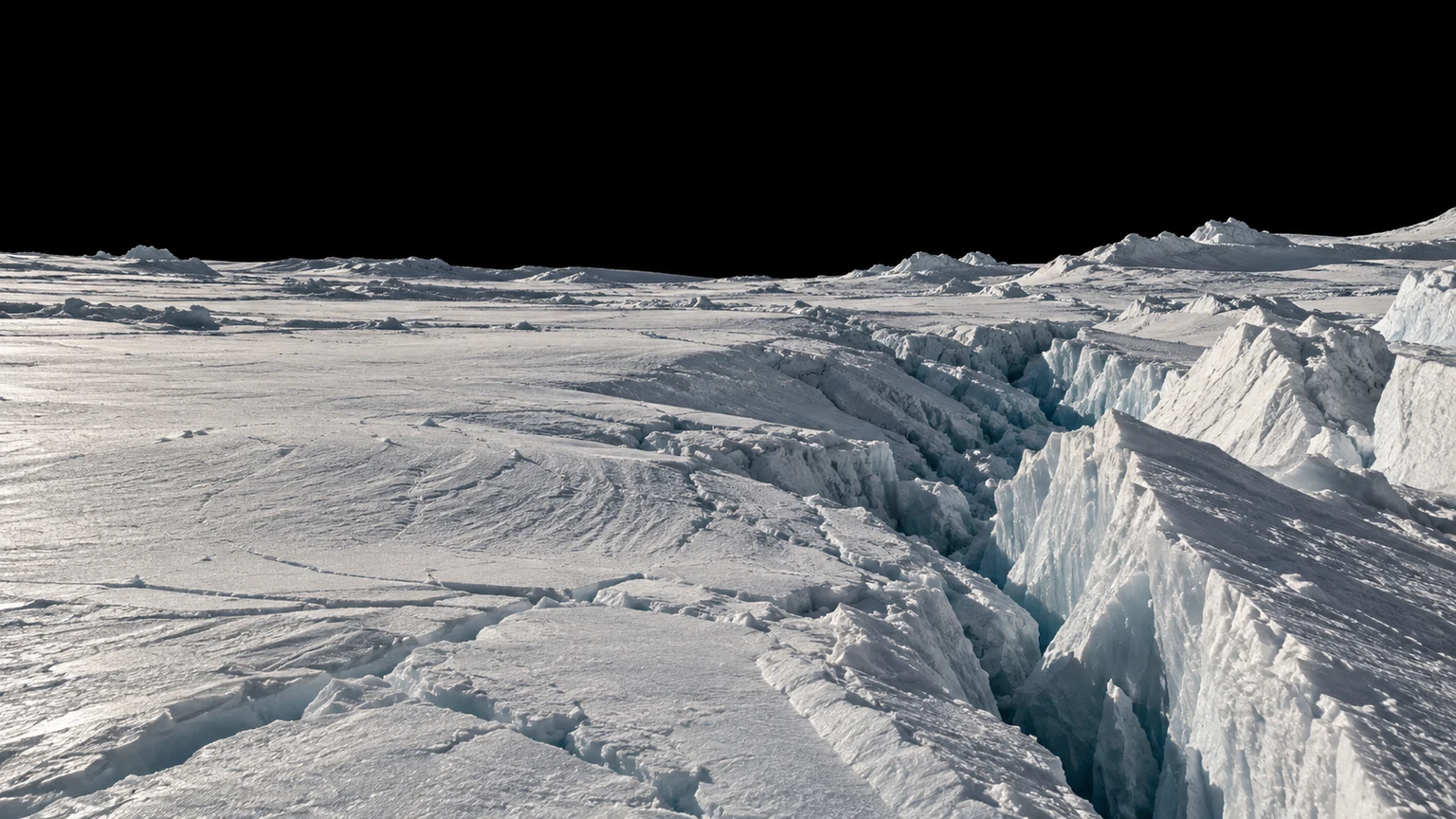
Brilliant ice in weak sunlight.
Enceladus reflects much of the sunlight that reaches it. Its exposed shell is intensely cold, yet some regions show comparatively young terrain. Surface brightness is not a reliable guide to what is happening underneath.
An ocean sends out samples.
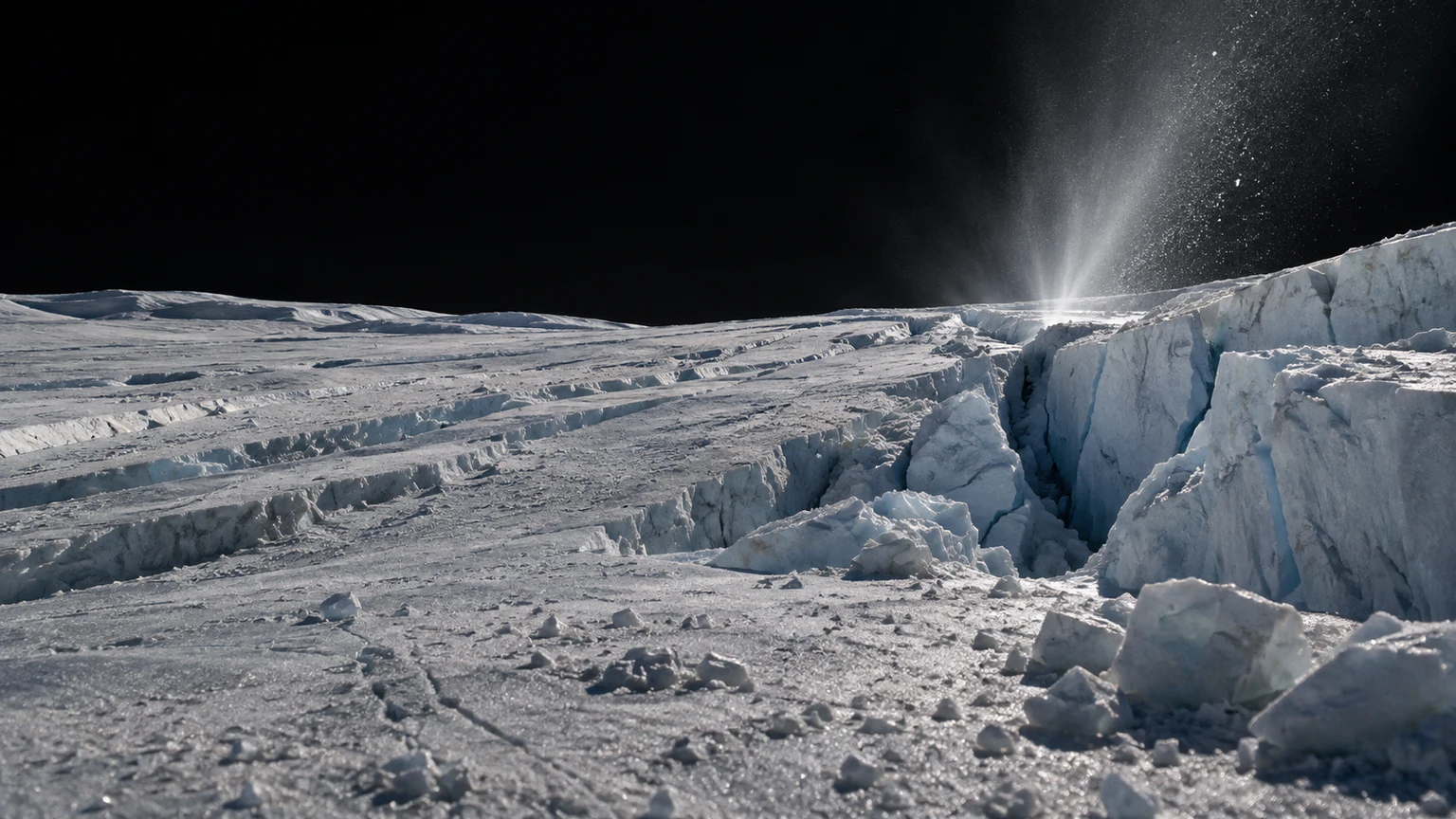
South-polar fractures release water vapor and ice particles into space. Cassini sampled material in these plumes. Unlike a hidden ocean that can only be inferred from afar, Enceladus offers traces of its interior outside the crust.
Small does not mean inactive.
Orbital interactions maintain tidal heating within the moon. Fractures, resurfacing and the plumes reflect that activity. Some escaping ice also helps supply Saturn’s diffuse E ring, connecting this little world to a much larger structure.
Ingredients worth following.
Plume measurements reveal chemistry relevant to life, with evidence consistent with water-rock interaction. These findings make the ocean a strong target for investigation. They have not revealed organisms, and the frozen surface is not the proposed habitat.