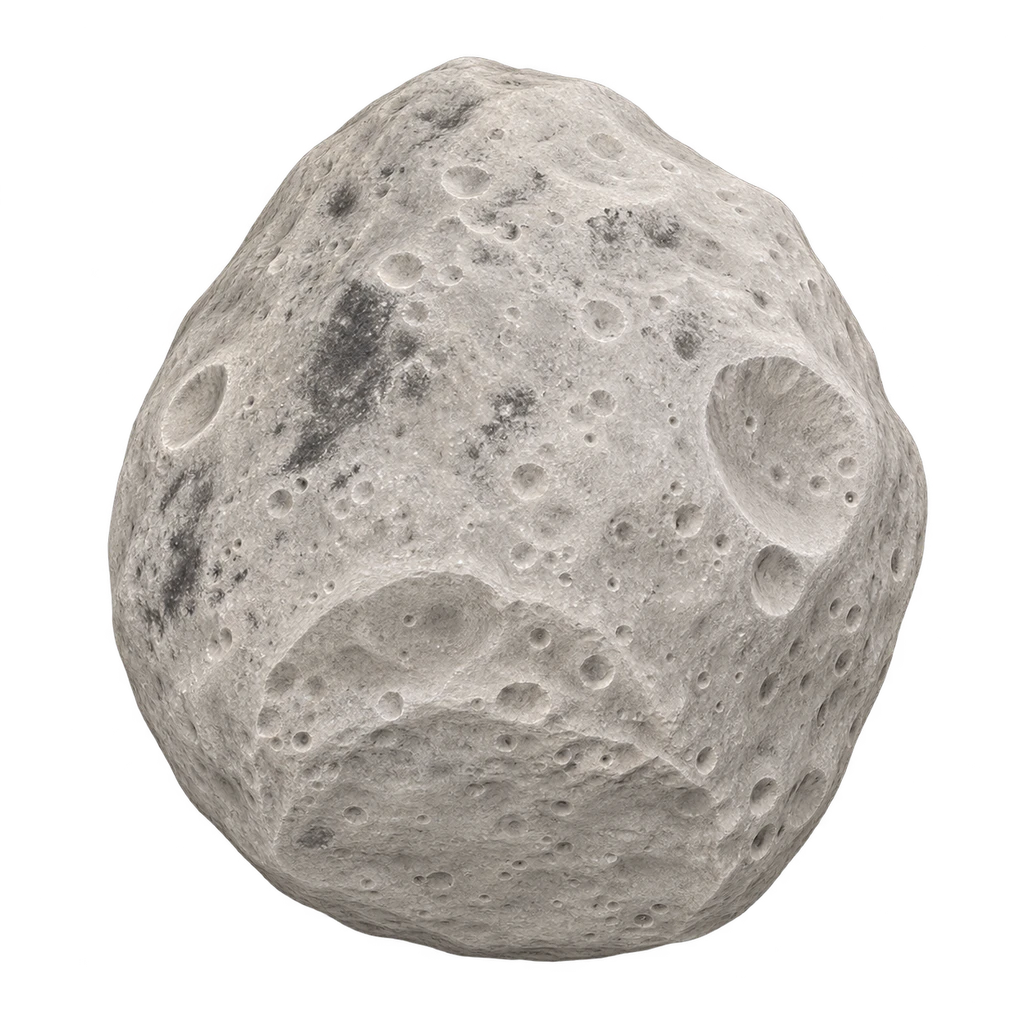
A battered moon with a flattened end.
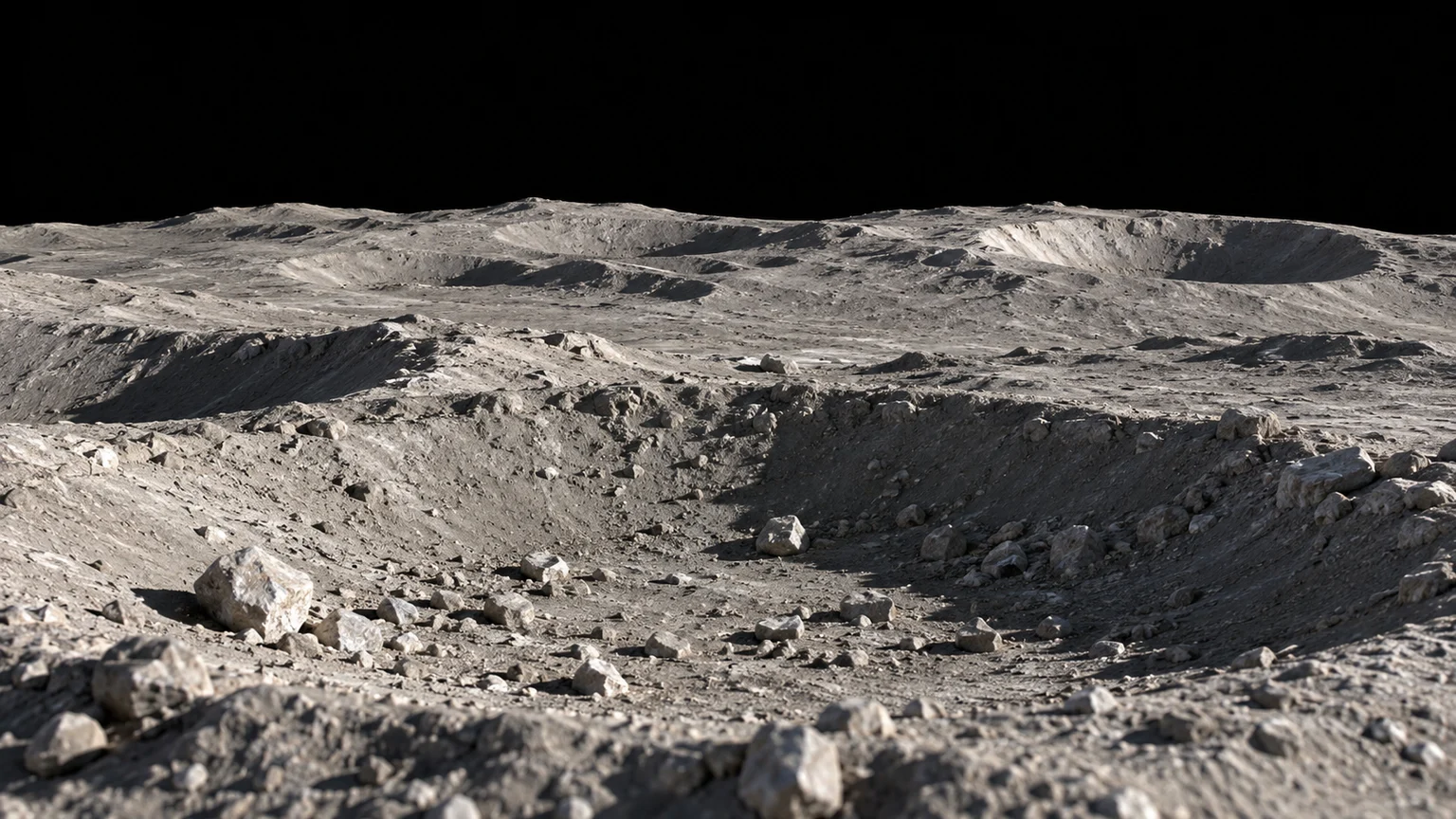
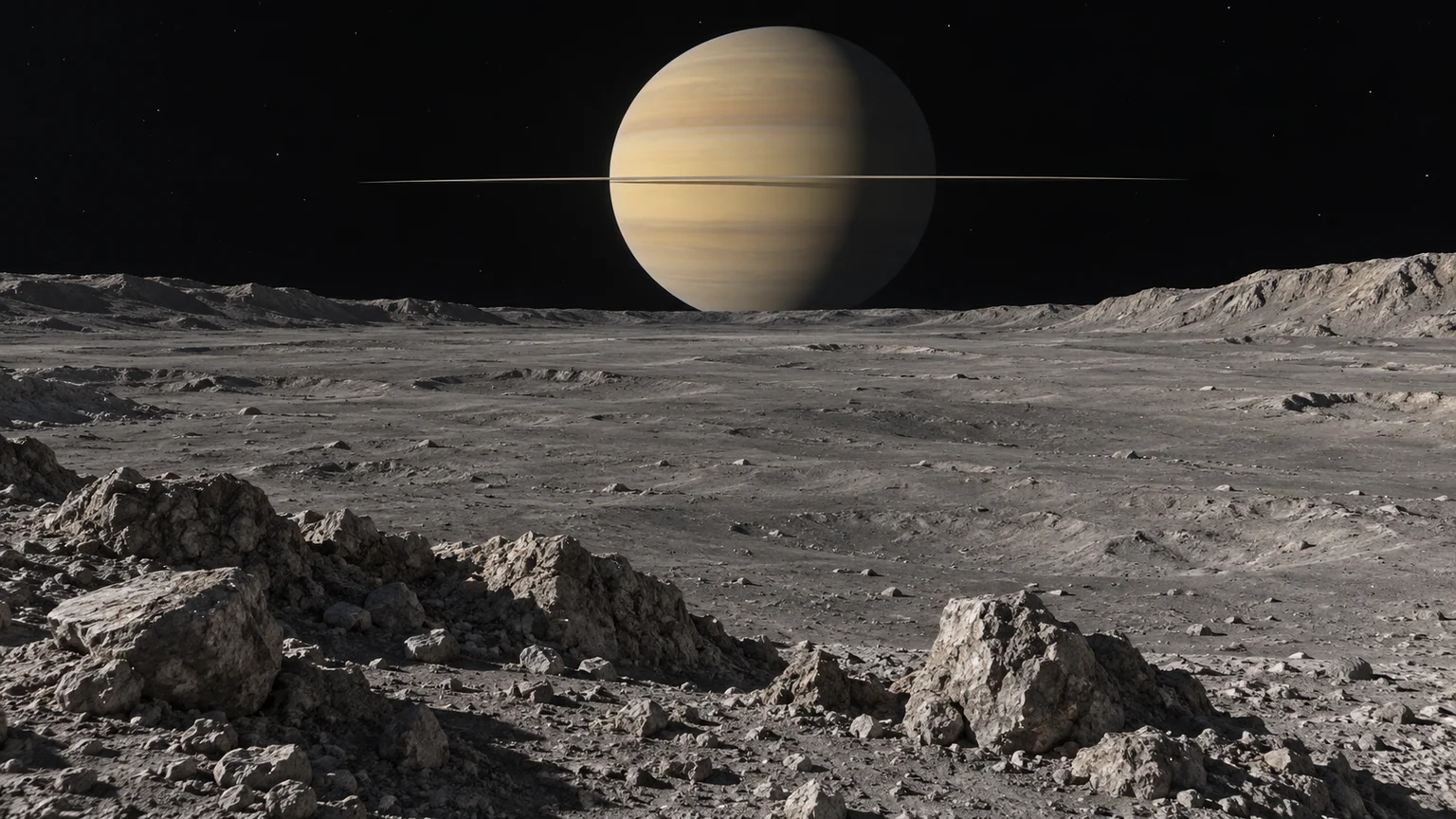
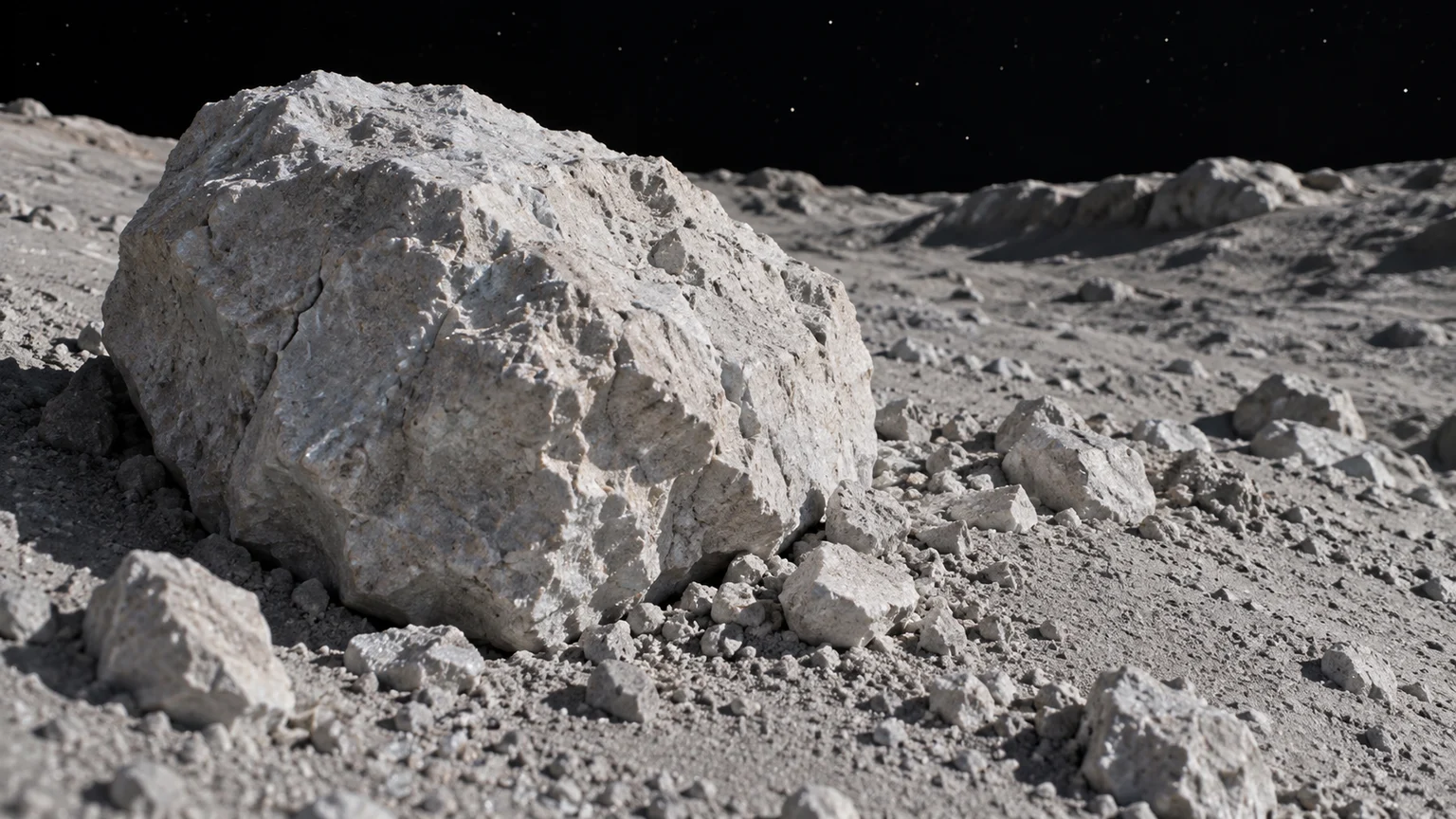
Large craters crowd Epimetheus’s irregular surface. An ancient impact is associated with its flattened southern outline, while loose material softens many crater edges. Cassini revealed this broad terrain; the ground-level landscapes here are artistic reconstructions.
Two moons, one orbital partnership.
Epimetheus and Janus share a 1:1 resonance. The inner moon gradually catches the outer one, and their mutual gravity exchanges their orbital positions about every four years. They avoid collision through this exchange rather than simply passing on unchanged tracks.
An icy body with internal voids.
Its low density, about 0.64 grams per cubic centimeter, is consistent with an ice-rich body containing substantial empty space. Bulk mass and size do not reveal precise internal layers. A differentiated core or a present-day ocean is not established.
Locked, with a small rocking motion.
Epimetheus rotates approximately once per orbit, but does not hold a perfectly fixed orientation toward Saturn. Cassini measurements detected a forced libration: a periodic rocking around synchronous rotation. The rate comparison shows the mean spin, without modeling that oscillation.