Larger than a small planet.
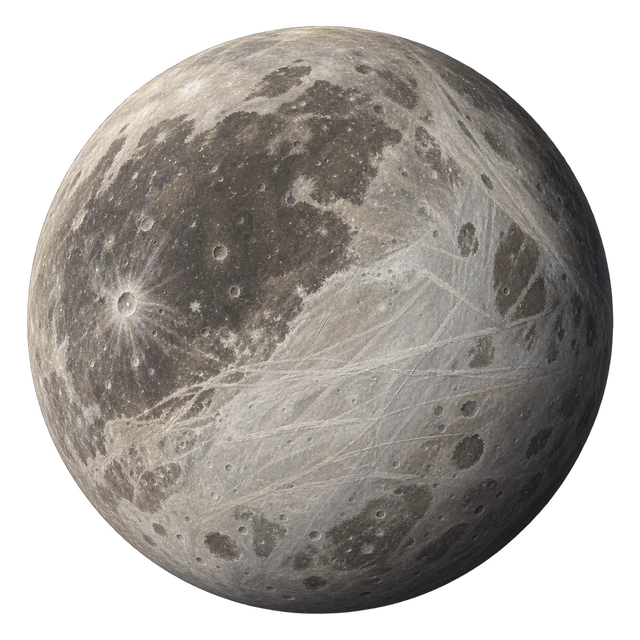
Ganymede is wider than Mercury, though less massive. Its size makes “moon” a description of its orbital role rather than a synonym for a tiny object. This is a substantial world in its own right.
Two landscapes share one globe.
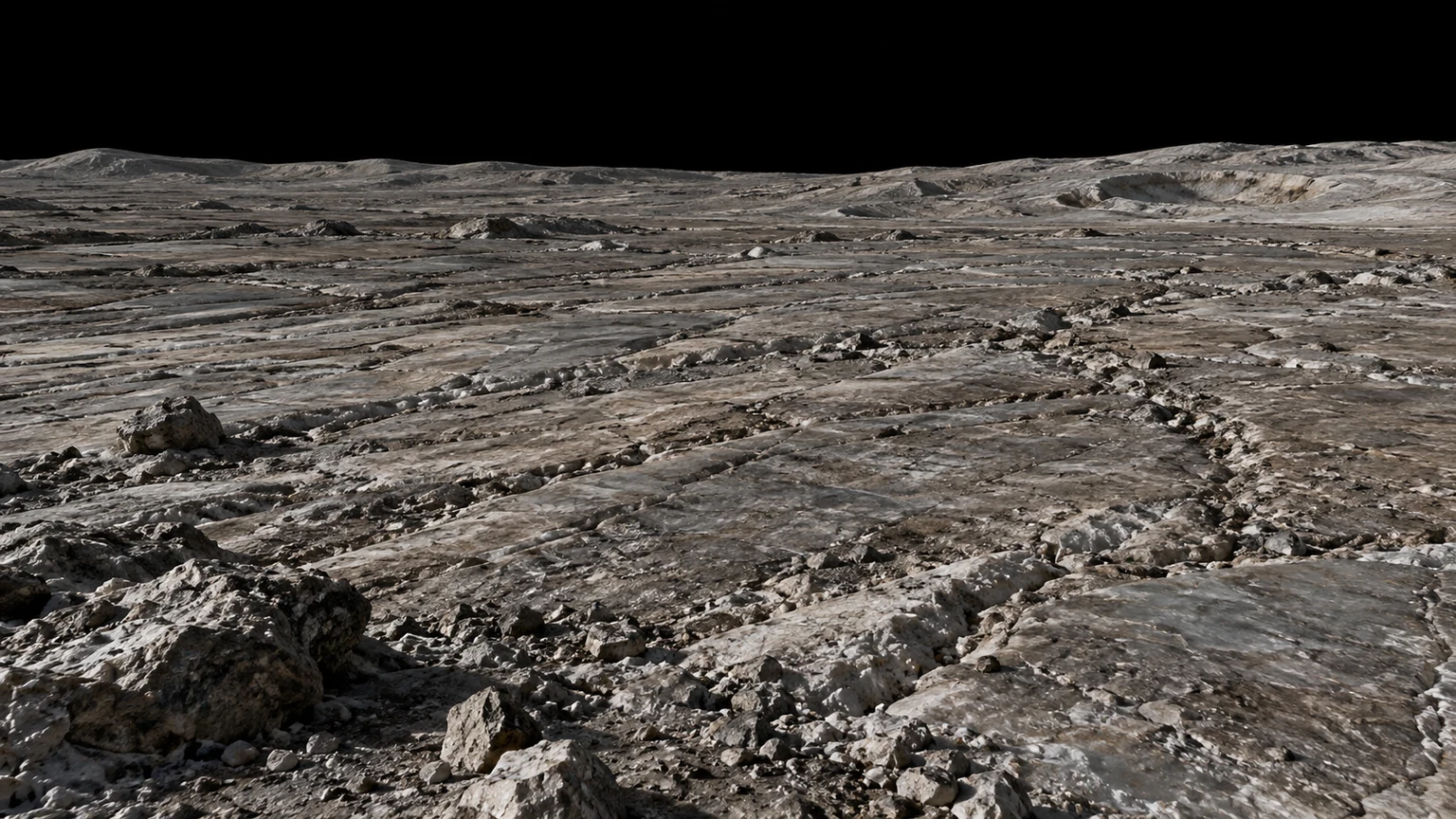
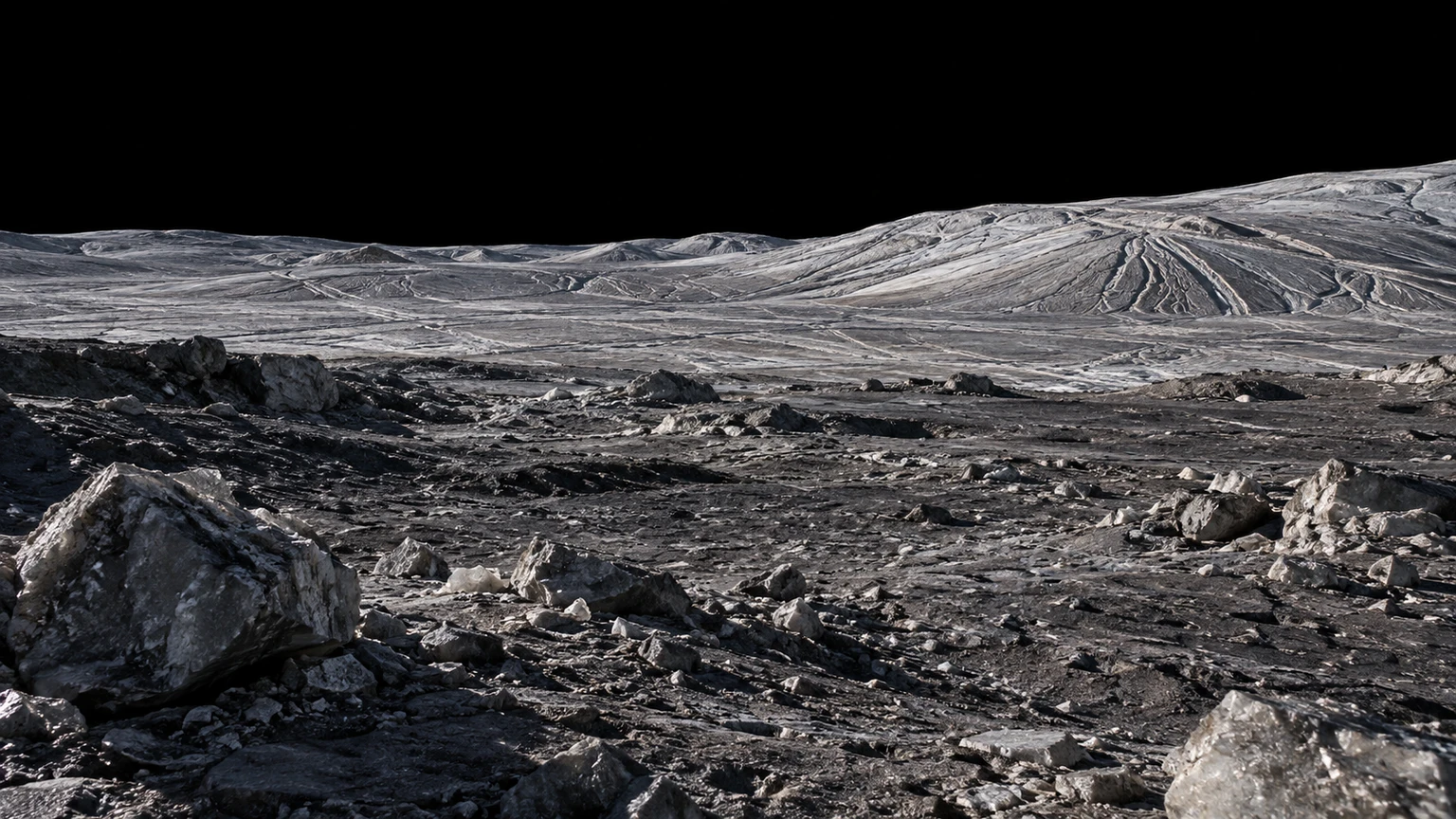
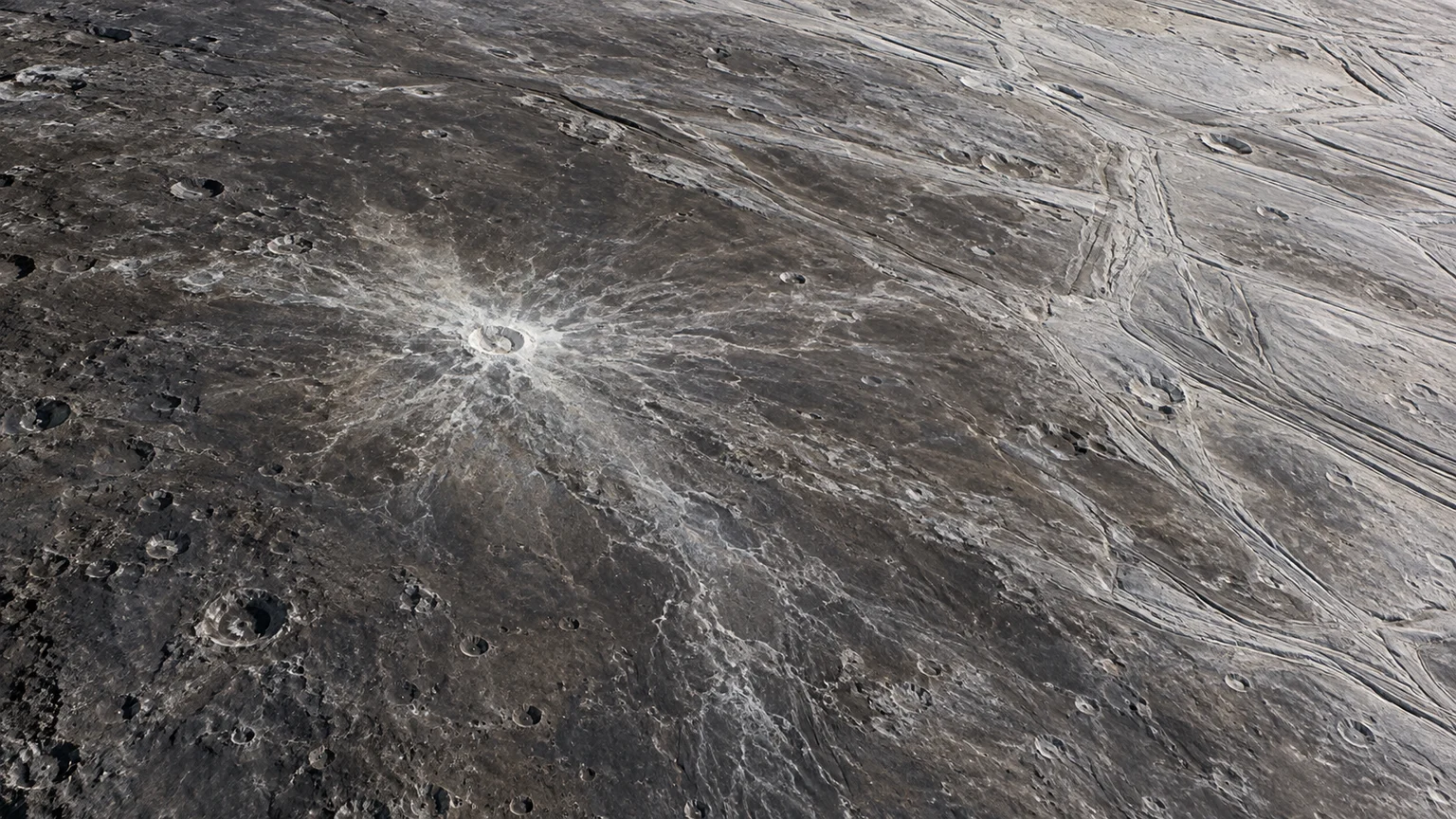
Dark, cratered regions sit beside brighter grooved terrain. Their contrast records different geological chapters. On the ground, those broad orbital patterns become an imagined landscape of ridges, broken crust and impact debris.
A field of its own.
Ganymede generates an intrinsic magnetic field inside Jupiter’s much larger magnetic environment. That unusual property hints at a differentiated interior. It does not create a breathable atmosphere or make the exposed surface safe.
Water beneath several layers.
Evidence supports a deep saltwater ocean beneath the ice. Its structure and contact with rock remain important questions. A concealed reservoir may be enormous without telling us whether its chemistry and energy supply can sustain life.