A moon found from Earth.
Charles Dillon Perrine discovered Himalia at Lick Observatory on December 3, 1904. It is the largest member of a family of outer Jovian moons with related orbits. A shared origin in a disrupted captured body is a proposed explanation for that family.
A few pixels, a broad outline.
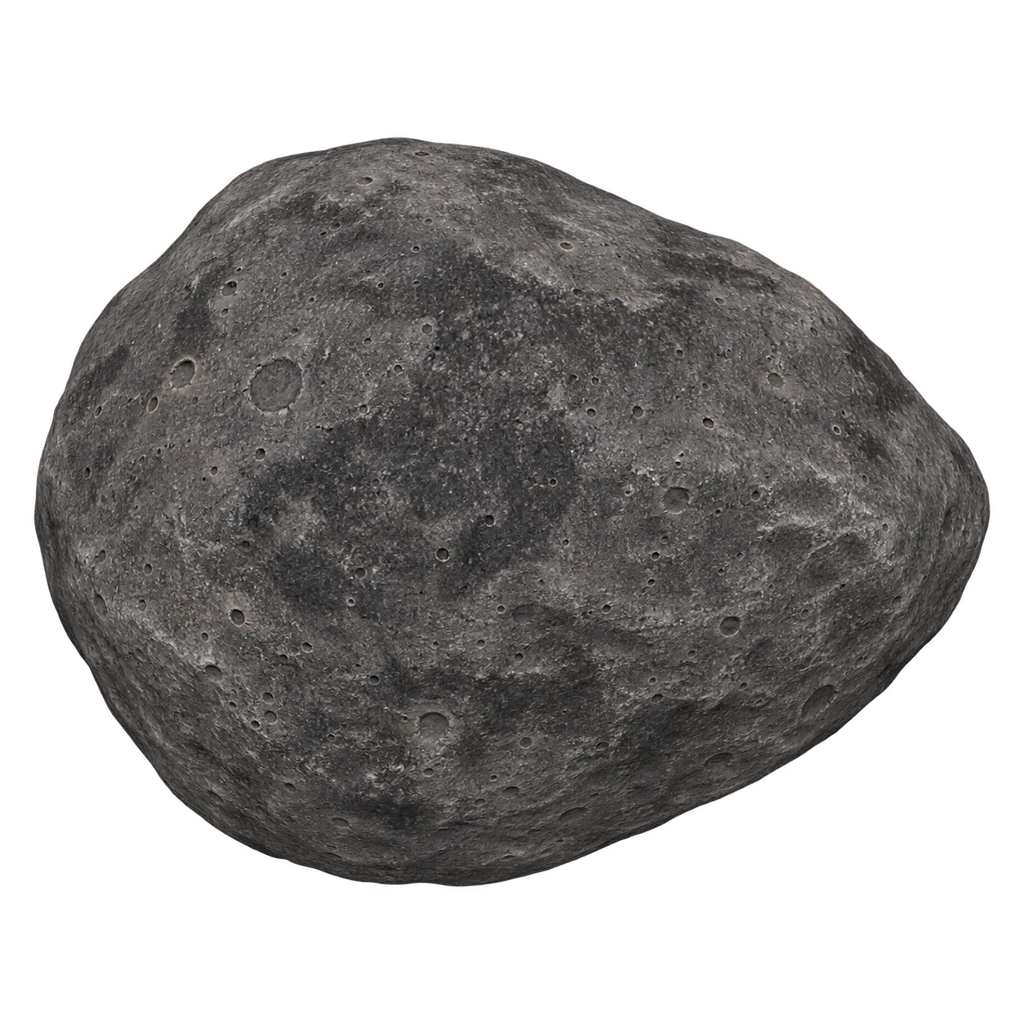
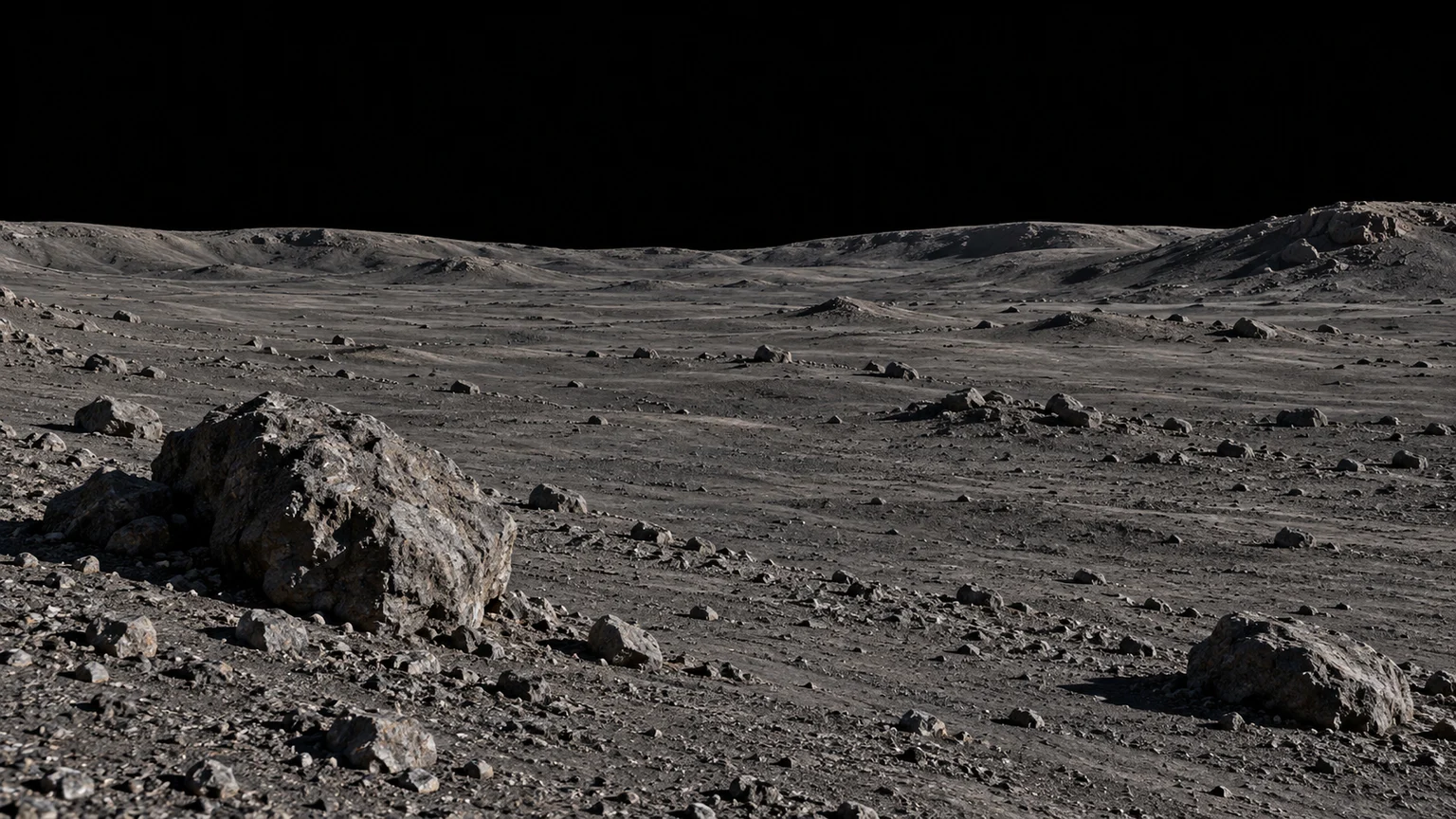
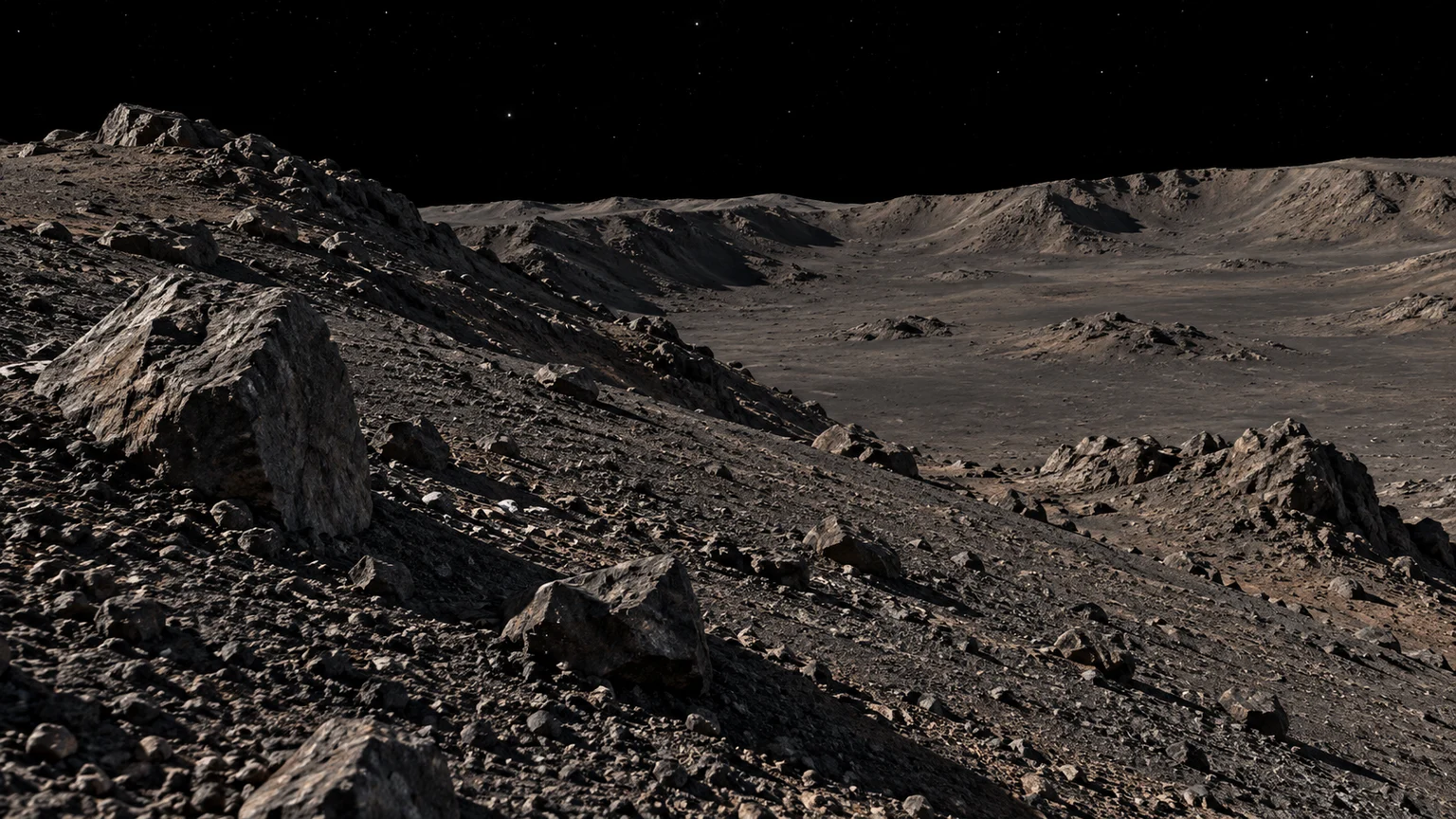
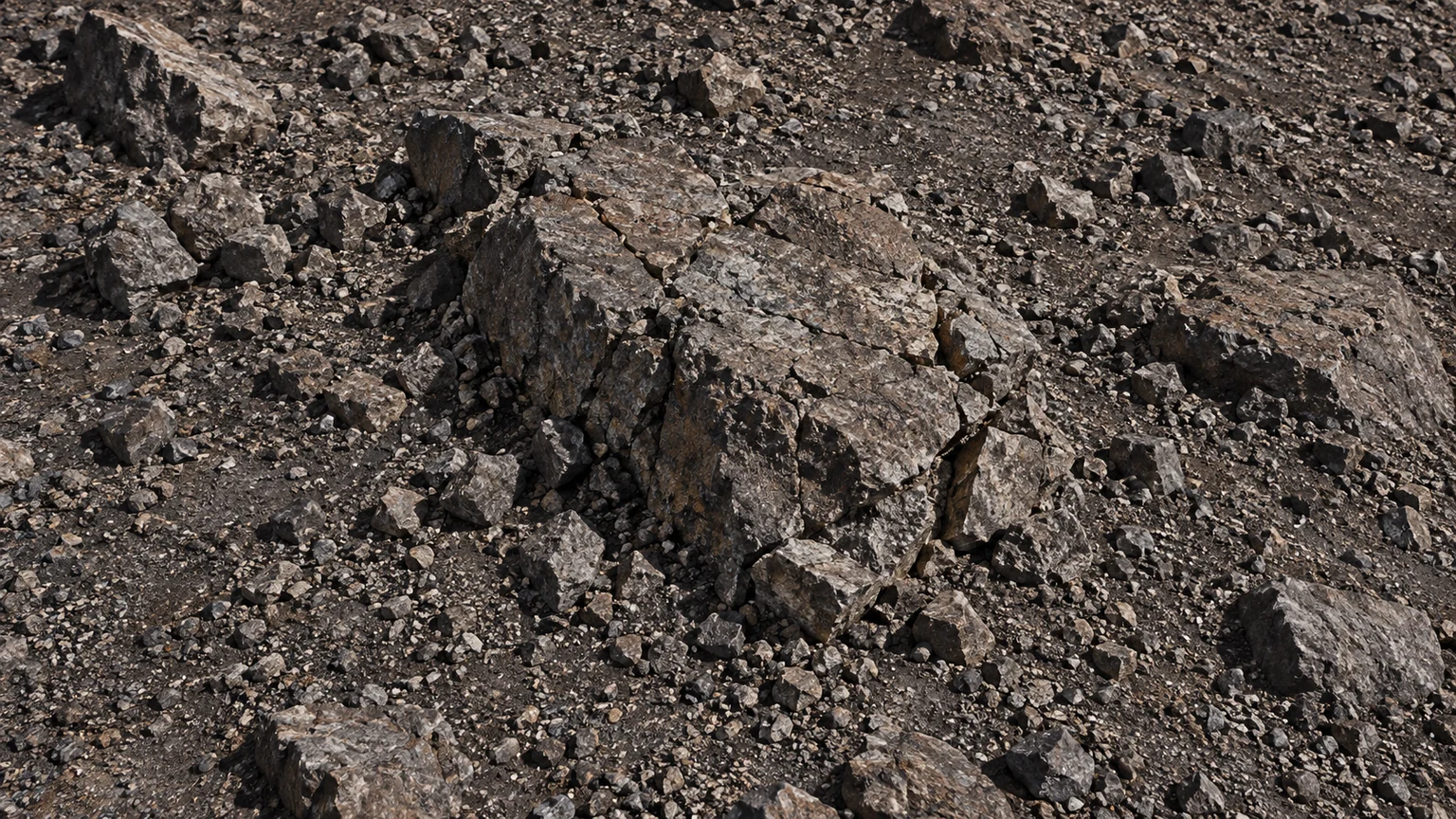
Cassini imaged Himalia in December 2000 from about 4.4 million kilometers away. Those observations supported a non-spherical outline, but did not reveal a detailed surface map. The portrait and ground-level landscapes are interpretations rather than resolved geology.
A short spin on a long orbit.
Photometric observations give a synodic rotation period of 7.7819 ± 0.0005 hours. Himalia is not locked into one turn per orbit. The animation compares this observed rate with Earth; its displayed spin direction and orientation are illustrative.
Far outside the inner moons.
The adopted mean semimajor axis is 11,439,000 kilometers, eccentricity 0.160 and orbital period 249.9090 Earth days. Himalia travels prograde on an inclined path. The flat ellipse omits inclination and solar perturbations; it is not a live position prediction.