NEPTUNE SYSTEM / SATELLITE DOSSIER

Hippocamp

Hippocamp is a small moon of Neptune, found in archived Hubble images on a path between Larissa and Proteus.
DIAMETER / EARTH0.0027×
EARTHHIPPOCAMP
ATMOSPHERE
No substantial atmosphere detectedEffectively airless
SURFACE TEMPERATURE
Cold exposed surface
SURFACE PRESSURE
Effectively airless
HABITABILITYNo life detected
UNPROTECTED HUMANSNot survivable

Interior ↗

03
Hippocamp interiorHippocamp's internal structure is unresolved.Unresolved

Moon system ↗

04
Neptune moon orbitsSelected moons, ordered outward. Orbit sizes and positions are schematic; relative periods are preserved.NEPTUNENAIADTHALASSADESPINAGALATEALARISSAHIPPOCAMPPROTEUSTRITONNEREID
HIPPOCAMP

Instrument detail

THE SKY FROM HIPPOCAMP

Neptune, in perspective.

SHARED ANGULAR SCALE
Neptune compared with Luna in Earth's skyAt semimajor-axis distance, Neptune spans approximately 27.21 degrees, 52.53 times the apparent diameter of Luna at its mean distance from Earth. Both disks share one angular scale.NEPTUNEOUR MOON≈ 0.52°
Idealized size study · full disks · decorative lighting · rings excluded
ANGULAR DIAMETER
27.21°
OUR MOON'S APPARENT DIAMETER
52.53 ×
CENTER-TO-CENTER DISTANCE
105,300 km

The viewpoint is on Hippocamp’s nominal spherical surface, directly facing Neptune. The reference is Luna seen from Earth’s center at its mean distance. The reference distance is the orbit’s semimajor axis. Rounded body diameters and orbital elements set the disk sizes; terrain, phases, rings and the actual sky position are not modeled.

Explore Neptune ↗
Hippocamp orbitElliptical orbit viewed along the orbital axis, relative to Neptune. Motion is accelerated, not a live position. Distances are center to center.NEPTUNEHIPPOCAMP≈ 105,300 km
ONE ORBIT0.950390 Earth days around Neptune
Closest to Neptune
105,195 km
Farthest from Neptune
105,405 km

Hippocamp circles Neptune. Distances are measured between the centers of the two bodies.

This JPL mean-element path omits inclination, precession and perturbations. It is not a live position prediction.

Hippocamp rotationThe rotation period is unresolved. Static portrait, not an orientation prediction.PERIOD UNCERTAINNO UNIQUE PERIOD ADOPTED
ROTATION STATEUncertain

Rotation remains uncertain

The cited overview gives no measured spin period. This static portrait assumes no fixed rate or orientation; uncertainty alone does not imply chaotic tumbling.

Satellite atlasMoons
Neptune moon orbitsSelected moons, ordered outward. Orbit sizes and positions are schematic; relative periods are preserved.NEPTUNENAIADTHALASSADESPINAGALATEALARISSAHIPPOCAMPPROTEUSTRITONNEREID
FEATURED MOONS09
  1. 01Naiad ↗0.29398 days
  2. 02Thalassa ↗0.311078 days
  3. 03Despina ↗0.334656 days
  4. 04Galatea ↗0.428744 days
  5. 05Larissa ↗0.554989 days
  6. 06Hippocamp0.95039 days
  7. 07Proteus ↗1.1223 days
  8. 08Triton ↗5.88 days
  9. 09Nereid ↗360.133039 days

A family of moons circles the planet.

Triton travels in the opposite direction to Neptune’s rotation. Naiad and Thalassa have a three-dimensional resonant relationship; this flat schematic does not show their orbital inclinations or vertical separation.

GRAVITY UNKNOWNMASS UNCERTAIN
SURFACE GRAVITYUnknown

Mass remains uncertain

No measured mass is adopted. A numerical gravity comparison would require additional assumptions and is omitted.

Hippocamp interiorHippocamp's internal structure is unresolved.Unresolved

Beyond the surface

Hippocamp’s interior remains unresolved. The available observations do not establish distinct layers or a present-day ocean.

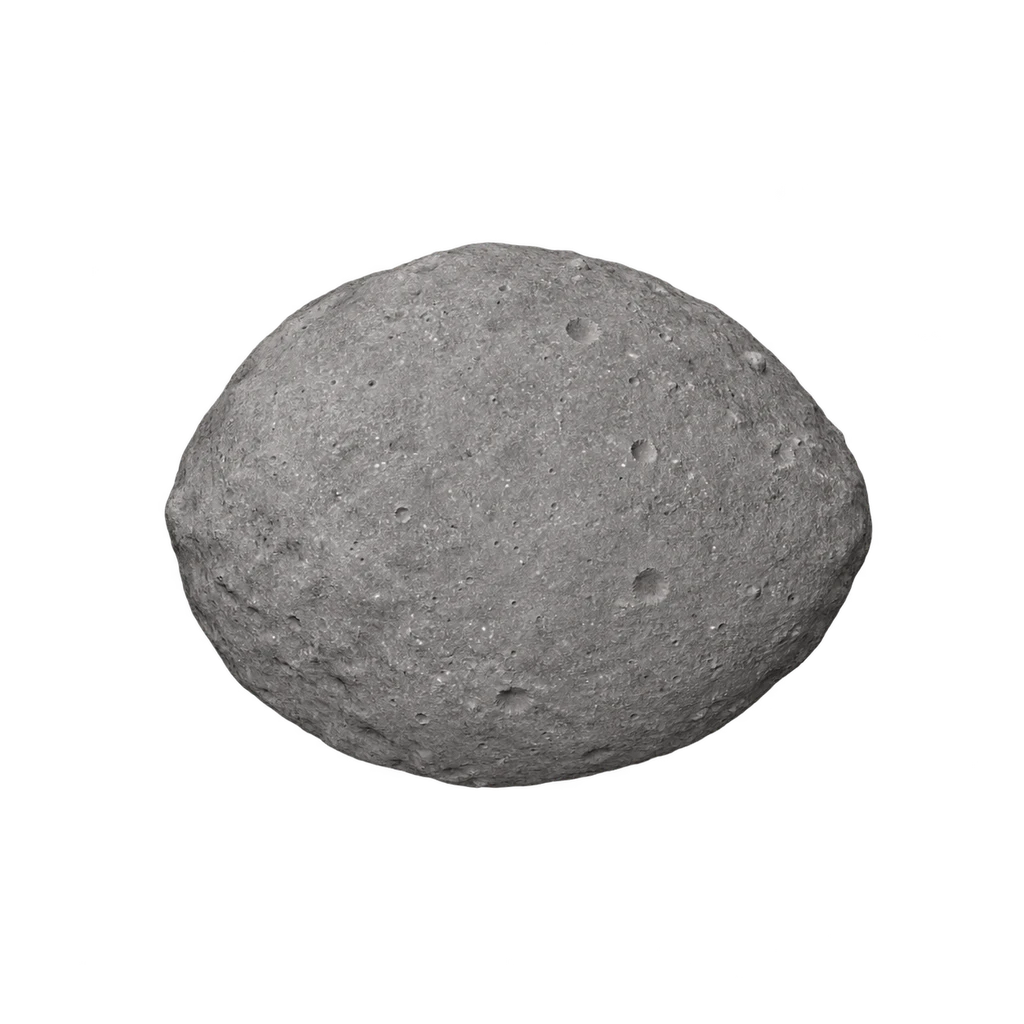
    Artist’s impression of Hippocamp

    A faint point revealed by repeated images.

    Mark Showalter identified Hippocamp in July 2013 while studying Hubble observations taken from 2004 to 2009. Combining evidence across many images revealed a moon Voyager 2 had missed.

    A small world without a surface map.

    NASA gives an approximate diameter of 34 kilometers. Its terrain and interior remain unresolved; the illustrated hollows, fragments and overall shape are artistic interpretations.

    Perhaps a fragment of Proteus.

    One hypothesis links Hippocamp to an ancient impact on the larger moon Proteus. Ejected debris could have formed the smaller companion, but this remains an interpretation rather than a directly observed history.

    A circuit in less than one Earth day.

    The adopted mean orbit has a scale of 105,300 kilometers and a period of 0.950390 Earth days. The display simplifies the path and omits inclination, precession and neighboring moons’ gravitational effects.

    DIAMETER / EARTH0.0027×
    EARTHHIPPOCAMP
    EARTH
    12,742 km
    HIPPOCAMP
    34 km
    Mean diameters · circles share one scale

    Approximately 34 km across, following NASA’s overview.

    ATMOSPHERE
    No substantial atmosphere detectedEffectively airless

    Hippocamp is effectively airless. No substantial atmosphere is known.

    SURFACE TEMPERATURE
    Cold exposed surface
    SURFACE PRESSURE
    Effectively airless
    HABITABILITYNo life detected

    No life has been detected, and a habitable environment has not been established.

    UNPROTECTED HUMANSNot survivable

    The exposed surface requires oxygen, pressure protection and thermal control.

    Planet and landscape images are artistic interpretations.

    • NASA ↗
      • Classification and orbital data
      • Mass and gravity constraints
      • Rotation model and synchronous or independent spin
      • Rotation and internal structure constraints
      • Size, physical data and atmospheric constraints
      • Natural conditions and human survival
      • Discovery
      • Scale
      • Origin
    • NASA ↗
      • Parent-body diameter for the angular sky comparison
    • NASA / JPL ↗
      • Mean orbital dimensions; distances from parent center
      • Orbit
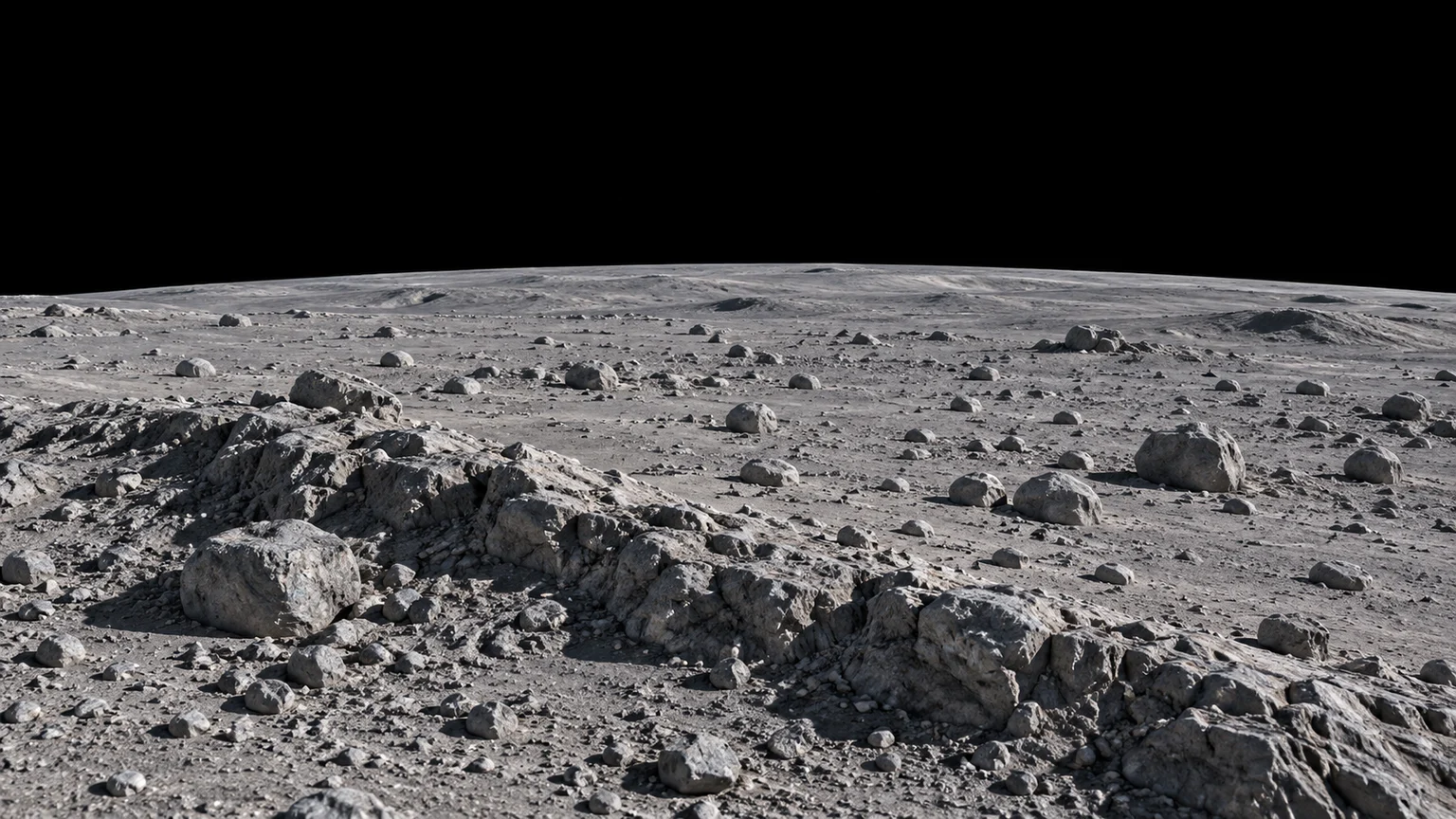
    A speculative ground-level view on Hippocamp. The depressions, fragments and horizon are artistic interpretations.

    Across an imagined hollow

    A speculative ground-level view on Hippocamp. The depressions, fragments and horizon are artistic interpretations.

    An imagined landscape on Hippocamp. No resolved surface map supports these local details.

    Along a low rise

    An imagined landscape on Hippocamp. No resolved surface map supports these local details.

    A low pale-gray dust-covered block surrounded by small darker fragments. An artistic reconstruction of Hippocamp; local detail, lighting and viewpoint are imagined.

    Surface fragments in close view

    A low pale-gray dust-covered block surrounded by small darker fragments. An artistic reconstruction of Hippocamp; local detail, lighting and viewpoint are imagined.