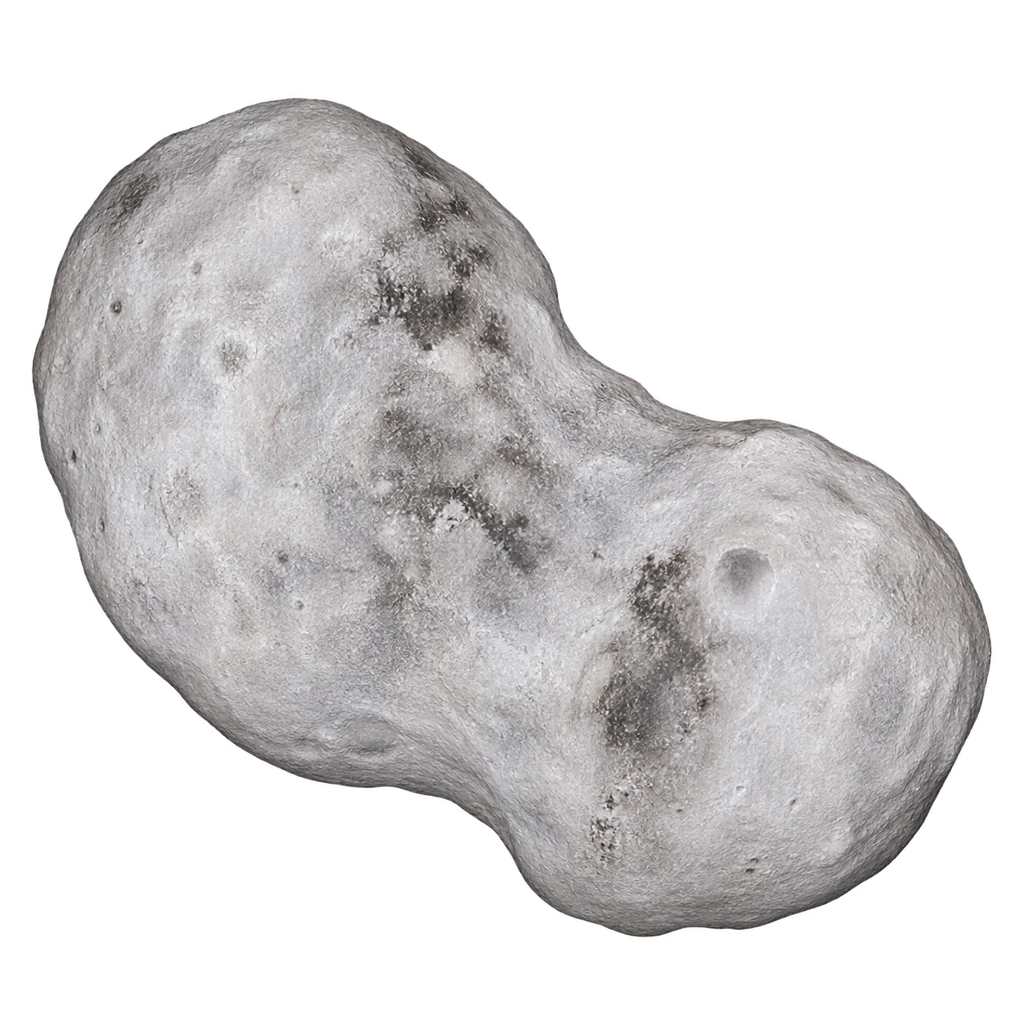
A faint companion revealed by Hubble.
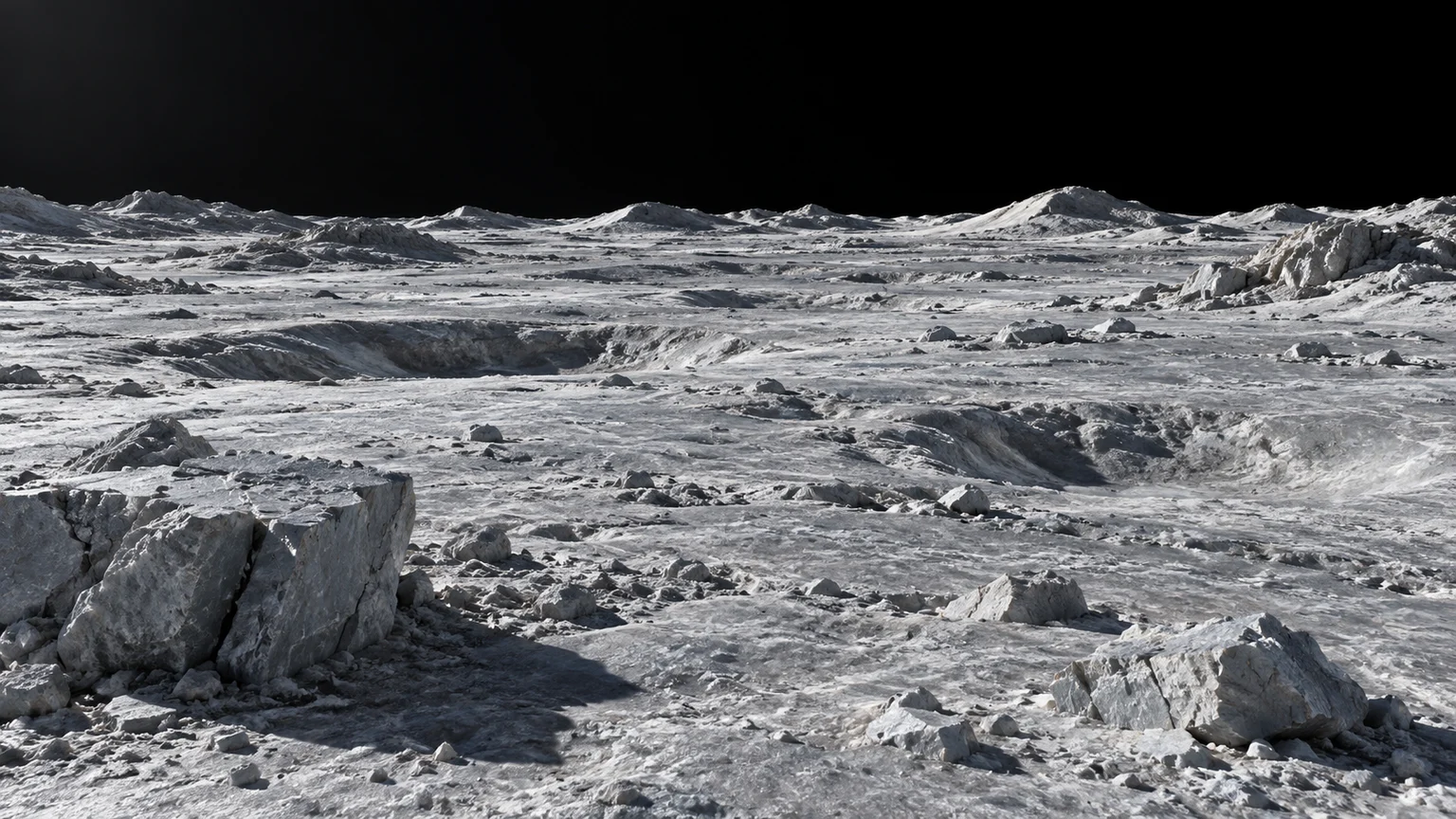
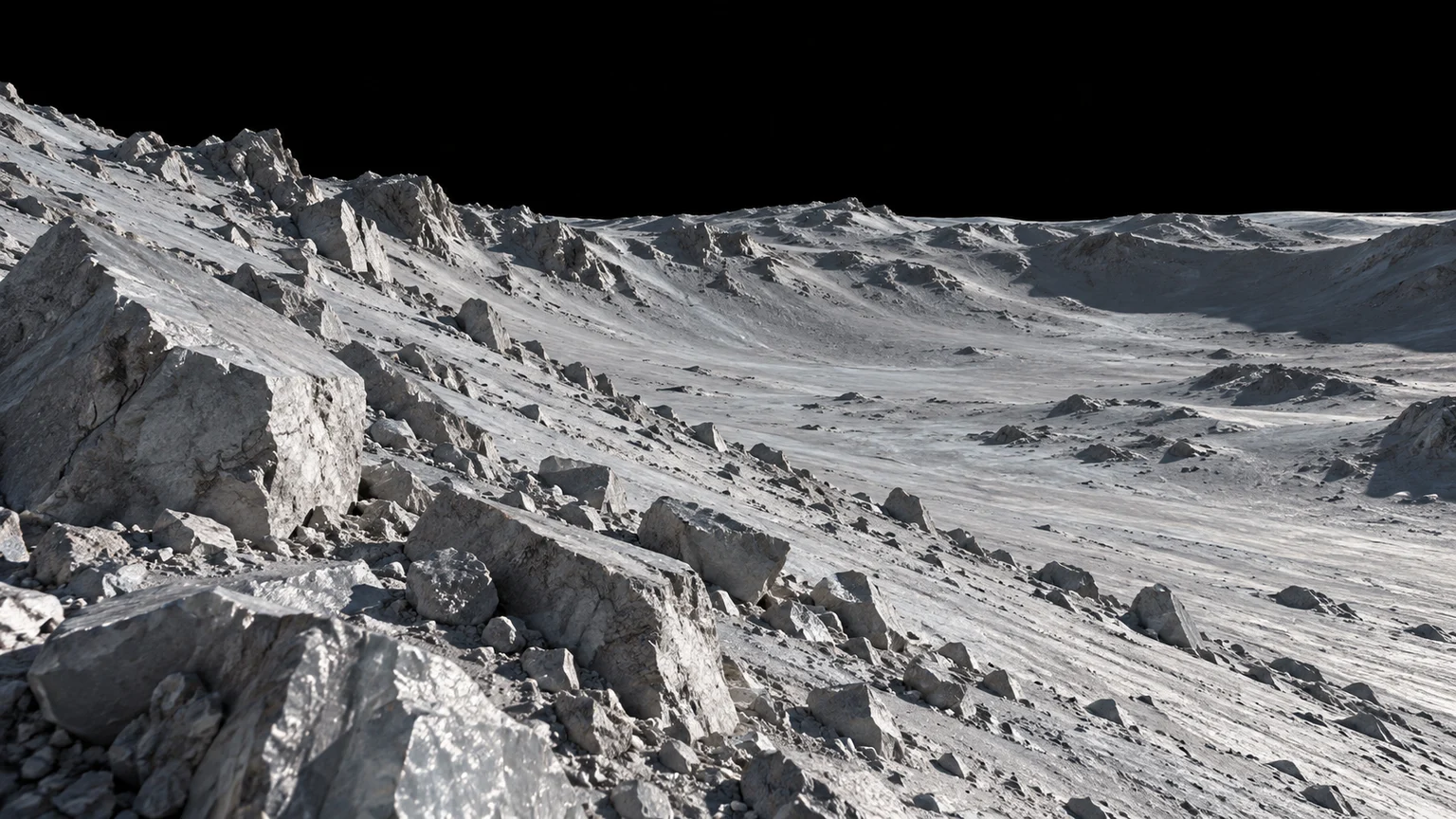
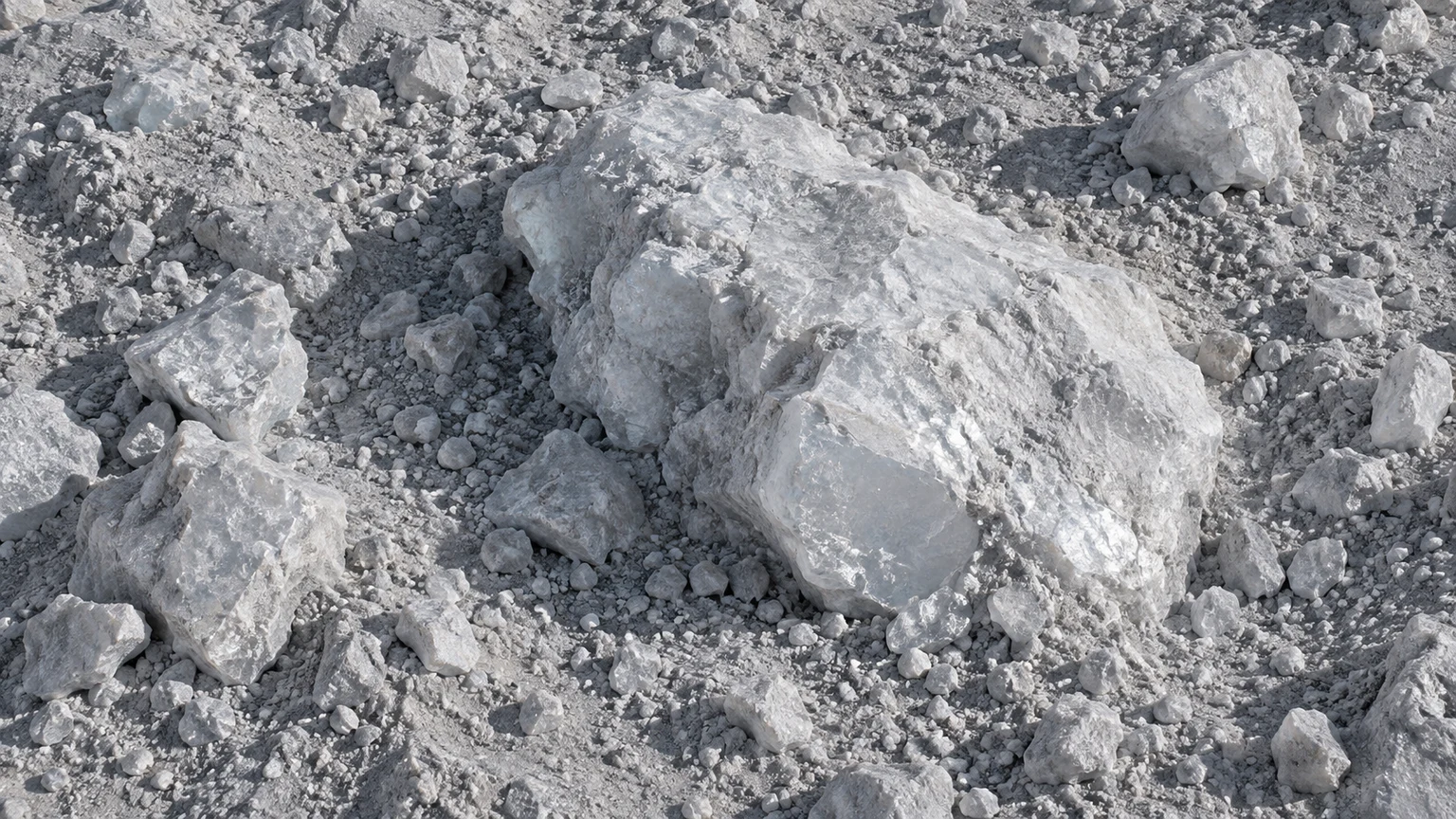
Hydra was discovered in 2005 using the Hubble Space Telescope, alongside Nix. New Horizons subsequently resolved its irregular form. The illustrations interpret that broad shape while treating ground-level details as speculative.
A strong signature of water ice.
New Horizons detected a pronounced water-ice signature on Hydra. Its reflective exterior may be refreshed by small impacts, one proposed explanation rather than an observed ongoing process. No liquid surface or internal ocean is established.
Many turns in one circuit.
The New Horizons rotation period is about 0.4295 Earth days, or 10.31 hours. Hydra spins many times during one orbit. The instrument compares that measured rate, with an illustrative direction and no prediction of its pole or long-term orientation.
Outside the other four moons.
Hydra circles the Pluto–Charon pair on the outermost known moon track. The adopted mean-element period is 38.20 Earth days and orbital scale 65,200 kilometers. Its Pluto-relative ellipse is an approximation, not a full binary-system integration.