PLUTO SYSTEM / SATELLITE DOSSIER

Kerberos

Kerberos is a tiny bright moon of the Pluto–Charon system, with a double-lobed outline revealed by New Horizons.

Artist’s impression of Kerberos

Kerberos is a tiny bright moon of the Pluto–Charon system, with a double-lobed outline revealed by New Horizons.

DIAMETER / EARTH0.00094×
EARTHKERBEROS
ATMOSPHERE
No substantial atmosphere detectedEffectively airless
SURFACE TEMPERATURE
Cold exposed surface
SURFACE PRESSURE
Effectively airless
HABITABILITYNo life detected
UNPROTECTED HUMANSNot survivable

Interior ↗

03
Kerberos interiorKerberos's internal structure is unresolved.Unresolved

Moon system ↗

04
Pluto and its five moonsPluto and Charon circle a shared center outside Pluto. The four smaller moons orbit farther out.PLUTO / FIVE MOONSPLUTOCHARONSHARED CENTERSTYXNIXKERBEROSHYDRA
KERBEROS

Instrument detail

Kerberos orbitElliptical orbit viewed along the orbital axis, relative to Pluto. Motion is accelerated, not a live position. Distances are center to center.PLUTOKERBEROS≈ 58,300 km
ONE ORBIT32.17 Earth days around Pluto–Charon
Closest to Pluto
57,717 km
Farthest from Pluto
58,883 km

This approximate orbit is shown relative to Pluto. The moon actually travels around both Pluto and Charon. Distances are measured between the centers of the two bodies.

This Pluto-relative mean ellipse approximates a circumbinary orbit. The moving gravity of Pluto and Charon is not integrated; the system overview shows their shared center.

Kerberos rotation compared with EarthThe markers follow equal elapsed time on both worlds. Equal elapsed time and sidereal rotation rates. Polar schematic: sizes, axial tilt and seasons are not shown. Illumination uses a circular mean orbit, not a live sky prediction. The spin direction is illustrative, not measured.SAME ELAPSED TIME · POLAR SCHEMATICKERBEROS5.3 daysSIDEREAL ROTATIONDirection illustrativeEARTH23.9 hoursSIDEREAL ROTATION≈ 24 h · solar day
Marked longitude · equal time on both worlds
ONE SIDEREAL ROTATION5.3 days

An independent spin

The encounter-era rotation period is about 5.31 Earth days. Direction is illustrative; pole tilt and long-term variations are omitted. Kerberos is not synchronously locked.

0 Earth hoursShared clock

Spin comparison only; no solar day is inferred. Sizes and starting longitudes are schematic, not live positions.

Satellite atlasMoons
Pluto and its five moonsPluto and Charon circle a shared center outside Pluto. The four smaller moons orbit farther out.PLUTO / FIVE MOONSPLUTOCHARONSHARED CENTERSTYXNIXKERBEROSHYDRA
ONE SHARED ORBIT6.39 Earth days

Charon is large enough that the pair’s center of mass lies outside Pluto. Both worlds orbit that point, keeping the same sides turned toward each other.

Five moons, outward from the pair

  1. 01Charon ↗6.39 days
  2. 02Styx ↗20.16 days
  3. 03Nix ↗24.85 days
  4. 04Kerberos32.17 days
  5. 05Hydra ↗38.20 days
GRAVITY UNKNOWNMASS UNCERTAIN
SURFACE GRAVITYUnknown

Mass remains uncertain

JPL gives only an upper limit, GM < 0.0002 km³/s². This is not a measured mass, so no numerical surface gravity or jump comparison is shown.

Kerberos interiorKerberos's internal structure is unresolved.Unresolved

Beyond the surface

Kerberos’s interior is unresolved. Available observations do not establish distinct internal layers or a present-day ocean.

    Artist’s impression of Kerberos

    Hubble found a fourth companion.

    Kerberos was discovered in June 2011 by a Hubble team led by Mark Showalter. Later observations confirmed the faint object. It travels between Nix and Hydra, far outside the closely bound Pluto–Charon pair.

    A possible merger written in the outline.

    New Horizons revealed two unequal lobes. Their shape suggests that two smaller objects may once have joined, although that history is not directly observed. The bright exterior is consistent with relatively clean water ice; local surface details remain unresolved.

    Several turns on each journey.

    The adopted encounter-era spin period is approximately 5.31 Earth days. It is not synchronous with the orbit. The rotating portrait compares rates without predicting the pole or future orientation.

    A small body with an uncertain mass.

    The mean orbital period is 32.17 days. JPL currently provides an upper limit for the mass parameter rather than a measured value suitable for a surface-gravity comparison. The interior remains unresolved.

    DIAMETER / EARTH0.00094×
    EARTHKERBEROS
    EARTH
    12,742 km
    KERBEROS
    12 km
    Mean diameters · circles share one scale

    12 km is the adopted approximate diameter. The JPL equivalent-size value does not represent the longest dimension.

    ATMOSPHERE
    No substantial atmosphere detectedEffectively airless

    Kerberos is effectively airless. No substantial atmosphere is known.

    SURFACE TEMPERATURE
    Cold exposed surface
    SURFACE PRESSURE
    Effectively airless
    HABITABILITYNo life detected

    No life has been detected, and a habitable environment has not been established.

    UNPROTECTED HUMANSNot survivable

    The exposed surface requires oxygen, pressure protection and thermal control.

    Planet and landscape images are artistic interpretations.

    • NASA ↗
      • Classification and orbital data
      • Rotation and internal structure constraints
      • Natural conditions and human survival
      • Discovery
      • Shape
    • NASA / JPL ↗
      • Mass and gravity constraints
      • Size, physical data and atmospheric constraints
      • Orbit
    • NASA / JPL ↗
      • Mean orbital dimensions; distances from parent center
    • arxiv.org ↗
      • Rotation model and synchronous or independent spin
      • Rotation
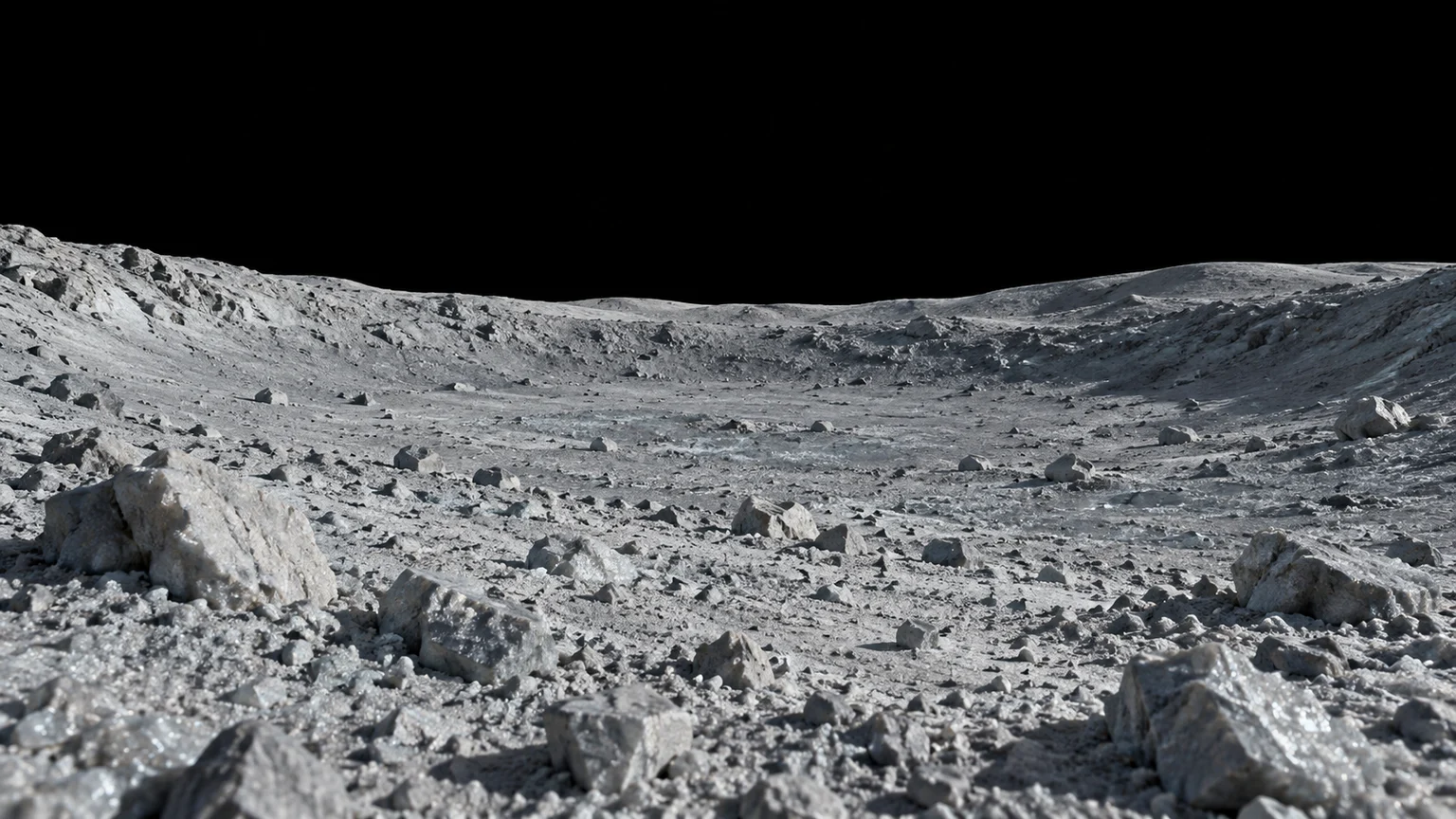
    A speculative ground-level view on Kerberos. The crater, fragments and local relief are artistic reconstructions.

    Inside an imagined hollow

    A speculative ground-level view on Kerberos. The crater, fragments and local relief are artistic reconstructions.

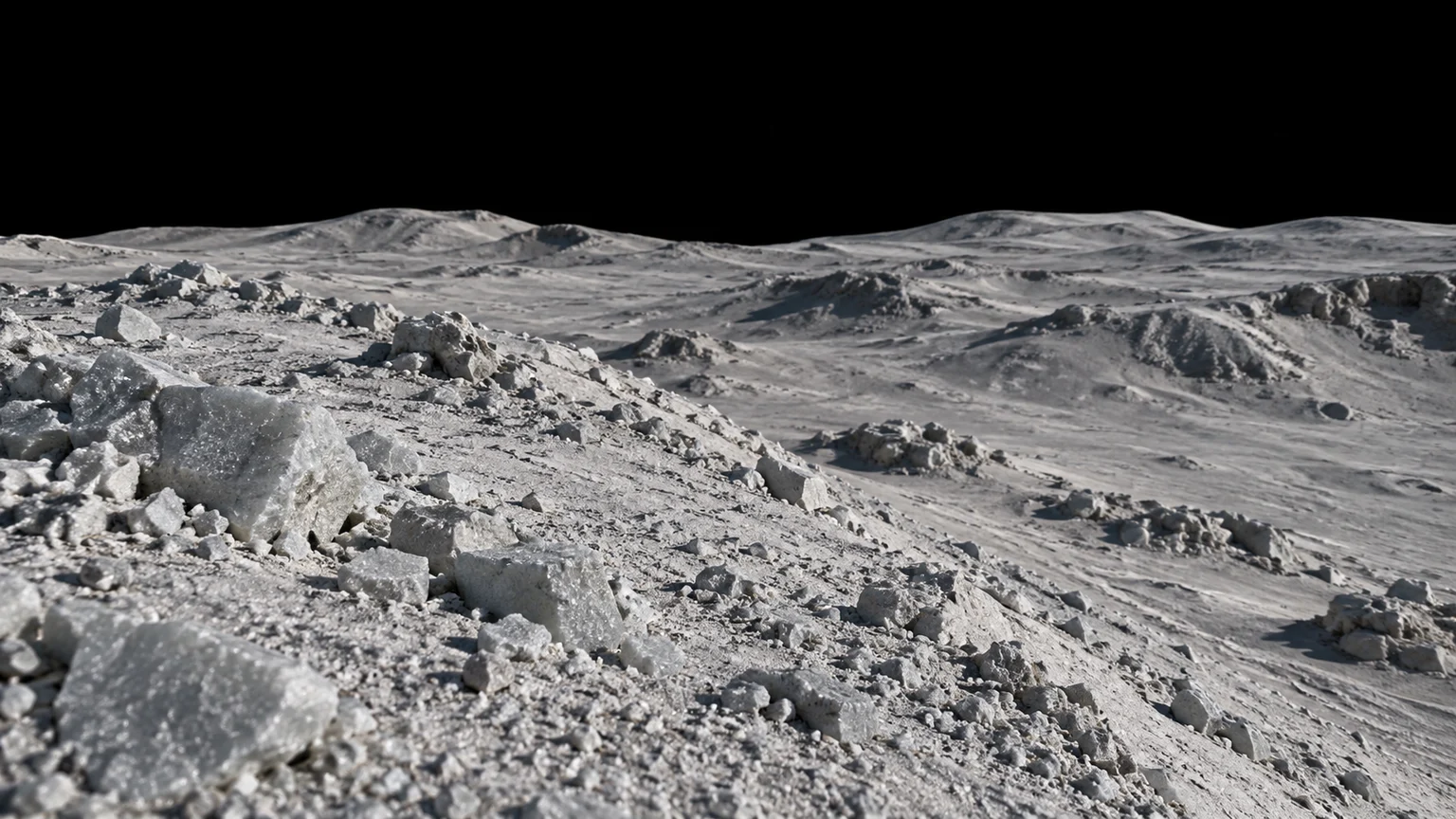
    An imagined landscape on Kerberos. Surface textures and illumination are not a spacecraft panorama.

    Along an uneven ridge

    An imagined landscape on Kerberos. Surface textures and illumination are not a spacecraft panorama.

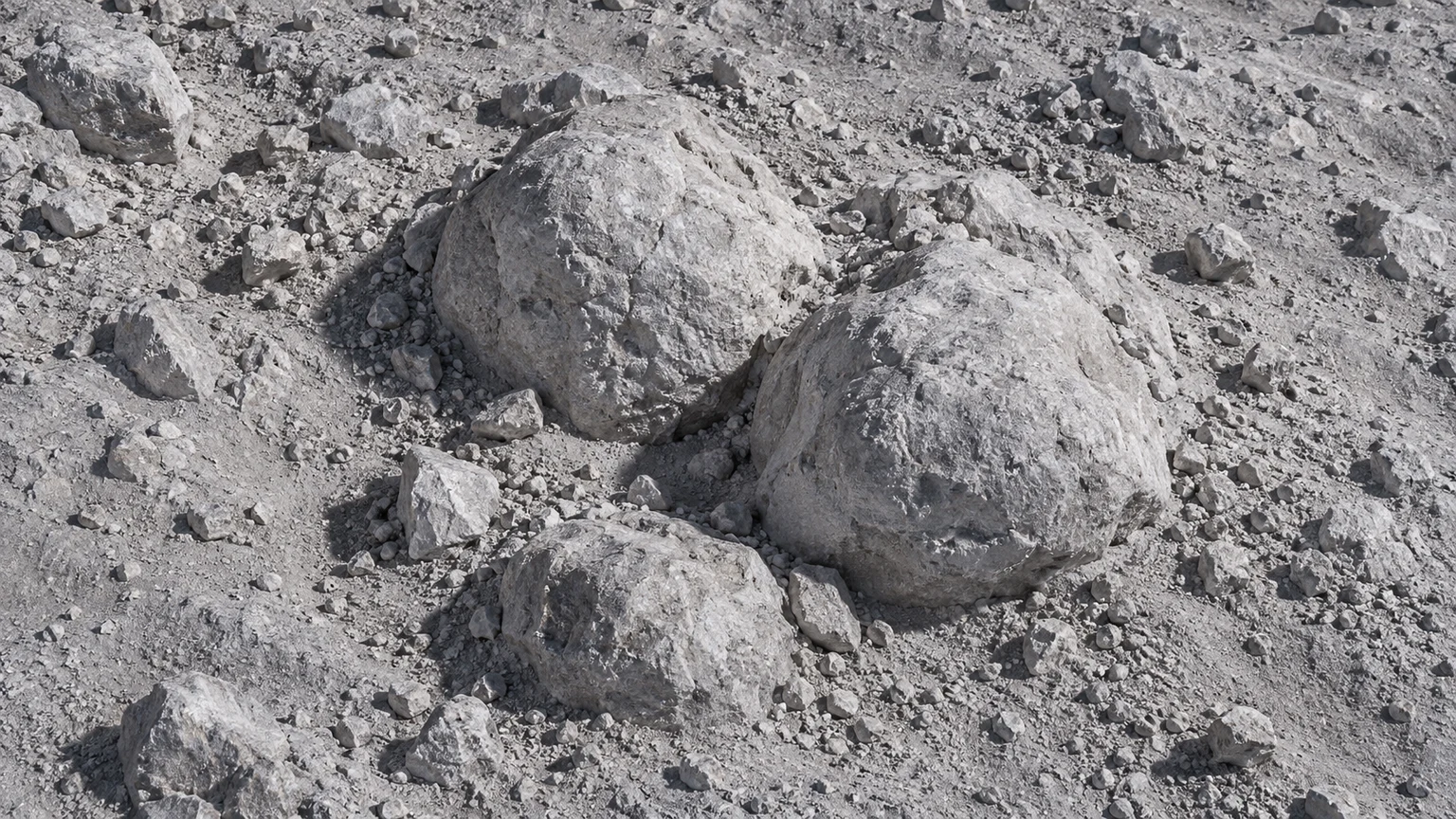
    A cluster of pale gray rounded fragments in fine icy debris. An artistic reconstruction of Kerberos; local detail, lighting and viewpoint are imagined.

    Surface fragments in close view

    A cluster of pale gray rounded fragments in fine icy debris. An artistic reconstruction of Kerberos; local detail, lighting and viewpoint are imagined.