Hubble revealed another small companion.
Mark Showalter and Jack Lissauer discovered Mab with the Hubble Space Telescope in August 2003. It was initially designated S/2003 U1.
Brightness leaves room for uncertainty.
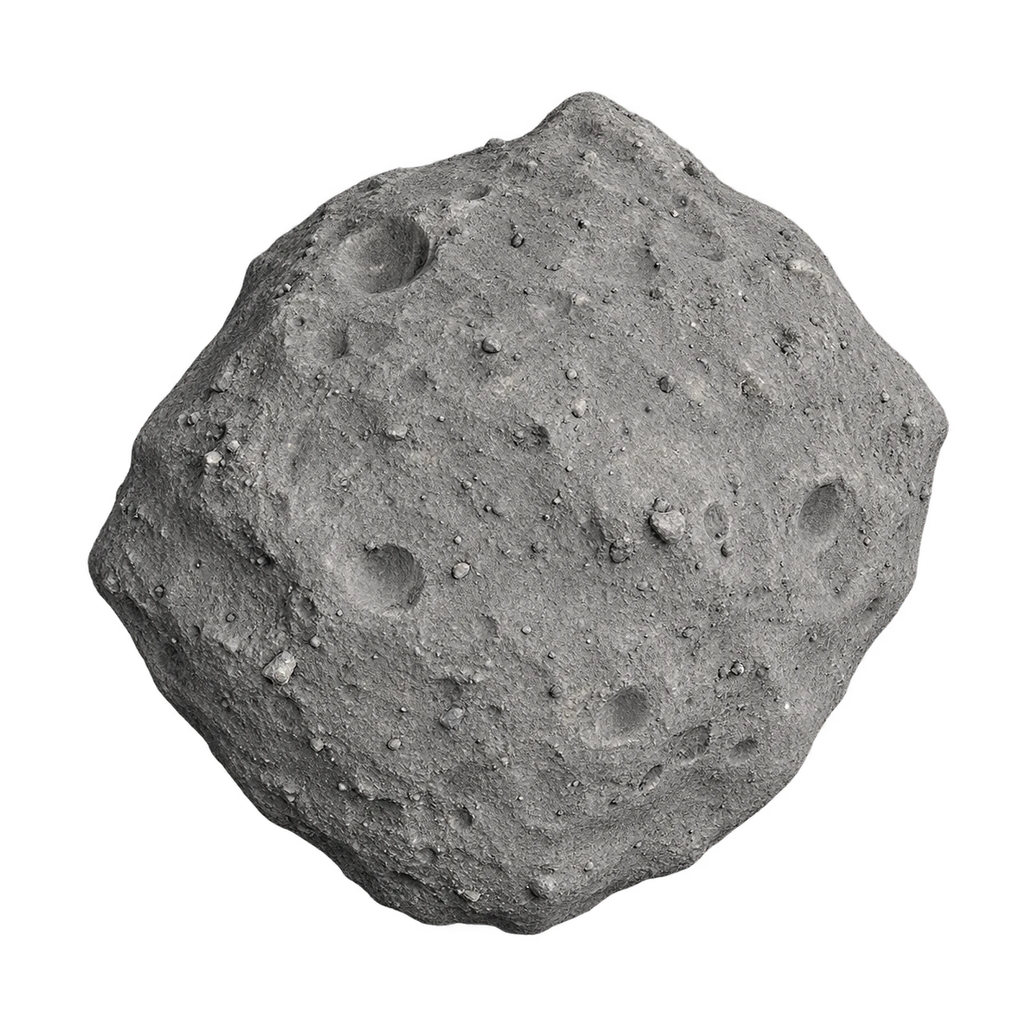
The adopted diameter is about 24 kilometers, from the nominal 12 ± 3 kilometer radius used by French and Showalter. Its inferred size depends on reflectivity; the portrait is not a resolved shape model.
A possible source of fresh dust.
Mab follows a path through the Mu ring. Impacts by meteoroids or ring particles may eject material from its surface and supply the ring with dust. This connection does not reveal the moon’s detailed geology.
Beyond Puck, inside Miranda.
The adopted mean orbital scale is 97,737 kilometers, with a period of 0.9229 Earth days. The moon is named after the fairy queen mentioned in Shakespeare’s Romeo and Juliet.