PLUTO SYSTEM / SATELLITE DOSSIER

Nix

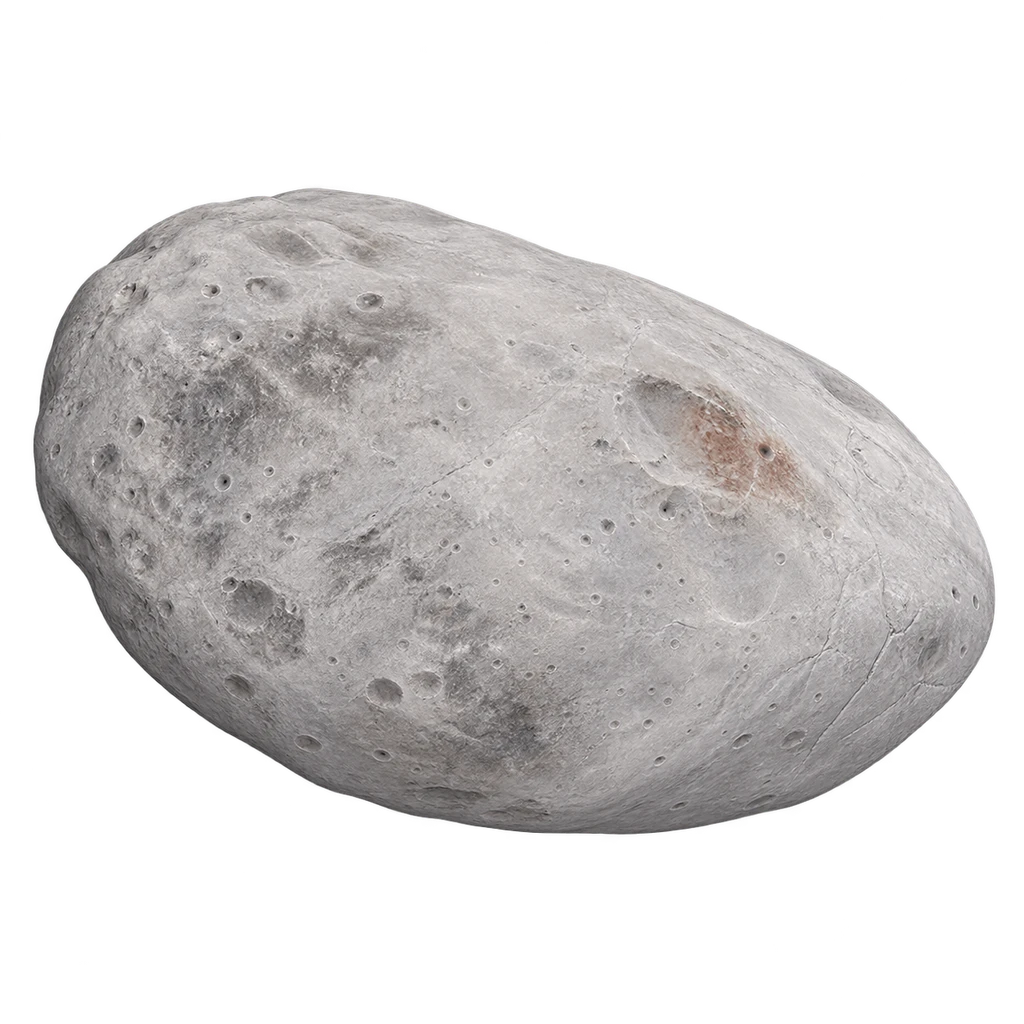
Nix is a small elongated icy moon orbiting the Pluto–Charon pair, with a reddish surface patch and an independent spin.

Artist’s impression of Nix

Nix is a small elongated icy moon orbiting the Pluto–Charon pair, with a reddish surface patch and an independent spin.

DIAMETER / EARTH0.0028×
EARTHNIX
ATMOSPHERE
No substantial atmosphere detectedEffectively airless
SURFACE TEMPERATURE
Cold exposed surface
SURFACE PRESSURE
Effectively airless
HABITABILITYNo life detected
UNPROTECTED HUMANSNot survivable

Interior ↗

03
Nix interiorNix's internal structure is unresolved.Unresolved

Moon system ↗

04
Pluto and its five moonsPluto and Charon circle a shared center outside Pluto. The four smaller moons orbit farther out.PLUTO / FIVE MOONSPLUTOCHARONSHARED CENTERSTYXNIXKERBEROSHYDRA
NIX

Instrument detail

Nix orbitElliptical orbit viewed along the orbital axis, relative to Pluto. Motion is accelerated, not a live position. Distances are center to center.PLUTONIX≈ 49,300 km
ONE ORBIT24.85 Earth days around Pluto–Charon
Closest to Pluto
48,561 km
Farthest from Pluto
50,039 km

This approximate orbit is shown relative to Pluto. The moon actually travels around both Pluto and Charon. Distances are measured between the centers of the two bodies.

This Pluto-relative mean ellipse is a simplified view of a circumbinary path. Both Pluto and Charon move around their shared center of mass; their time-dependent gravity is not integrated here. The system panel illustrates the shared center.

Nix rotation compared with EarthThe markers follow equal elapsed time on both worlds. Equal elapsed time and sidereal rotation rates. Polar schematic: sizes, axial tilt and seasons are not shown. Illumination uses a circular mean orbit, not a live sky prediction. The spin direction is illustrative, not measured.SAME ELAPSED TIME · POLAR SCHEMATICNIX43.9 hoursSIDEREAL ROTATIONDirection illustrativeEARTH23.9 hoursSIDEREAL ROTATION≈ 24 h · solar day
Marked longitude · equal time on both worlds
ONE SIDEREAL ROTATION43.9 hours

An independent, rapid spin

The New Horizons encounter-era rotation period is about 1.829 Earth days. This comparison shows the measured rate with illustrative direction; pole tilt and long-term changes are omitted. Nix is not synchronously locked to the Pluto–Charon orbit.

0 Earth hoursShared clock

Spin comparison only; no solar day is inferred. Sizes and starting longitudes are schematic, not live positions.

Satellite atlasMoons
Pluto and its five moonsPluto and Charon circle a shared center outside Pluto. The four smaller moons orbit farther out.PLUTO / FIVE MOONSPLUTOCHARONSHARED CENTERSTYXNIXKERBEROSHYDRA
ONE SHARED ORBIT6.39 Earth days

Charon is large enough that the pair’s center of mass lies outside Pluto. Both worlds orbit that point, keeping the same sides turned toward each other.

Five moons, outward from the pair

  1. 01Charon ↗6.39 days
  2. 02Styx ↗20.16 days
  3. 03Nix24.85 days
  4. 04Kerberos ↗32.17 days
  5. 05Hydra ↗38.20 days
Nix gravityEqual launches at 2 m/s; shared metre scale; air resistance ignored.0 m200 m400 m600 mEARTH9.80 m/s²NIX0.0046 m/s²NOMINAL ESTIMATE
NIX / EARTH GRAVITY0.00047 ×

Nominal spherical GM/r² estimate, using JPL GM = 0.0015 ± 0.0005 km³/s² and mean radius 18 ± 1 km. Local shape, rotation and binary tides are omitted.

Same push, different gravity

Both balls launch at 2 m/s, using the same height and time scales. Weaker gravity gives a higher jump and a longer time in the air. Air resistance is ignored. This idealized comparison uses constant spherical gravity GM/r²; local terrain, tides and rotation are excluded. Playback runs 72× faster for both balls.

Earth · height / airtime
0.20 m / 0.41 s
Nix · height / airtime
432.00 m / 864.00 s
Nix interiorNix's internal structure is unresolved.Unresolved

Beyond the surface

Nix’s internal structure is unresolved. Surface appearance and bulk measurements do not establish distinct internal layers or a present-day ocean.

    Artist’s impression of Nix

    From Hubble’s faint point to a small world.

    A Hubble Space Telescope team discovered Nix in 2005. New Horizons later resolved its elongated outline and a localized reddish patch. The portrait interprets those broad characteristics; the ground-level scenes are imagined.

    Water ice on the outside.

    New Horizons spectroscopy provides evidence for water ice on Nix’s surface. Similarity to Hydra connects the two small moons, but their detailed surface properties differ. Surface ice alone does not establish a buried ocean or a layered interior.

    A spin independent of the orbit.

    New Horizons measurements give Nix a rotation period of about 1.829 Earth days. It is not synchronously locked. The comparison uses that encounter-era rate; pole orientation and complex long-term rotational behavior are omitted.

    Around a pair of worlds.

    Nix travels around the Pluto–Charon binary. The adopted JPL mean-element table gives a 24.85-day period and a 49,300-kilometer orbital scale. The individual orbit panel is a simplified Pluto-relative view; the system panel shows the shared center.
    DIAMETER / EARTH0.0028×
    EARTHNIX
    EARTH
    12,742 km
    NIX
    36 km
    Mean diameters · circles share one scale

    36 km is the adopted JPL mean diameter. This equivalent-size estimate does not represent the longest dimension of the irregular body.

    ATMOSPHERE
    No substantial atmosphere detectedEffectively airless

    Nix is effectively airless. No substantial atmosphere is known to provide breathable air or surface pressure.

    SURFACE TEMPERATURE
    Cold exposed surface
    SURFACE PRESSURE
    Effectively airless
    HABITABILITYNo life detected

    No life has been detected, and a habitable environment has not been established.

    UNPROTECTED HUMANSNot survivable

    The exposed surface requires oxygen, pressure protection and thermal control.

    Planet and landscape images are artistic interpretations.

    • NASA ↗
      • Classification and orbital data
      • Rotation and internal structure constraints
      • Natural conditions and human survival
      • Discovery
    • NASA / JPL ↗
      • GM and mean radius; spherical gravity estimate GM/r²
      • Size, physical data and atmospheric constraints
    • NASA / JPL ↗
      • Mean orbital dimensions; distances from parent center
      • Orbit
    • arxiv.org ↗
      • Rotation model and synchronous or independent spin
      • Rotation
    • www.nasa.gov ↗
      • Surface
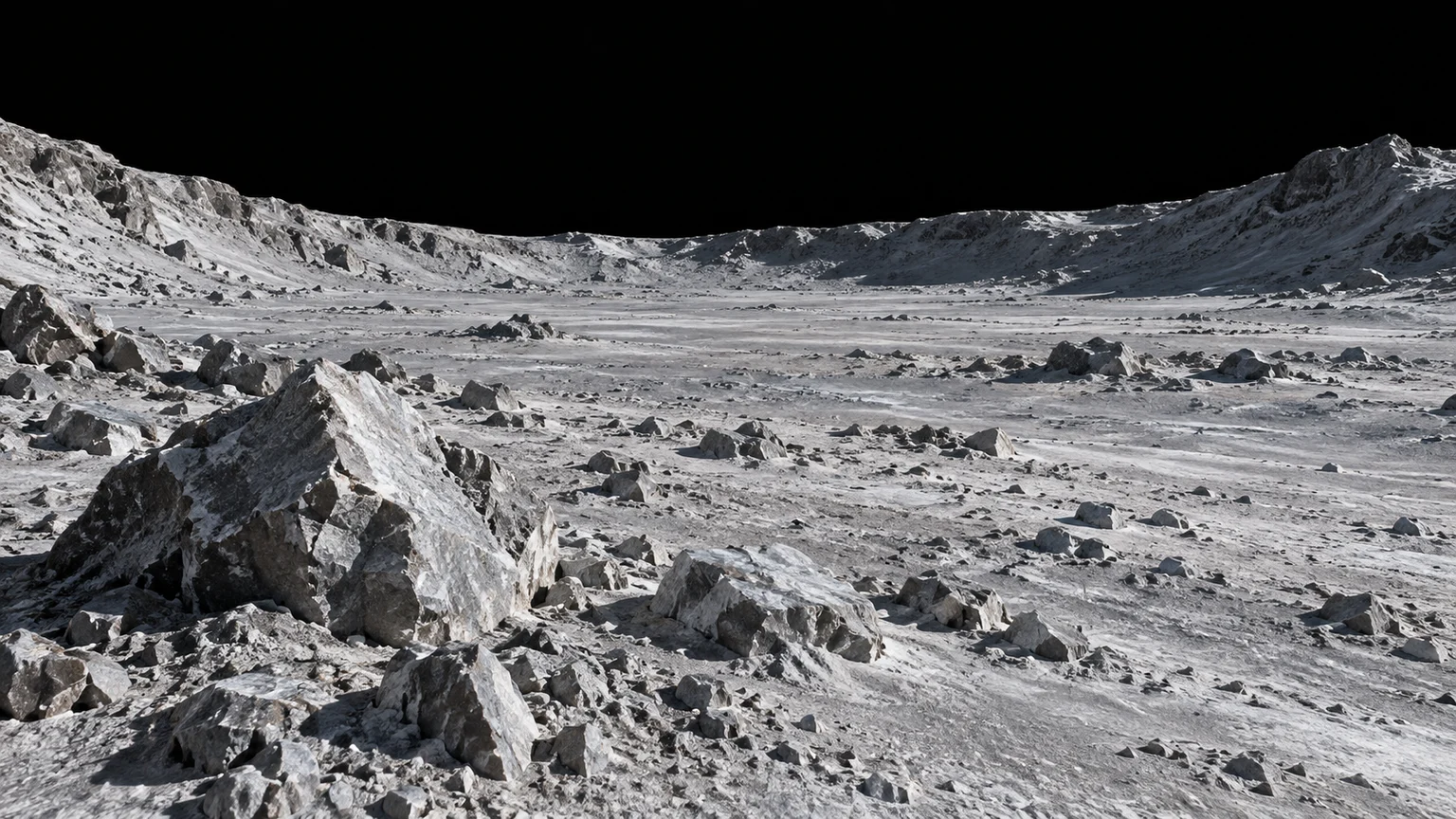
    An imagined ground-level landscape on Nix, with water-ice-rich debris. The local crater geometry and fragments are reconstructions.

    Across pale crater debris

    An imagined ground-level landscape on Nix, with water-ice-rich debris. The local crater geometry and fragments are reconstructions.

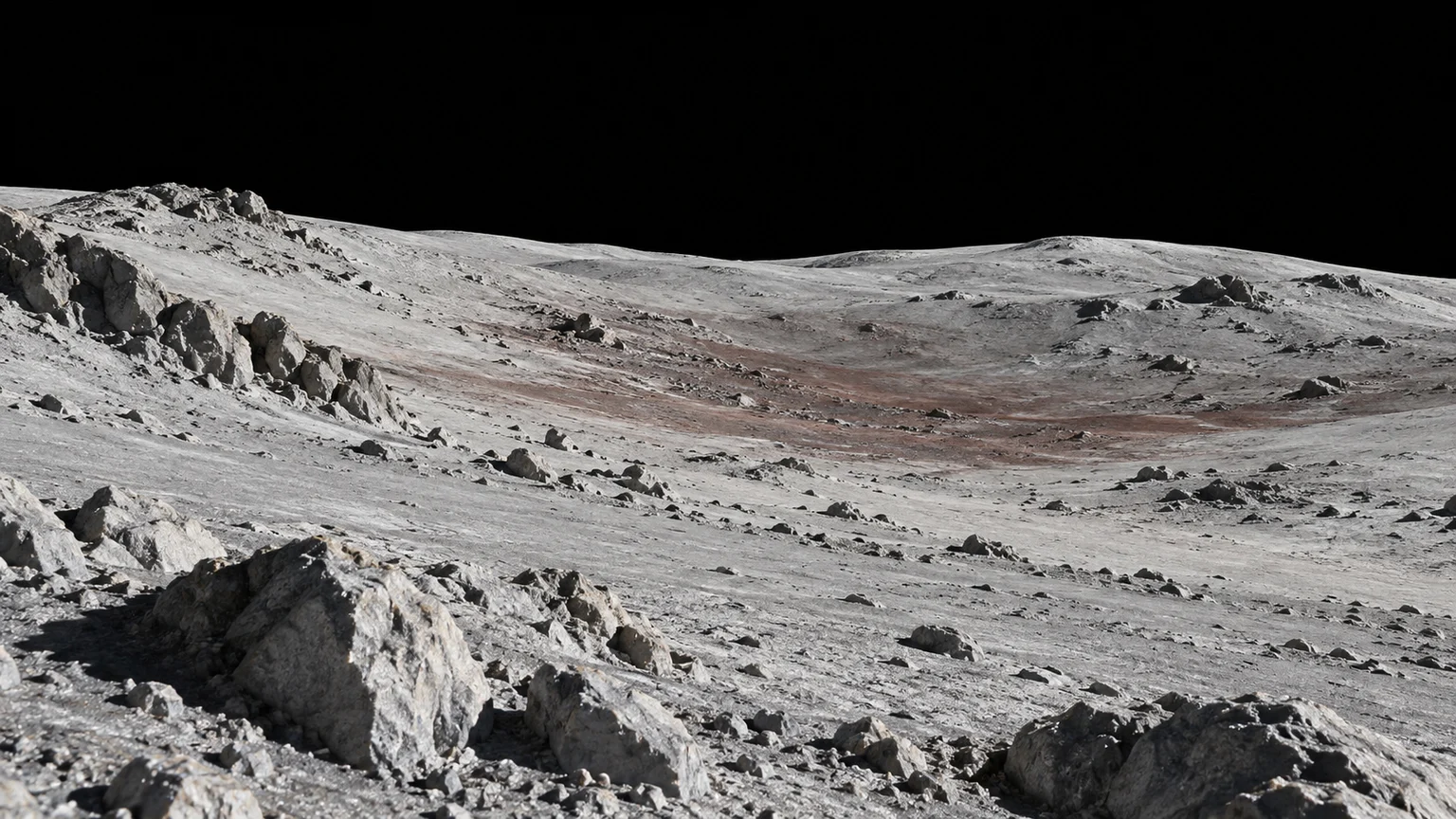
    A speculative landscape inspired by Nix’s observed color variation. This is not the mapped location or measured appearance of its reddish patch.

    A muted patch on the ridge

    A speculative landscape inspired by Nix’s observed color variation. This is not the mapped location or measured appearance of its reddish patch.

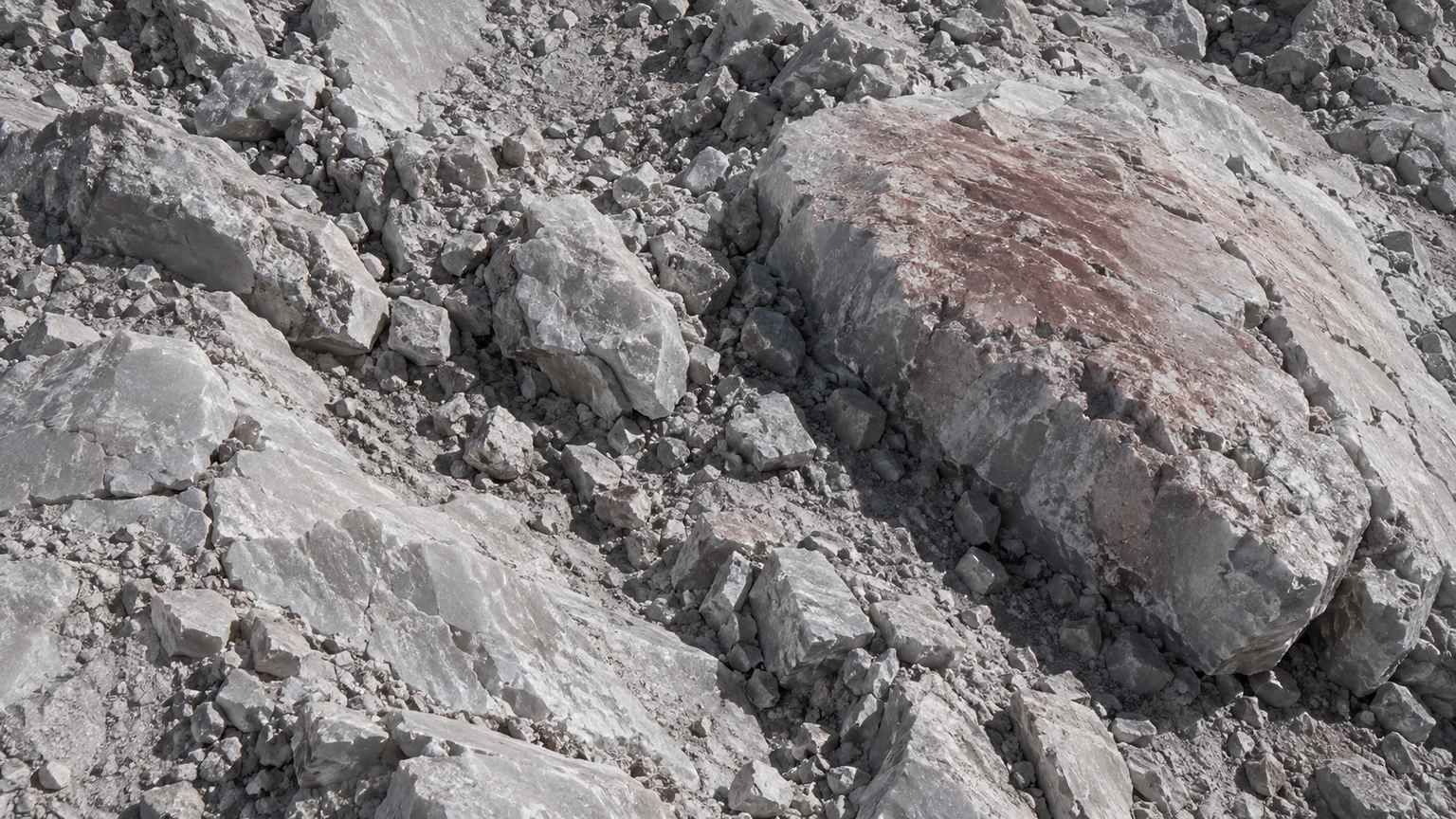
    Pale ice-rich fragments with a faint muted reddish stain on one block. An artistic reconstruction of Nix; local detail, lighting and viewpoint are imagined.

    Surface fragments in close view

    Pale ice-rich fragments with a faint muted reddish stain on one block. An artistic reconstruction of Nix; local detail, lighting and viewpoint are imagined.