PLUTO SYSTEM / SATELLITE DOSSIER

Styx

Styx is a small elongated moon circling the Pluto–Charon pair, discovered during the search for hazards ahead of New Horizons.
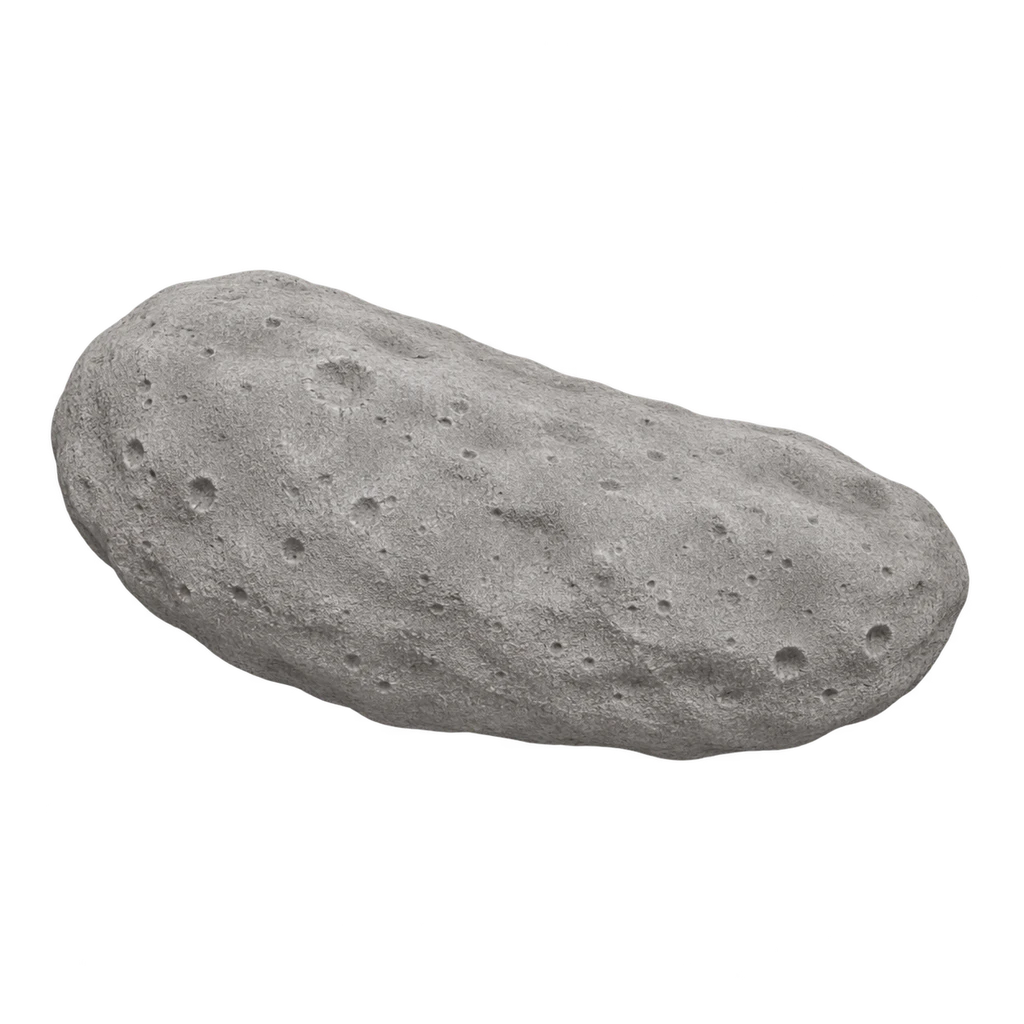
Artist’s impression of Styx

Styx is a small elongated moon circling the Pluto–Charon pair, discovered during the search for hazards ahead of New Horizons.

DIAMETER / EARTH0.00082×
EARTHSTYX
ATMOSPHERE
No substantial atmosphere detectedEffectively airless
SURFACE TEMPERATURE
Cold exposed surface
SURFACE PRESSURE
Effectively airless
HABITABILITYNo life detected
UNPROTECTED HUMANSNot survivable
Interior ↗

03
Styx interiorStyx's internal structure is unresolved.Unresolved

Moon system ↗

04
Pluto and its five moonsPluto and Charon circle a shared center outside Pluto. The four smaller moons orbit farther out.PLUTO / FIVE MOONSPLUTOCHARONSHARED CENTERSTYXNIXKERBEROSHYDRA
STYX

Instrument detail

Styx orbitElliptical orbit viewed along the orbital axis, relative to Pluto. Motion is accelerated, not a live position. Distances are center to center.PLUTOSTYX≈ 43,200 km
ONE ORBIT20.16 Earth days around Pluto–Charon
Closest to Pluto
42,120 km
Farthest from Pluto
44,280 km

This approximate orbit is shown relative to Pluto. The moon actually travels around both Pluto and Charon. Distances are measured between the centers of the two bodies.

This Pluto-relative mean ellipse approximates a circumbinary orbit. The moving gravity of Pluto and Charon is not integrated; the system overview shows their shared center.

Styx rotation compared with EarthThe markers follow equal elapsed time on both worlds. Equal elapsed time and sidereal rotation rates. Polar schematic: sizes, axial tilt and seasons are not shown. Illumination uses a circular mean orbit, not a live sky prediction. The spin direction is illustrative, not measured.SAME ELAPSED TIME · POLAR SCHEMATICSTYX3.2 daysSIDEREAL ROTATIONDirection illustrativeEARTH23.9 hoursSIDEREAL ROTATION≈ 24 h · solar day
Marked longitude · equal time on both worlds
ONE SIDEREAL ROTATION3.2 days

An independent spin

The encounter-era rotation period is about 3.24 Earth days. Direction is illustrative; pole tilt and long-term variations are omitted. Styx is not synchronously locked.

0 Earth hoursShared clock

Spin comparison only; no solar day is inferred. Sizes and starting longitudes are schematic, not live positions.

Satellite atlasMoons
Pluto and its five moonsPluto and Charon circle a shared center outside Pluto. The four smaller moons orbit farther out.PLUTO / FIVE MOONSPLUTOCHARONSHARED CENTERSTYXNIXKERBEROSHYDRA
ONE SHARED ORBIT6.39 Earth days

Charon is large enough that the pair’s center of mass lies outside Pluto. Both worlds orbit that point, keeping the same sides turned toward each other.

Five moons, outward from the pair

  1. 01Charon ↗6.39 days
  2. 02Styx20.16 days
  3. 03Nix ↗24.85 days
  4. 04Kerberos ↗32.17 days
  5. 05Hydra ↗38.20 days
GRAVITY UNKNOWNMASS UNCERTAIN
SURFACE GRAVITYUnknown

Mass remains uncertain

JPL gives only an upper limit, GM < 0.0003 km³/s². This is not a measured mass, so no numerical surface gravity or jump comparison is shown.

Styx interiorStyx's internal structure is unresolved.Unresolved

Beyond the surface

Styx’s interior is unresolved. Available observations do not establish distinct internal layers or a present-day ocean.

    Artist’s impression of Styx

    A faint point in a safety survey.

    A team led by Mark Showalter discovered Styx with Hubble in June 2012. The observations were part of a search for hazards along the approaching New Horizons spacecraft’s route. A barely visible companion became the fifth known moon of Pluto.

    An elongated world, only partly resolved.

    New Horizons resolved an elongated outline in 2015. Its limited images cannot supply a detailed terrain map. The portrait interprets the broad form; the small craters, debris and slopes in the surface studies are imagined.

    Turning on its own schedule.

    The encounter-era rotation period is about 3.24 Earth days, distinct from the orbital period. The spin comparison uses that measured rate with an illustrative direction, omitting pole orientation and long-term changes.

    Between Charon and Nix.

    Styx is the innermost of the four small moons outside Charon. The adopted mean orbit takes 20.16 days. Its individual ellipse is a simplified Pluto-relative view; the system overview illustrates motion around the Pluto–Charon pair.

    DIAMETER / EARTH0.00082×
    EARTHSTYX
    EARTH
    12,742 km
    STYX
    10.4 km
    Mean diameters · circles share one scale

    10.4 km is the adopted approximate diameter. The JPL equivalent-size value does not represent the longest dimension.

    ATMOSPHERE
    No substantial atmosphere detectedEffectively airless

    Styx is effectively airless. No substantial atmosphere is known.

    SURFACE TEMPERATURE
    Cold exposed surface
    SURFACE PRESSURE
    Effectively airless
    HABITABILITYNo life detected

    No life has been detected, and a habitable environment has not been established.

    UNPROTECTED HUMANSNot survivable

    The exposed surface requires oxygen, pressure protection and thermal control.

    Planet and landscape images are artistic interpretations.

    • NASA ↗
      • Classification and orbital data
      • Rotation and internal structure constraints
      • Natural conditions and human survival
      • Discovery
    • NASA / JPL ↗
      • Mass and gravity constraints
      • Size, physical data and atmospheric constraints
    • NASA / JPL ↗
      • Mean orbital dimensions; distances from parent center
      • Orbit
    • arxiv.org ↗
      • Rotation model and synchronous or independent spin
      • Shape
      • Rotation
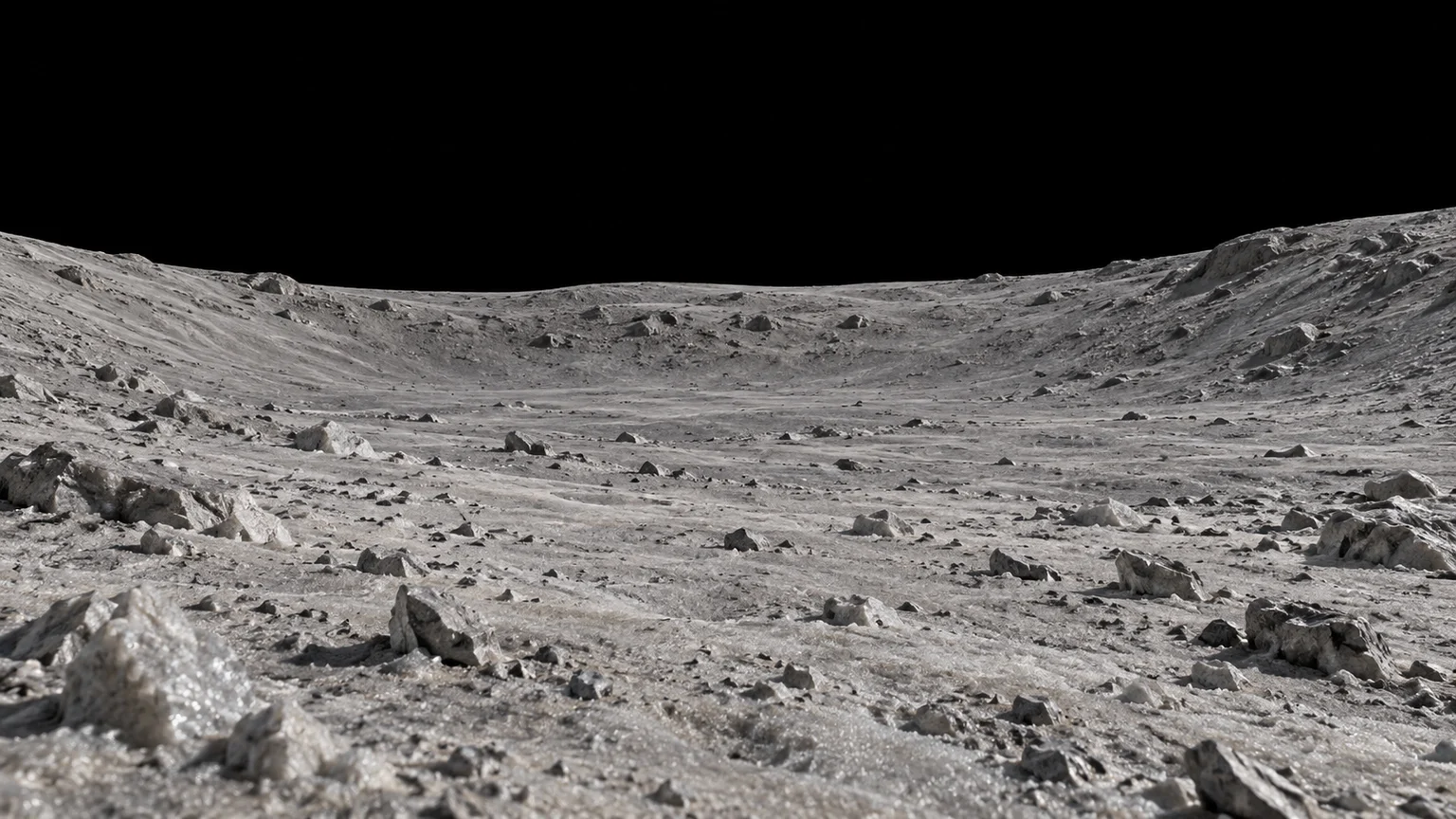
    A speculative ground-level view on Styx. The crater, fragments and local relief are artistic reconstructions.

    Inside an imagined hollow

    A speculative ground-level view on Styx. The crater, fragments and local relief are artistic reconstructions.

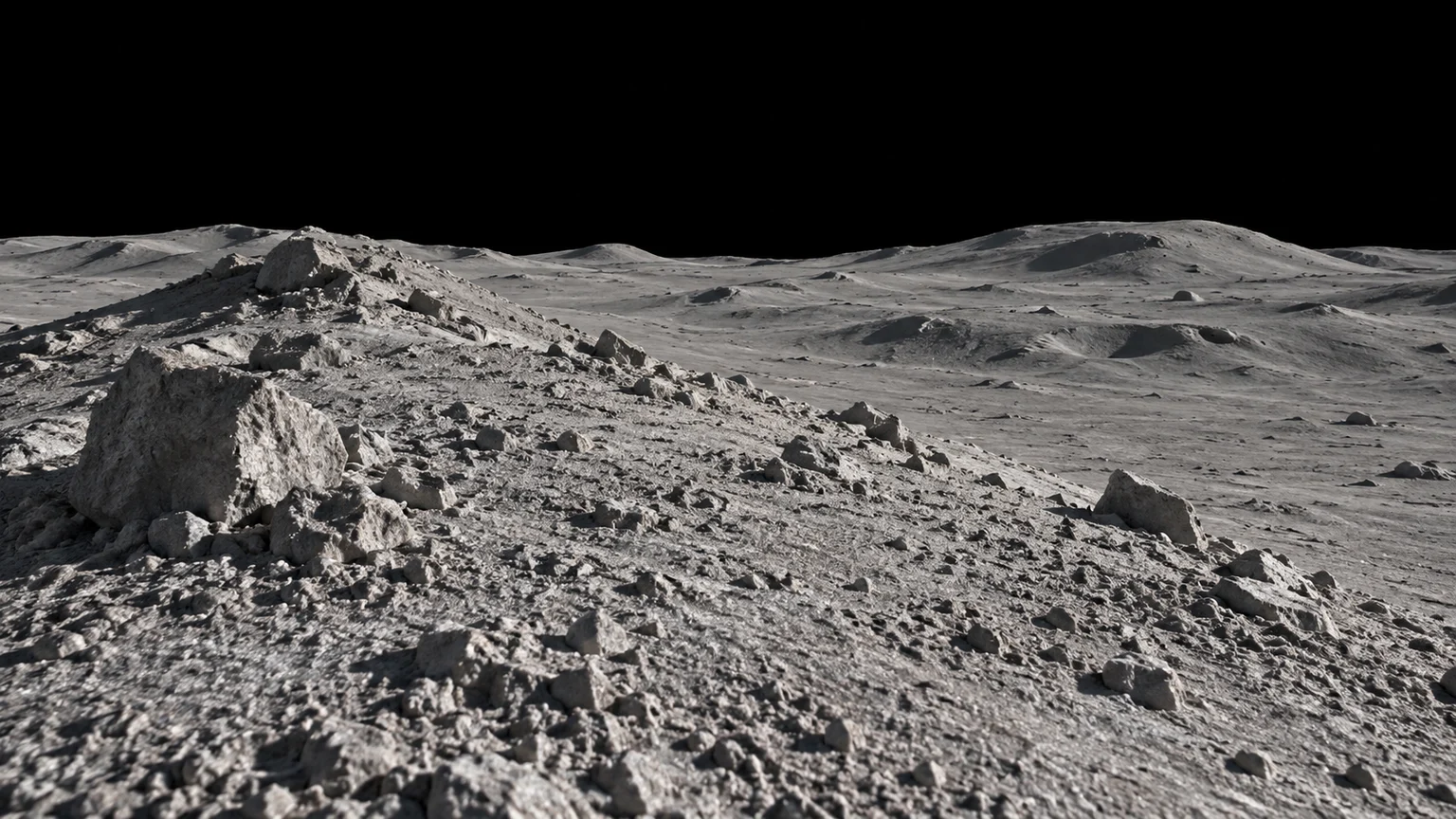
    An imagined landscape on Styx. Surface textures and illumination are not a spacecraft panorama.

    Along an uneven ridge

    An imagined landscape on Styx. Surface textures and illumination are not a spacecraft panorama.

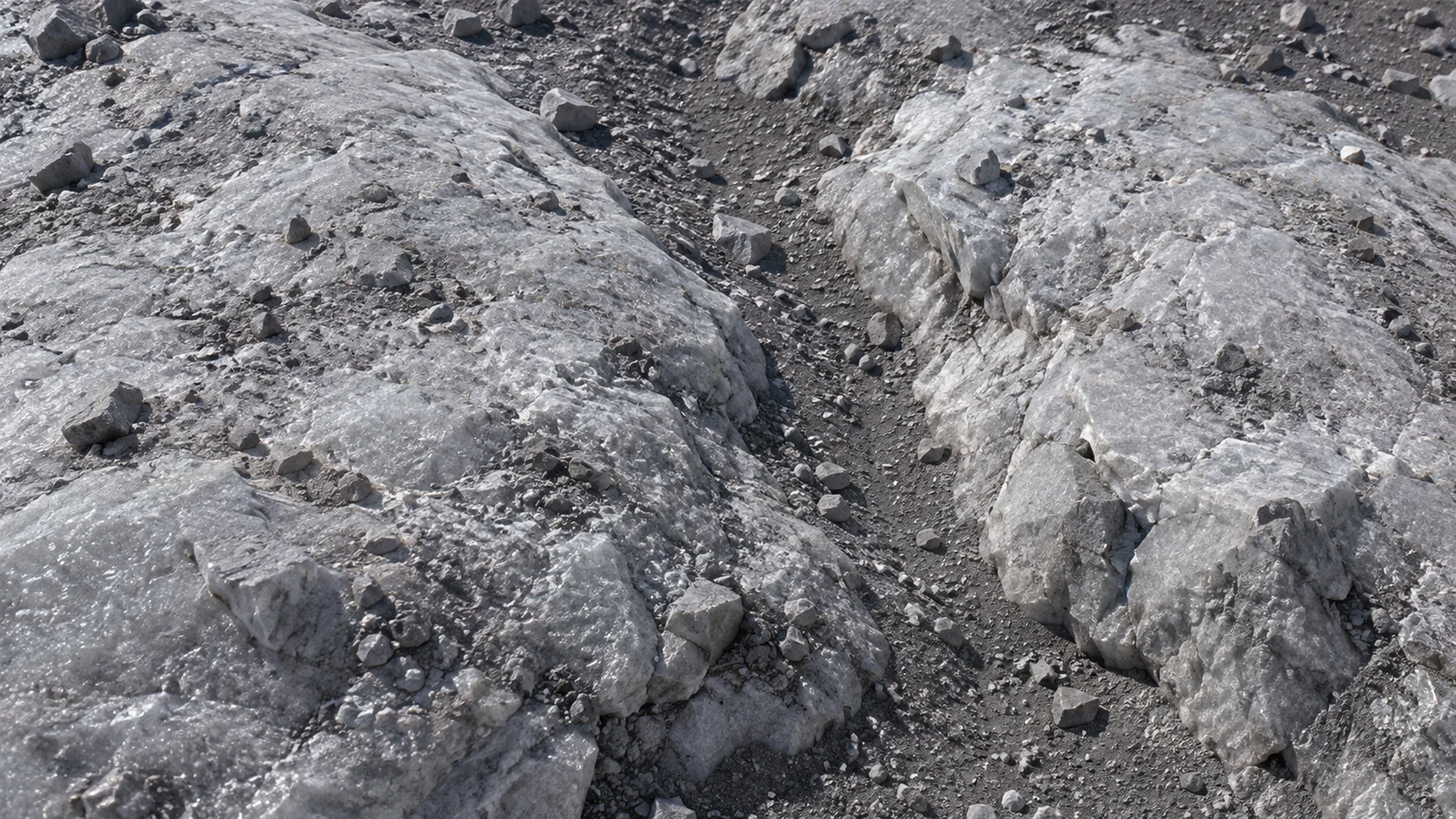
    Two modest pale ice-rich blocks separated by a fine gray dusty seam. An artistic reconstruction of Styx; local detail, lighting and viewpoint are imagined.

    Surface fragments in close view

    Two modest pale ice-rich blocks separated by a fine gray dusty seam. An artistic reconstruction of Styx; local detail, lighting and viewpoint are imagined.