KEPLER-16 A & KEPLER-16 B SYSTEM / PLANETARY DOSSIER

Kepler-16 b

A cold gas giant circling both members of an eclipsing binary—the first unambiguous transiting circumbinary planet.
Environment ↗

02
ATMOSPHERE

Gas giant · composition not mapped

DIAMETER
8.459 × Earth
POSSIBILITY FOR LIFE
No evidence of life
WITHOUT PROTECTION
Not survivable without protection

Mass comparison ↗

04
DYNAMICAL MASS0.333 × Jupiter

± 0.016 Jupiter masses

Mutual eclipses, planetary transits and orbital perturbations constrain the three-body system.
KEPLER-16 B

Instrument detail

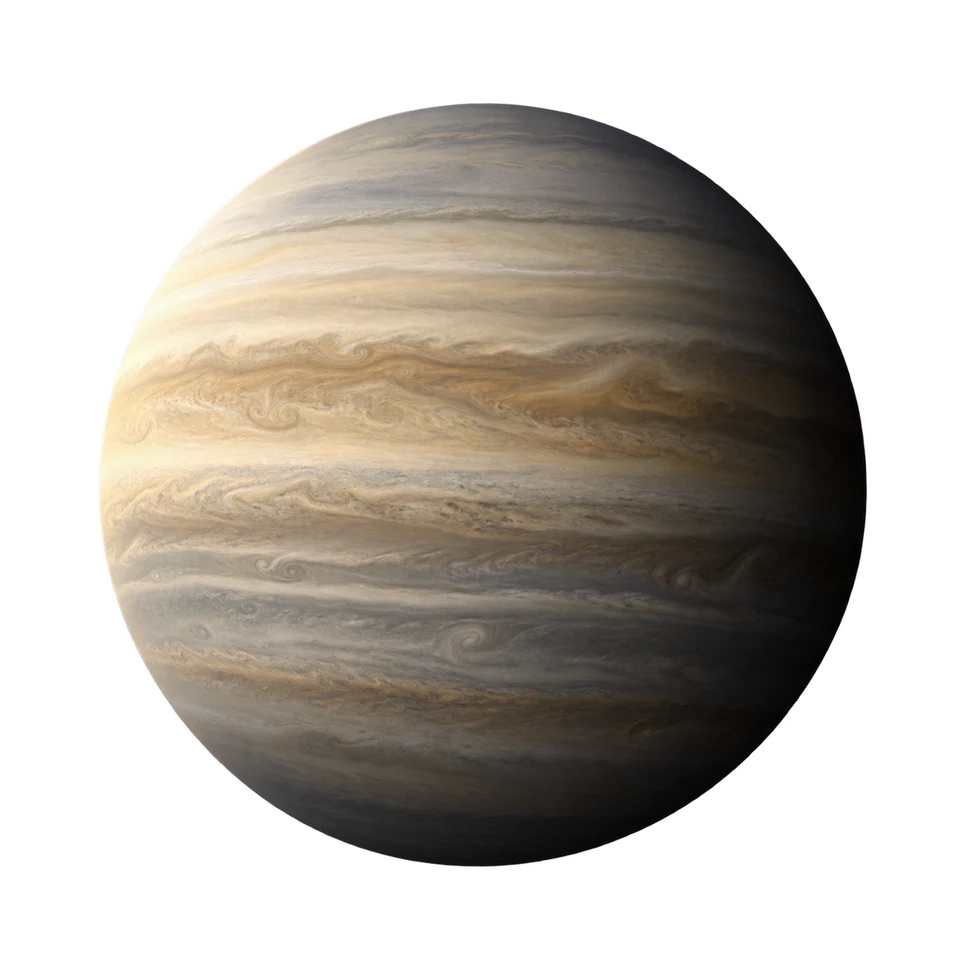
Artist’s impression of Kepler-16 b

Artist’s impression · appearance is hypothetical; diameter is inferred from transits.

The orbit encloses both stars.

The planet circles the shared center of mass of Kepler-16 A and B in about 229 days, outside their roughly 41-day binary orbit. Its 0.7048 AU semimajor axis refers to that shared center, not the distance to either moving star.

A distinctive sequence of eclipses.

Kepler recorded the stellar eclipses and transits across both stars. Their changing timings and durations established the circumbinary geometry in 2011.

A giant with a measured size.

A radius about three quarters Jupiter’s and roughly one third its mass put Kepler-16 b in the gas-giant regime. The detailed clouds in these scenes remain artistic interpretations.

Size, mass and atmosphere

DIAMETER / EARTH8.459 ×

+0.028 / −0.028 · Earth-relative ratio

Doyle et al. (2011): 0.7538 ± 0.0025 Jupiter radii; converted using Jupiter 71,492 km and Earth 6,371 km.

DYNAMICAL MASS / JUPITER
  • Kepler-16 b0.333 ± 0.016 M♃
  • Jupiter · reference mass1.00 M♃

Shared scale: 0–1 Jupiter masses. Mutual eclipses, planetary transits and orbital perturbations constrain the three-body system. Doyle et al. (2011), photometric-dynamical model: 0.333 ± 0.016 Jupiter masses.

ATMOSPHERE / COMPOSITION

Gas giant · composition not mapped

Its measured mass and radius imply a low-density giant. Cloud colors and patterns are hypothetical; the illustrations do not show solid ground.

Habitability

NATURAL CONDITIONSNo evidence of life

A cold gas giant is not an Earth-like surface environment. No habitable moon or life has been detected here.

HUMANS / WITHOUT PROTECTIONNot survivable without protection

There is no accessible solid surface beneath a breathable atmosphere; pressure increases into the gaseous envelope.

SURFACE TEMPERATURE
Unknown · no measured climate
SURFACE PRESSURE
Unknown
LIQUID WATER
Not established
SURFACE GRAVITY
Unknown · radius required

A year around Kepler-16 A & Kepler-16 B

228.776 Earth days

Semimajor axis: 0.7048 AU. One astronomical unit is approximately the mean Earth–Sun distance.

The overview is a schematic: sizes, orbital shape and the planet’s position are illustrative. It does not show a measured eccentricity, the orbit’s orientation or a live position.

The planet circles the shared center of mass of Kepler-16 A and B in about 229 days, outside their roughly 41-day binary orbit. Its 0.7048 AU semimajor axis refers to that shared center, not the distance to either moving star.

Doyle et al. (2011) · orbital measurements ↗
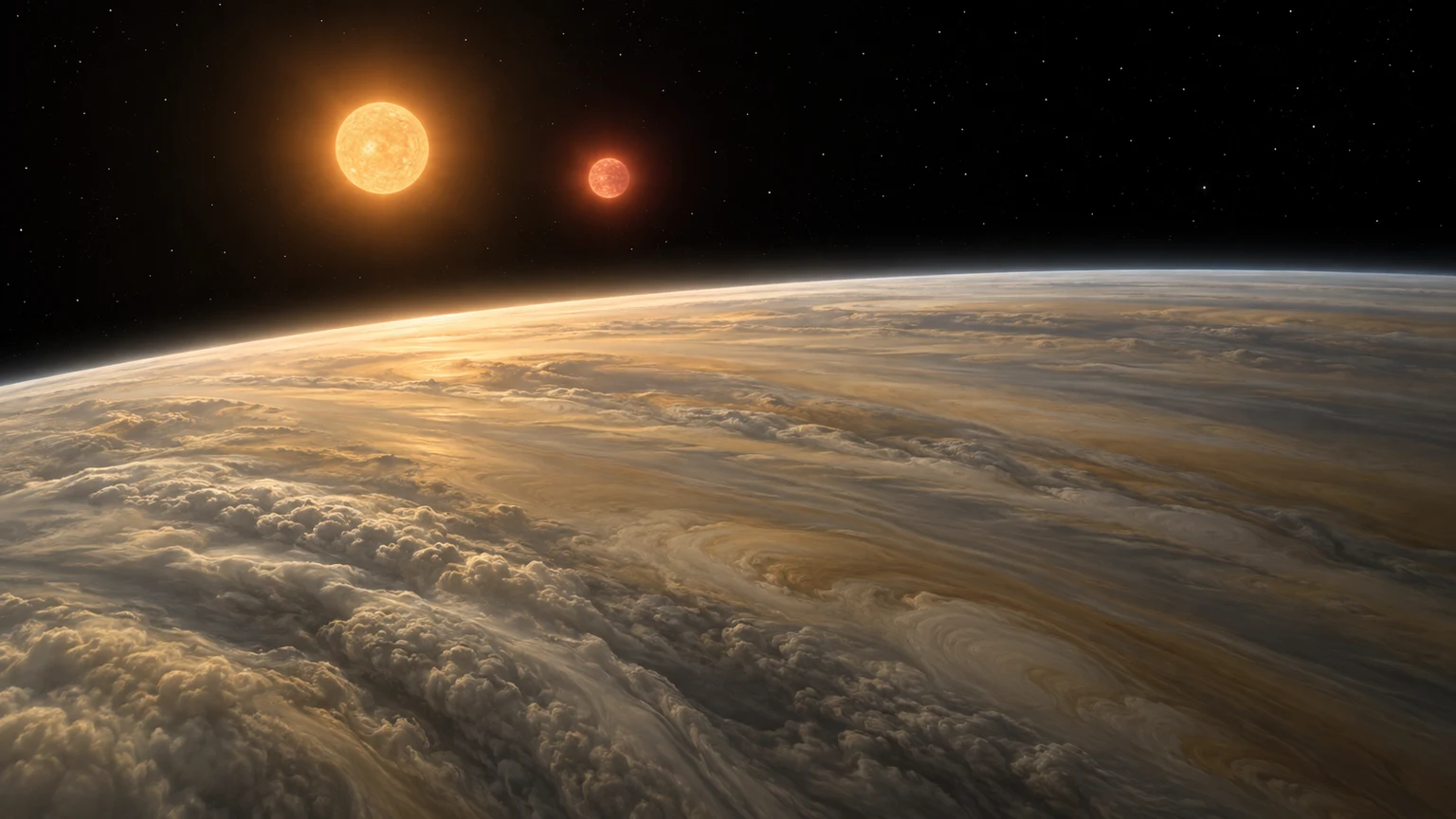
A hypothetical high atmospheric view. The two stellar lights represent the binary; cloud structure and apparent geometry are invented.

Under two suns

A hypothetical high atmospheric view. The two stellar lights represent the binary; cloud structure and apparent geometry are invented.

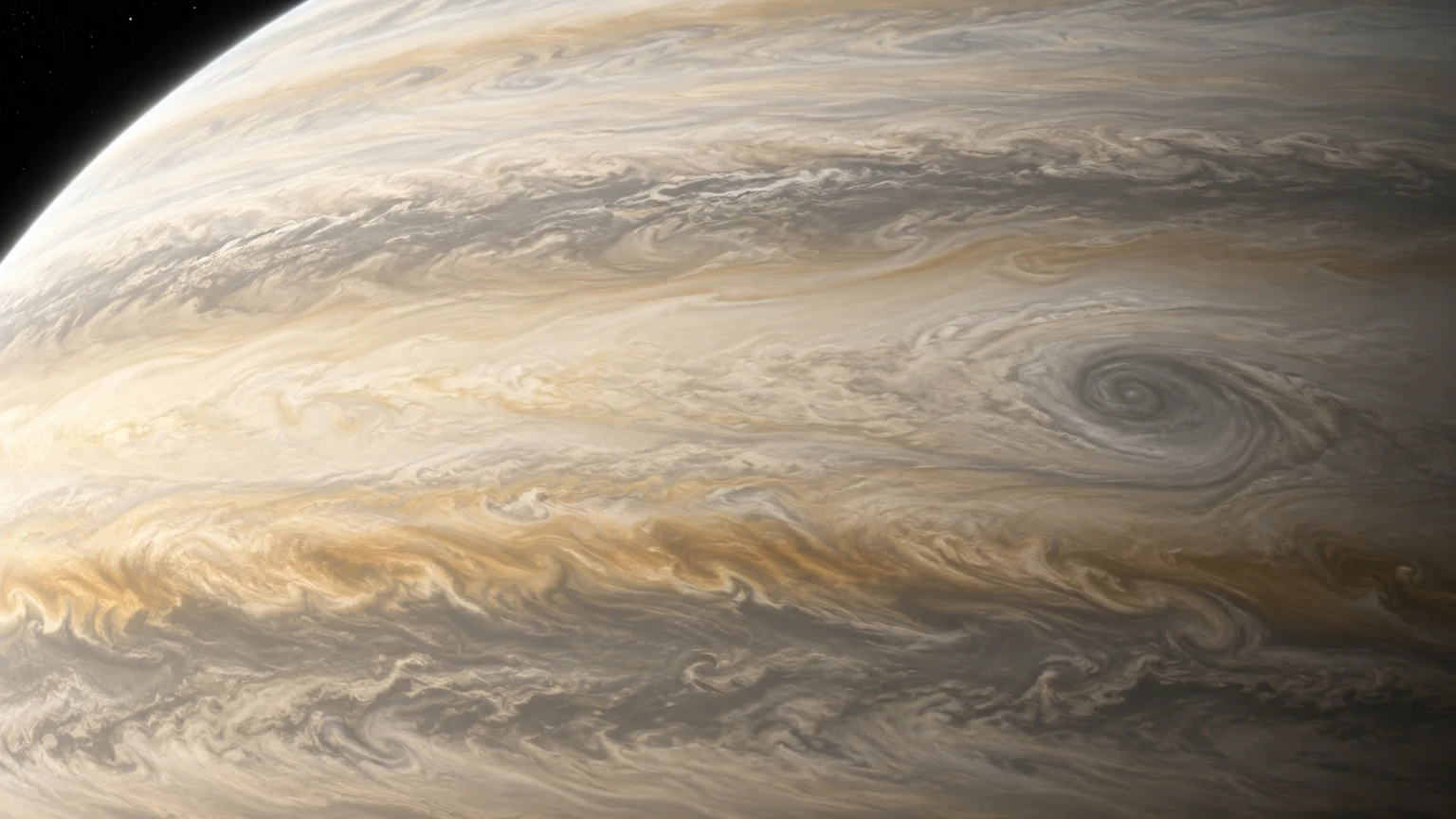
An imagined overhead cloud study. No atmospheric map or particular storm has been observed.

Inside the cloud bands

An imagined overhead cloud study. No atmospheric map or particular storm has been observed.

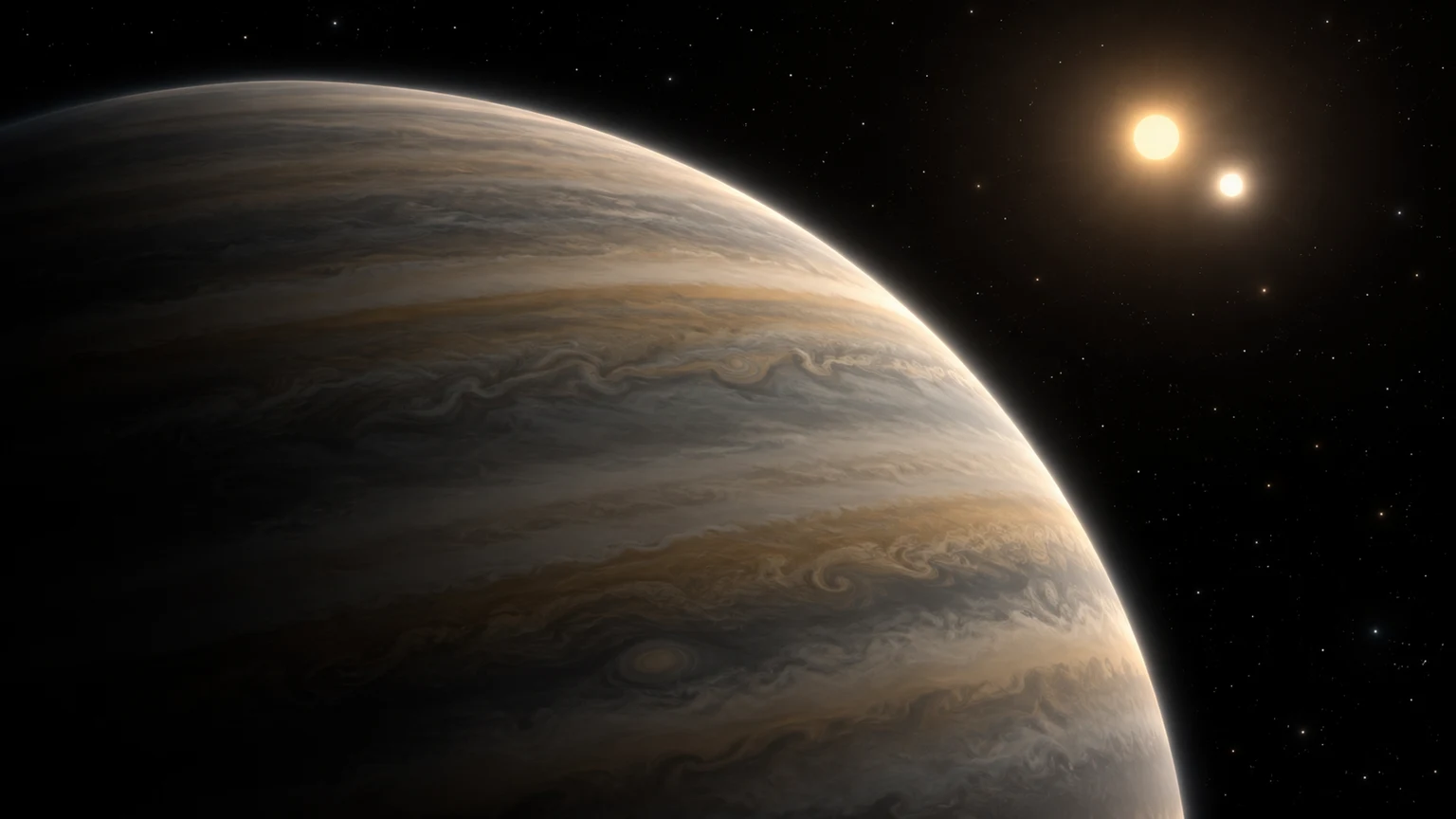
A conceptual view of atmospheric haze and a banded limb. Color, illumination and viewing angle are illustrative.

At the twilight limb

A conceptual view of atmospheric haze and a banded limb. Color, illumination and viewing angle are illustrative.

Planet and landscape images are hypothetical artistic interpretations.