SOL SYSTEM / PLANETARY DOSSIER

Makemake

Makemake is a reddish outer-solar-system world with methane and ethane ice on its surface and a faint moon known as MK 2. Observations rule out a substantial global atmosphere, though a very thin or local one remains possible.
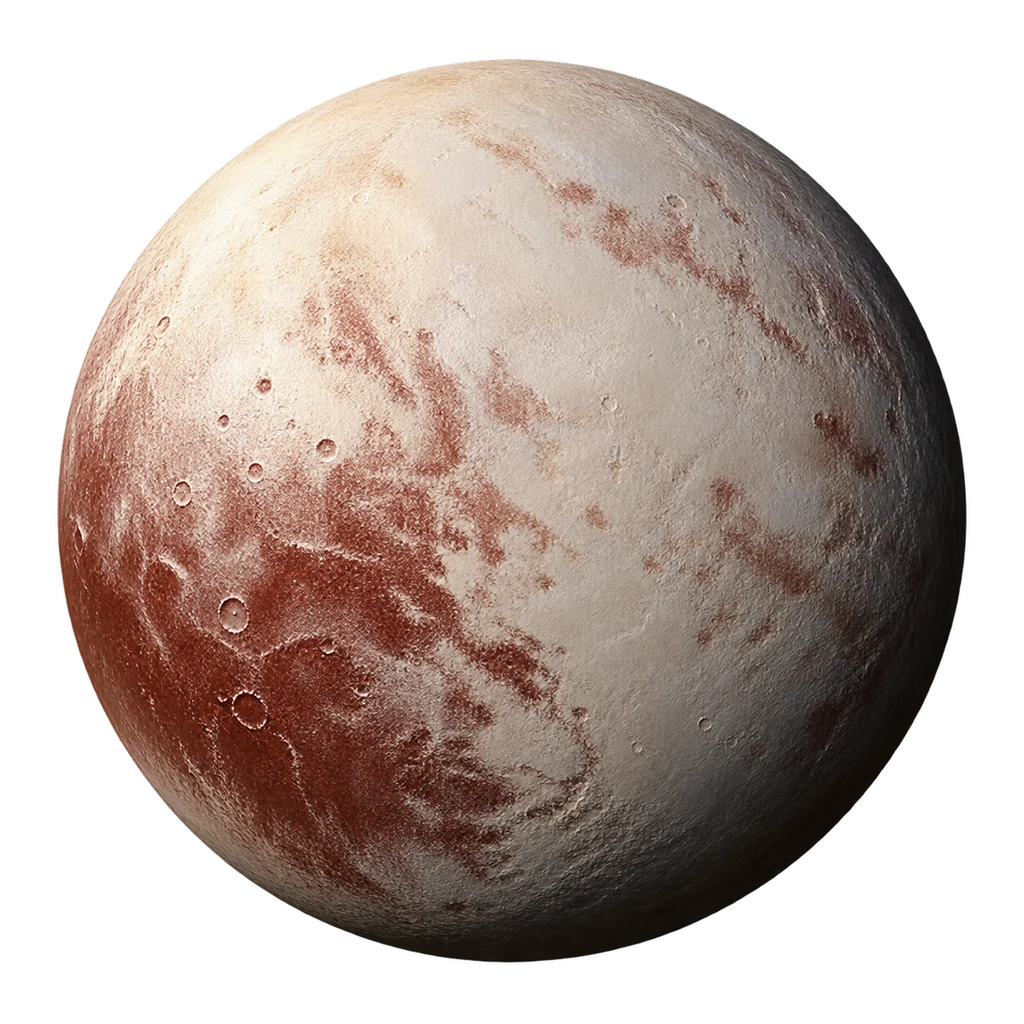
Artist’s impression of Makemake

Dwarf planetA reddish world whose faint reflected light carries the signature of frozen methane.

DIAMETER / EARTH0.11×
EARTHMAKEMAKE
ATMOSPHERE
A global atmosphere was not detectedTenuous or local gas remains possible
SURFACE TEMPERATURE
Very cold · no local measurements
SURFACE PRESSURE
Not established at a landing site
HABITABILITYNo life detected
UNPROTECTED HUMANSNot survivable
Interior ↗

03
Makemake interiorMakemake's internal structure is unresolved.Unresolved

System ↗

04
MK 21 companionSYSTEM OVERVIEW · NOT TO SCALE
MAKEMAKE

Instrument detail

Makemake orbitElliptical orbit viewed along the orbital axis, relative to Sun. Motion is accelerated, not a live position. Distances are center to center.SUNMAKEMAKE52.80 AU38.30 AU
ONE ORBIT≈ 305 Earth years
Closest to the Sun
38.30 AU
Farthest from the Sun
52.80 AU

The Sun sits at a focus of the orbit. Makemake moves faster near the Sun and more slowly farther away.

A simplified ellipse from rounded JPL orbital elements at epoch JD 2461200.5. The moving marker is illustrative, not a current position. Orbital inclination and perturbations are omitted.

Makemake rotation compared with EarthThe markers follow equal elapsed time on both worlds. Equal elapsed time and sidereal rotation rates. Polar schematic: sizes, axial tilt and seasons are not shown. Illumination uses a circular mean orbit, not a live sky prediction. The spin direction is illustrative, not measured.SAME ELAPSED TIME · POLAR SCHEMATICMAKEMAKE22.8 hoursSIDEREAL ROTATIONDirection illustrativeEARTH23.9 hoursSIDEREAL ROTATION≈ 24 h · solar day
Marked longitude · equal time on both worlds
ONE SIDEREAL ROTATION22.8 hours

An estimated spin period

The comparison uses a reported light-curve period of about 22.8 hours. JPL flags the period as uncertain because the observations do not cover the light curve fully. Spin direction is illustrative.

0 Earth hoursShared clock

Spin comparison only; no solar day is inferred. Sizes and starting longitudes are schematic, not live positions.

Satellite atlasMoons
MK 21 companionSYSTEM OVERVIEW · NOT TO SCALE

Makemake and its surroundings

Hubble revealed a much fainter moon, nicknamed MK 2. Separating the light of the two bodies helps astronomers understand the system.

The illustration identifies companions without assigning orbital periods, distances or present-day positions. Body sizes and spacing are schematic.

GRAVITY CONSTRAINTSMODEL-DEPENDENT
SURFACE GRAVITYModel-dependent

Mass, size and shape

Surface gravity requires the body’s own mass and radius. Size estimates and the division of mass between binary components introduce model assumptions. No single numerical jump comparison is adopted here.

Makemake interiorMakemake's internal structure is unresolved.Unresolved

Beyond the surface

Remote observations constrain surface materials and bulk properties, but do not map internal layer boundaries. A precise core, shell thickness or present-day ocean is not established by this view.

    Artist’s impression of Makemake

    Chemistry in reflected light.

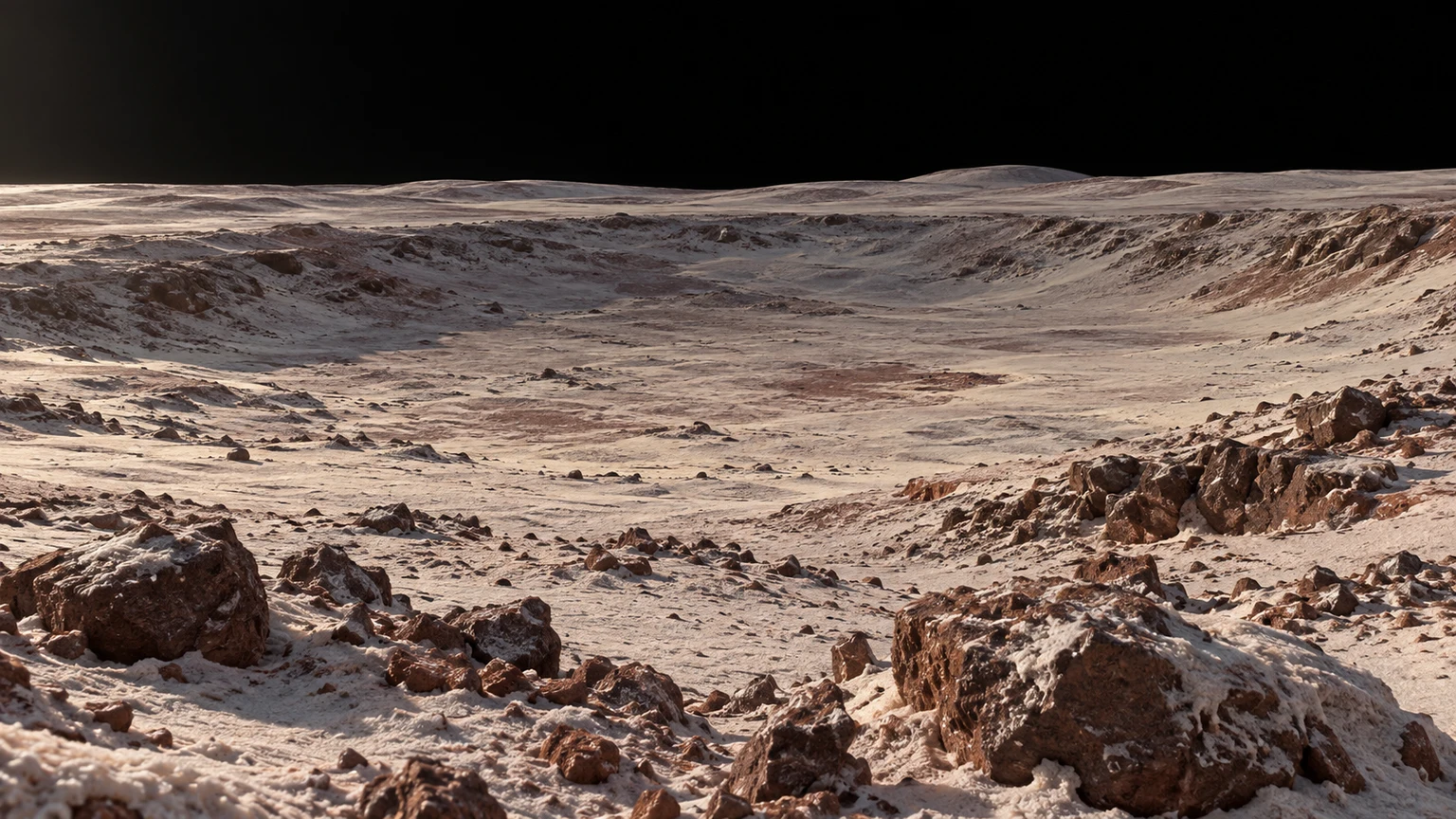
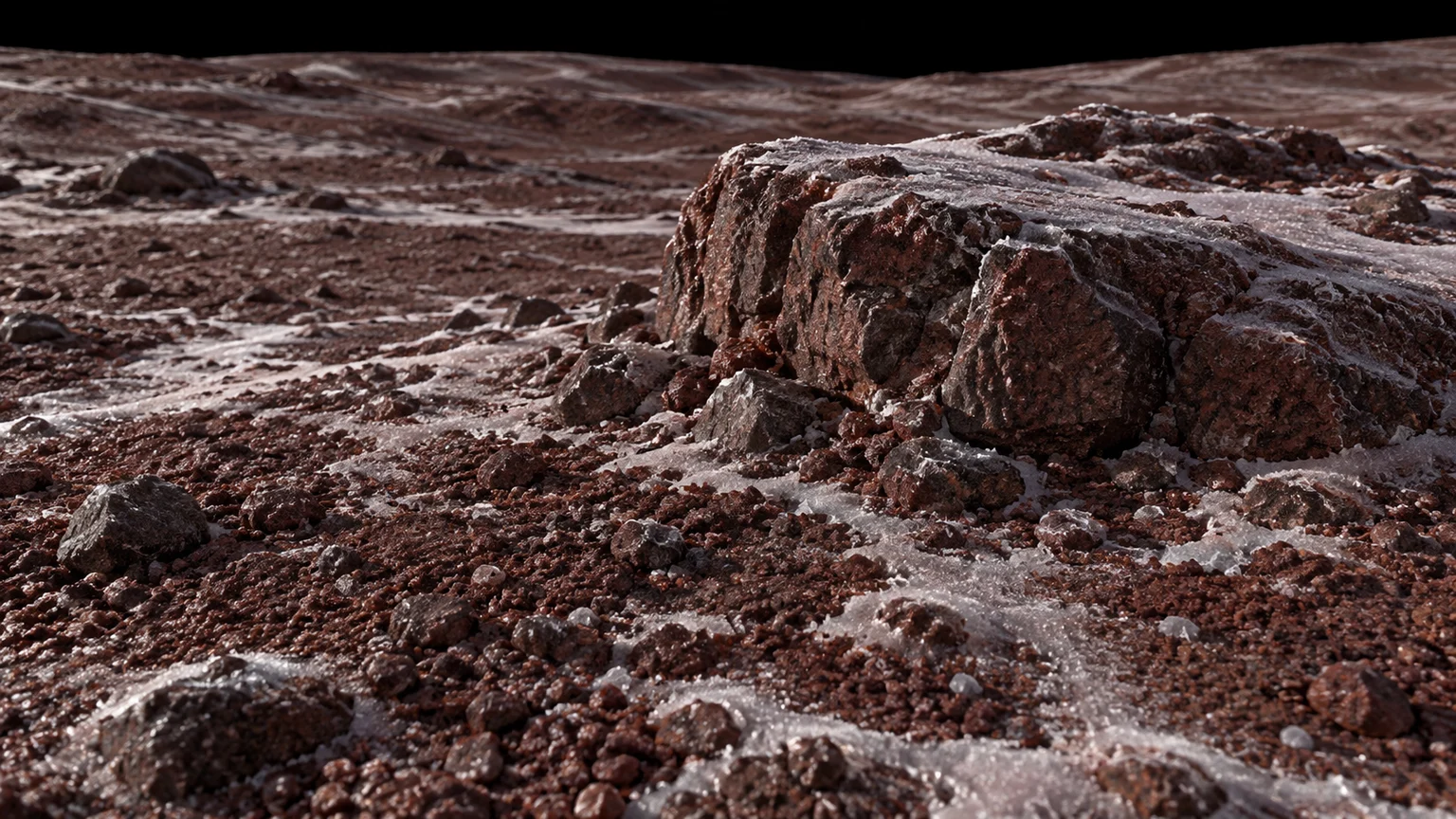
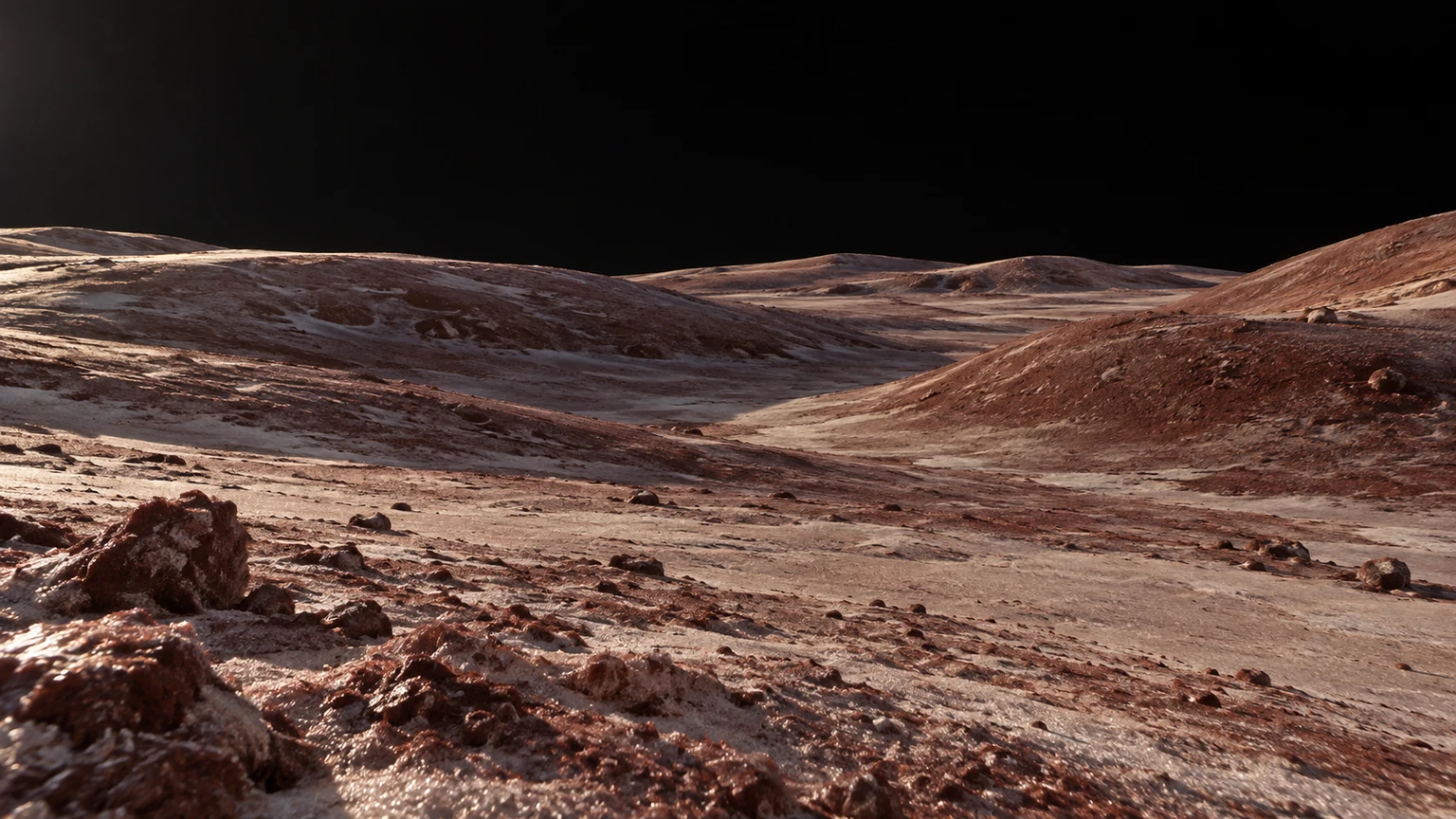
    Methane and ethane ice have been detected on Makemake. Its overall reddish-brown appearance is known, but its local geography is not. The frost and low hills in these scenes are interpretations rather than surveyed features.

    A sharp disappearance.

    When Makemake crossed a background star, the sudden loss of starlight argued against a substantial global atmosphere. A local or very tenuous envelope is harder to exclude. Atmospheric limits are more informative here than invented percentages.

    A dark point beside a bright world.

    Hubble revealed a much fainter moon, nicknamed MK 2. Separating the light of the two bodies helps astronomers understand the system.

    Centuries outside, hours within.

    A year lasts about three centuries, while a rotation takes roughly twenty-two and a half hours.

    DIAMETER / EARTH0.11×
    EARTHMAKEMAKE
    EARTH
    12,756 km
    MAKEMAKE
    1,430 km
    approximate planet diameter / equatorial Earth diameter · rings excluded

    Approximate diameter; local surface details are unresolved.

    ATMOSPHERE
    A global atmosphere was not detectedTenuous or local gas remains possible

    A stellar occultation ruled out a substantial Pluto-like global atmosphere at that observation. It did not exclude every possible local or seasonal envelope.

    SURFACE TEMPERATURE
    Very cold · no local measurements
    SURFACE PRESSURE
    Not established at a landing site
    HABITABILITYNo life detected

    There is no evidence of life here. Remote measurements do not establish a liquid-water habitat; the interior remains poorly constrained.

    UNPROTECTED HUMANSNot survivable

    The distant, cold environment offers no known breathable air or protective surface pressure. Human exploration would require a sealed, thermally controlled habitat.

    Planet and landscape images are artistic interpretations.

    • NASA ↗
      • Classification and orbital data
      • Natural conditions and human survival
      • Surface
      • Companion
      • Time
    • NASA / JPL ↗
      • Rounded heliocentric orbital elements
      • Rotation measurements and uncertainty
    • Research ↗
      • Size, physical data and atmospheric constraints
      • Atmosphere
    Hypothetical ground-level landscape of Makemake. Color and broad material choices follow remote observations; terrain, lighting and local details are artistic interpretation, not a mapped or photographed site.

    Frost among reddish hills

    Hypothetical ground-level landscape of Makemake. Color and broad material choices follow remote observations; terrain, lighting and local details are artistic interpretation, not a mapped or photographed site.

    Hypothetical ground-level landscape of Makemake. Color and broad material choices follow remote observations; terrain, lighting and local details are artistic interpretation, not a mapped or photographed site.

    Inside an imagined basin

    Hypothetical ground-level landscape of Makemake. Color and broad material choices follow remote observations; terrain, lighting and local details are artistic interpretation, not a mapped or photographed site.

    Pale frost tracing the edges of reddish granular material and one squat outcrop, black sky only a narrow strip. An artistic reconstruction of Makemake; local detail, lighting and viewpoint are imagined. The depicted environment is a possibility, not an observed surface or weather map.

    Frost at the stone edge

    Pale frost tracing the edges of reddish granular material and one squat outcrop, black sky only a narrow strip. An artistic reconstruction of Makemake; local detail, lighting and viewpoint are imagined. The depicted environment is a possibility, not an observed surface or weather map.