SOL SYSTEM / PLANETARY DOSSIER

Salacia

Salacia is a dark outer-solar-system body paired with the moon Actaea. Their mutual orbit reveals the system’s mass, and brightness measurements suggest they may keep the same faces turned toward each other.

Artist’s impression of Salacia

Dwarf planet candidateA faint outer-solar-system object whose companion helps bring it into focus.

DIAMETER / EARTH0.07×
EARTHSALACIA
ATMOSPHERE
An environment still being studiedNo measured composition chart
SURFACE TEMPERATURE
Very cold · no local measurements
SURFACE PRESSURE
Not established at a landing site
HABITABILITYNo life detected
UNPROTECTED HUMANSNot survivable
Interior ↗

03
Salacia interiorSalacia's internal structure is unresolved.Unresolved

System ↗

04
Actaea1 companionSYSTEM OVERVIEW · NOT TO SCALE
SALACIA

Instrument detail

Salacia orbitElliptical orbit viewed along the orbital axis, relative to Sun. Motion is accelerated, not a live position. Distances are center to center.SUNSALACIA46.50 AU37.70 AU
ONE ORBIT≈ 275 Earth years
Closest to the Sun
37.70 AU
Farthest from the Sun
46.50 AU

The Sun sits at a focus of the orbit. Salacia moves faster near the Sun and more slowly farther away.

A simplified ellipse from rounded JPL orbital elements at epoch JD 2461200.5. The moving marker is illustrative, not a current position. Orbital inclination and perturbations are omitted.

Salacia rotation compared with EarthThe markers follow equal elapsed time on both worlds. Equal elapsed time and sidereal rotation rates. Polar schematic: sizes, axial tilt and seasons are not shown. Illumination uses a circular mean orbit, not a live sky prediction. The spin direction is illustrative, not measured.SAME ELAPSED TIME · POLAR SCHEMATICSALACIA5.5 daysSIDEREAL ROTATIONDirection illustrativeEARTH23.9 hoursSIDEREAL ROTATION≈ 24 h · solar day
Marked longitude · equal time on both worlds
ONE SIDEREAL ROTATION5.5 days

Turning through space

Long-term photometry supports a rotation period of about 5.49 days, consistent with Actaea’s orbit. This illustrates the inferred synchronous state; spin direction is illustrative.

0 Earth hoursShared clock

Spin comparison only; no solar day is inferred. Sizes and starting longitudes are schematic, not live positions.

Satellite atlasMoons
Actaea1 companionSYSTEM OVERVIEW · NOT TO SCALE

Salacia and its surroundings

Salacia and Actaea form a binary system. Their mutual orbit constrains the combined mass, while thermal modeling estimates their sizes. The circle comparison uses an estimate for Salacia alone, not the combined emitting area of both bodies.

The illustration identifies companions without assigning orbital periods, distances or present-day positions. Body sizes and spacing are schematic.

GRAVITY CONSTRAINTSMODEL-DEPENDENT
SURFACE GRAVITYModel-dependent

Mass, size and shape

Surface gravity requires the body’s own mass and radius. Size estimates and the division of mass between binary components introduce model assumptions. No single numerical jump comparison is adopted here.

Salacia interiorSalacia's internal structure is unresolved.Unresolved

Beyond the surface

Remote observations constrain surface materials and bulk properties, but do not map internal layer boundaries. A precise core, shell thickness or present-day ocean is not established by this view.

    Artist’s impression of Salacia

    Dark does not mean small.

    Salacia reflects relatively little sunlight. Thermal observations help break the link between brightness and size, revealing a substantial body behind that faint signal. Its neutral, dark appearance guides the palette here; the terrain itself is hypothetical.

    Actaea is part of the measurement.

    Salacia and Actaea form a binary system. Their mutual orbit constrains the combined mass, while thermal modeling estimates their sizes. The circle comparison uses an estimate for Salacia alone, not the combined emitting area of both bodies.

    Evidence for a synchronized pair.

    Long-term brightness measurements provide significant evidence that Salacia and Actaea are both locked to their mutual orbital period. If so, they keep the same faces toward one another, turning as a pair through space.

    The portrait is still incomplete.

    Years of photometry can reveal a rhythm without resolving a single valley. That is the distinction behind this log: the system’s changing light is measured, while the close-up landscapes remain possible views awaiting a much closer look.

    DIAMETER / EARTH0.07×
    EARTHSALACIA
    EARTH
    12,756 km
    SALACIA
    854 km
    approximate planet diameter / equatorial Earth diameter · rings excluded

    Published thermal-model estimate 854 ± 45 km for Salacia alone, assuming equal reflectivity for Salacia and Actaea. The system’s combined effective diameter is larger.

    ATMOSPHERE
    An environment still being studiedNo measured composition chart

    A reliable atmospheric inventory is not available here. Unknown abundances are left unquantified rather than turned into percentage bars.

    SURFACE TEMPERATURE
    Very cold · no local measurements
    SURFACE PRESSURE
    Not established at a landing site
    HABITABILITYNo life detected

    There is no evidence of life here. Remote measurements do not establish a liquid-water habitat; the interior remains poorly constrained.

    UNPROTECTED HUMANSNot survivable

    The distant, cold environment offers no known breathable air or protective surface pressure. Human exploration would require a sealed, thermally controlled habitat.

    Planet and landscape images are artistic interpretations.

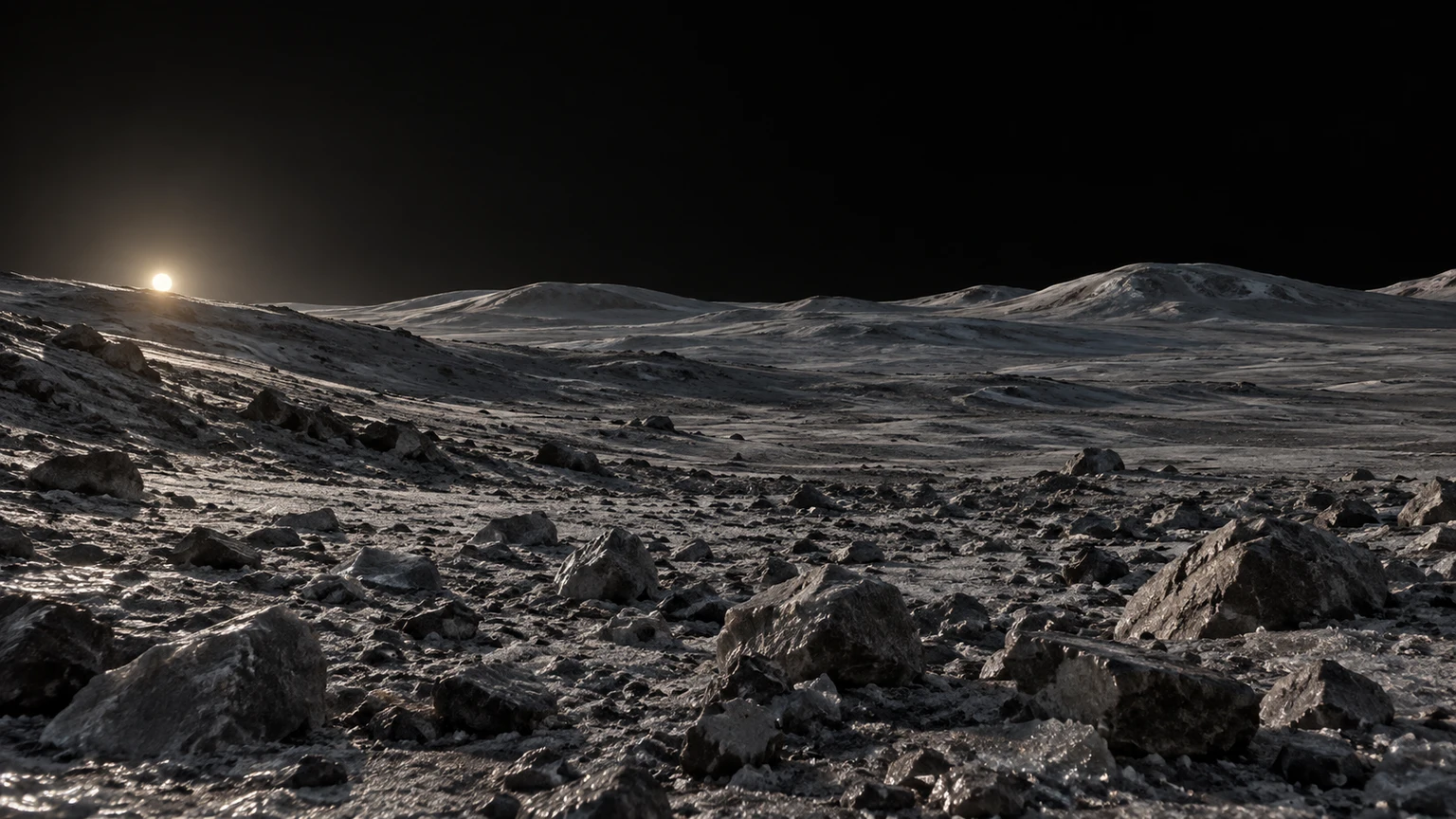
    Hypothetical ground-level landscape of Salacia. Color and broad material choices follow remote observations; terrain, lighting and local details are artistic interpretation, not a mapped or photographed site.

    Dark ground beneath a black sky

    Hypothetical ground-level landscape of Salacia. Color and broad material choices follow remote observations; terrain, lighting and local details are artistic interpretation, not a mapped or photographed site.

    Hypothetical ground-level landscape of Salacia. Color and broad material choices follow remote observations; terrain, lighting and local details are artistic interpretation, not a mapped or photographed site.

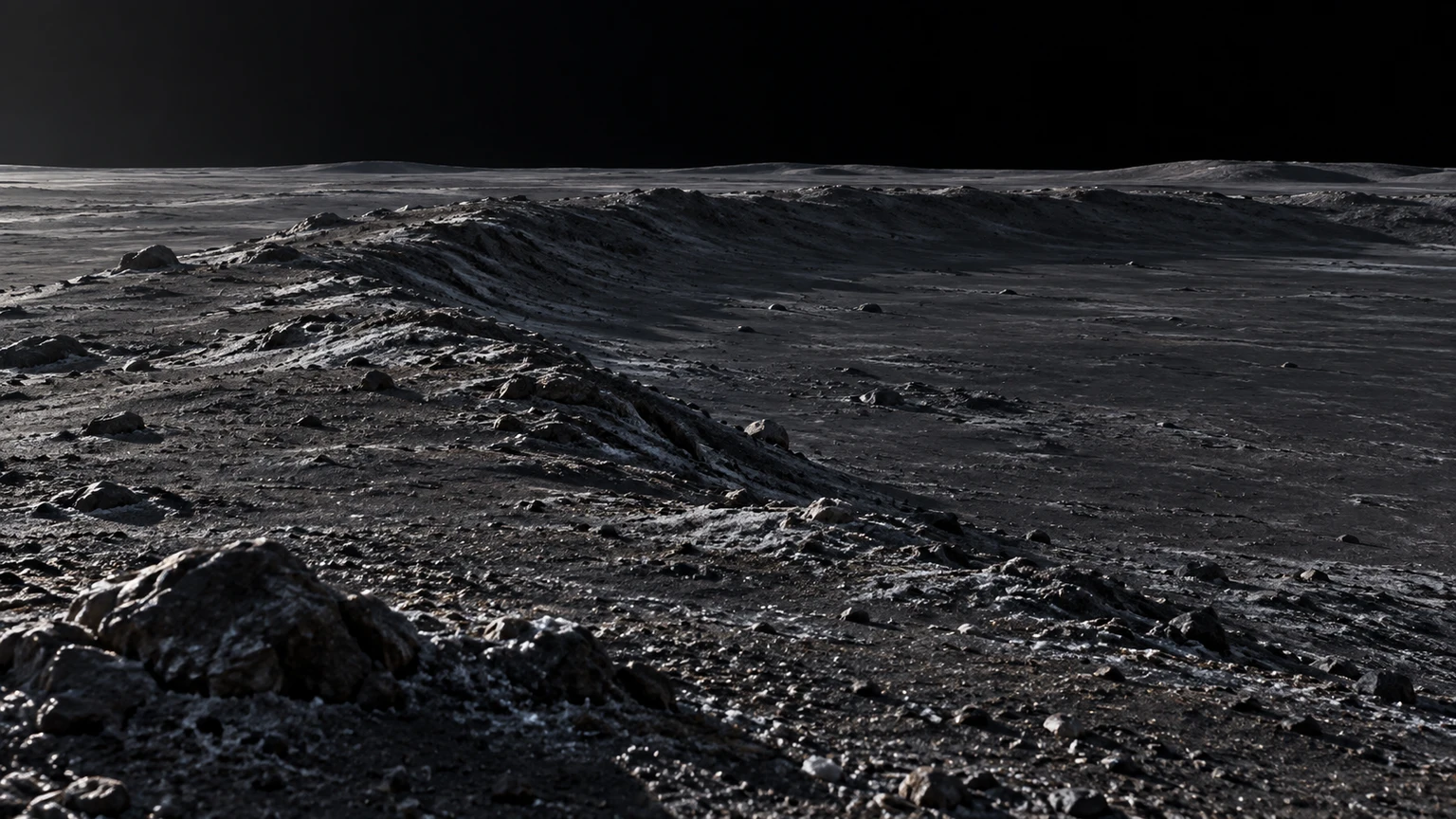
    Rubble and a low horizon

    Hypothetical ground-level landscape of Salacia. Color and broad material choices follow remote observations; terrain, lighting and local details are artistic interpretation, not a mapped or photographed site.

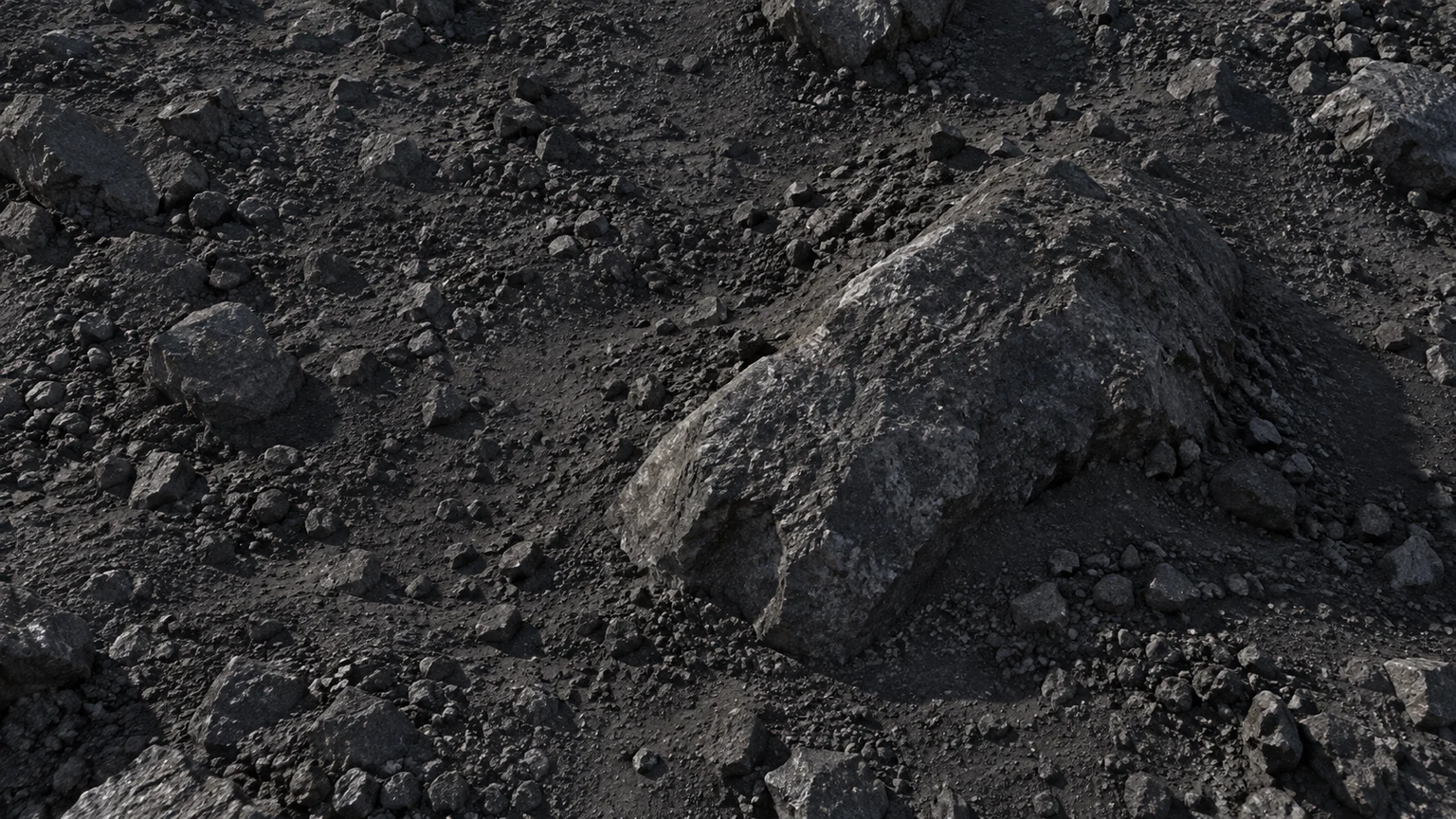
    Dark gray rubble and a partially buried coarse block, faint sunlight revealed by camera exposure. An artistic reconstruction of Salacia; local detail, lighting and viewpoint are imagined. The depicted environment is a possibility, not an observed surface or weather map.

    Textures in the dark

    Dark gray rubble and a partially buried coarse block, faint sunlight revealed by camera exposure. An artistic reconstruction of Salacia; local detail, lighting and viewpoint are imagined. The depicted environment is a possibility, not an observed surface or weather map.