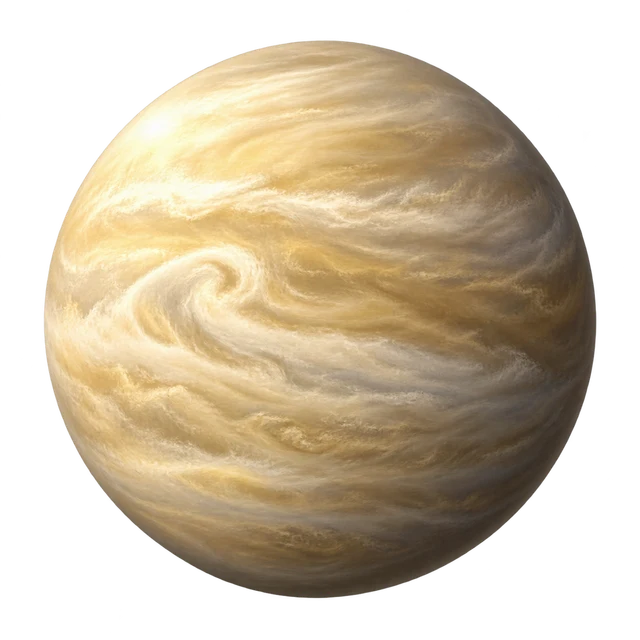
A sky that holds the heat.
Venus wears a bright veil of sulfuric-acid clouds. Below it, a dense carbon-dioxide atmosphere traps enough heat to make this the hottest planet in our solar system.
A world written in lava.
Broad volcanic plains cover much of Venus. Lava flows, highlands and mountains shape a landscape hidden from ordinary cameras in orbit. Radar lets us look through the clouds and trace that terrain.
Beneath the cloud cover.
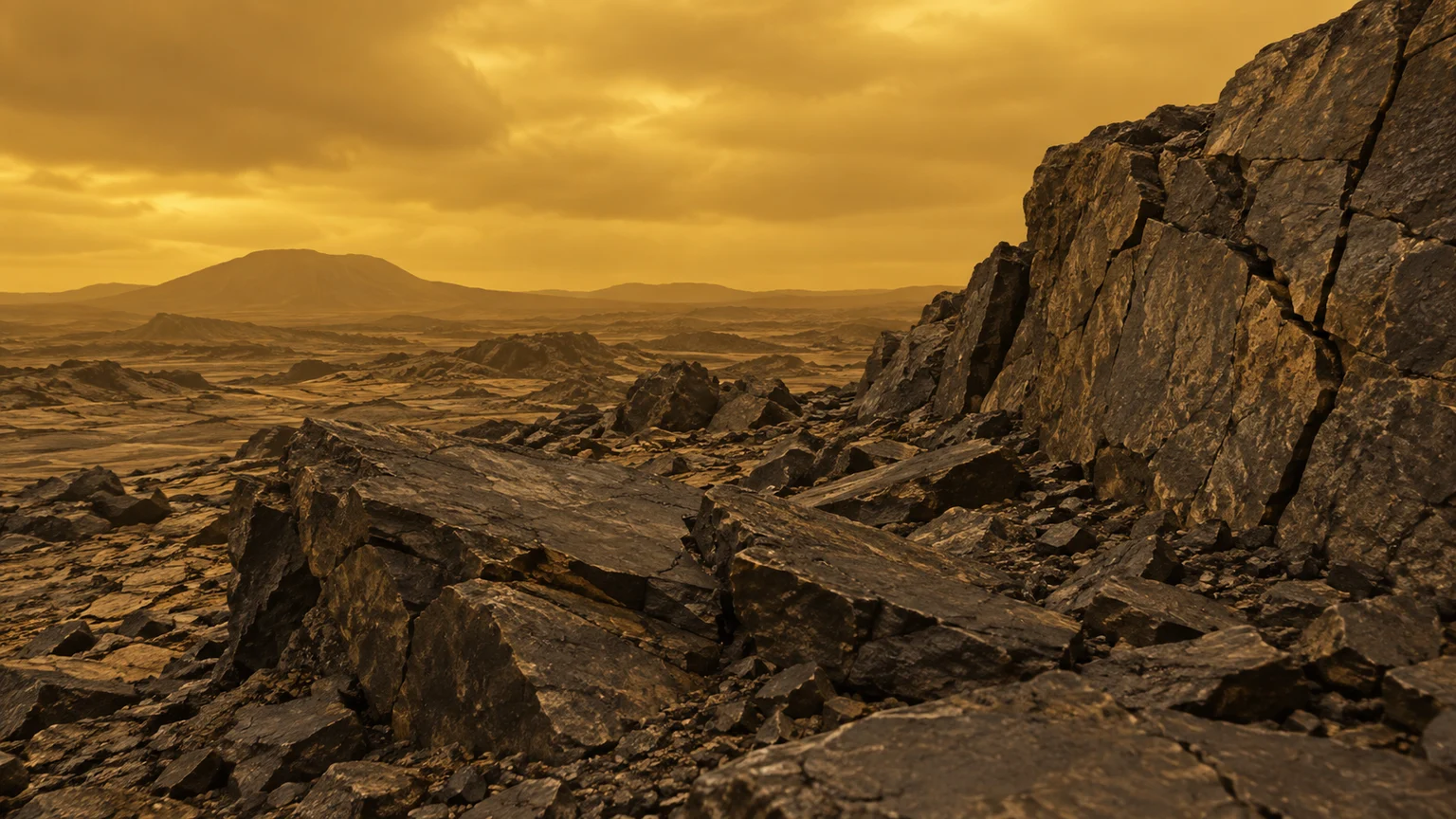
Down on the ground, the view becomes intimate: broken rock underfoot, layered surfaces and a distant horizon fading into the atmosphere. The scenes here imagine that perspective; they are not photographs of a surveyed location.
A world on its own clock.
One full rotation takes about 243 Earth days—longer than Venus’s 225-day year. But rotation and sunrise are different clocks: a solar day lasts about 117 Earth days. Venus also turns in the opposite direction to most planets. If the clouds allowed you to follow the Sun, it would rise in the west and set in the east.