SOL SYSTEM / SPACE PROBE DOSSIER

New Horizons

The first close encounter with Pluto revealed an unexpectedly complex world. New Horizons continued to Arrokoth, a small survivor from the early Solar System.
OUTER SOLAR SYSTEM

Calculated position ·

Space probes ↗
Artist’s illustration of New Horizons
SPACE PROBEARTIST’S IMPRESSION

Distance from home ↗

02
DISTANCE FROM SOL65.63 AU

About 9.82 billion kilometres from the Sun.

Calculated position · 20 Sep 2026

Signal & speed ↗

03
SPEED RELATIVE TO THE SUN13.6 km/s

Travelling at 13.6 km/s relative to the Sun.

Calculated from the dated trajectory

Mission field log ↗

04
  1. 2006Launch
  2. 2007Jupiter gravity assist
  3. 2015Pluto & Charon
  4. 2019Arrokoth

Encounters ↗

05
Pluto & Arrokoth

Two encounters with very different worlds.

Sources & image notes ↗

06
MISSION REFERENCESNASA / JPL

Mission history, spacecraft design and the dated position used on the map.

Illustration, not a mission photograph.
NEW HORIZONS

Instrument detail

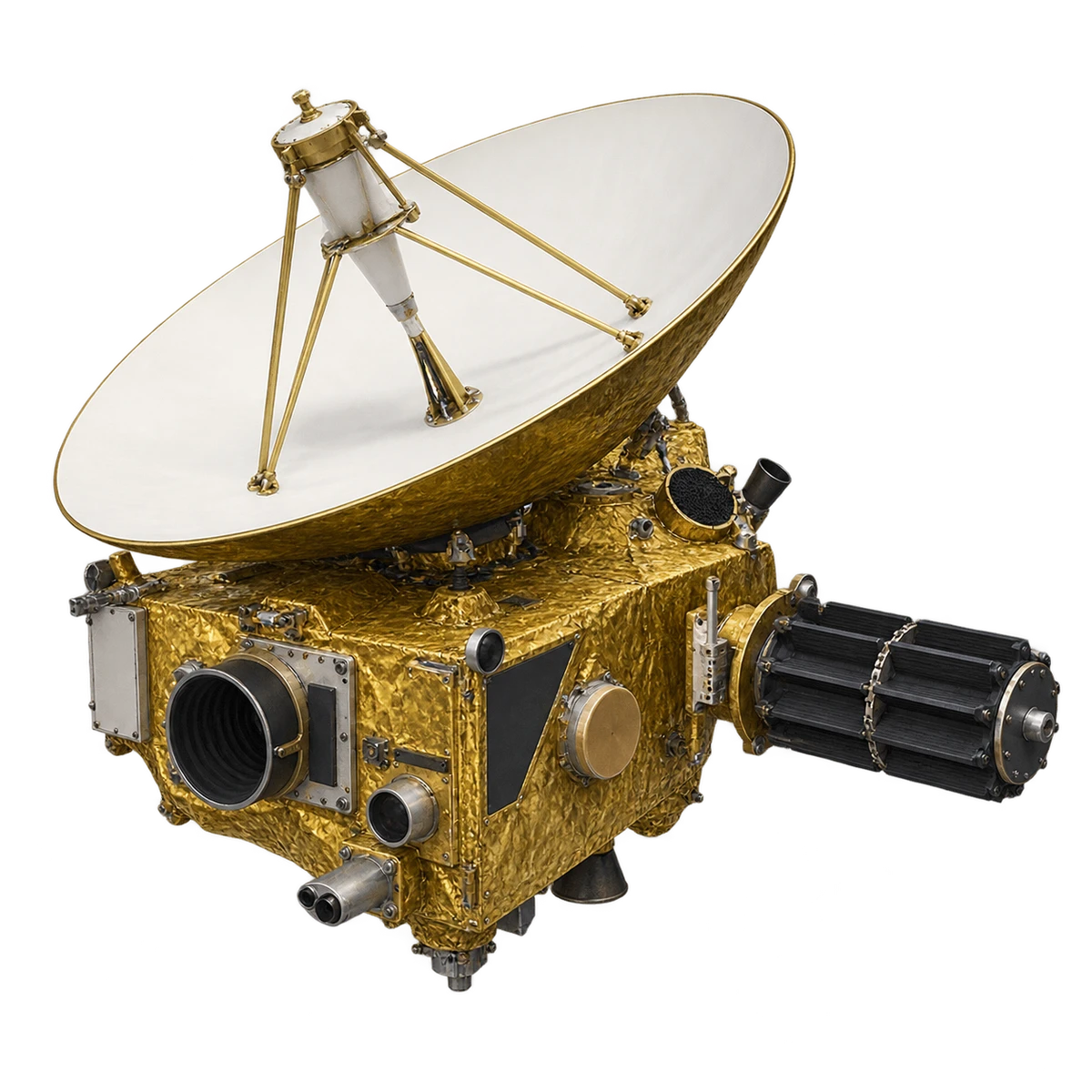
Artist’s impression of New Horizons

Research-informed artist’s impression. Not an engineering drawing or mission photograph.

Built for a brief encounter.

A compact, gold-wrapped spacecraft carries cameras, spectrometers and instruments for particles and dust. A radioisotope generator supplies electricity. The antenna returns stored observations across the long distance to Earth.

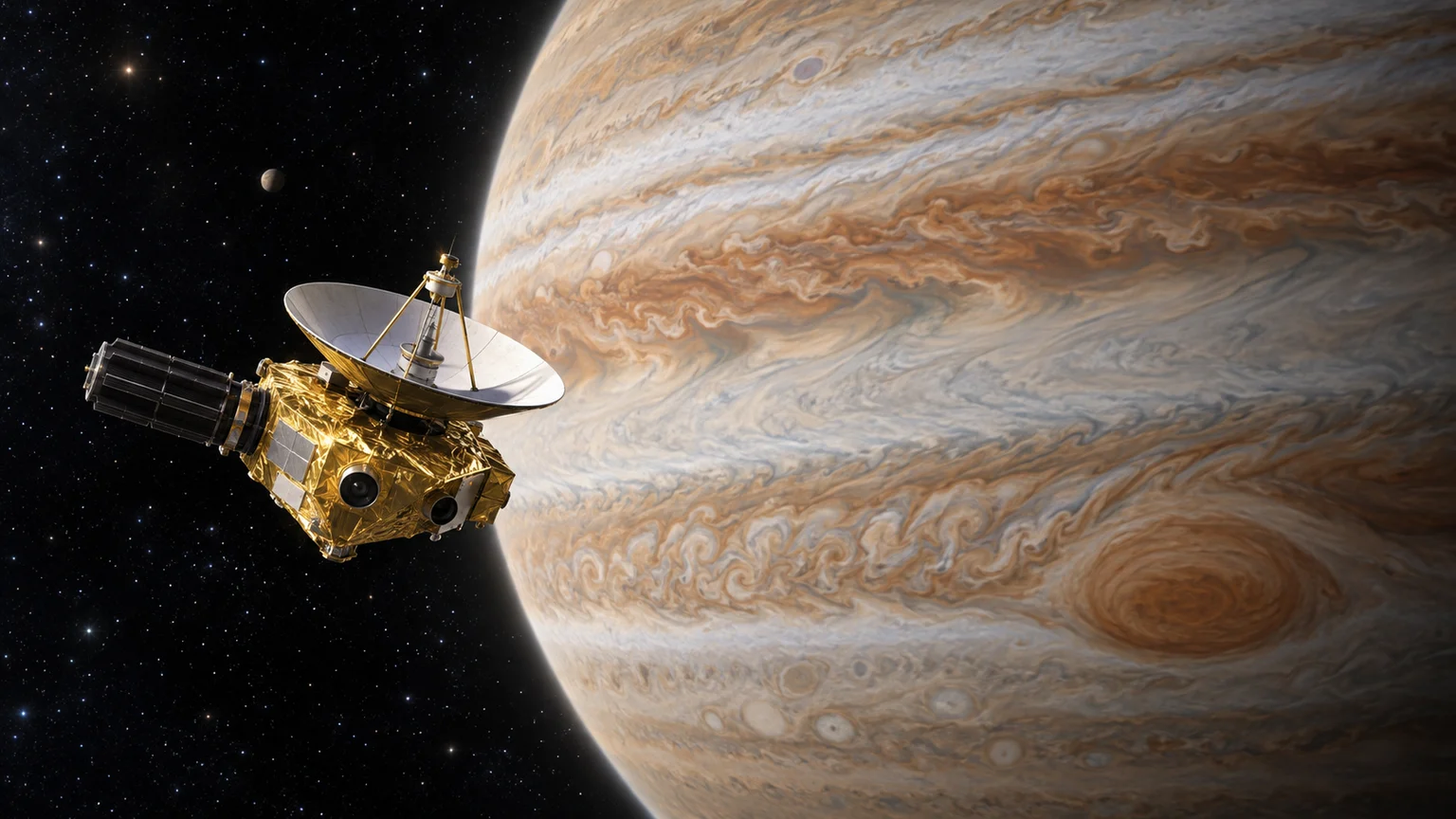
An artistic view of New Horizons at Jupiter. The spacecraft and cloudscape evoke its gravity-assist encounter; geometry and lighting are illustrative.

A boost from Jupiter

An artistic view of New Horizons at Jupiter. The spacecraft and cloudscape evoke its gravity-assist encounter; geometry and lighting are illustrative.

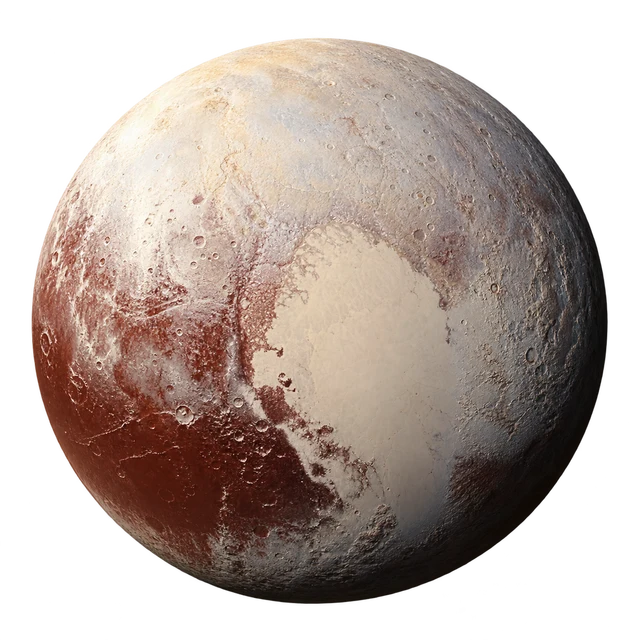
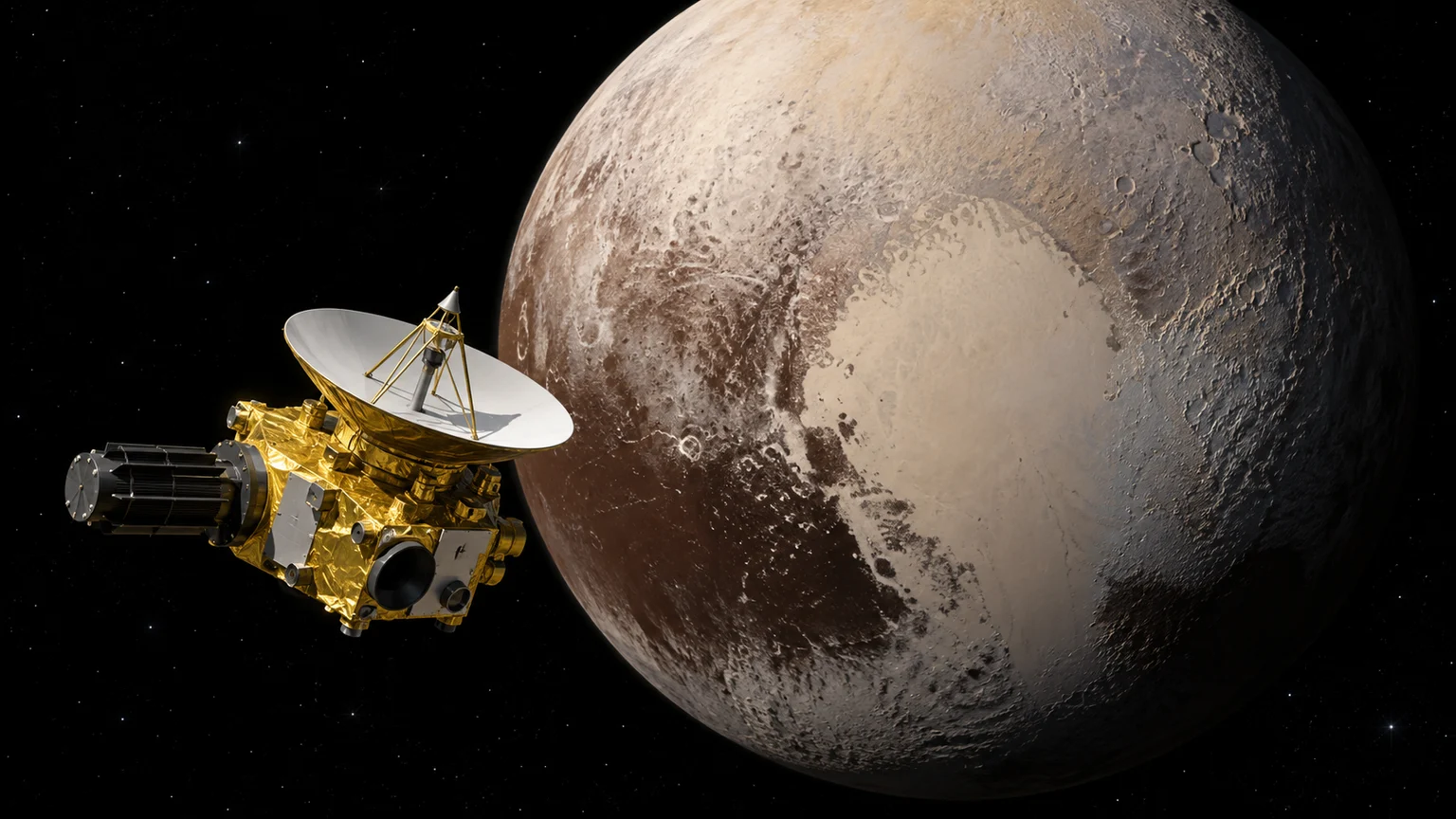
An imagined view of the Pluto encounter. The bright ice region draws on Pluto’s observed appearance; spacecraft position and lighting are illustrative.

Pluto comes into view

An imagined view of the Pluto encounter. The bright ice region draws on Pluto’s observed appearance; spacecraft position and lighting are illustrative.

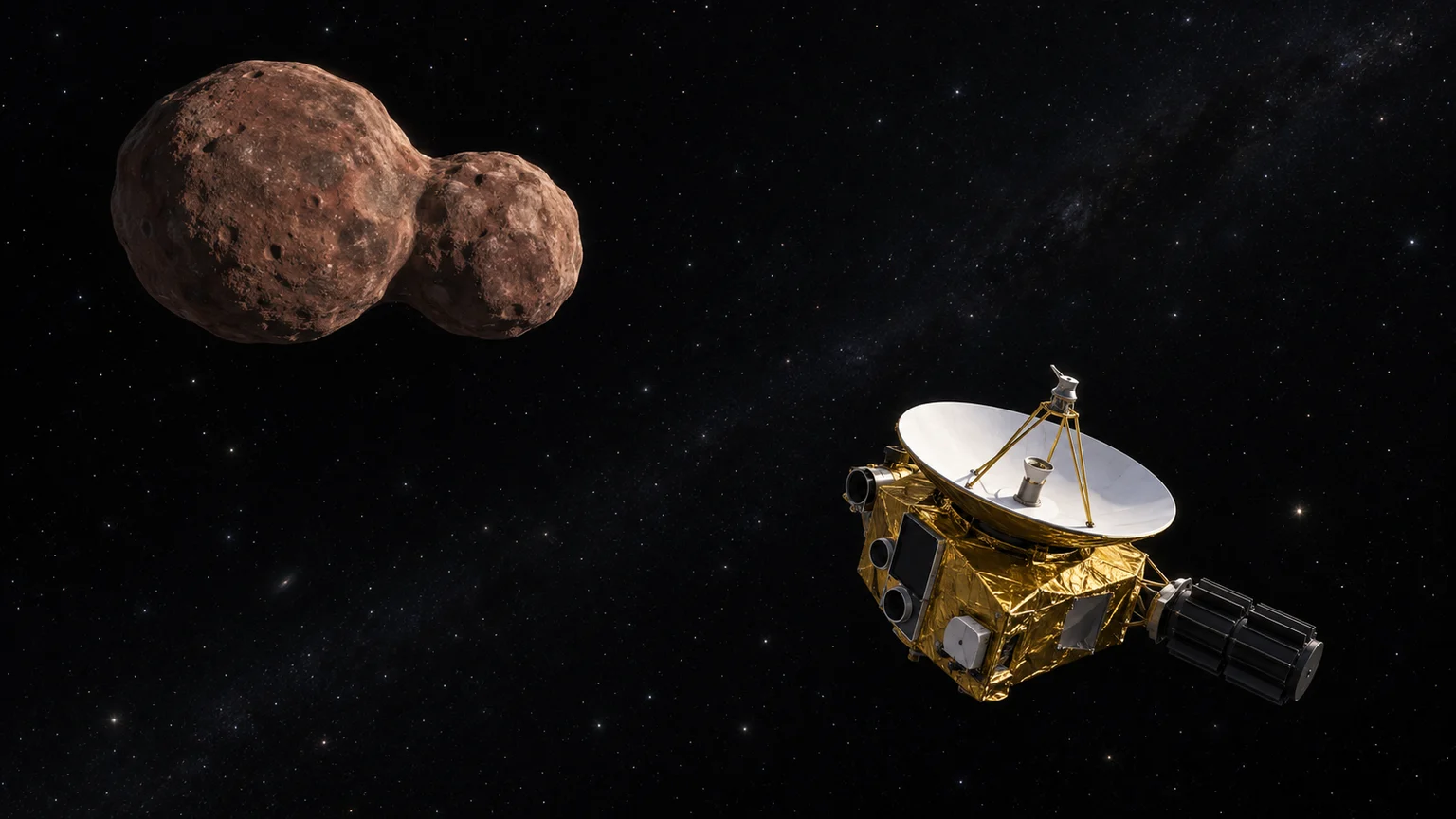
An artistic reconstruction of the Arrokoth encounter. Its joined lobes reflect the observed form; fine terrain and viewing geometry are illustrative.

Meeting Arrokoth

An artistic reconstruction of the Arrokoth encounter. Its joined lobes reflect the observed form; fine terrain and viewing geometry are illustrative.

A place on the distance scale.

This map places New Horizons at 65.63 AU from the Sun, about 9.82 billion kilometres. NASA/JPL Horizons trajectory calculation for 20 September 2026, 00:00 TDB. This is a modelled position, not live telemetry.

The marker shows distance along Starvium’s route, not a live sky position or flight direction. New Horizons continues moving; this dated marker stays fixed until the snapshot is updated.

Find New Horizons on the map ↗NASA / JPL · Position reference ↗

Motion beyond the planets.

The displayed speed is the magnitude of the heliocentric velocity in the dated NASA/JPL trajectory. It is not a live communications reading.

Speed relative to the Sun: 13.6 km/s. Position epoch: 20 Sep 2026.

NASA · Mission position and status ↗

ENTRY 01 / PLUTO

A world comes into focus.

New Horizons passed Pluto on 14 July 2015. A distant point of light became a world of mountains, ice and intricate terrain. The encounter also revealed new detail on Charon and Pluto’s smaller moons.

ENTRY 02 / BEYOND PLUTO

An ancient meeting.

On 1 January 2019, New Horizons encountered Arrokoth. Its joined lobes preserve clues to how small bodies assembled early in the Solar System. The mission continues outward beyond its two close-up destinations.

Two chapters of one story.

Pluto and Arrokoth offer very different views of the outer Solar System: a complex dwarf planet and a small, ancient body. Their encounters connect planetary geology with the origins of the building blocks of planets.