ROSS 128 / STELLAR DOSSIER

Ross 128

11.01 light-years from Sol

A small red dwarf with a close companion and a relatively subdued stellar temperament.
Stellar conditions ↗

02
EFFECTIVE TEMPERATURE3,192 K

A cool star is still incandescent.

Ross 1283,192 K
Sol5,770 K
Shared scale 0–10,000 K · effective, not core temperature

Evolution ↗

03
H–R MAPBRIGHTER ↑
SOLHEREHOTTERCOOLER →
CURRENT PHASE

A long-lived stellar engine.

  1. NOWHydrogen fusion
  2. INTERIORDeep convection
  3. OUTLOOKLong main sequence
A broad evolutionary picture, not a measured remaining lifetime.
An imagined view above Ross 128’s photosphere. Granules, darker patches and small limb structures draw on solar physics, not a resolved map of this star. Warm filtered color and reduced exposure reveal the gas.Across the quiet glow ↗ ARTIST’S IMPRESSION · 3 VIEWS

Diameter comparison ↗

06
0.1967 × Sol
ROSS 128

Instrument detail

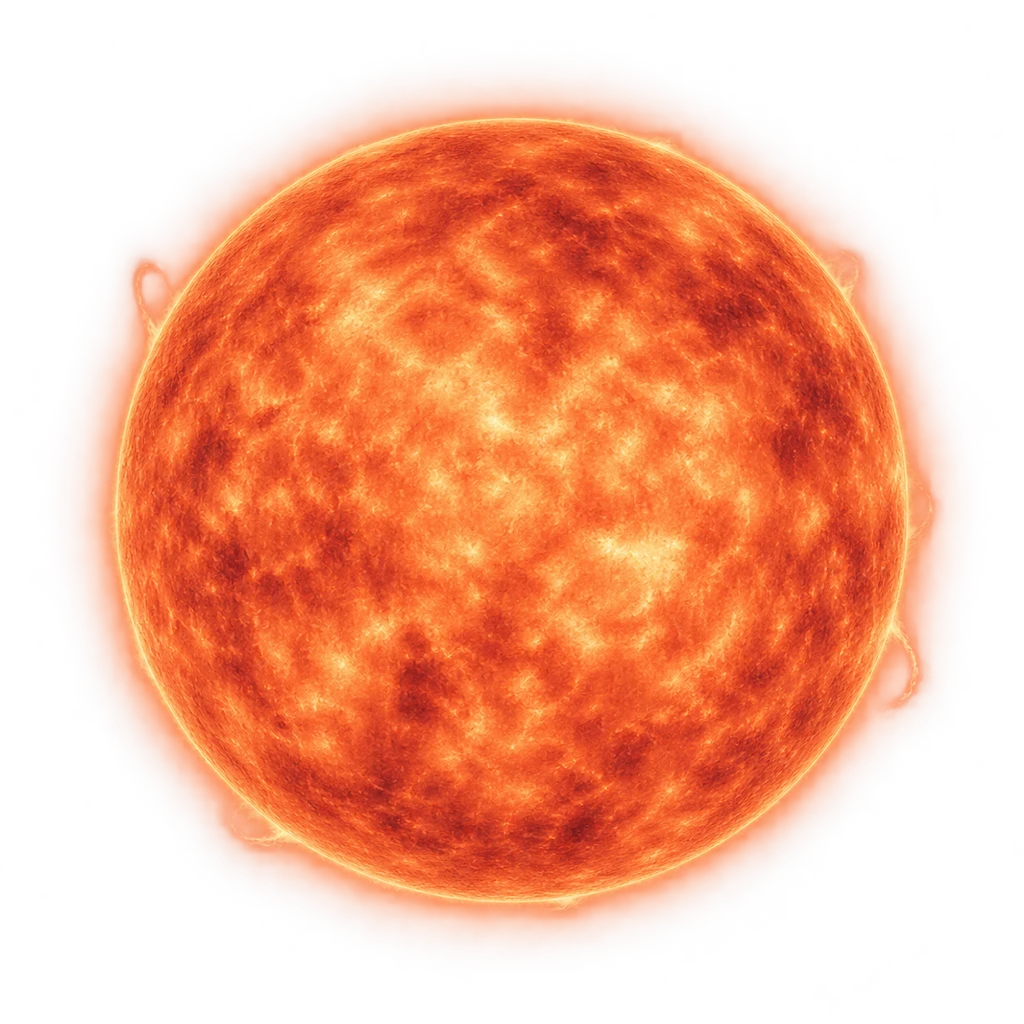
Artist’s impression of Ross 128

Artist’s impression · structure and color are illustrative.

One fifth of a familiar sun.

Ross 128 also appears in stellar surveys as Gliese 447. Its diameter is roughly one fifth of Sol’s, and its effective temperature is much lower. The comparison above uses a radius inferred from stellar measurements rather than the apparent size of our illustration. A small disk can still conceal the enormous volume and energy of a working star.

There is no ground beneath the glow.

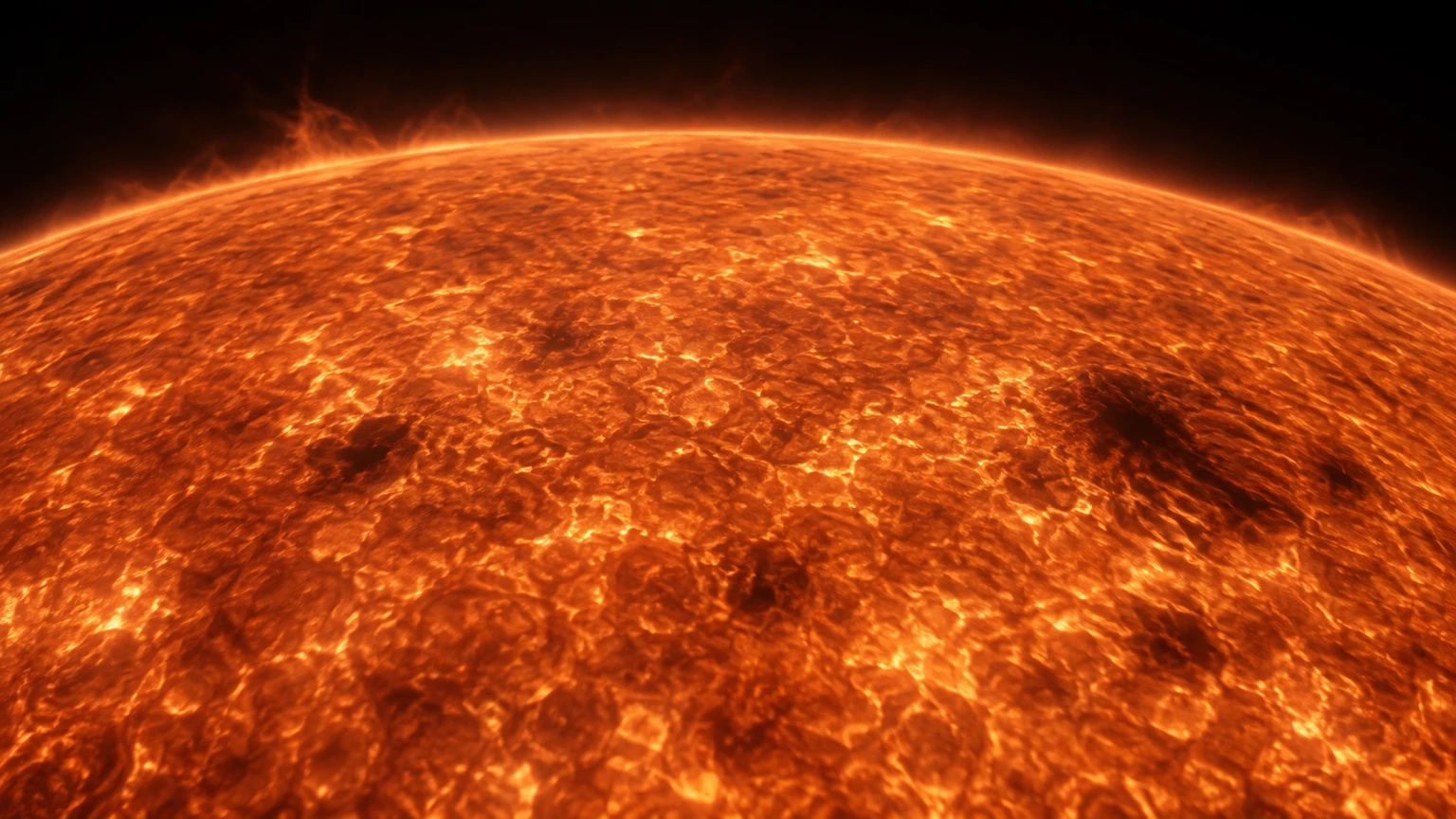
Hydrogen fusion supplies energy deep inside a main-sequence red dwarf. The visible photosphere is a gaseous layer from which light escapes. Our close view translates that structure into bright cells, subtle dark patches and a curved horizon. These are not islands or mountains. Even a cooler star remains a place of intense heat, with no breathable air or surface to stand on.

A calmer host, not a promise.

The discovery observations found weak magnetic activity and slow rotation. That made Ross 128 an interesting contrast to more active nearby red dwarfs. Less stellar activity can ease one concern about a planet’s environment, but it does not establish that the planet has kept an atmosphere or developed life.

The neighborhood keeps changing.

Ross 128 is moving toward our Solar System. ESO’s discovery report estimated that it would become our nearest stellar neighbor in about 79,000 years. This is a reminder that the atlas is a snapshot: the stars have their own journeys. That future approach does not imply a collision or make the immense distances between systems disappear.

A star in perspective.

DIAMETER / SOL0.197 ×

About 19.7% of our Sun’s diameter.

Circles compare diameter, not mass or luminosity. Radius: 0.1967 ± 0.0077 solar radii, Mann et al. (2015), Table 5, Gl 447. Diameter uses the same ratio.

EFFECTIVE TEMPERATURE

A cool star is still incandescent.

  • Ross 128≈ 3,192 K
  • Sol≈ 5,770 K

Shared scale: 0–10,000 K. Effective temperature describes total emitted energy per unit surface area; it is not the core temperature. Effective temperature: 3,192 ± 60 K from the same study.

LIFE PHASE

A long-lived stellar engine.

  1. NOWHydrogen fusion
  2. INTERIORDeep convection
  3. OUTLOOKLong main sequence

A broad evolutionary picture, not a measured remaining lifetime.

Research · size and temperature ↗
LIFE & HUMAN SURVIVAL / THE STAR ITSELF
POSSIBILITY FOR LIFEIncompatible with known life

The star’s hot gaseous layers cannot provide the cool, stable environment required by life as we know it. Conditions on any orbiting worlds are a separate question.

WITHOUT PROTECTIONNot survivable

No breathable air or solid ground. Extreme heat and radiation make a close encounter lethal; a meaningful survival timer depends on where you are.

NASA · stellar structure and evolution ↗
10⁵1,000100.10.00110⁻⁵30,00010,0005,0002,500LUMINOSITY / SOL · BRIGHTER →HOTTER ← EFFECTIVE TEMPERATURE (K) → COOLERSUPERGIANTSGIANTSWHITE DWARFSMAIN SEQUENCESOLRoss 128
Ross 1283,192 K · ≈ 0.00362 × Sol
Sol / reference5,770 K · 1 × Sol

Estimated from size & temperature. Both axes are logarithmic; equal steps represent equal ratios.

Small points are other worlds in this atlas. The soft band marks the main sequence; region labels are broad guides, not a path through time.

A long-lived stellar engine.

  1. NOWHydrogen fusion
  2. INTERIORDeep convection
  3. OUTLOOKLong main sequence

A broad evolutionary picture, not a measured remaining lifetime.

Research ↗

How much energy leaves the star?

≈ 0.00362 × Sol

This compares total radiant power across all wavelengths, not just visible light or apparent brightness in our sky. The beams on the dashboard share a linear length scale.

The estimate combines this log’s diameter ratio (0.1967 × Sol) and effective temperature (3,192 K): luminosity scales with radius squared and temperature to the fourth power. It is derived from rounded values, not an independent luminosity measurement.

Radius: 0.1967 ± 0.0077 solar radii, Mann et al. (2015), Table 5, Gl 447. Diameter uses the same ratio.

Effective temperature: 3,192 ± 60 K from the same study.

Swinburne University · Stefan–Boltzmann law ↗

One fifth of a familiar sun.

Ross 128 also appears in stellar surveys as Gliese 447. Its diameter is roughly one fifth of Sol’s, and its effective temperature is much lower. The comparison above uses a radius inferred from stellar measurements rather than the apparent size of our illustration. A small disk can still conceal the enormous volume and energy of a working star.

There is no ground beneath the glow.

Hydrogen fusion supplies energy deep inside a main-sequence red dwarf. The visible photosphere is a gaseous layer from which light escapes. Our close view translates that structure into bright cells, subtle dark patches and a curved horizon. These are not islands or mountains. Even a cooler star remains a place of intense heat, with no breathable air or surface to stand on.

A calmer host, not a promise.

The discovery observations found weak magnetic activity and slow rotation. That made Ross 128 an interesting contrast to more active nearby red dwarfs. Less stellar activity can ease one concern about a planet’s environment, but it does not establish that the planet has kept an atmosphere or developed life.

The neighborhood keeps changing.

Ross 128 is moving toward our Solar System. ESO’s discovery report estimated that it would become our nearest stellar neighbor in about 79,000 years. This is a reminder that the atlas is a snapshot: the stars have their own journeys. That future approach does not imply a collision or make the immense distances between systems disappear.

An imagined view above Ross 128’s photosphere. Granules, darker patches and small limb structures draw on solar physics, not a resolved map of this star. Warm filtered color and reduced exposure reveal the gas.

Across the quiet glow

An imagined view above Ross 128’s photosphere. Granules, darker patches and small limb structures draw on solar physics, not a resolved map of this star. Warm filtered color and reduced exposure reveal the gas.

A hypothetical close approach to the curved photospheric limb. Fine plasma structures are illustrative; this is not an observed flare or a solid landscape. Color and brightness are adjusted for visibility.

Along the stellar edge

A hypothetical close approach to the curved photospheric limb. Fine plasma structures are illustrative; this is not an observed flare or a solid landscape. Color and brightness are adjusted for visibility.

An artistic view of Ross 128 against space. The luminous disk and fine gaseous texture are illustrative; color and exposure are adjusted for visibility, not a resolved stellar photograph.

The star against space

An artistic view of Ross 128 against space. The luminous disk and fine gaseous texture are illustrative; color and exposure are adjusted for visibility, not a resolved stellar photograph.

Stellar images are artistic interpretations, not resolved photographs of this star.