GJ 1061 SYSTEM / PLANETARY DOSSIER

GJ 1061 c

A low-mass planet in GJ 1061’s compact three-planet system, constrained by mutual gravitational interactions.
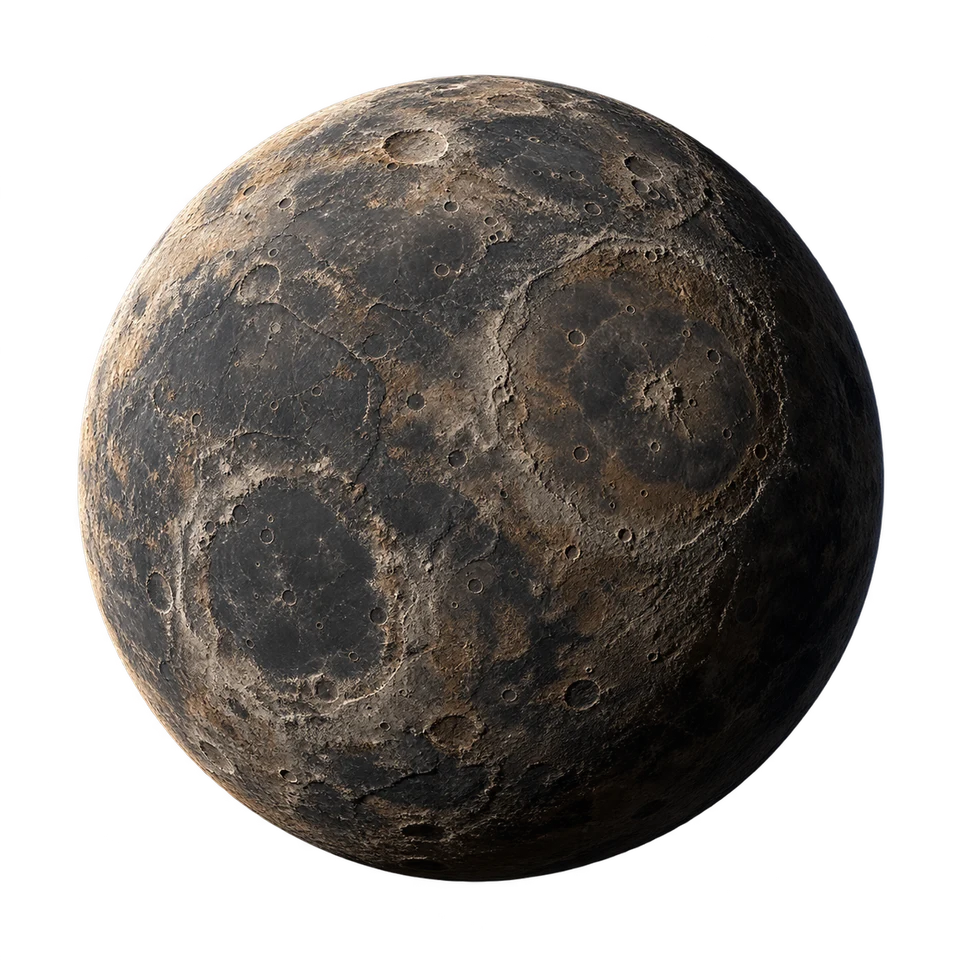
Artist’s impression of GJ 1061 c; appearance and diameter are unconfirmed
Terrestrial-mass exoplanet

A nearby world whose climate remains unseen.

Environment ↗

02
ATMOSPHERE

Not measured

DIAMETER
Not measured
POSSIBILITY FOR LIFE
Unknown
WITHOUT PROTECTION
Not established as survivable

Mass comparison ↗

04
DYNAMICAL MASS1.81 × Earth

+0.13 / −0.11 Earth masses

Planet–planet interactions in radial-velocity data constrain inclination and dynamical mass.
GJ 1061 C

Instrument detail

Artist’s impression of GJ 1061 c

Artist’s impression · appearance and diameter are unconfirmed.

A compact planetary family.

The adopted interacting model gives a period of 6.6821 Earth days and a semimajor axis of 0.0342 AU. The planet orbits alongside b and d.

The planets perturb one another.

The 2025 radial-velocity analysis includes planet–planet interactions and constrains orbital inclination. We use its tabulated values as catalogued by the NASA Exoplanet Archive, matching the existing b entry. This dynamical inference is model-dependent and does not measure radius or density.

A temperate orbit is not a measured environment.

The study discusses potentially rocky planets and equilibrium-temperature estimates. Those estimates depend on assumptions and do not measure surface temperature, atmosphere or liquid water. Radius and density remain unknown.

Size, mass and atmosphere

DIAMETER / EARTH

Not measured.

The radius has not been measured; the illustration does not establish its size.

SIZE UNKNOWN
DYNAMICAL MASS / EARTH
  • GJ 1061 c1.81 (+0.13 / −0.11) M⊕
  • Earth · reference mass1.00 M⊕

Shared scale: 0–2 Earth masses. Planet–planet interactions in radial-velocity data constrain inclination and dynamical mass. Dreizler et al. (2025), tabulated interacting model: 1.81 (+0.13 / −0.11) Earth masses. Model-dependent; adopted tabulated values as catalogued by the NASA Exoplanet Archive.

ATMOSPHERE / COMPOSITION

Not measured

We cannot assign atmospheric percentages or surface pressure. An atmosphere has not been established here; that is different from proving the planet is airless.

Habitability

NATURAL CONDITIONSUnknown

No atmosphere, surface water or life has been established. Orbital location alone does not determine a surface climate.

HUMANS / WITHOUT PROTECTIONNot established as survivable

Breathable air, safe pressure and tolerable temperatures are not known. A survival time would be speculation.

SURFACE TEMPERATURE
Unknown · no measured climate
SURFACE PRESSURE
Unknown
LIQUID WATER
Not established
SURFACE GRAVITY
Unknown · radius required

A year around GJ 1061

6.6821 Earth days

Semimajor axis: 0.0342 AU. One astronomical unit is approximately the mean Earth–Sun distance.

The overview is a schematic: sizes, orbital shape and the planet’s position are illustrative. It does not show a measured eccentricity, the orbit’s orientation or a live position.

The adopted interacting model gives a period of 6.6821 Earth days and a semimajor axis of 0.0342 AU. The planet orbits alongside b and d.

Dreizler et al. (2025) · orbital measurements ↗
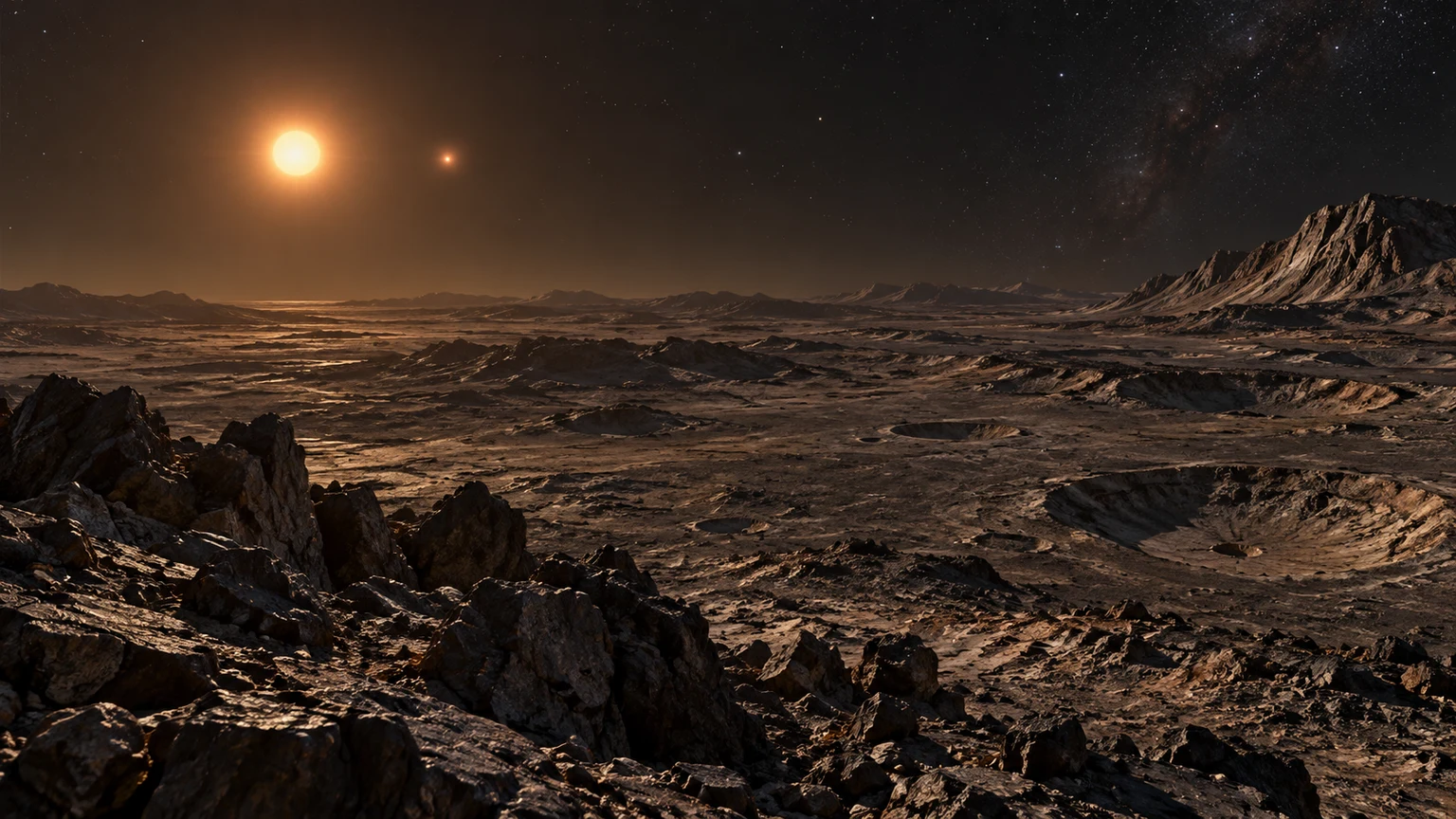
A hypothetical rocky landscape. Terrain, mineral colors and the absence of air are artistic assumptions, not observed conditions.

Across the rocky plateau

A hypothetical rocky landscape. Terrain, mineral colors and the absence of air are artistic assumptions, not observed conditions.

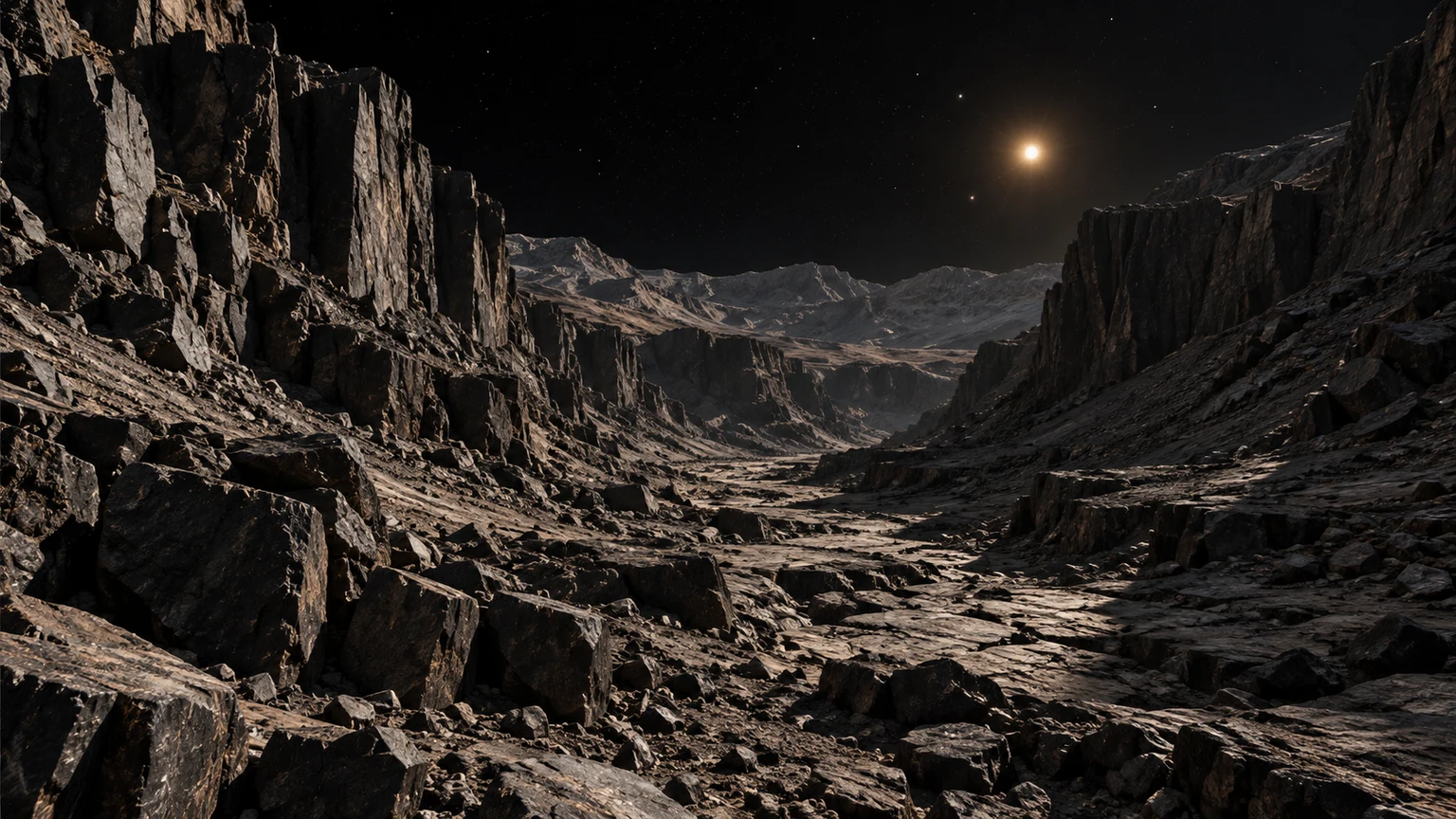
A hypothetical rocky landscape. Terrain, mineral colors and the absence of air are artistic assumptions, not observed conditions.

Below the canyon walls

A hypothetical rocky landscape. Terrain, mineral colors and the absence of air are artistic assumptions, not observed conditions.

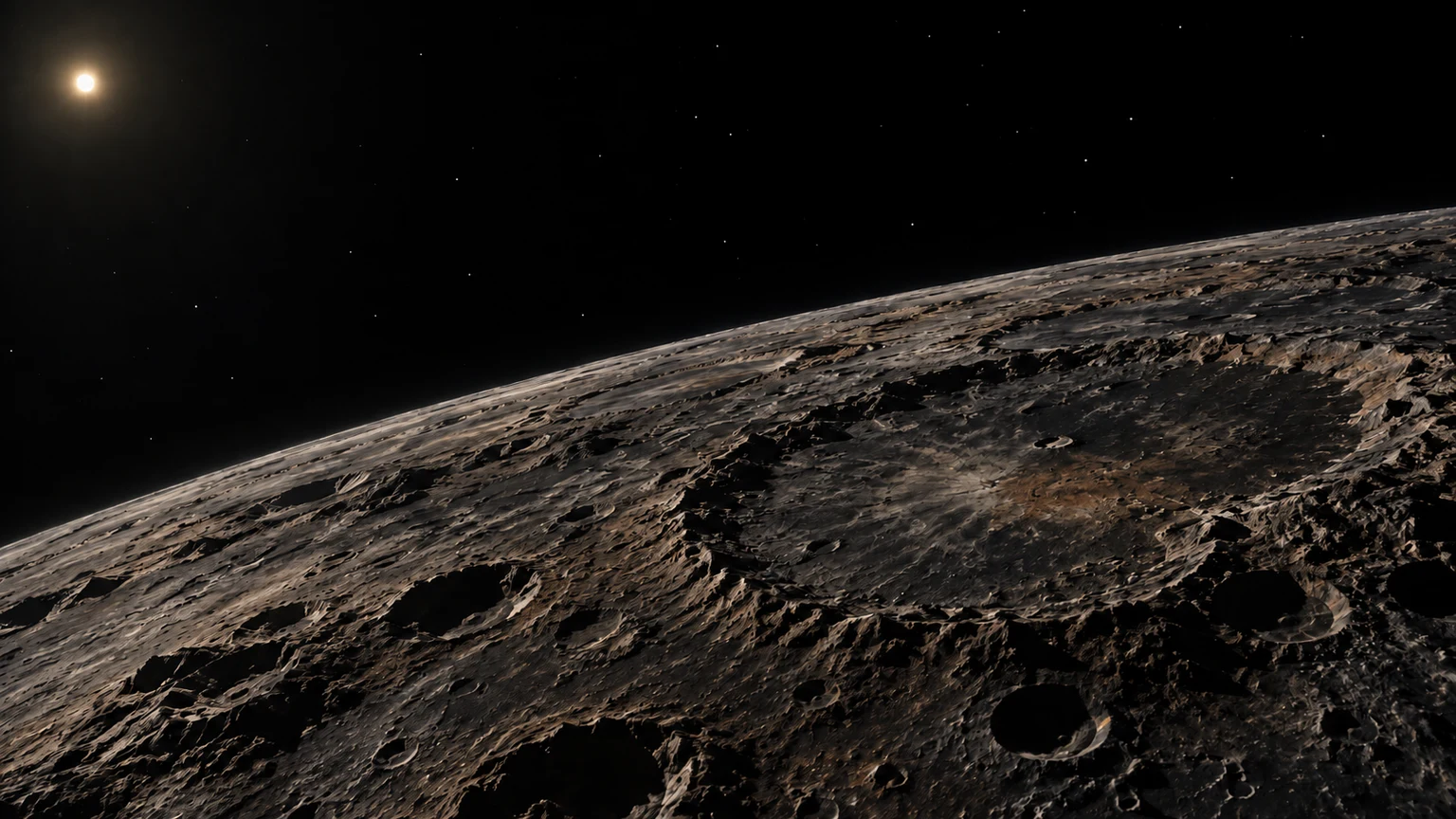
A hypothetical rocky landscape. Terrain, mineral colors and the absence of air are artistic assumptions, not observed conditions.

Beyond the cratered horizon

A hypothetical rocky landscape. Terrain, mineral colors and the absence of air are artistic assumptions, not observed conditions.

Planet and landscape images are hypothetical artistic interpretations.