Following a signal across years.
The outer planet’s orbit takes about eight years, so identifying its rhythm requires a long record. The confirmation study combined observations from several spectrographs and checked whether stellar activity could explain the signal. The preferred interpretation was a planetary companion. That long baseline reveals a gravitational orbit rather than a visible cloud-covered disk.
Neptune-like is a clue, not a photograph.
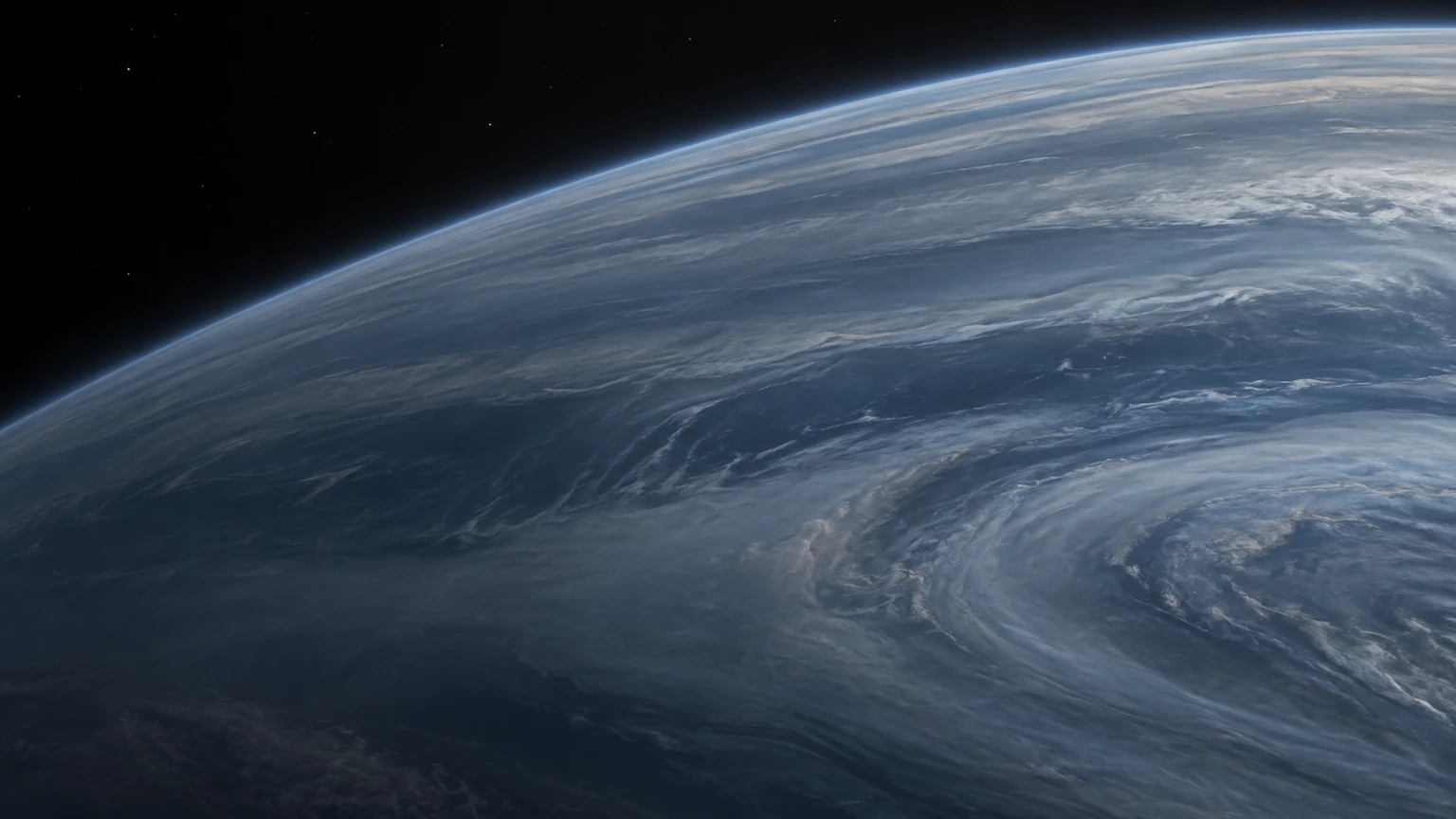
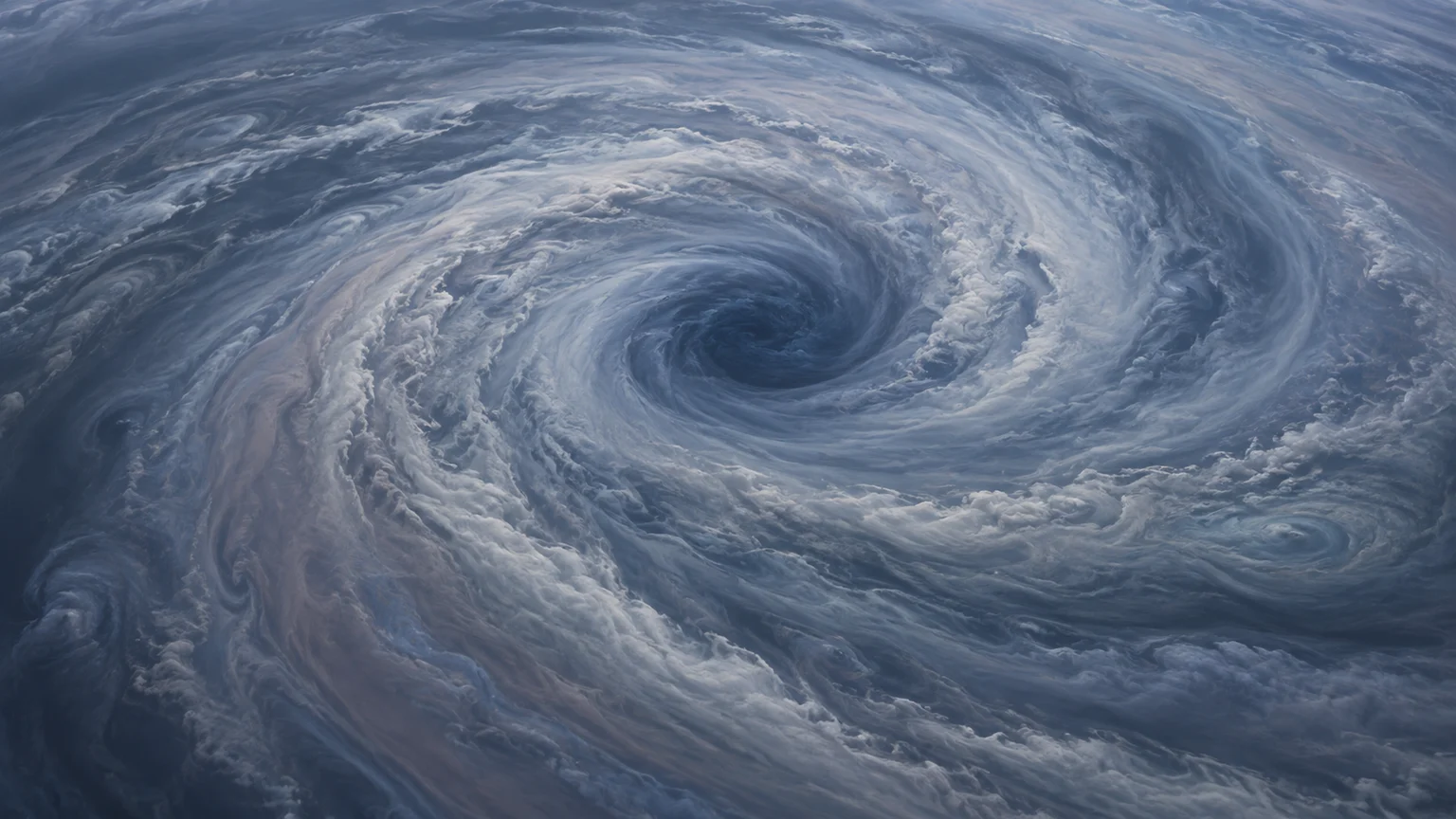
The minimum mass places c in a regime associated with worlds like Neptune. It does not tell us exactly how much gas surrounds the interior or what the clouds contain. The blue-gray atmosphere in these pictures is a plausible visual interpretation. Different compositions and thermal histories could produce a very different appearance.
A distant planet beside a nearby star.
Separating a planet’s faint light from its star is difficult even for a nearby system. Direct imaging uses techniques that reduce stellar glare, while radial velocities reveal the host’s motion. These methods answer different questions. A clean orbital signal does not automatically supply the radius, spectrum or detailed atmospheric structure needed to turn an imagined scene into an observed one.
Cold starlight does not tell the whole story.
A wide orbit around a faint star provides weak external heating. Internal energy and atmospheric structure can still matter at depth. The illustrated cloud layers therefore have no assigned pressure, wind speed or temperature: those details are not measured here. A cold-looking image is an invitation to explore a possibility, not evidence for ice cliffs or a walkable frozen world.