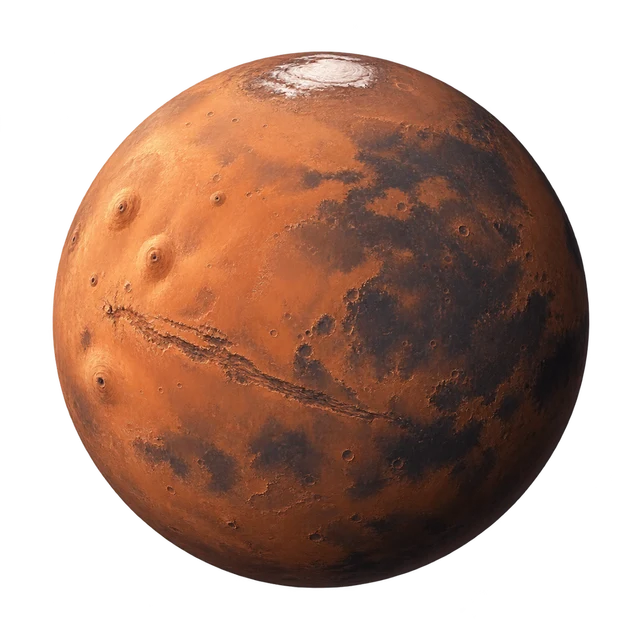
The color of weathered iron.
Mars gets its reddish appearance from oxidized iron minerals in its soil. Today it is a cold desert with a thin atmosphere, but spacecraft have found evidence that parts of this world were once much wetter, with rivers and lakes.
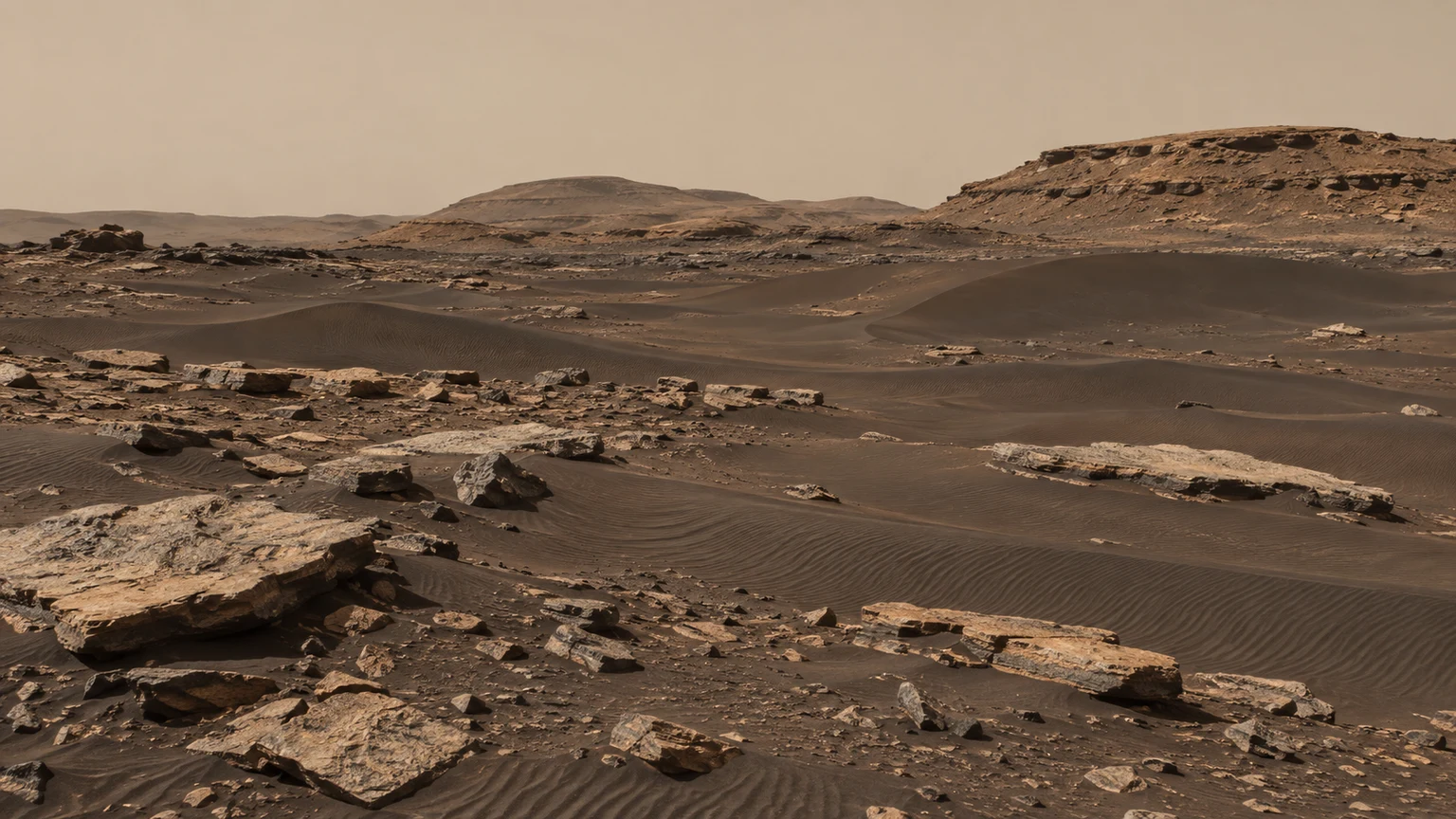
A familiar view. Unfamiliar air.
The thin air matters as much as the color. Although carbon dioxide dominates its composition, there is very little atmosphere overall. A person standing in this apparently familiar desert would still need pressure protection and a supply of breathable air.
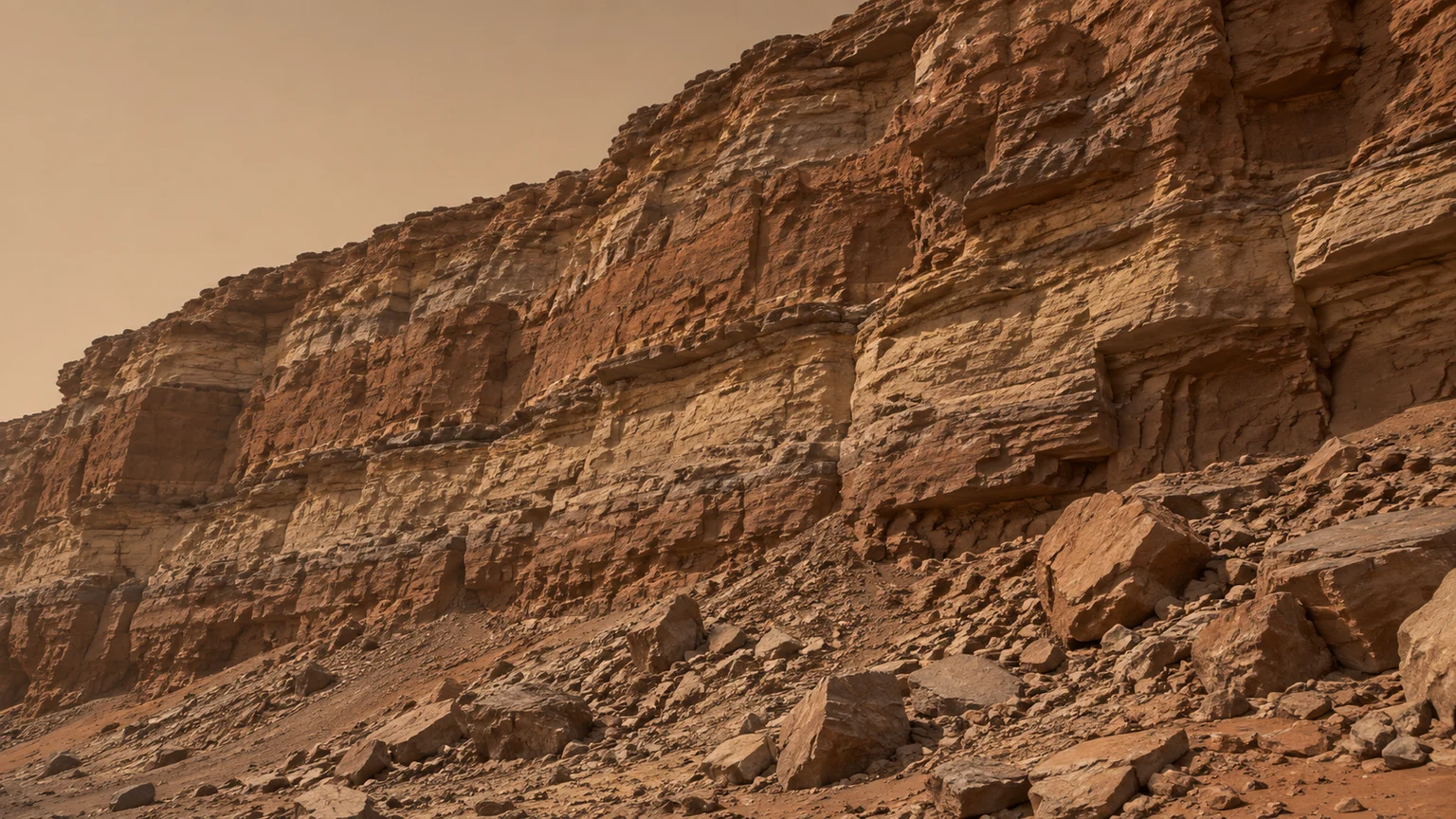
Familiar shapes. Different scale.
Dunes, canyons and extinct volcanoes shape the landscape. Mars has polar ice caps and seasons, too. Its rotation takes about 24.6 hours, close to Earth’s, while its longer orbit stretches a year to 687 Earth days.
Two small shapes overhead.
Phobos and Deimos are Mars’s two small, irregular moons. Phobos orbits closer to the planet; Deimos circles farther out. Neither is massive enough for gravity to give it the rounded shape of a large moon.