SOL SYSTEM / PLANETARY DOSSIER

Quaoar

Quaoar is an icy world with two known rings and a moon called Weywot. Its outer ring lies unusually far away, where material was expected to gather into a moon instead.
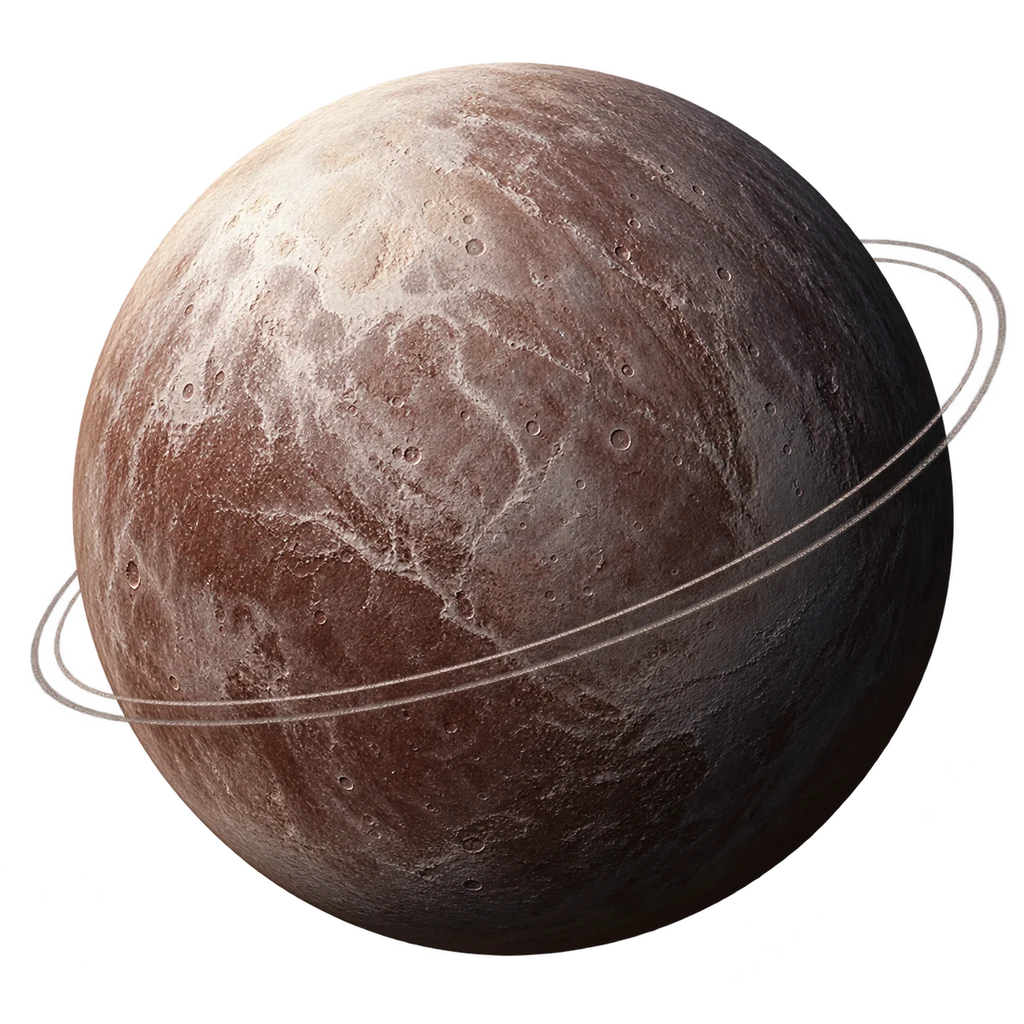
Artist’s impression of Quaoar

Dwarf planet candidateA modest icy world with a surprisingly far-reaching ring system.

DIAMETER / EARTH0.09×
EARTHQUAOAR
ATMOSPHERE
An environment still being studiedNo measured composition chart
SURFACE TEMPERATURE
Very cold · no local measurements
SURFACE PRESSURE
Not established at a landing site
HABITABILITYNo life detected
UNPROTECTED HUMANSNot survivable
Interior ↗

03
Unresolvedinternal structure

System ↗

04
Weywot1 companionRINGS AND MOONS · SCHEMATIC

Rotation ↗

06
Quaoar rotationRotation period unresolved. Static portrait, not an orientation prediction.PERIOD UNCERTAINNO UNIQUE PERIOD ADOPTED

Gravity ↗

07
GRAVITY CONSTRAINTSMODEL-DEPENDENT
QUAOAR

Instrument detail

Quaoar orbitElliptical orbit viewed along the orbital axis, relative to Sun. Motion is accelerated, not a live position. Distances are center to center.SUNQUAOAR44.70 AU41.60 AU
ONE ORBIT≈ 285 Earth years
Closest to the Sun
41.60 AU
Farthest from the Sun
44.70 AU

The Sun sits at a focus of the orbit. Quaoar moves faster near the Sun and more slowly farther away.

A simplified ellipse from rounded JPL orbital elements at epoch JD 2461200.5. The moving marker is illustrative, not a current position. Orbital inclination and perturbations are omitted.

Quaoar rotationRotation period unresolved. Static portrait, not an orientation prediction.PERIOD UNCERTAINNO UNIQUE PERIOD ADOPTED
ROTATION STATEUncertain

An unresolved spin period

Published interpretations of Quaoar’s light curve include approximately 8.84 and 17.68 hours, depending on whether the light curve is single- or double-peaked. This view leaves that ambiguity visible rather than selecting a unique spin.

Satellite atlasMoons
Weywot1 companionRINGS AND MOONS · SCHEMATIC

Quaoar and its surroundings

Quaoar also has a moon, Weywot. Together with the rings, it makes a compact system around a body only about eleven hundred kilometers across. The ring illustration emphasizes visibility rather than matching the scale of a real observation.

Quaoar’s outer ring lies unusually far from the body, where simple expectations suggest material should gather into a moon. Its discovery challenged those expectations and made this small world a laboratory for how orbiting particles behave.

The illustration identifies companions without assigning orbital periods, distances or present-day positions. Body sizes and spacing are schematic.

GRAVITY CONSTRAINTSMODEL-DEPENDENT
SURFACE GRAVITYModel-dependent

Mass, size and shape

Surface gravity requires the body’s own mass and radius. Size estimates and the division of mass between binary components introduce model assumptions. No single numerical jump comparison is adopted here.

Unresolvedinternal structure

Beyond the surface

Remote observations constrain surface materials and bulk properties, but do not map internal layer boundaries. A precise core, shell thickness or present-day ocean is not established by this view.

    Artist’s impression of Quaoar

    A ring beyond expectations.

    Quaoar’s outer ring lies unusually far from the body, where simple expectations suggest material should gather into a moon. Its discovery challenged those expectations and made this small world a laboratory for how orbiting particles behave.

    Reading the dips in starlight.

    As Quaoar passed across distant stars, telescopes recorded additional brief dimmings beside the main occultation. Those events revealed ring material. Later observations identified a second ring, adding structure to a system too small to image in detail.

    Ice, color and missing geography.

    Spectra show water ice and evidence for additional frozen compounds on Quaoar. Its muted reddish color is a broad observational clue. Neither the plains nor the crater basin illustrated here should be read as an actual surface map.

    Weywot shares the neighborhood.

    Quaoar also has a moon, Weywot. Together with the rings, it makes a compact system around a body only about eleven hundred kilometers across. The ring illustration emphasizes visibility rather than matching the scale of a real observation.

    DIAMETER / EARTH0.09×
    EARTHQUAOAR
    EARTH
    12,756 km
    QUAOAR
    1,100 km
    approximate planet diameter / equatorial Earth diameter · rings excluded

    Approximate area-equivalent diameter of 1,100 km. Ring sizes are excluded from the comparison.

    ATMOSPHERE
    An environment still being studiedNo measured composition chart

    A reliable atmospheric inventory is not available here. Unknown abundances are left unquantified rather than turned into percentage bars.

    SURFACE TEMPERATURE
    Very cold · no local measurements
    SURFACE PRESSURE
    Not established at a landing site
    HABITABILITYNo life detected

    There is no evidence of life here. Remote measurements do not establish a liquid-water habitat; the interior remains poorly constrained.

    UNPROTECTED HUMANSNot survivable

    The distant, cold environment offers no known breathable air or protective surface pressure. Human exploration would require a sealed, thermally controlled habitat.

    Planet and landscape images are artistic interpretations.

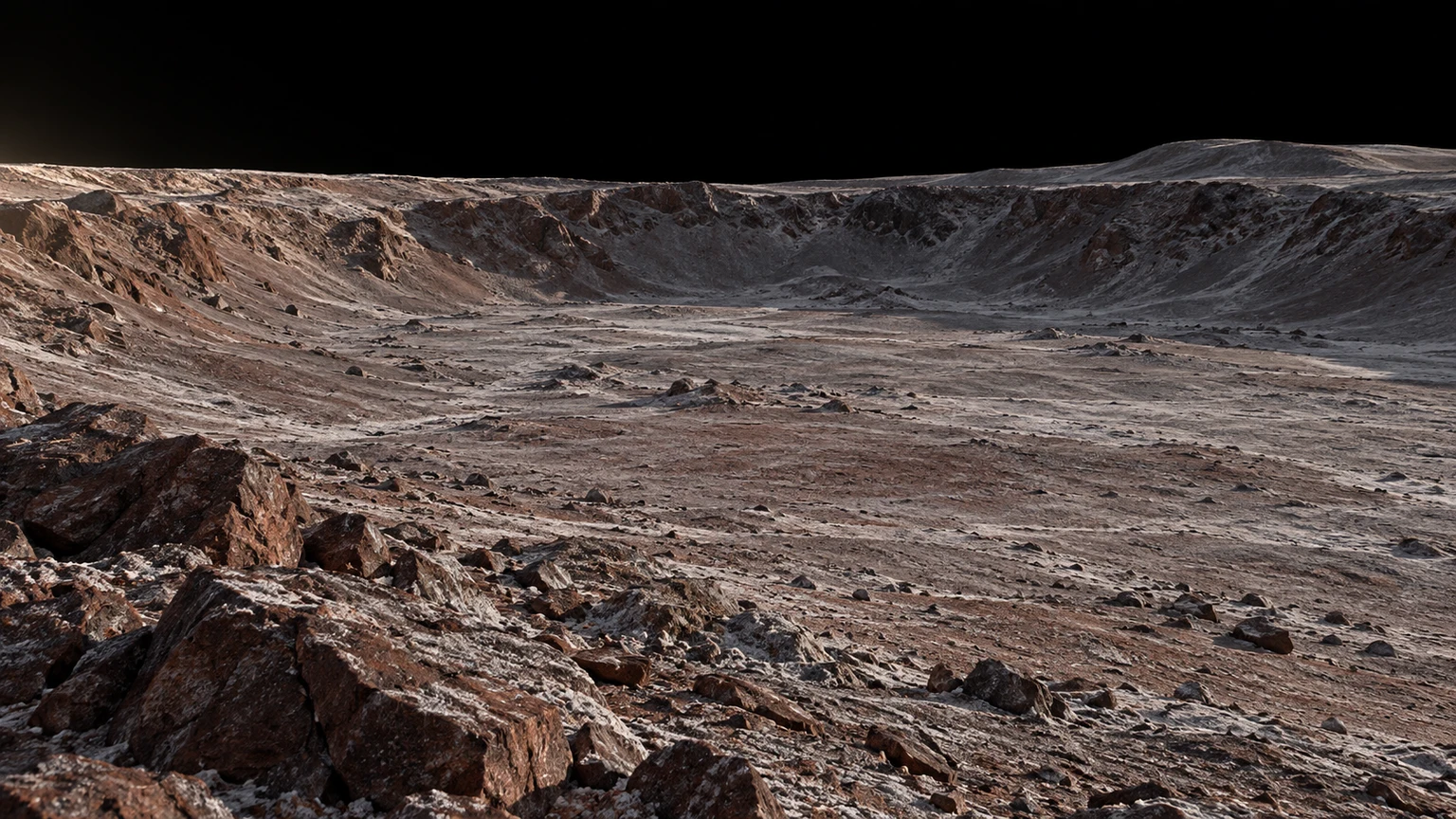
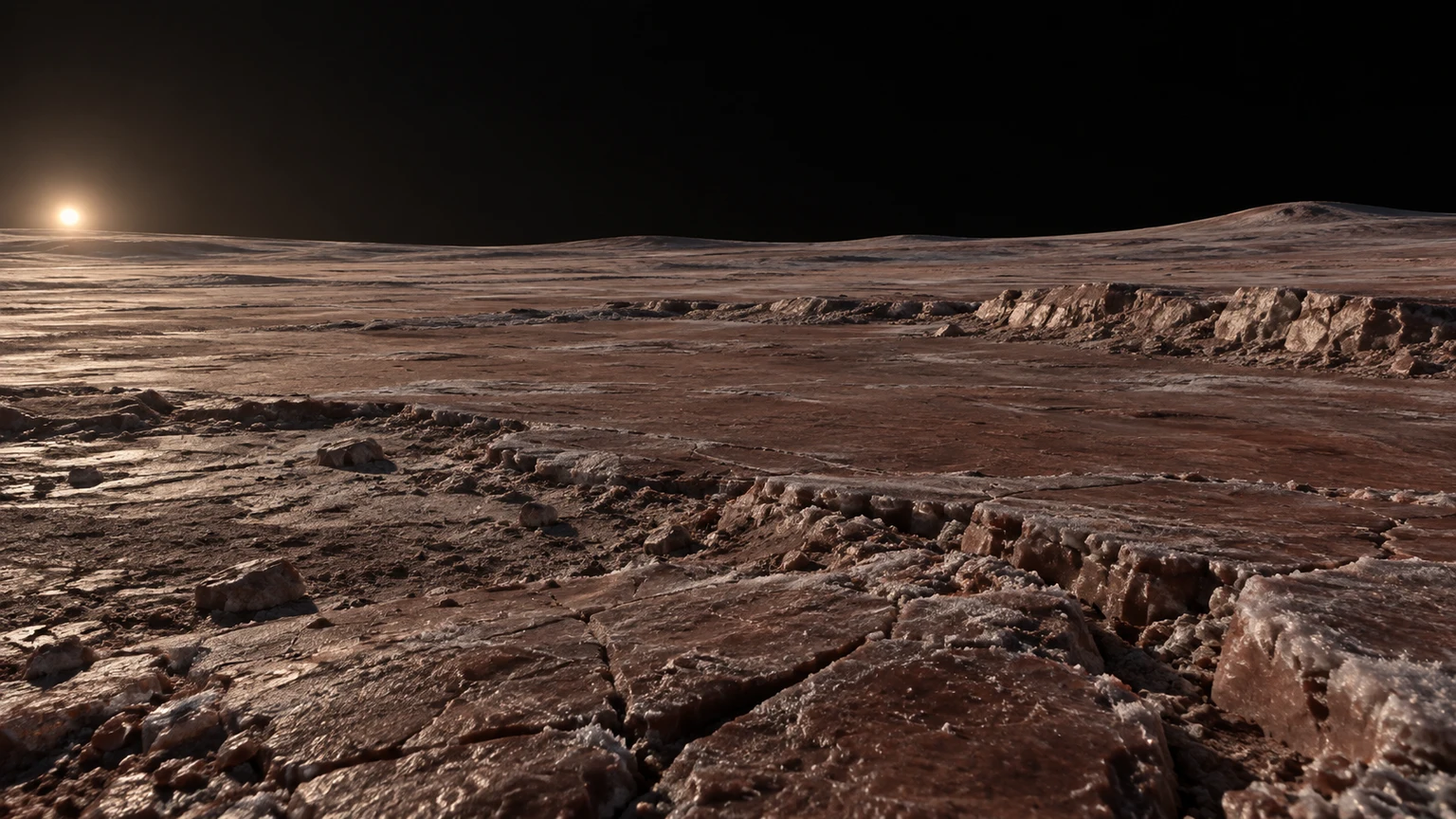
    Hypothetical ground-level landscape of Quaoar. Color and broad material choices follow remote observations; terrain, lighting and local details are artistic interpretation, not a mapped or photographed site.

    A muted red ice plain

    Hypothetical ground-level landscape of Quaoar. Color and broad material choices follow remote observations; terrain, lighting and local details are artistic interpretation, not a mapped or photographed site.

    Hypothetical ground-level landscape of Quaoar. Color and broad material choices follow remote observations; terrain, lighting and local details are artistic interpretation, not a mapped or photographed site.

    Across a weathered basin

    Hypothetical ground-level landscape of Quaoar. Color and broad material choices follow remote observations; terrain, lighting and local details are artistic interpretation, not a mapped or photographed site.

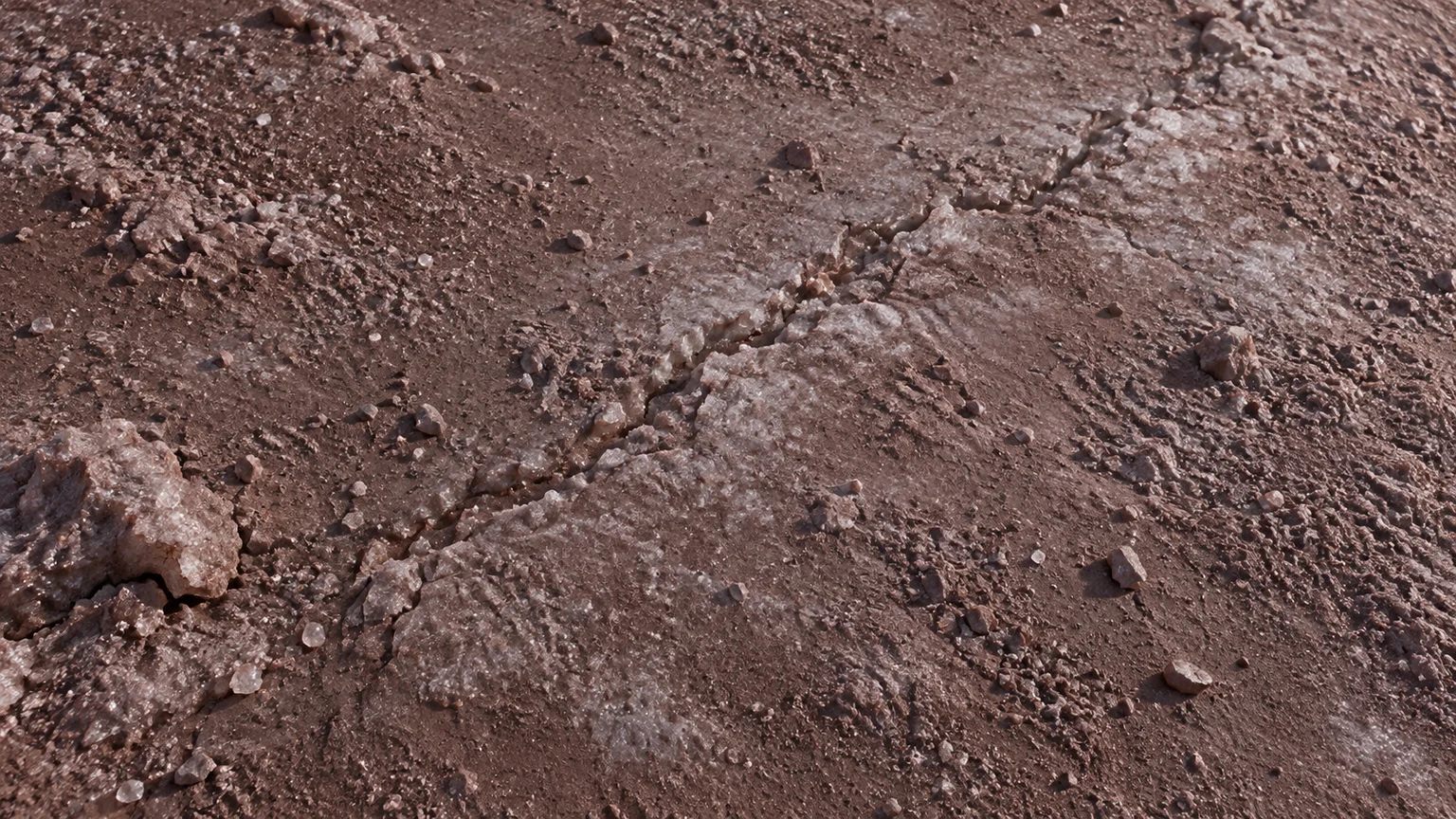
    Muted reddish icy regolith with sparse pale grains and a shallow seam. An artistic reconstruction of Quaoar; local detail, lighting and viewpoint are imagined. The depicted environment is a possibility, not an observed surface or weather map.

    Pale grains on red ground

    Muted reddish icy regolith with sparse pale grains and a shallow seam. An artistic reconstruction of Quaoar; local detail, lighting and viewpoint are imagined. The depicted environment is a possibility, not an observed surface or weather map.