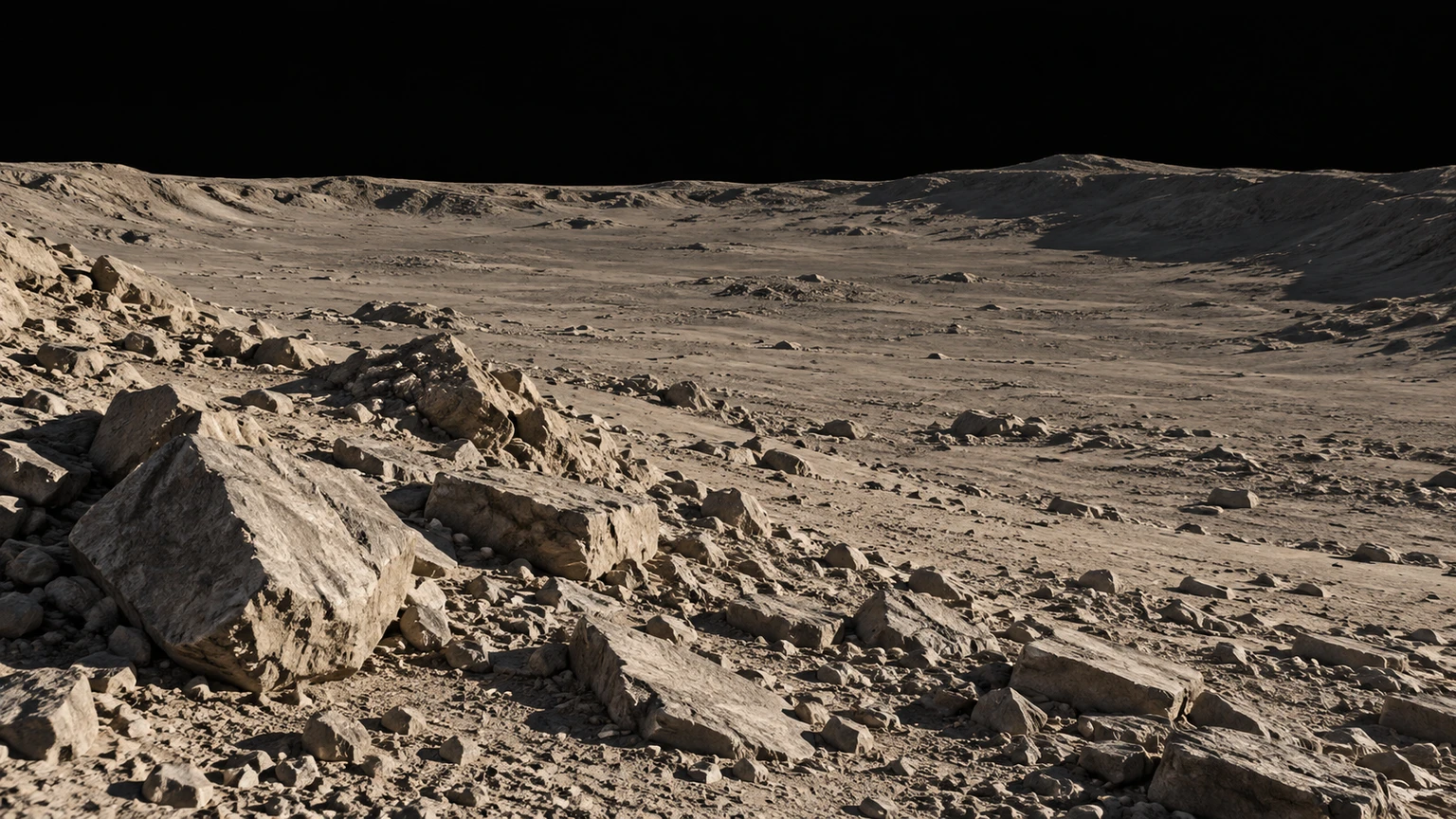
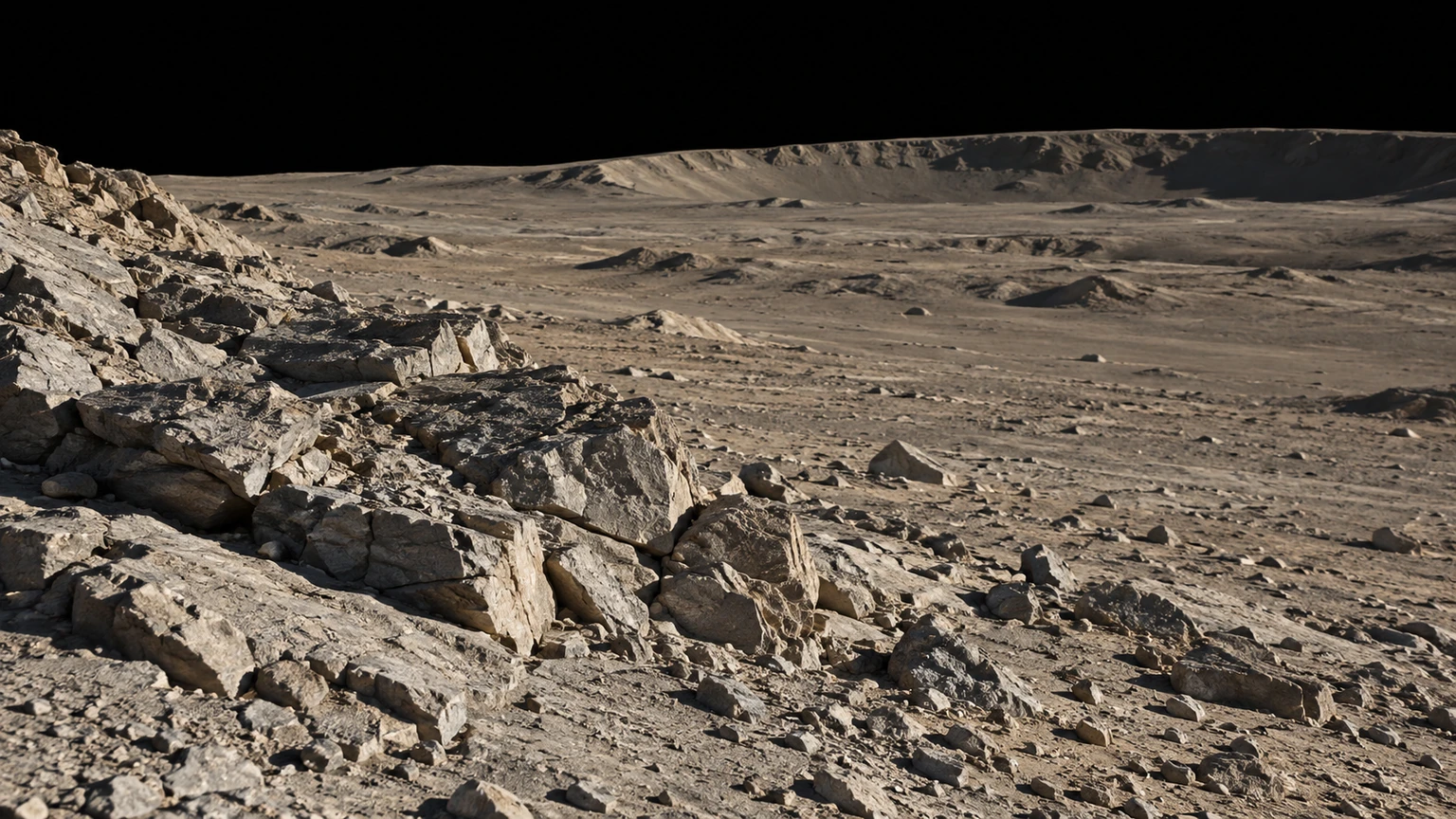
Close to a much fainter sun.
Ross 128 b circles its star in just under ten Earth days. Its orbit lies far closer to the star than Earth does to Sol, but a red dwarf supplies much less light. Distance alone is therefore a poor guide to climate. The discovery drew attention because a compact orbit could still produce an interesting range of possible heating conditions.
A tug with an important qualifier.
The planet was found through the small motion it induces in its star. Radial velocities measure movement toward and away from us, leaving the orbital tilt uncertain. That is why the graph says minimum mass. A radius would supply another essential clue to density and composition; an Earth-like mass alone cannot tell us whether the imagined rocks resemble anything on the real world.
An energy balance is not a weather report.
Equilibrium temperature estimates depend on how much starlight a world reflects and simplify how it releases heat. An atmosphere can change the surface conditions substantially. A number near Earth’s temperature scale would therefore not prove a temperate landscape, let alone breathable air. Our black sky and hard shadows illustrate one airless scenario, while the profile keeps the actual climate unknown.
No silhouette across the star.
The discovery study used K2 photometry to rule out transits. Without a planetary silhouette crossing the stellar disk, that route to measuring its radius is unavailable. The close-up scenes here remain reconstructions, not photographs of a known surface.