LACAILLE 9352 / STELLAR DOSSIER

Lacaille 9352

10.72 light-years from Sol

A nearby red dwarf whose light reveals a compact family of worlds.
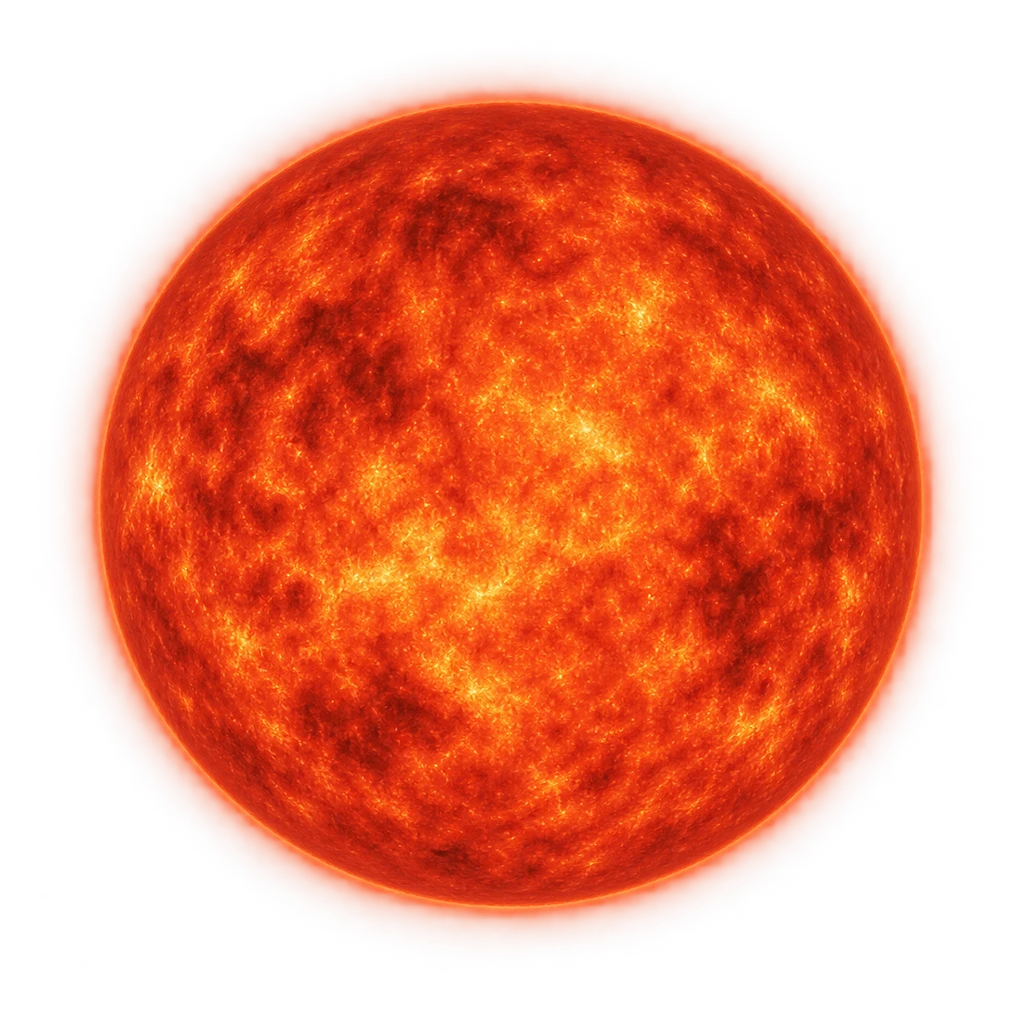
Artist’s impression of Lacaille 9352
M1 V · main sequence

A small sun with a busy neighborhood.

Stellar conditions ↗

02
EFFECTIVE TEMPERATURE3,688 K

Warm light from a cooler star.

Lacaille 93523,688 K
Sol5,770 K
Shared scale 0–10,000 K · effective, not core temperature

Evolution ↗

03
H–R MAPBRIGHTER ↑
SOLHEREHOTTERCOOLER →
CURRENT PHASE

A long main-sequence chapter.

  1. NOWHydrogen fusion
  2. STRUCTUREConvective outer layers
  3. OUTLOOKLong-lived dwarf
A broad stellar picture, not a measured age or a countdown.
An imagined close approach to Lacaille 9352’s photosphere. Fine convection cells and darker regions are inspired by solar physics, not mapped on this star. Exposure and warm filtered color reveal the luminous gas.Over the copper horizon ↗ ARTIST’S IMPRESSION · 3 VIEWS

Diameter comparison ↗

06
0.468 × Sol
LACAILLE 9352

Instrument detail

Artist’s impression of Lacaille 9352

Artist’s impression · structure and color are illustrative.

Less than half the diameter.

Lacaille 9352 is also catalogued as Gliese 887. Its diameter is about 47 percent of Sol’s, and its effective temperature is lower. Measurements of the light a star emits, combined with distance and temperature, let astronomers infer its physical size. That gives our comparison a measured foundation even though these close-up scenes are imagined.

A horizon you cannot land on.

The photosphere marks where visible light escapes from hot gas. Beneath it, energy travels outward from a fusion-powered interior. Brighter cells and darker magnetic regions make that idea visible in our reconstruction. They are not islands in a molten sea: the star has no solid crust, and the warm color does not make a close approach safe.

Quiet is not a permanent state.

A later observing campaign caught stronger activity than the earlier discovery data. Researchers recovered a rotation period near 39 days by examining the changing light and spectral indicators. Even a relatively quiet red dwarf needs its own activity model before a tiny stellar motion can confidently be assigned to a planet.

A family that grew with the evidence.

The 2026 RedDots analysis supports four confirmed planets: b, c, d and e. The two featured here, b and c, were the first discovered. A planetary system can become more complete as observations accumulate; the collection above is a selection of worlds to explore, not a claim that the star has only two companions.

A star in perspective.

DIAMETER / SOL0.47 ×

About 46.8% of our Sun’s diameter.

Circles compare diameter, not mass or luminosity. Radius: 0.468 ± 0.022 solar radii, Mann et al. (2015), Table 5, Gl 887. Diameter has the same relative ratio.

EFFECTIVE TEMPERATURE

Warm light from a cooler star.

  • Lacaille 9352≈ 3,688 K
  • Sol≈ 5,770 K

Shared scale: 0–10,000 K. Effective temperature describes total emitted energy per unit surface area; it is not the core temperature. Effective temperature: 3,688 ± 86 K from the same study.

LIFE PHASE

A long main-sequence chapter.

  1. NOWHydrogen fusion
  2. STRUCTUREConvective outer layers
  3. OUTLOOKLong-lived dwarf

A broad stellar picture, not a measured age or a countdown.

Research · size and temperature ↗
LIFE & HUMAN SURVIVAL / THE STAR ITSELF
POSSIBILITY FOR LIFEIncompatible with known life

The star’s hot gaseous layers cannot provide the cool, stable environment required by life as we know it. Conditions on any orbiting worlds are a separate question.

WITHOUT PROTECTIONNot survivable

No breathable air or solid ground. Extreme heat and radiation make a close encounter lethal; a meaningful survival timer depends on where you are.

NASA · stellar structure and evolution ↗
10⁵1,000100.10.00110⁻⁵30,00010,0005,0002,500LUMINOSITY / SOL · BRIGHTER →HOTTER ← EFFECTIVE TEMPERATURE (K) → COOLERSUPERGIANTSGIANTSWHITE DWARFSMAIN SEQUENCESOLLacaille 9352
Lacaille 93523,688 K · ≈ 0.0366 × Sol
Sol / reference5,770 K · 1 × Sol

Estimated from size & temperature. Both axes are logarithmic; equal steps represent equal ratios.

Small points are other worlds in this atlas. The soft band marks the main sequence; region labels are broad guides, not a path through time.

A long main-sequence chapter.

  1. NOWHydrogen fusion
  2. STRUCTUREConvective outer layers
  3. OUTLOOKLong-lived dwarf

A broad stellar picture, not a measured age or a countdown.

Research ↗

How much energy leaves the star?

≈ 0.0366 × Sol

This compares total radiant power across all wavelengths, not just visible light or apparent brightness in our sky. The beams on the dashboard share a linear length scale.

The estimate combines this log’s diameter ratio (0.468 × Sol) and effective temperature (3,688 K): luminosity scales with radius squared and temperature to the fourth power. It is derived from rounded values, not an independent luminosity measurement.

Radius: 0.468 ± 0.022 solar radii, Mann et al. (2015), Table 5, Gl 887. Diameter has the same relative ratio.

Effective temperature: 3,688 ± 86 K from the same study.

Swinburne University · Stefan–Boltzmann law ↗

Less than half the diameter.

Lacaille 9352 is also catalogued as Gliese 887. Its diameter is about 47 percent of Sol’s, and its effective temperature is lower. Measurements of the light a star emits, combined with distance and temperature, let astronomers infer its physical size. That gives our comparison a measured foundation even though these close-up scenes are imagined.

A horizon you cannot land on.

The photosphere marks where visible light escapes from hot gas. Beneath it, energy travels outward from a fusion-powered interior. Brighter cells and darker magnetic regions make that idea visible in our reconstruction. They are not islands in a molten sea: the star has no solid crust, and the warm color does not make a close approach safe.

Quiet is not a permanent state.

A later observing campaign caught stronger activity than the earlier discovery data. Researchers recovered a rotation period near 39 days by examining the changing light and spectral indicators. Even a relatively quiet red dwarf needs its own activity model before a tiny stellar motion can confidently be assigned to a planet.

A family that grew with the evidence.

The 2026 RedDots analysis supports four confirmed planets: b, c, d and e. The two featured here, b and c, were the first discovered. A planetary system can become more complete as observations accumulate; the collection above is a selection of worlds to explore, not a claim that the star has only two companions.

An imagined close approach to Lacaille 9352’s photosphere. Fine convection cells and darker regions are inspired by solar physics, not mapped on this star. Exposure and warm filtered color reveal the luminous gas.

Over the copper horizon

An imagined close approach to Lacaille 9352’s photosphere. Fine convection cells and darker regions are inspired by solar physics, not mapped on this star. Exposure and warm filtered color reveal the luminous gas.

A hypothetical magnetic region with filamentary structure amid the photosphere. Its size and location are invented. The dark patch is cooler gas, not a crater, and the image is not a record of a particular event.

Where the glow darkens

A hypothetical magnetic region with filamentary structure amid the photosphere. Its size and location are invented. The dark patch is cooler gas, not a crater, and the image is not a record of a particular event.

An artistic view of Lacaille 9352 against space. The luminous disk and fine gaseous texture are illustrative; color and exposure are adjusted for visibility, not a resolved stellar photograph.

The star against space

An artistic view of Lacaille 9352 against space. The luminous disk and fine gaseous texture are illustrative; color and exposure are adjusted for visibility, not a resolved stellar photograph.

Stellar images are artistic interpretations, not resolved photographs of this star.