JUPITER SYSTEM / SATELLITE DOSSIER

Europa

Europa is an icy moon of Jupiter with strong evidence for an ocean beneath its fractured shell.

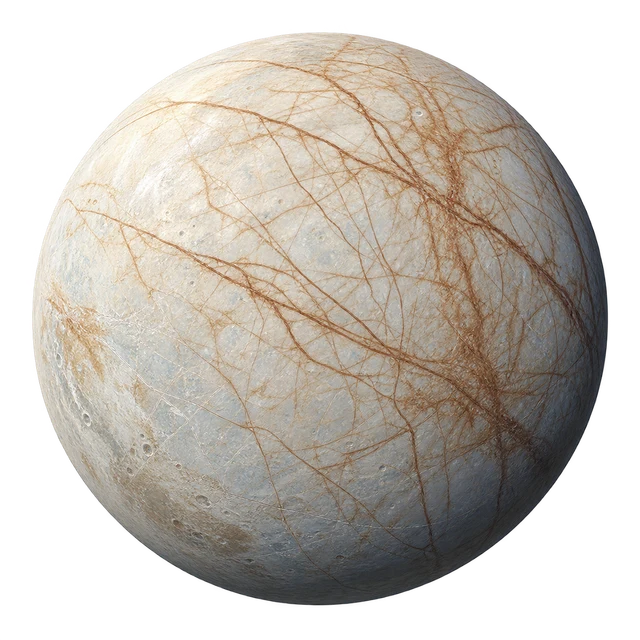
Artist’s impression of Europa

A fractured shell at the boundary between an exposed surface and a concealed interior.

DIAMETER / EARTH0.24×
EARTHEUROPA
ATMOSPHERE
Oxygen without breathable pressureExtremely tenuous
SURFACE TEMPERATURE
Deeply cold exposed ice
SURFACE PRESSURE
Near-vacuum
HABITABILITYOcean potential
UNPROTECTED HUMANSNot survivable

Interior ↗

03
Europa interiorSimplified interior model. Layer thicknesses and boundaries are illustrative, not measured to scale.Ice shellInferred oceanRocky mantleMetallic core

Moon system ↗

04
Jupiter moon orbitsSelected moons, ordered outward. Orbit sizes and positions are schematic; relative periods are preserved.JUPITERMETISADRASTEAAMALTHEATHEBEIOEUROPAGANYMEDECALLISTOLEDAHIMALIALYSITHEAELARA
EUROPA

Instrument detail

Europa orbitElliptical orbit viewed along the orbital axis, relative to Jupiter. Motion is accelerated, not a live position. Distances are center to center.JUPITEREUROPA≈ 671,100 km
ONE ORBIT3.55 Earth days around Jupiter
Closest to Jupiter
665,060 km
Farthest from Jupiter
677,140 km

Europa circles Jupiter. Distances are measured between the centers of the two bodies.

Europa rotationEqual elapsed time, with sidereal rotation rates and directions. Axial tilt and relative sizes are not shown.EUROPA3.5 daysEARTH23.9 hours
ONE ROTATION3.5 days

One turn per orbit

Europa turns once in each orbit, so roughly the same hemisphere faces Jupiter. The spin period is 3.55 Earth days; this is not the interval between sunrises.

Satellite atlasMoons
Jupiter moon orbitsSelected moons, ordered outward. Orbit sizes and positions are schematic; relative periods are preserved.JUPITERMETISADRASTEAAMALTHEATHEBEIOEUROPAGANYMEDECALLISTOLEDAHIMALIALYSITHEAELARA
FEATURED MOONS12
  1. 01Metis ↗0.294779 days
  2. 02Adrastea ↗0.29826 days
  3. 03Amalthea ↗0.499918 days
  4. 04Thebe ↗0.676105 days
  5. 05Io ↗1.77 days
  6. 06Europa3.55 days
  7. 07Ganymede ↗7.15 days
  8. 08Callisto ↗16.69 days
  9. 09Leda ↗240.3264 days
  10. 10Himalia ↗249.909 days
  11. 11Lysithea ↗258.5035 days
  12. 12Elara ↗258.8861 days

Io is volcanic, while the other Galilean moons are icy worlds that may conceal oceans. Each has its own environment; Jupiter’s atmospheric conditions do not describe its moons.

Europa gravityEqual launches at 2 m/s; shared metre scale; air resistance ignored.0 m1 m2 m3 mEARTH9.80 m/s²EUROPA1.31 m/s²
EUROPA / EARTH GRAVITY0.13 ×

Same push, different gravity

Both balls launch at 2 m/s, using the same height and time scales. Weaker gravity gives a higher jump and a longer time in the air. Air resistance is ignored. This idealized comparison uses constant spherical gravity GM/r²; local terrain, tides and rotation are excluded.

Earth · height / airtime
0.20 m / 0.41 s
Europa · height / airtime
1.52 m / 3.04 s
Europa interiorSimplified interior model. Layer thicknesses and boundaries are illustrative, not measured to scale.01020304
  1. 01
    INFERRED

    Ice shell

    Water ice forms the rigid outer shell.

  2. 02
    INFERRED

    Inferred ocean

    Measurements support buried liquid water; the exact depth and boundaries are uncertain.

  3. 03
    INFERRED

    Rocky mantle

    Silicate-rich material lies beneath the outer layers.

  4. 04
    INFERRED

    Metallic core

    A metal-rich central region is inferred from measurements.

Simplified interior model · layer thicknesses are illustrative.

Artist’s impression of Europa

A network across the ice.

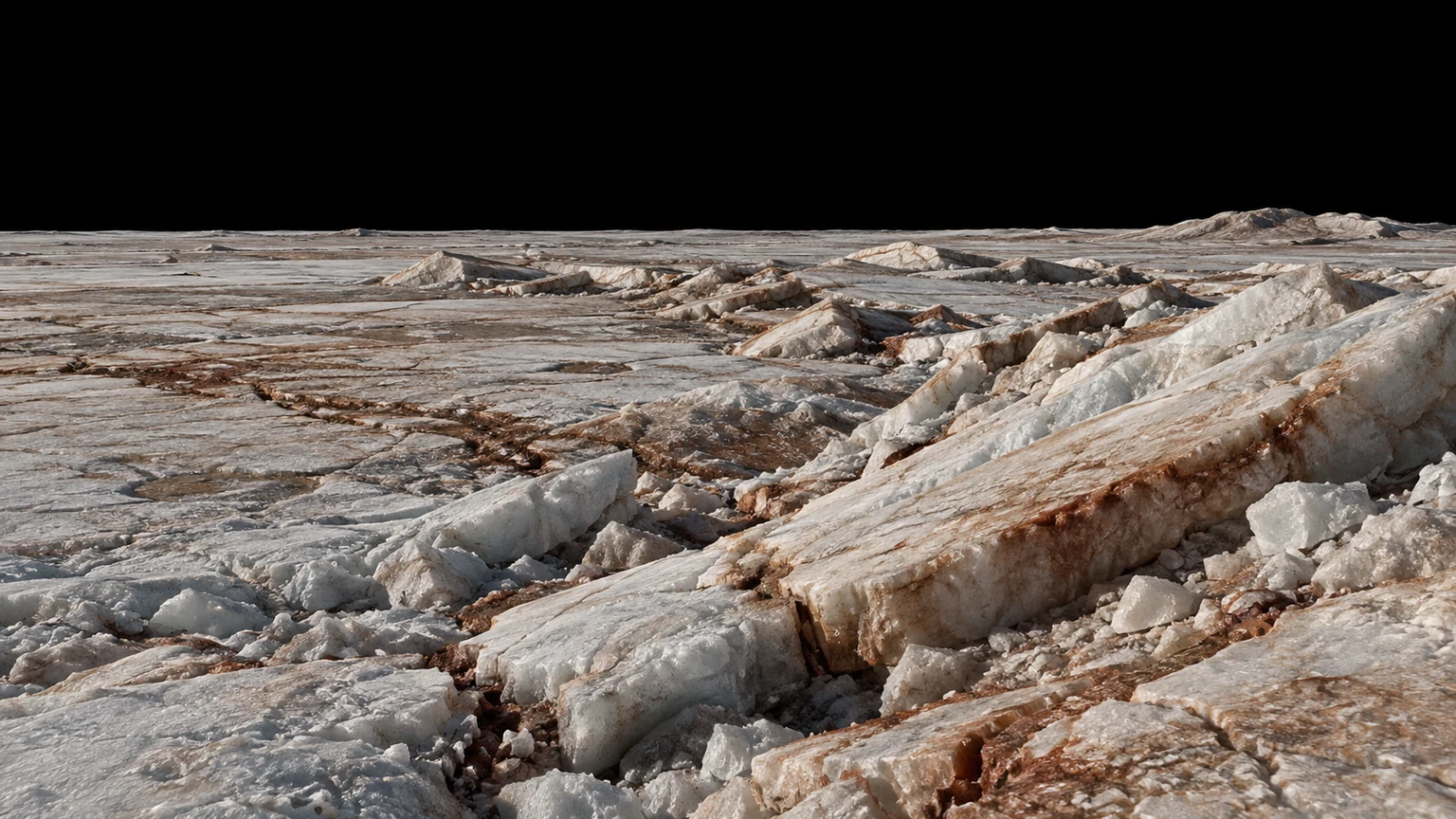
Long ridges and darker lines cross Europa’s bright crust. Some regions contain disrupted blocks called chaos terrain. These features record deformation, although a distant image cannot tell us every detail of the processes beneath them.

The important part is out of sight.

Multiple lines of evidence point to a salty global ocean below the ice. Its possible contact with rocky material makes Europa compelling for habitability research. The surface scene gives only an indirect view of that hidden environment.

An orbit that supplies heat.

Europa’s orbital interactions help maintain tidal flexing. Internal energy can matter as much as sunlight on an ocean world. A frozen exterior therefore does not imply that everything beneath it is frozen solid.

Habitability is not a discovery of life.

Water, chemistry and usable energy are ingredients to investigate. They are not proof of organisms. Europa’s ocean remains a research target, while its irradiated, nearly airless surface would be a very different place to inhabit.
DIAMETER / EARTH0.24×
EARTHEUROPA
EARTH
12,742 km
EUROPA
3,121.6 km
Mean diameters · circles share one scale
ATMOSPHERE
Oxygen without breathable pressureExtremely tenuous

Europa has an extremely tenuous oxygen envelope. The presence of oxygen does not imply biological production or enough air for breathing.

SURFACE TEMPERATURE
Deeply cold exposed ice
SURFACE PRESSURE
Near-vacuum
HABITABILITYOcean potential

A buried ocean may offer conditions relevant to life. No life has been detected; the exposed surface is strongly irradiated.

UNPROTECTED HUMANSNot survivable

There is no breathable air. Pressure protection, oxygen and thermal protection are essential; an apparently solid landscape is not a safe human environment.

Planet and landscape images are artistic interpretations.

  • NASA ↗
    • Classification and orbital data
    • Rotation and internal structure constraints
    • Natural conditions and human survival
    • Shell
    • Ocean
    • Tides
    • Evidence
  • NASA / JPL ↗
    • GM and mean radius; spherical gravity estimate GM/r²
  • NASA / JPL ↗
    • Mean orbital dimensions; distances from parent center
  • NASA ↗
    • Size, physical data and atmospheric constraints
An imagined surface of pale ice ridges and darker stained seams. Ground-level details are interpretive, informed by orbital observations.

Across the fractures

An imagined surface of pale ice ridges and darker stained seams. Ground-level details are interpretive, informed by orbital observations.

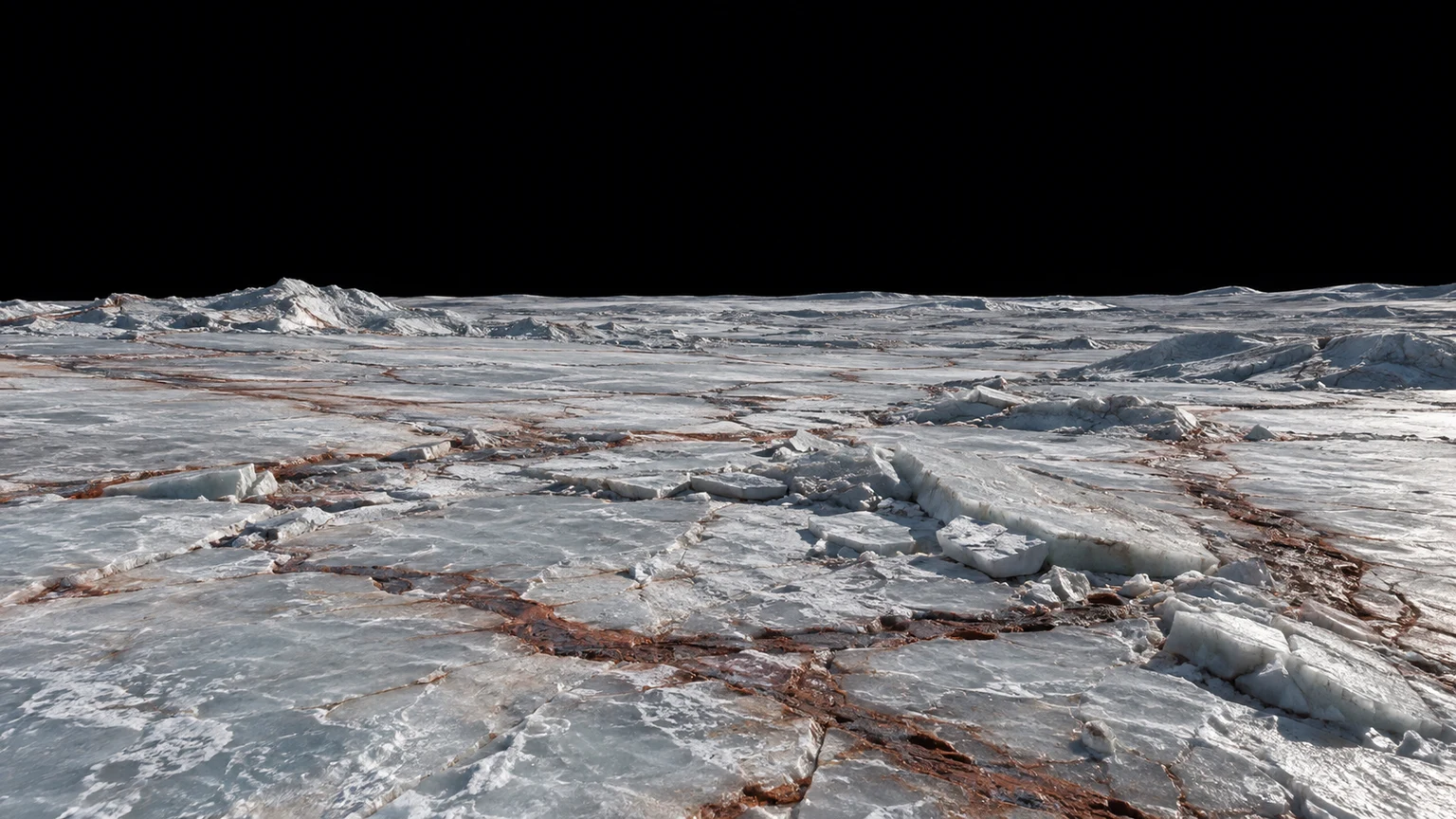
An imagined chaos-terrain scene of disrupted ice slabs. It does not reveal the buried ocean or claim a photographed surface viewpoint.

Broken ice

An imagined chaos-terrain scene of disrupted ice slabs. It does not reveal the buried ocean or claim a photographed surface viewpoint.

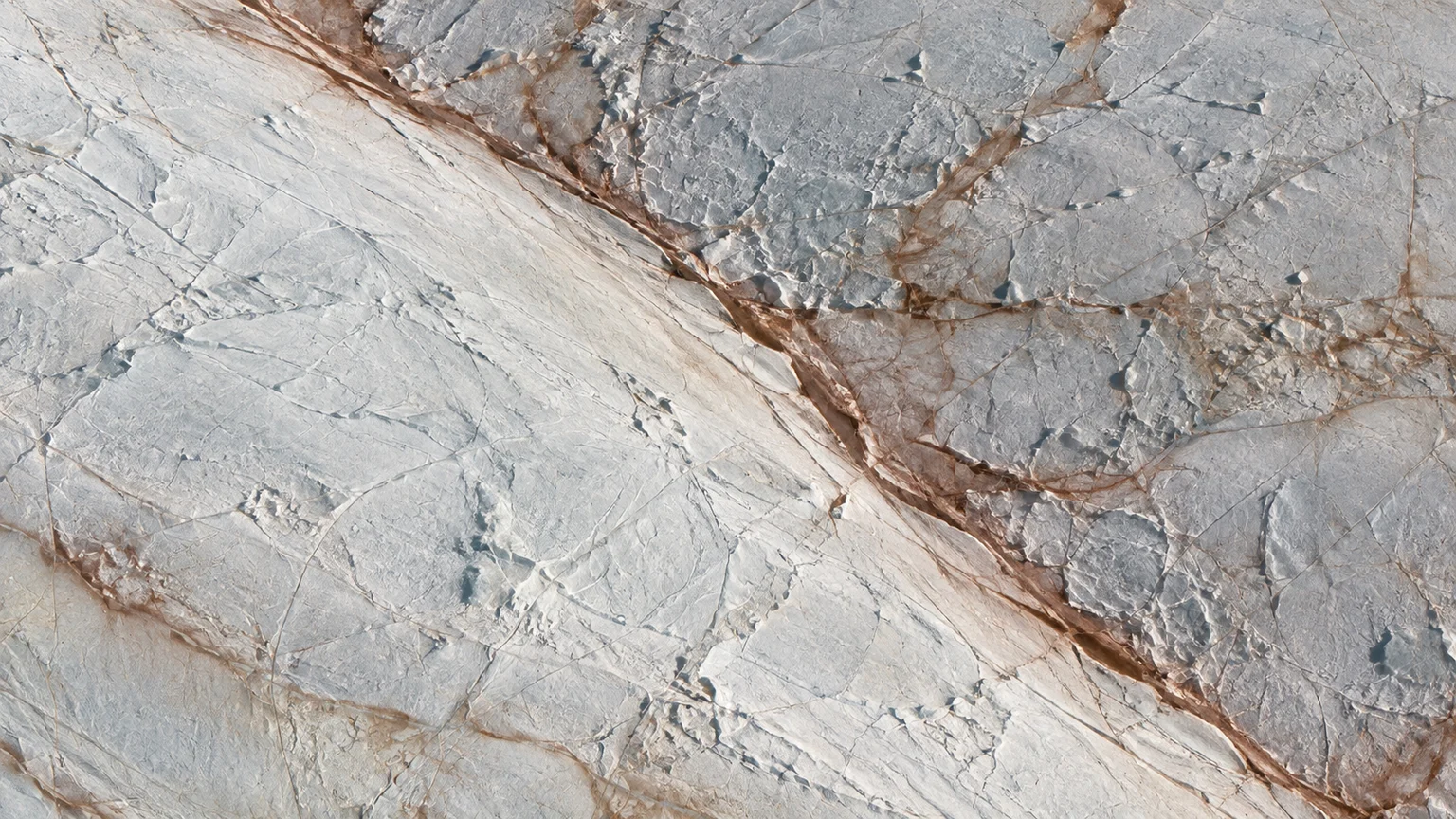
Two broad pale icy bands meeting diagonally with narrow rust-stained edges, fine cracked textures. An artistic reconstruction of Europa; local detail, lighting and viewpoint are imagined.

Bands crossing the ice

Two broad pale icy bands meeting diagonally with narrow rust-stained edges, fine cracked textures. An artistic reconstruction of Europa; local detail, lighting and viewpoint are imagined.