JUPITER SYSTEM / SATELLITE DOSSIER

Io

Io is Jupiter’s volcanic moon, with sulfur-stained plains and continually changing terrain.

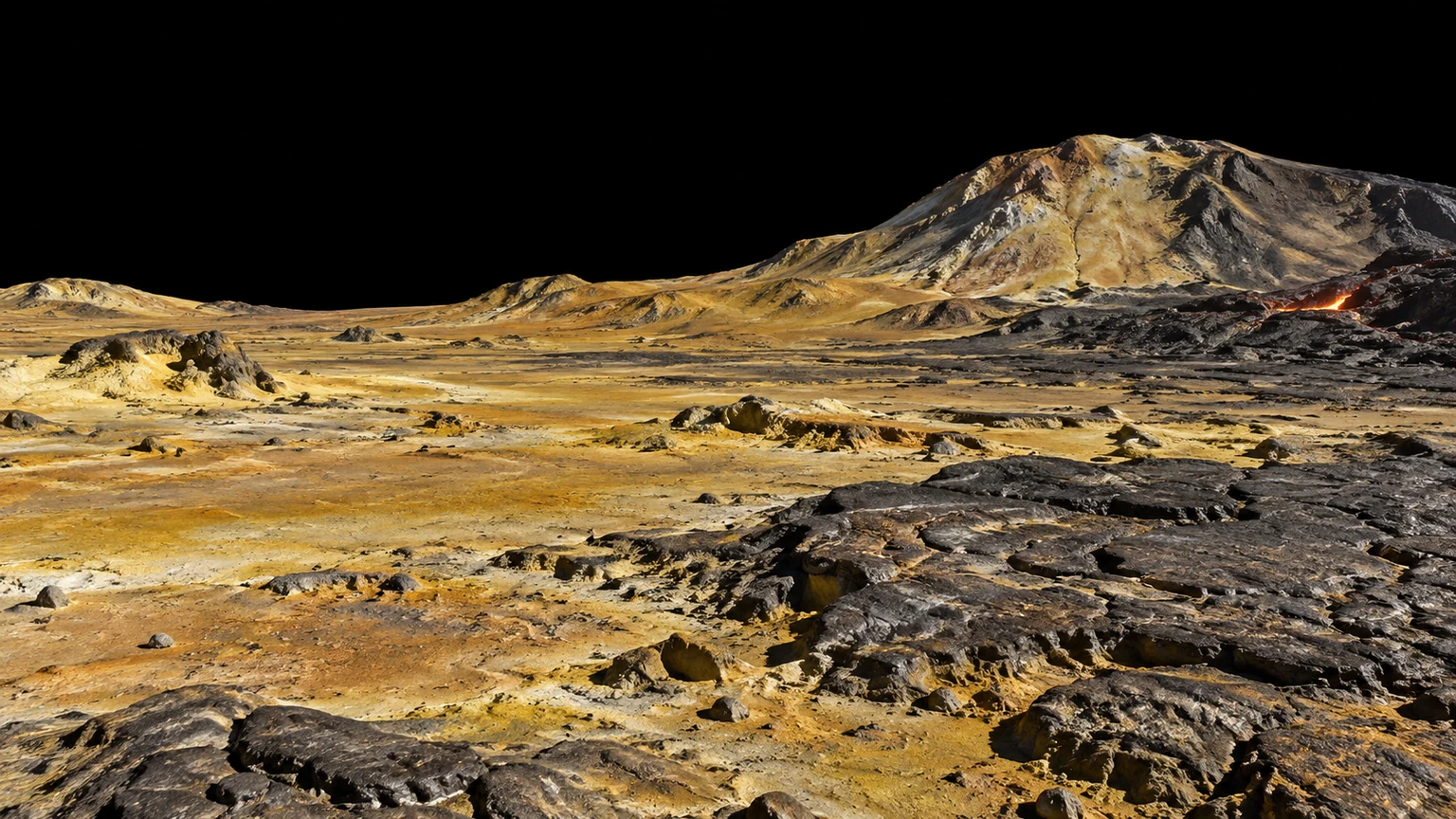
Artist’s impression of Io

Sulfur-stained plains and fresh lava under Jupiter’s powerful influence.

DIAMETER / EARTH0.29×
EARTHIO
ATMOSPHERE
A tenuous sulfur-dioxide envelopeThin and variable
SURFACE TEMPERATURE
Cold ground · hot lava locally
SURFACE PRESSURE
Very tenuous gas
HABITABILITYHostile surface
UNPROTECTED HUMANSNot survivable

Interior ↗

03
Io interiorSimplified interior model. Layer thicknesses and boundaries are illustrative, not measured to scale.Volcanic crustRocky mantleMetallic core

Moon system ↗

04
Jupiter moon orbitsSelected moons, ordered outward. Orbit sizes and positions are schematic; relative periods are preserved.JUPITERMETISADRASTEAAMALTHEATHEBEIOEUROPAGANYMEDECALLISTOLEDAHIMALIALYSITHEAELARA
IO

Instrument detail

Io orbitElliptical orbit viewed along the orbital axis, relative to Jupiter. Motion is accelerated, not a live position. Distances are center to center.JUPITERIO≈ 421,800 km
ONE ORBIT1.77 Earth days around Jupiter
Closest to Jupiter
420,113 km
Farthest from Jupiter
423,487 km

Io circles Jupiter. Distances are measured between the centers of the two bodies.

Io rotationEqual elapsed time, with sidereal rotation rates and directions. Axial tilt and relative sizes are not shown.IO42.5 hoursEARTH23.9 hours
ONE ROTATION42.5 hours

One turn per orbit

Io turns once in each orbit, so roughly the same hemisphere faces Jupiter. The spin period is 1.77 Earth days; this is not the interval between sunrises.

Satellite atlasMoons
Jupiter moon orbitsSelected moons, ordered outward. Orbit sizes and positions are schematic; relative periods are preserved.JUPITERMETISADRASTEAAMALTHEATHEBEIOEUROPAGANYMEDECALLISTOLEDAHIMALIALYSITHEAELARA
FEATURED MOONS12
  1. 01Metis ↗0.294779 days
  2. 02Adrastea ↗0.29826 days
  3. 03Amalthea ↗0.499918 days
  4. 04Thebe ↗0.676105 days
  5. 05Io1.77 days
  6. 06Europa ↗3.55 days
  7. 07Ganymede ↗7.15 days
  8. 08Callisto ↗16.69 days
  9. 09Leda ↗240.3264 days
  10. 10Himalia ↗249.909 days
  11. 11Lysithea ↗258.5035 days
  12. 12Elara ↗258.8861 days

Io is volcanic, while the other Galilean moons are icy worlds that may conceal oceans. Each has its own environment; Jupiter’s atmospheric conditions do not describe its moons.

Io gravityEqual launches at 2 m/s; shared metre scale; air resistance ignored.0.0 m0.5 m1.0 m1.5 mEARTH9.80 m/s²IO1.80 m/s²
IO / EARTH GRAVITY0.18 ×

Same push, different gravity

Both balls launch at 2 m/s, using the same height and time scales. Weaker gravity gives a higher jump and a longer time in the air. Air resistance is ignored. This idealized comparison uses constant spherical gravity GM/r²; local terrain, tides and rotation are excluded.

Earth · height / airtime
0.20 m / 0.41 s
Io · height / airtime
1.11 m / 2.23 s
Io interiorSimplified interior model. Layer thicknesses and boundaries are illustrative, not measured to scale.010203
  1. 01
    INFERRED

    Volcanic crust

    Lava and sulfur-rich deposits continually renew parts of the surface.

  2. 02
    INFERRED

    Rocky mantle

    Silicate-rich material lies beneath the outer layers.

  3. 03
    INFERRED

    Metallic core

    A metal-rich central region is inferred from measurements.

Simplified interior model · layer thicknesses are illustrative.

Artist’s impression of Io

Squeezed into activity.

Jupiter’s pull and the orbital rhythm shared with Europa and Ganymede flex Io’s interior. This tidal heating supplies the energy behind its extraordinary volcanism. Distance from the Sun does not decide whether a moon can be geologically active.

Colors with a volcanic origin.

Sulfur compounds and volcanic deposits paint the ground in yellows, reds and dark patches. Lava repeatedly changes the landscape. A view here captures a moment in a world that continually covers parts of its own past.

Plumes do not make breathable air.

Volcanic material can rise high above Io, but its surrounding gas remains extremely tenuous. A plume is a local event, not a thick protective atmosphere. At surface exposure, the sky would remain dark.

Inside Jupiter’s radiation belts.

Io travels through an intense magnetic environment. Charged particles interact with escaping material and the surface. The hazards extend far beyond the hot spots: even cold volcanic ground would offer no refuge for an unprotected visitor.

DIAMETER / EARTH0.29×
EARTHIO
EARTH
12,742 km
IO
3,643 km
Mean diameters · circles share one scale
ATMOSPHERE
A tenuous sulfur-dioxide envelopeThin and variable

Volcanism and surface frost supply a variable, very thin atmosphere. A single fixed mixture chart would obscure those variations.

SURFACE TEMPERATURE
Cold ground · hot lava locally
SURFACE PRESSURE
Very tenuous gas
HABITABILITYHostile surface

No life has been found. Radiation, scarce accessible water and a tenuous atmosphere make the surface extremely hostile.

UNPROTECTED HUMANSNot survivable

There is no breathable air. Pressure protection, oxygen and thermal protection are essential; an apparently solid landscape is not a safe human environment.

Planet and landscape images are artistic interpretations.

  • NASA ↗
    • Classification and orbital data
    • Rotation and internal structure constraints
    • Natural conditions and human survival
    • Heat
    • Surface
    • Sky
    • Environment
  • NASA / JPL ↗
    • GM and mean radius; spherical gravity estimate GM/r²
  • NASA / JPL ↗
    • Mean orbital dimensions; distances from parent center
  • NASA ↗
    • Size, physical data and atmospheric constraints
An artistic reconstruction of Io’s sulfur-colored volcanic terrain. Local geology and lighting are interpretive.

A restless horizon

An artistic reconstruction of Io’s sulfur-colored volcanic terrain. Local geology and lighting are interpretive.

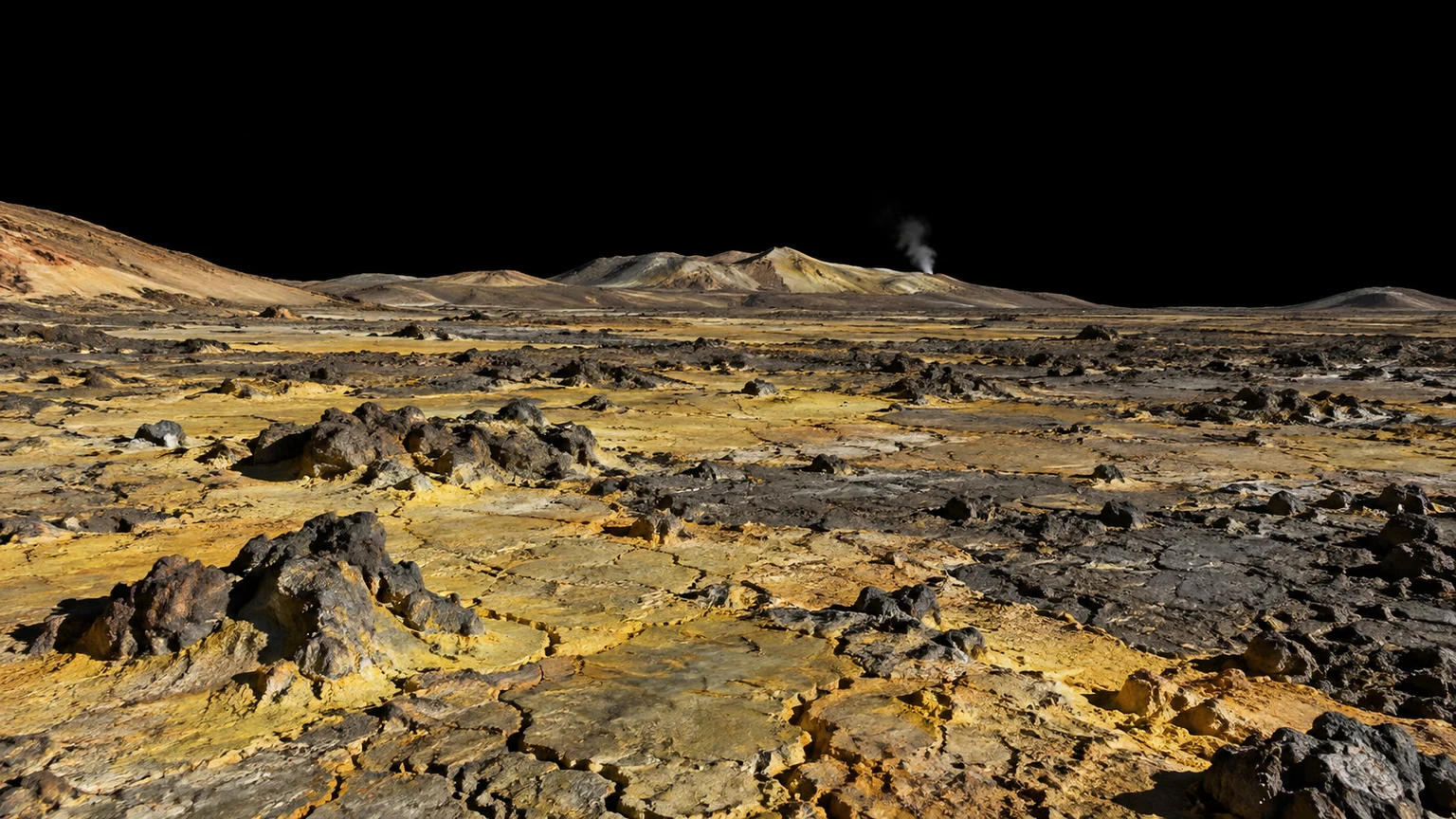
An imagined view across cooled basalt and sulfur-stained ground, with a small active fissure. No particular eruption or volcano is depicted.

After the lava

An imagined view across cooled basalt and sulfur-stained ground, with a small active fissure. No particular eruption or volcano is depicted.

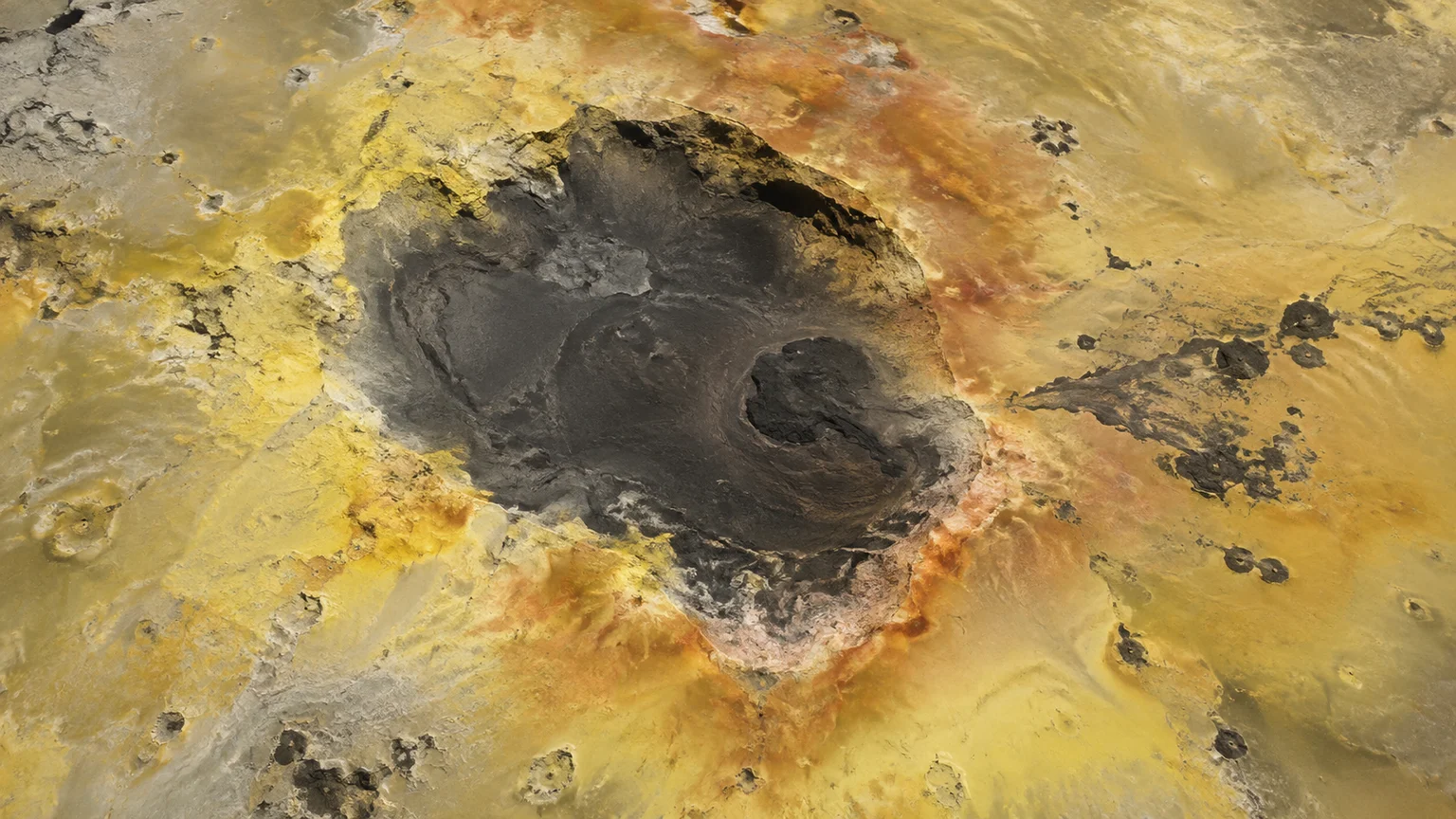
A dark volcanic depression with muted yellow sulfur-stained deposits and reddish diffuse margins, tiny dark lava lobes. An artistic reconstruction of Io; local detail, lighting and viewpoint are imagined.

Patterns around a volcanic vent

A dark volcanic depression with muted yellow sulfur-stained deposits and reddish diffuse margins, tiny dark lava lobes. An artistic reconstruction of Io; local detail, lighting and viewpoint are imagined.