SATURN SYSTEM / SATELLITE DOSSIER

Pandora

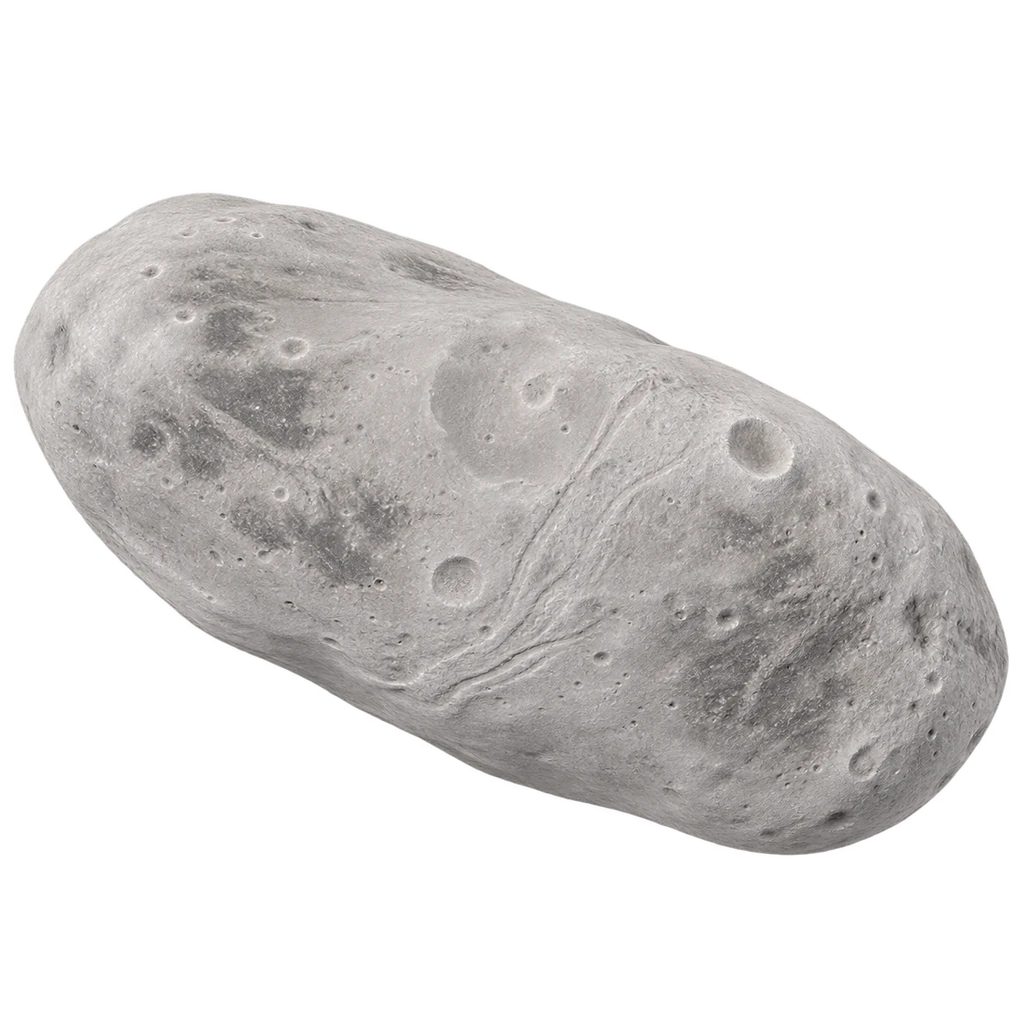
Pandora is a small dusty icy moon near Saturn’s F ring, with softened craters and shallow grooves.

Artist’s impression of Pandora

Pandora is a small elongated moon near Saturn’s F ring, with fine icy debris softening its craters, grooves and ridges.

DIAMETER / EARTH0.0064×
EARTHPANDORA
ATMOSPHERE
No substantial atmosphere detectedEffectively airless
SURFACE TEMPERATURE
Cold exposed surface
SURFACE PRESSURE
Effectively airless
HABITABILITYNo life detected
UNPROTECTED HUMANSNot survivable

Interior ↗

03
Unresolvedinternal structure

Moon system ↗

04
Saturn moon orbitsSelected moons, ordered outward. Orbit sizes and positions are schematic; relative periods are preserved.SATURNPANDAPHNISATLASPROMETHEUSPANDORAEPIMETHEUSJANUSMIMASENCELADUSTETHYSTELESTOCALYPSODIONEHELENERHEATITANHYPERIONIAPETUSPHOEBE
PANDORA

Instrument detail

Pandora orbitElliptical orbit viewed along the orbital axis, relative to Saturn. Motion is accelerated, not a live position. Distances are center to center.SATURNPANDORA≈ 141,700 km
ONE ORBIT0.631369 Earth days around Saturn
Closest to Saturn
141,133 km
Farthest from Saturn
142,267 km

Pandora circles Saturn. Distances are measured between the centers of the two bodies.

The mean ellipse omits detailed perturbations from other moons and Pandora’s interaction with the F ring.

Pandora rotationEqual elapsed time, with sidereal rotation rates and directions. Axial tilt and relative sizes are not shown.PANDORA15.2 hoursEARTH23.9 hours
ONE ROTATION15.2 hours

One turn per orbit

Pandora turns once in each orbit, so roughly the same hemisphere faces Saturn. The spin period is 0.631369 Earth days; this is not the interval between sunrises.

Satellite atlasMoons
Saturn moon orbitsSelected moons, ordered outward. Orbit sizes and positions are schematic; relative periods are preserved.SATURNPANDAPHNISATLASPROMETHEUSPANDORAEPIMETHEUSJANUSMIMASENCELADUSTETHYSTELESTOCALYPSODIONEHELENERHEATITANHYPERIONIAPETUSPHOEBE
FEATURED MOONS19
  1. 01Pan ↗0.575051 days
  2. 02Daphnis ↗0.59408 days
  3. 03Atlas ↗0.604602 days
  4. 04Prometheus ↗0.615878 days
  5. 05Pandora0.631369 days
  6. 06Epimetheus ↗0.697012 days
  7. 07Janus ↗0.697353 days
  8. 08Mimas ↗0.9424 days
  9. 09Enceladus ↗1.37 days
  10. 10Tethys ↗1.8878 days
  11. 11Telesto ↗1.887802 days
  12. 12Calypso ↗1.887803 days
  13. 13Dione ↗2.7369 days
  14. 14Helene ↗2.736916 days
  15. 15Rhea ↗4.5175 days
  16. 16Titan ↗15.95 days
  17. 17Hyperion ↗21.2767 days
  18. 18Iapetus ↗79.331 days
  19. 19Phoebe ↗550.3039 days

Saturn’s moon system includes hazy Titan and icy Enceladus. Methane lakes on Titan and water jets from Enceladus make these worlds compelling destinations in their own right. Saturn itself takes about 29.4 Earth years to complete an orbit.

Janus and Epimetheus share nearly the same orbital distance and exchange inner and outer positions. Their separated tracks here are schematic; this view does not simulate that exchange. Telesto and Calypso share Tethys’s orbit, roughly 60 degrees ahead and behind. Their tracks and positions are also separated schematically here; co-orbital libration is not simulated. Helene similarly shares Dione’s orbit in the leading region.

Pandora gravityEqual launches at 2 m/s; shared metre scale; air resistance ignored.0 m200 m400 m600 mEARTH9.80 m/s²PANDORA0.0056 m/s²
PANDORA / EARTH GRAVITY0.00057 ×

Same push, different gravity

Both balls launch at 2 m/s, using the same height and time scales. Weaker gravity gives a higher jump and a longer time in the air. Air resistance is ignored. This idealized comparison uses constant spherical gravity GM/r²; local terrain, tides and rotation are excluded. Playback runs 60× faster for both balls.

Earth · height / airtime
0.20 m / 0.41 s
Pandora · height / airtime
356.02 m / 712.03 s
Unresolvedinternal structure

Beyond the surface

Pandora’s low density suggests substantial porosity in an ice-rich body. Fine icy material coats the exterior, but its internal arrangement and any separate layers remain unresolved.

    Artist’s impression of Pandora

    Crater rims beneath fine debris.

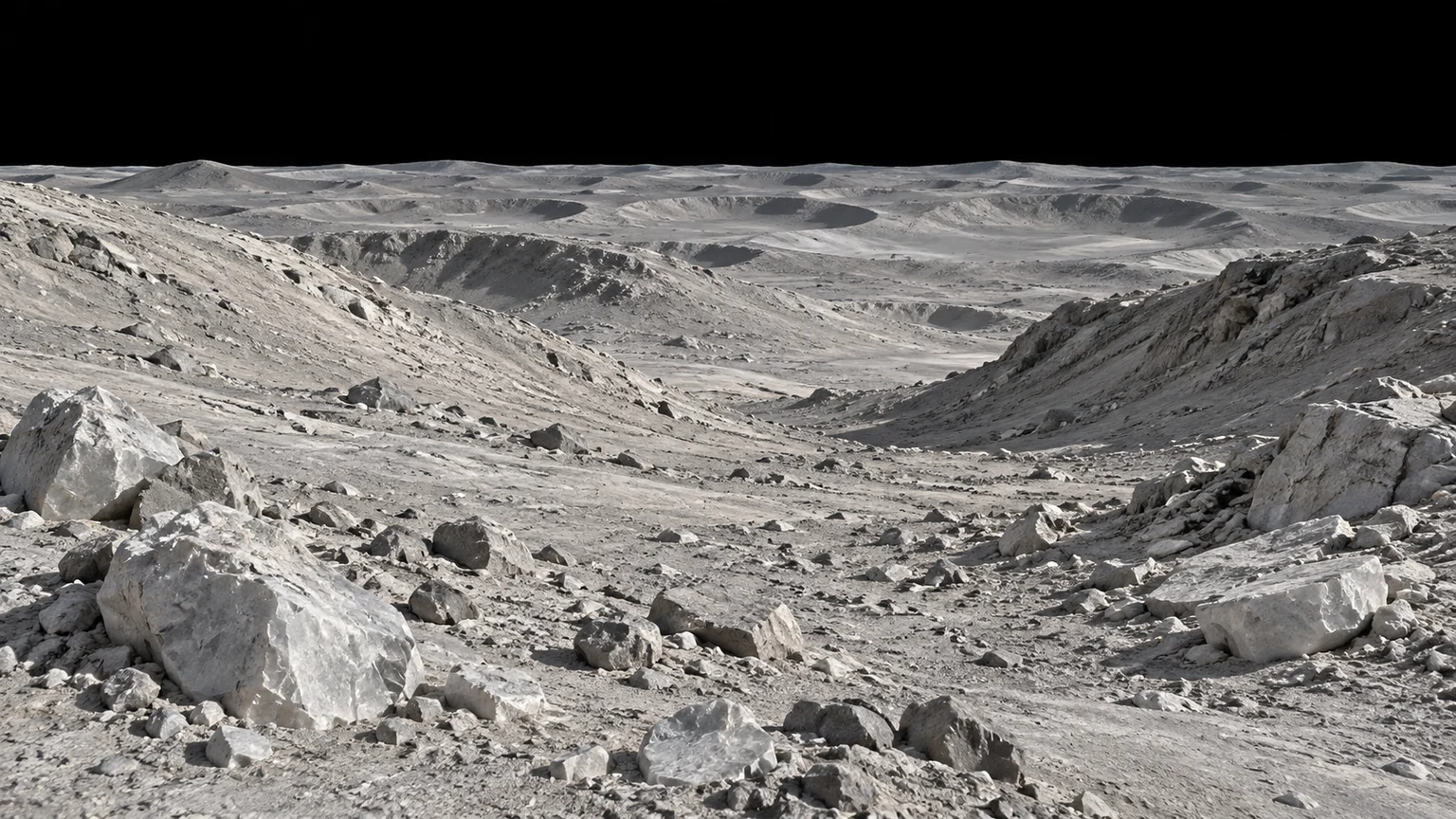
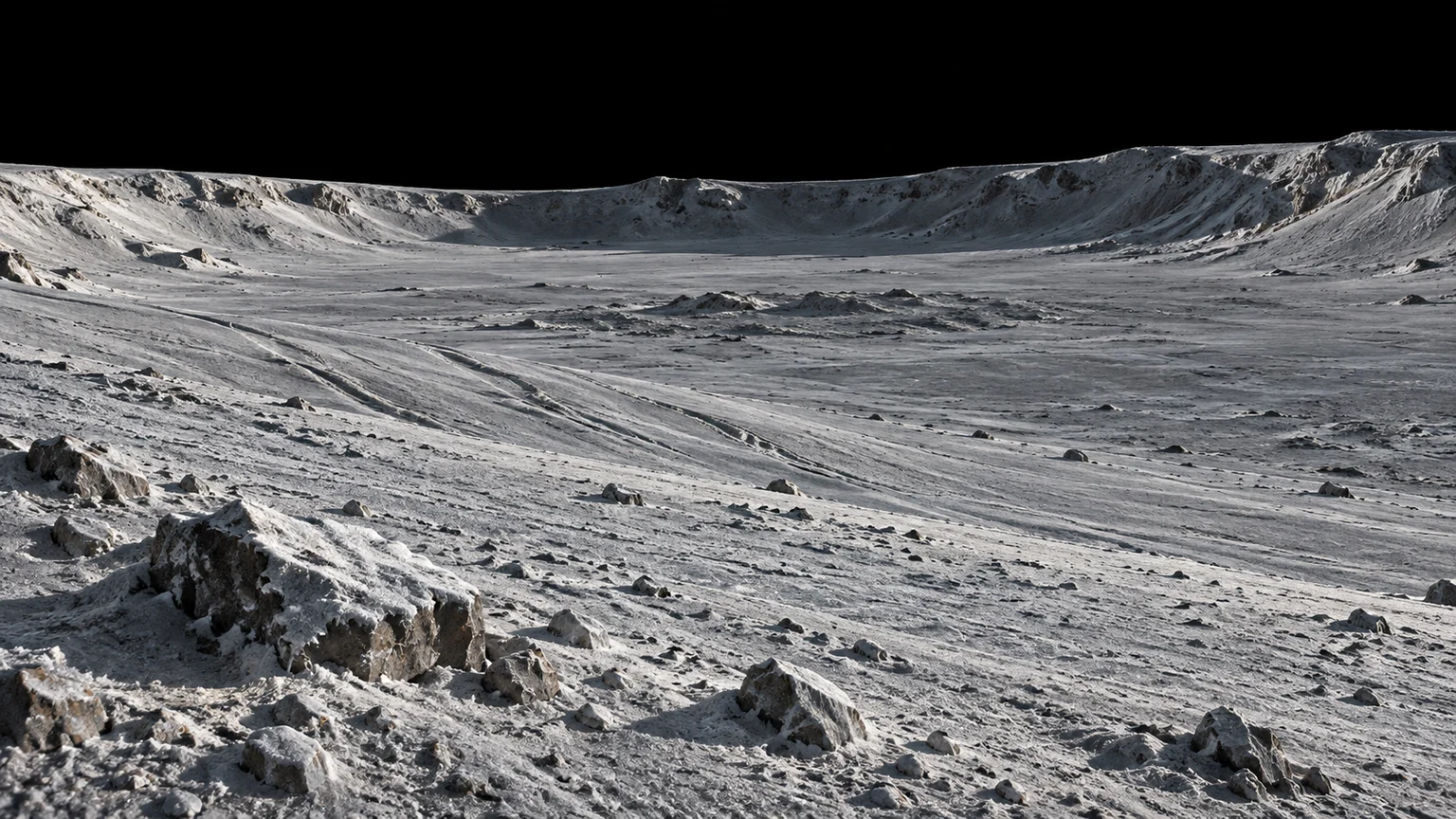
    Fine icy material covers Pandora’s surface and softens the appearance of its craters. Low ridges and shallow grooves cross its irregular body. The landscape studies imagine the texture of that dusty exterior, rather than reproducing a surveyed landing site.

    A neighbor that disturbs the ring.

    Pandora travels just outside the F ring. It can disturb ring material, and its role is more complicated than the familiar picture of two moons holding a ring neatly between them. Prometheus, on the inner side, produces conspicuous streamer-channel structures.

    Low density, uncertain layers.

    The adopted density is about 0.49 grams per cubic centimeter, consistent with a porous ice-rich body. These bulk properties do not map separate internal layers. No present-day ocean or habitable interior is established.

    A circuit of about fifteen hours.

    Pandora’s mean orbital scale is about 141,700 kilometers from Saturn’s center. One orbit takes 0.631369 Earth days. The rate comparison treats its spin as approximately synchronous; the mean ellipse does not model detailed gravitational perturbations from other moons.
    DIAMETER / EARTH0.0064×
    EARTHPANDORA
    EARTH
    12,742 km
    PANDORA
    81.2 km
    Mean diameters · circles share one scale

    81.2 km is the adopted volume-equivalent mean diameter. Pandora is elongated and irregular; the circle is only a size comparison.

    ATMOSPHERE
    No substantial atmosphere detectedEffectively airless

    Pandora is effectively airless. No substantial atmosphere is known to provide breathable air or surface pressure.

    SURFACE TEMPERATURE
    Cold exposed surface
    SURFACE PRESSURE
    Effectively airless
    HABITABILITYNo life detected

    No life has been detected, and a habitable environment has not been established.

    UNPROTECTED HUMANSNot survivable

    The exposed surface requires oxygen, pressure protection and thermal control.

    Planet and landscape images are artistic interpretations.

    • NASA ↗
      • Classification and orbital data
      • Rotation and internal structure constraints
      • Natural conditions and human survival
      • Landscape
      • Rings
    • NASA / JPL ↗
      • GM and mean radius; spherical gravity estimate GM/r²
      • Size, physical data and atmospheric constraints
      • Interior
    • NASA / JPL ↗
      • Mean orbital dimensions; distances from parent center
      • Orbit
    • naif.jpl.nasa.gov ↗
      • Rotation model and synchronous or independent spin
    An artist’s reconstruction inspired by Pandora’s fine icy surface debris. Crater shapes, shallow grooves and the ground-level viewpoint are imagined.

    Powder across an old crater

    An artist’s reconstruction inspired by Pandora’s fine icy surface debris. Crater shapes, shallow grooves and the ground-level viewpoint are imagined.

    An imagined landscape across Pandora’s muted icy relief. Local slopes, fragments and illumination are artistic interpretations, not mapped ground features.

    Along a dust-covered ridge

    An imagined landscape across Pandora’s muted icy relief. Local slopes, fragments and illumination are artistic interpretations, not mapped ground features.

    A squat gray icy block, its base buried in pale fine debris. An artistic reconstruction of Pandora; local detail, lighting and viewpoint are imagined.

    A weathered block in the dust

    A squat gray icy block, its base buried in pale fine debris. An artistic reconstruction of Pandora; local detail, lighting and viewpoint are imagined.