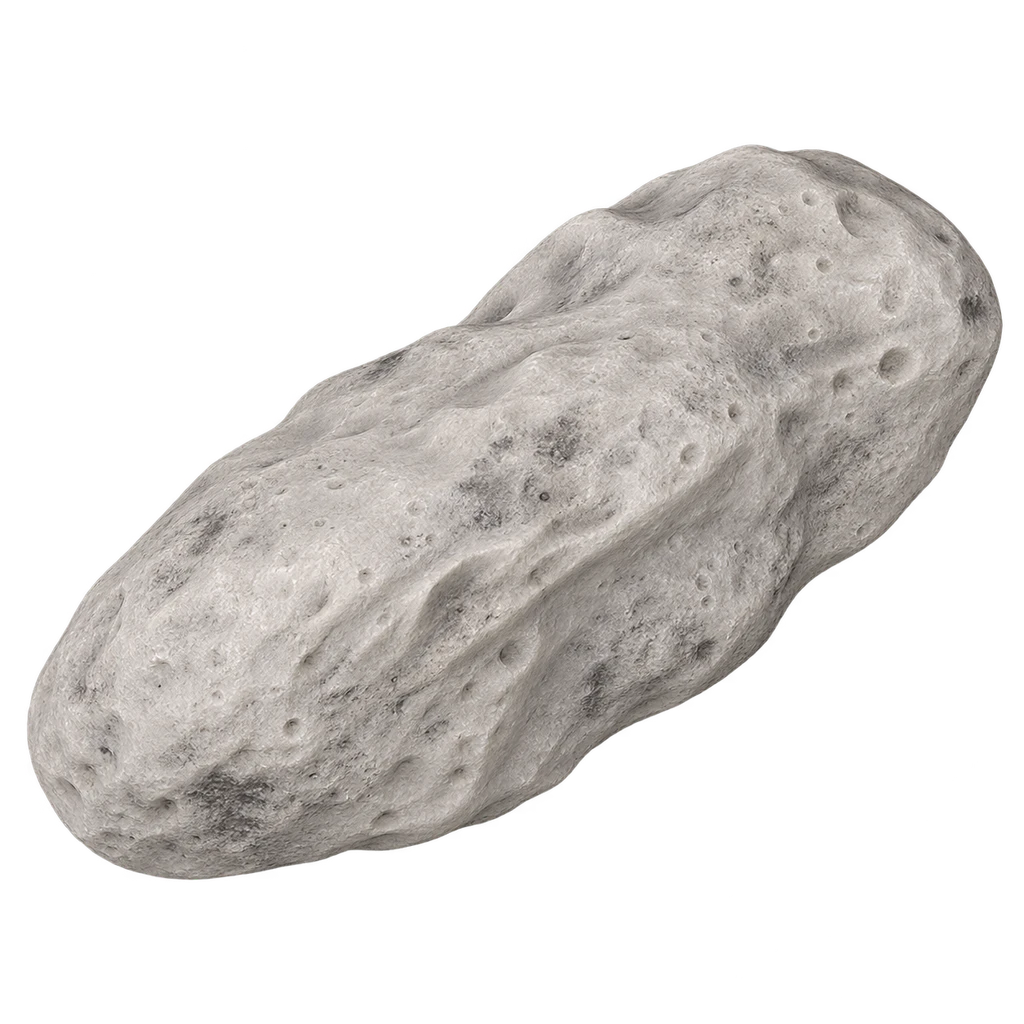
A long, uneven body.
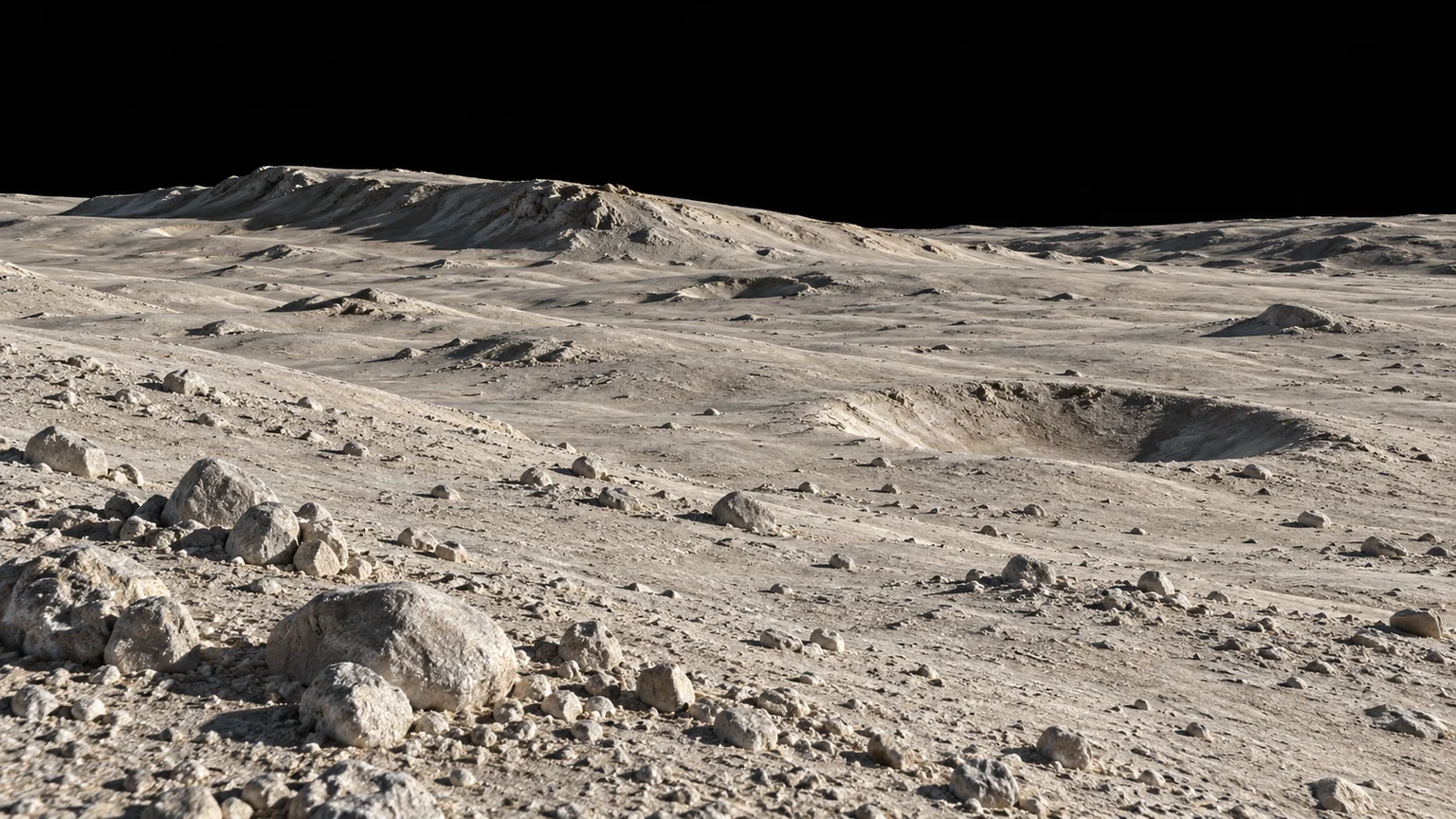
Prometheus is strongly elongated, with low ridges and impact depressions across a pale icy exterior. It has fewer obvious craters than nearby Pandora, Janus and Epimetheus. The portrait follows its general shape; local landscape detail is reconstructed.
A passing moon leaves a pattern.
As Prometheus passes close to the F ring, its gravity draws particles into streamers and leaves channels. These structures evolve as the ring material moves onward. The orbital instrument shows the moon’s mean path, not a simulation of these particle interactions.
An icy body with a low density.
The adopted mass and size imply a density around 0.48 grams per cubic centimeter. Substantial internal porosity is consistent with such a low value. The distribution of ice, rock and empty space is unresolved; a layered core or ocean is not established.
Inside the F ring.
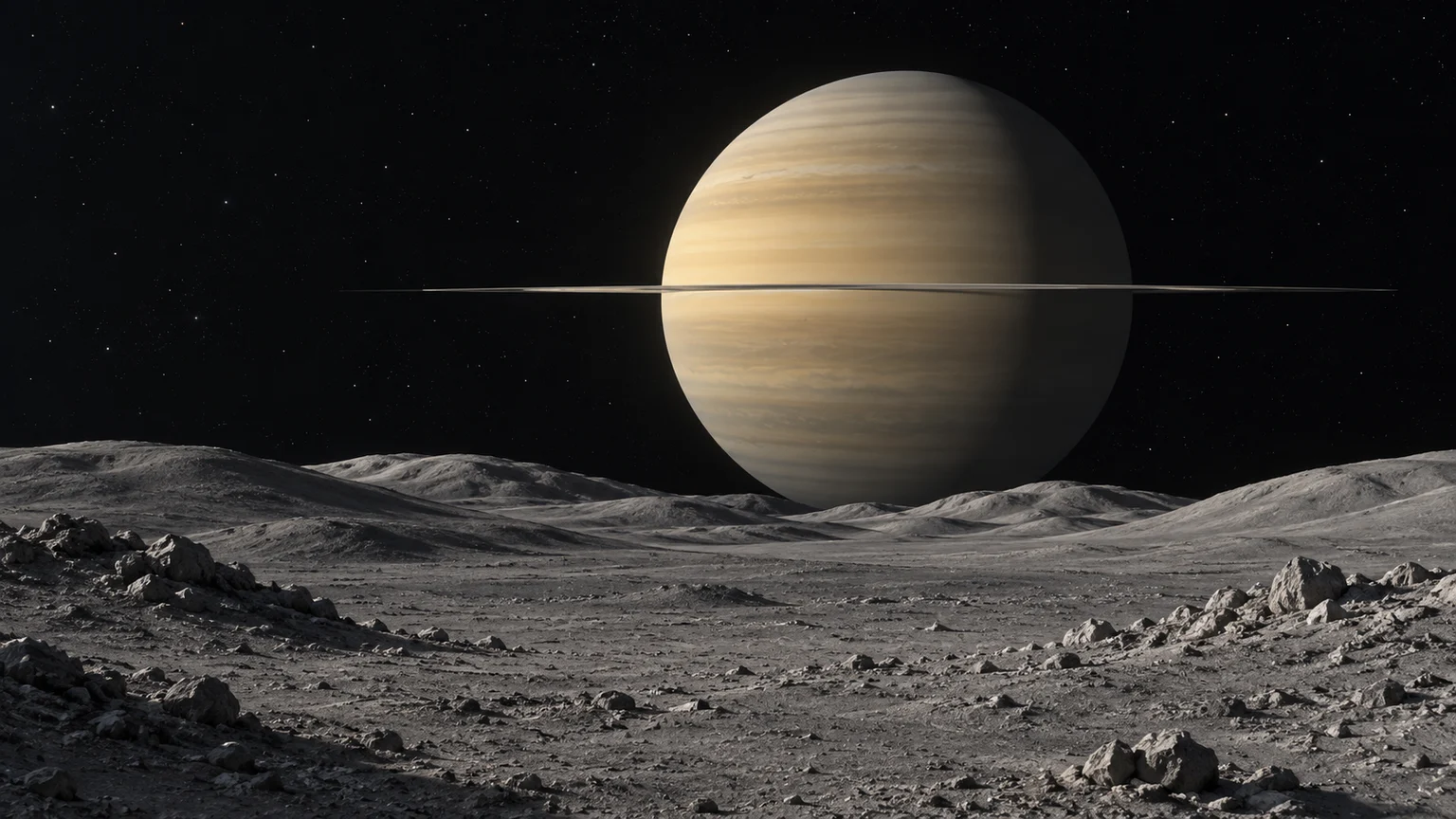
The mean orbital scale is about 139,400 kilometers from Saturn’s center, with a period of 0.615878 Earth days. The spin comparison uses approximate synchronous rotation, keeping broadly the same side toward Saturn. Real interactions with neighboring moons and ring particles are omitted.