SOL SYSTEM / PLANETARY DOSSIER

Sedna

Sedna follows a detached orbit that never brings it close to the major planets and takes more than ten thousand years to complete. Its reddish color and estimated size are known, but its surface features have not been mapped.

Artist’s impression of Sedna

Dwarf planet candidateA reddish object whose orbit never brings it into the realm of the major planets.

DIAMETER / EARTH0.08×
EARTHSEDNA
ATMOSPHERE
An environment still being studiedNo measured composition chart
SURFACE TEMPERATURE
Very cold · no local measurements
SURFACE PRESSURE
Not established at a landing site
HABITABILITYNo life detected
UNPROTECTED HUMANSNot survivable
Interior ↗

03
Unresolvedinternal structure

System ↗

04
No known moonsSYSTEM OVERVIEW · NOT TO SCALE

Rotation ↗

06
Sedna rotationEqual elapsed time and measured spin rate. Spin direction is illustrative, not measured. Axial tilt and relative sizes are not shown.SEDNA10.3 hoursEARTH23.9 hoursSPIN DIRECTION ILLUSTRATIVE

Gravity ↗

07
GRAVITY CONSTRAINTSMODEL-DEPENDENT
SEDNA

Instrument detail

Sedna orbitElliptical orbit viewed along the orbital axis, relative to Sun. Motion is accelerated, not a live position. Distances are center to center.SUNSEDNA1010.00 AU76.20 AU
ONE ORBIT> 10,000 Earth years
Closest to the Sun
76.20 AU
Farthest from the Sun
1010.00 AU

The Sun sits at a focus of the orbit. Sedna moves faster near the Sun and more slowly farther away.

A simplified ellipse from rounded JPL orbital elements at epoch JD 2461200.5. The moving marker is illustrative, not a current position. Orbital inclination and perturbations are omitted.

Sedna rotationEqual elapsed time and measured spin rate. Spin direction is illustrative, not measured. Axial tilt and relative sizes are not shown.SEDNA10.3 hoursEARTH23.9 hoursSPIN DIRECTION ILLUSTRATIVE
ONE ROTATION10.3 hours

An estimated spin period

The comparison uses a reported light-curve period of about 10.3 hours. JPL flags the period as uncertain because of incomplete observational coverage. Spin direction is illustrative.

Satellite atlasMoons
No known moonsSYSTEM OVERVIEW · NOT TO SCALE

Sedna and its surroundings

No moon is currently known around Sedna. Its remote orbit and faintness make small companions difficult to detect.

The illustration identifies companions without assigning orbital periods, distances or present-day positions. Body sizes and spacing are schematic.

GRAVITY CONSTRAINTSMODEL-DEPENDENT
SURFACE GRAVITYModel-dependent

Mass, size and shape

Sedna’s size is estimated from thermal observations, but its mass is not securely measured. A numerical surface-gravity comparison would require an assumed density.

Unresolvedinternal structure

Beyond the surface

Remote observations constrain surface materials and bulk properties, but do not map internal layer boundaries. A precise core, shell thickness or present-day ocean is not established by this view.

    Artist’s impression of Sedna

    Even the closest approach is far away.

    Sedna stays beyond the main Kuiper Belt throughout its orbit. Its closest approach is around seventy-six Earth–Sun distances, and the complete journey lasts more than ten thousand years.

    An orbit that asks a question.

    Such a detached path is difficult to explain through the familiar planets alone. Sedna’s discoverers considered encounters in the young solar system as one possibility. Its orbit is evidence to investigate, not proof of one particular hidden cause.

    A faint, reddish clue.

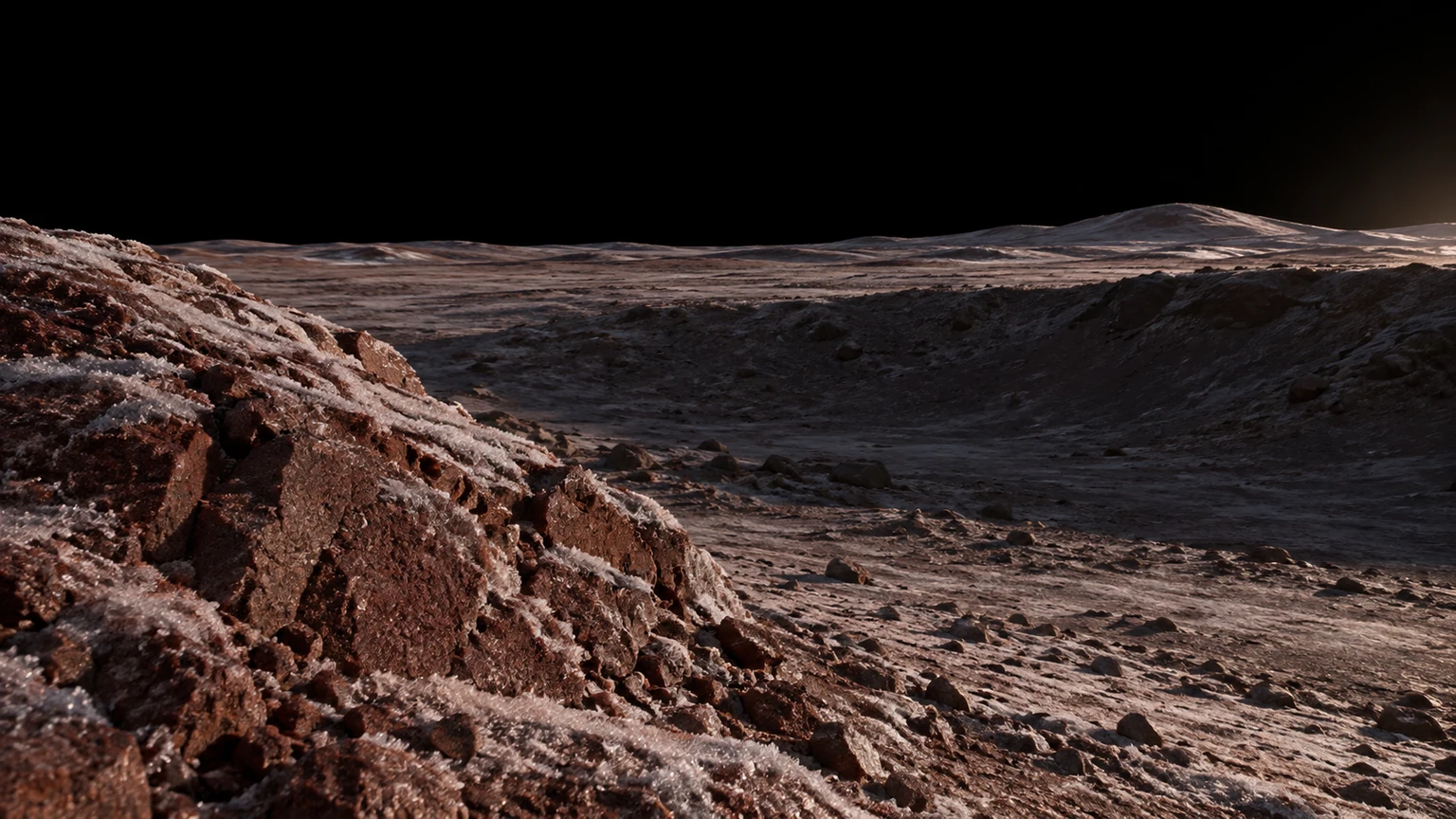
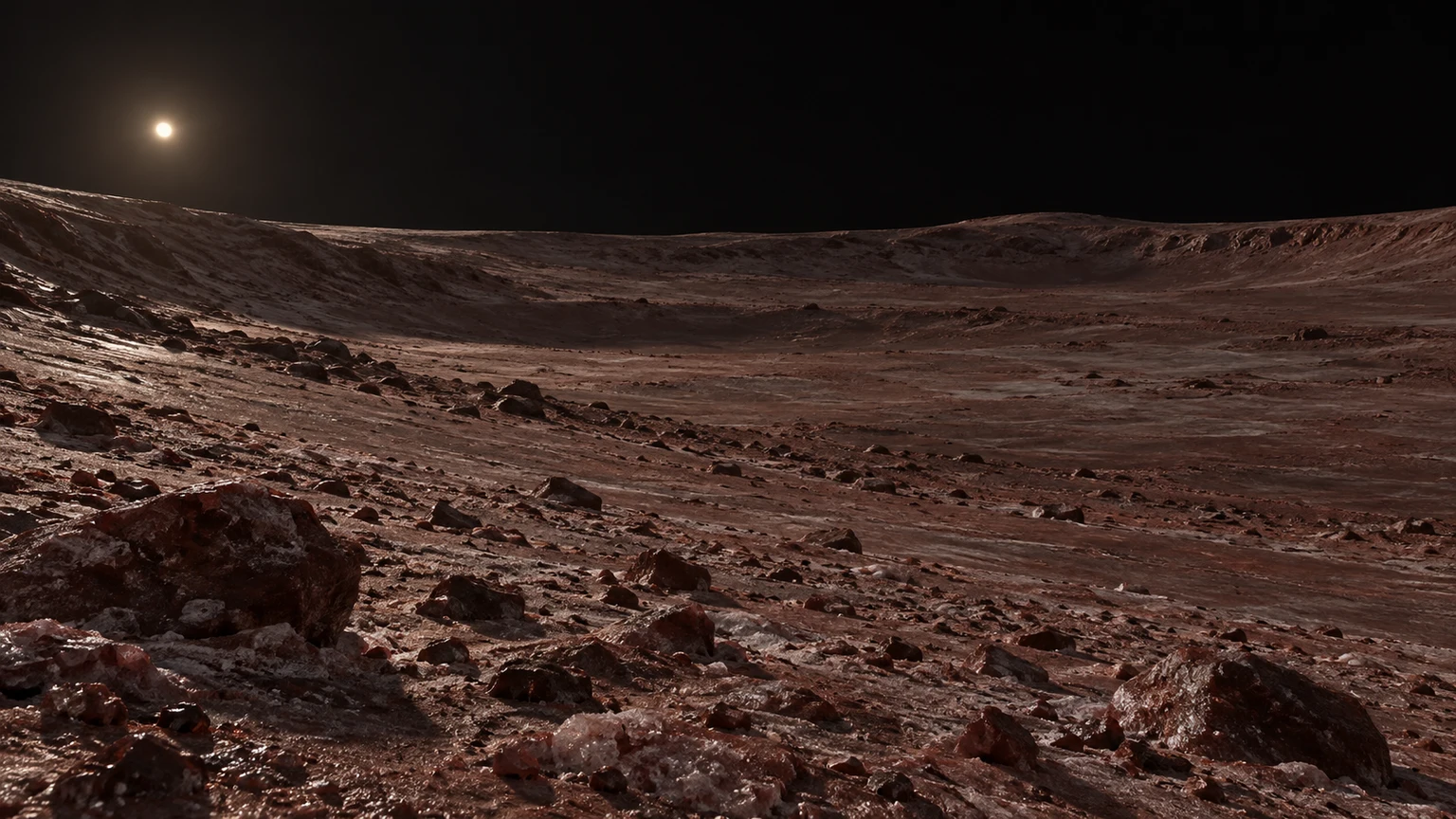
    Observations show a strongly reddish color. They do not reveal the ground-level formations pictured here. The muted red palette follows that observation; the rocks, frost and shallow depressions remain hypothetical scenery.

    Heat reveals a hidden scale.

    Far-infrared observations allow astronomers to combine reflected light with thermal emission. For Sedna, this produced an estimated diameter near a thousand kilometers. The method helps distinguish a large dark object from a smaller bright one.

    DIAMETER / EARTH0.08×
    EARTHSEDNA
    EARTH
    12,756 km
    SEDNA
    995 km
    approximate planet diameter / equatorial Earth diameter · rings excluded

    Thermal-model diameter 995 ± 80 km. The terrain in the illustrations is hypothetical.

    ATMOSPHERE
    An environment still being studiedNo measured composition chart

    A reliable atmospheric inventory is not available here. Unknown abundances are left unquantified rather than turned into percentage bars.

    SURFACE TEMPERATURE
    Very cold · no local measurements
    SURFACE PRESSURE
    Not established at a landing site
    HABITABILITYNo life detected

    There is no evidence of life here. Remote measurements do not establish a liquid-water habitat; the interior remains poorly constrained.

    UNPROTECTED HUMANSNot survivable

    The distant, cold environment offers no known breathable air or protective surface pressure. Human exploration would require a sealed, thermally controlled habitat.

    Planet and landscape images are artistic interpretations.

    Hypothetical ground-level landscape of Sedna. Color and broad material choices follow remote observations; terrain, lighting and local details are artistic interpretation, not a mapped or photographed site.

    The long shadow of a crater

    Hypothetical ground-level landscape of Sedna. Color and broad material choices follow remote observations; terrain, lighting and local details are artistic interpretation, not a mapped or photographed site.

    Hypothetical ground-level landscape of Sedna. Color and broad material choices follow remote observations; terrain, lighting and local details are artistic interpretation, not a mapped or photographed site.

    Frost on a reddish outcrop

    Hypothetical ground-level landscape of Sedna. Color and broad material choices follow remote observations; terrain, lighting and local details are artistic interpretation, not a mapped or photographed site.

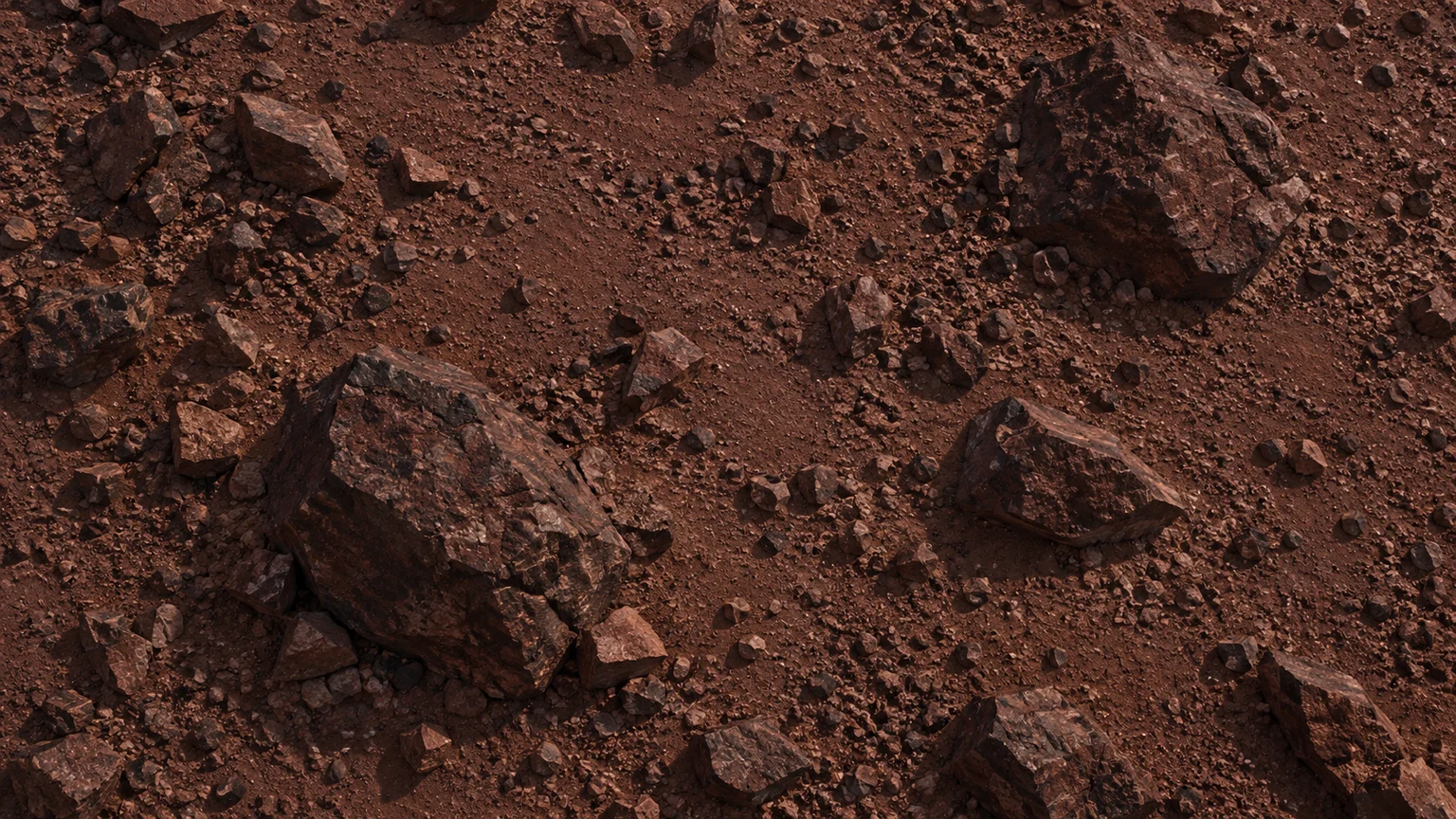
    Dark red-brown weathered fragments scattered over a finer ruddy surface, weak distant sunlight revealed by enhanced exposure. An artistic reconstruction of Sedna; local detail, lighting and viewpoint are imagined. The depicted environment is a possibility, not an observed surface or weather map.

    A field of red fragments

    Dark red-brown weathered fragments scattered over a finer ruddy surface, weak distant sunlight revealed by enhanced exposure. An artistic reconstruction of Sedna; local detail, lighting and viewpoint are imagined. The depicted environment is a possibility, not an observed surface or weather map.