ROSS 154 / STELLAR DOSSIER

Ross 154

9.71 light-years from Sol

A nearby red dwarf whose quiet-looking glow can give way to powerful magnetic outbursts.
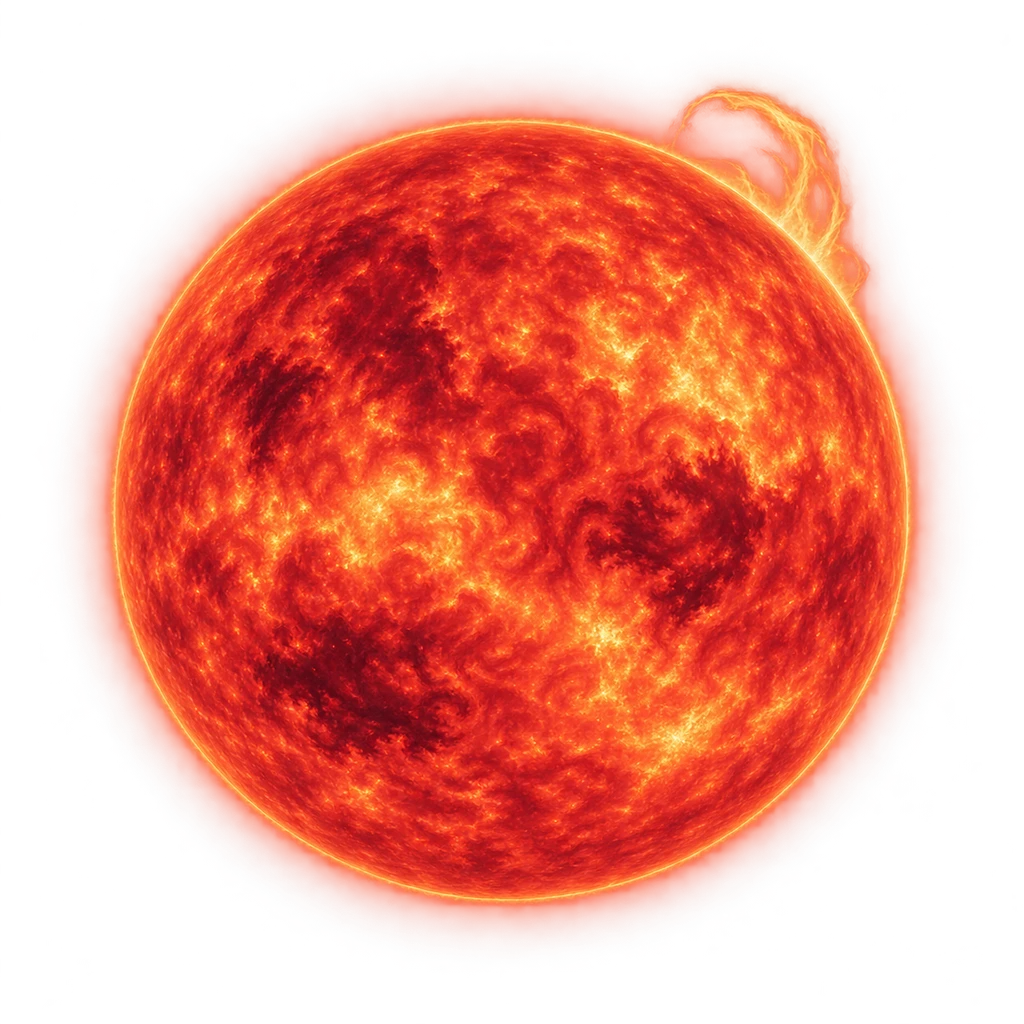
Artist’s impression of Ross 154
M3.5 Ve · flare star

A small star with a sudden temper.

Stellar conditions ↗

02
EFFECTIVE TEMPERATURE3,162 K

Cooler light. Hotter outbursts.

Ross 1543,162 K
Sol5,770 K
Shared scale 0–10,000 K · effective, not core temperature

Evolution ↗

03
H–R MAPBRIGHTER ↑
SOLHEREHOTTERCOOLER →
CURRENT PHASE

A long main-sequence chapter.

  1. NOWHydrogen fusion
  2. INTERIORDeep convection
  3. OUTLOOKLong-lived dwarf
A low-mass stellar outlook, not an age measurement or a forecast of the next flare.
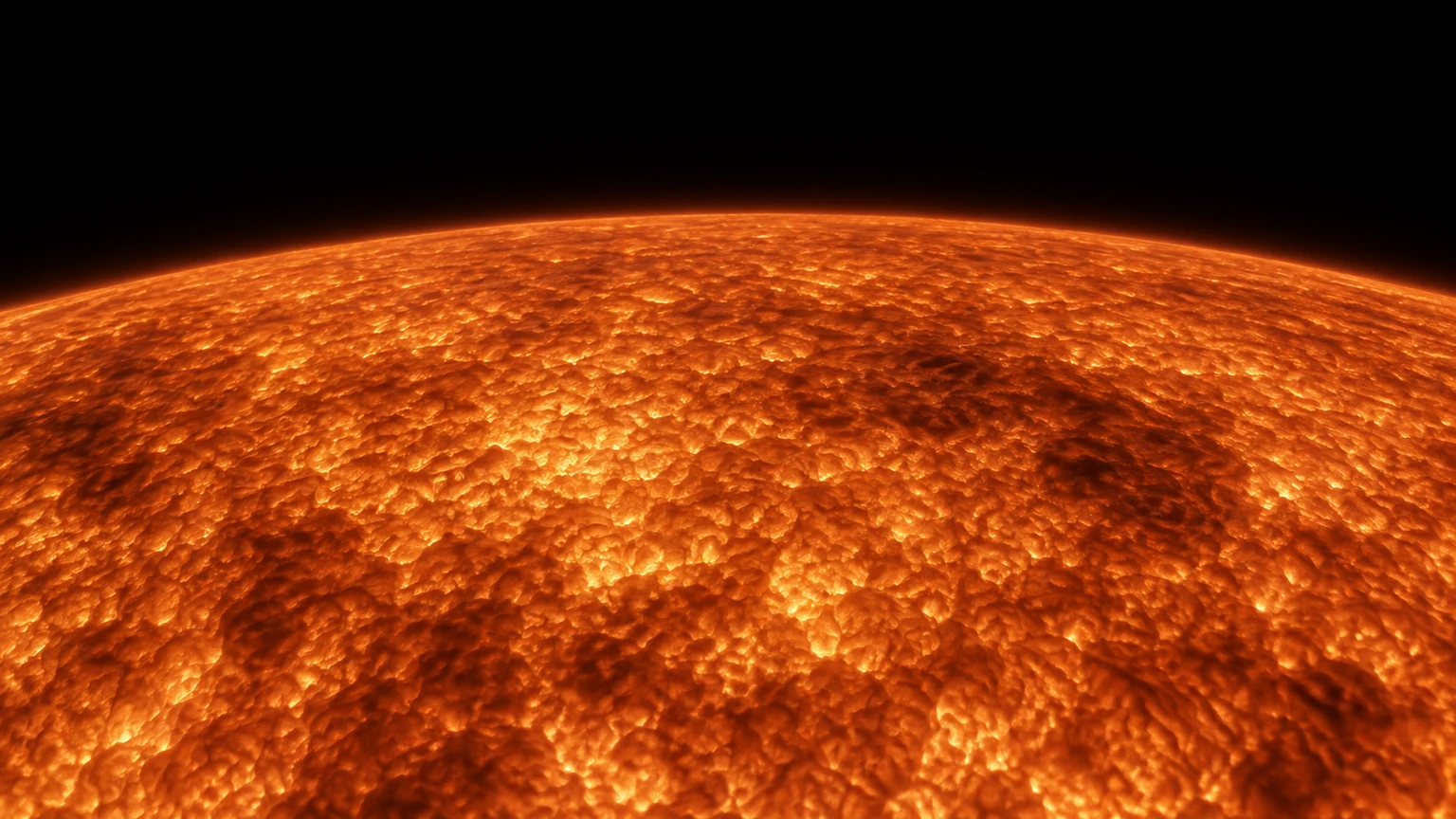
An imagined panorama across Ross 154’s photosphere. Granulation and darker magnetic patches draw on solar physics, not a resolved map of this star. Warm filtered color and reduced exposure reveal incandescent gas.Between the outbursts ↗ ARTIST’S IMPRESSION · 3 VIEWS

Diameter comparison ↗

06
0.205 × Sol
ROSS 154

Instrument detail

Artist’s impression of Ross 154

Artist’s impression · structure and color are illustrative.

Small enough to surprise you.

Ross 154 is also known as GJ 729. Its diameter is only about a fifth of Sol’s, and its effective temperature is substantially lower. Interferometry combines light from separated telescopes to measure a star’s tiny apparent diameter. Adding its distance turns that angular measurement into a physical size: the basis of the comparison above.

A photosphere, not a landscape.

A red dwarf is a working star, sustained by hydrogen fusion. Its visible glow comes from gaseous layers rather than a crust. Our close view borrows the language of solar observations: brighter cells, darker magnetic regions and a curved horizon. Those details are an interpretation, not places an observer has mapped on Ross 154.

A quiet exposure suddenly changed.

During a Chandra observation, a large flare drove the detected X-ray count rate to more than a hundred times its earlier level. That increase describes what the X-ray instrument recorded, not a hundredfold rise in all the star’s light. The event shows how misleading a small, cool star’s ordinary appearance can be.

The fading light still tells a story.

Researchers followed the flare’s rise and decline, using its changing spectrum to study heated plasma. The decay contained more than one component, revealing a richer event than a simple flash. Measurements across time help constrain the physics even when the star’s individual magnetic structures cannot be photographed. Our loop view imagines that hidden geometry.

A star in perspective.

DIAMETER / SOL0.20 ×

About 20.5% of our Sun’s diameter.

Circles compare diameter, not mass or luminosity. Interferometric radius: 0.205 ± 0.006 solar radii, from Rabus et al. (2019), listed as GJ 729. Diameter has the same relative ratio.

EFFECTIVE TEMPERATURE

Cooler light. Hotter outbursts.

  • Ross 154≈ 3,162 K
  • Sol≈ 5,770 K

Shared scale: 0–10,000 K. Effective temperature describes total emitted energy per unit surface area; it is not the core temperature. The adopted effective temperature is 3,162 ± 30 K. Flare-heated coronal gas can be much hotter; that is a separate measurement.

LIFE PHASE

A long main-sequence chapter.

  1. NOWHydrogen fusion
  2. INTERIORDeep convection
  3. OUTLOOKLong-lived dwarf

A low-mass stellar outlook, not an age measurement or a forecast of the next flare.

Research · size and temperature ↗
LIFE & HUMAN SURVIVAL / THE STAR ITSELF
POSSIBILITY FOR LIFEIncompatible with known life

The hot stellar gas is incompatible with known life. Being cooler than Sol does not make the star habitable, and its flare activity adds a separate source of high-energy radiation.

WITHOUT PROTECTIONNot survivable

No breathable air or solid ground. Stellar heat and radiation make a close approach unsurvivable without protection; a single survival timer would be misleading.

NASA · stellar structure and evolution ↗
10⁵1,000100.10.00110⁻⁵30,00010,0005,0002,500LUMINOSITY / SOL · BRIGHTER →HOTTER ← EFFECTIVE TEMPERATURE (K) → COOLERSUPERGIANTSGIANTSWHITE DWARFSMAIN SEQUENCESOLRoss 154
Ross 1543,162 K · ≈ 0.00379 × Sol
Sol / reference5,770 K · 1 × Sol

Estimated from size & temperature. Both axes are logarithmic; equal steps represent equal ratios.

Small points are other worlds in this atlas. The soft band marks the main sequence; region labels are broad guides, not a path through time.

A long main-sequence chapter.

  1. NOWHydrogen fusion
  2. INTERIORDeep convection
  3. OUTLOOKLong-lived dwarf

A low-mass stellar outlook, not an age measurement or a forecast of the next flare.

Research ↗

How much energy leaves the star?

≈ 0.00379 × Sol

This compares total radiant power across all wavelengths, not just visible light or apparent brightness in our sky. The beams on the dashboard share a linear length scale.

The estimate combines this log’s diameter ratio (0.205 × Sol) and effective temperature (3,162 K): luminosity scales with radius squared and temperature to the fourth power. It is derived from rounded values, not an independent luminosity measurement.

Interferometric radius: 0.205 ± 0.006 solar radii, from Rabus et al. (2019), listed as GJ 729. Diameter has the same relative ratio.

The adopted effective temperature is 3,162 ± 30 K. Flare-heated coronal gas can be much hotter; that is a separate measurement.

Swinburne University · Stefan–Boltzmann law ↗

Small enough to surprise you.

Ross 154 is also known as GJ 729. Its diameter is only about a fifth of Sol’s, and its effective temperature is substantially lower. Interferometry combines light from separated telescopes to measure a star’s tiny apparent diameter. Adding its distance turns that angular measurement into a physical size: the basis of the comparison above.

A photosphere, not a landscape.

A red dwarf is a working star, sustained by hydrogen fusion. Its visible glow comes from gaseous layers rather than a crust. Our close view borrows the language of solar observations: brighter cells, darker magnetic regions and a curved horizon. Those details are an interpretation, not places an observer has mapped on Ross 154.

A quiet exposure suddenly changed.

During a Chandra observation, a large flare drove the detected X-ray count rate to more than a hundred times its earlier level. That increase describes what the X-ray instrument recorded, not a hundredfold rise in all the star’s light. The event shows how misleading a small, cool star’s ordinary appearance can be.

The fading light still tells a story.

Researchers followed the flare’s rise and decline, using its changing spectrum to study heated plasma. The decay contained more than one component, revealing a richer event than a simple flash. Measurements across time help constrain the physics even when the star’s individual magnetic structures cannot be photographed. Our loop view imagines that hidden geometry.

An imagined panorama across Ross 154’s photosphere. Granulation and darker magnetic patches draw on solar physics, not a resolved map of this star. Warm filtered color and reduced exposure reveal incandescent gas.

Between the outbursts

An imagined panorama across Ross 154’s photosphere. Granulation and darker magnetic patches draw on solar physics, not a resolved map of this star. Warm filtered color and reduced exposure reveal incandescent gas.

A hypothetical magnetic loop above the stellar limb, inspired by solar plasma structures and Ross 154’s observed flare activity. Its shape, position and visible colors are illustrative, not an image of the Chandra event.

When magnetic energy escapes

A hypothetical magnetic loop above the stellar limb, inspired by solar plasma structures and Ross 154’s observed flare activity. Its shape, position and visible colors are illustrative, not an image of the Chandra event.

An artistic view of Ross 154 against space. The luminous disk and fine gaseous texture are illustrative; color and exposure are adjusted for visibility, not a resolved stellar photograph.

The star against space

An artistic view of Ross 154 against space. The luminous disk and fine gaseous texture are illustrative; color and exposure are adjusted for visibility, not a resolved stellar photograph.

Stellar images are artistic interpretations, not resolved photographs of this star.