ROSS 248 / STELLAR DOSSIER

Ross 248

10.31 light-years from Sol

A small red dwarf with magnetic secrets and a place in the far future of human exploration.
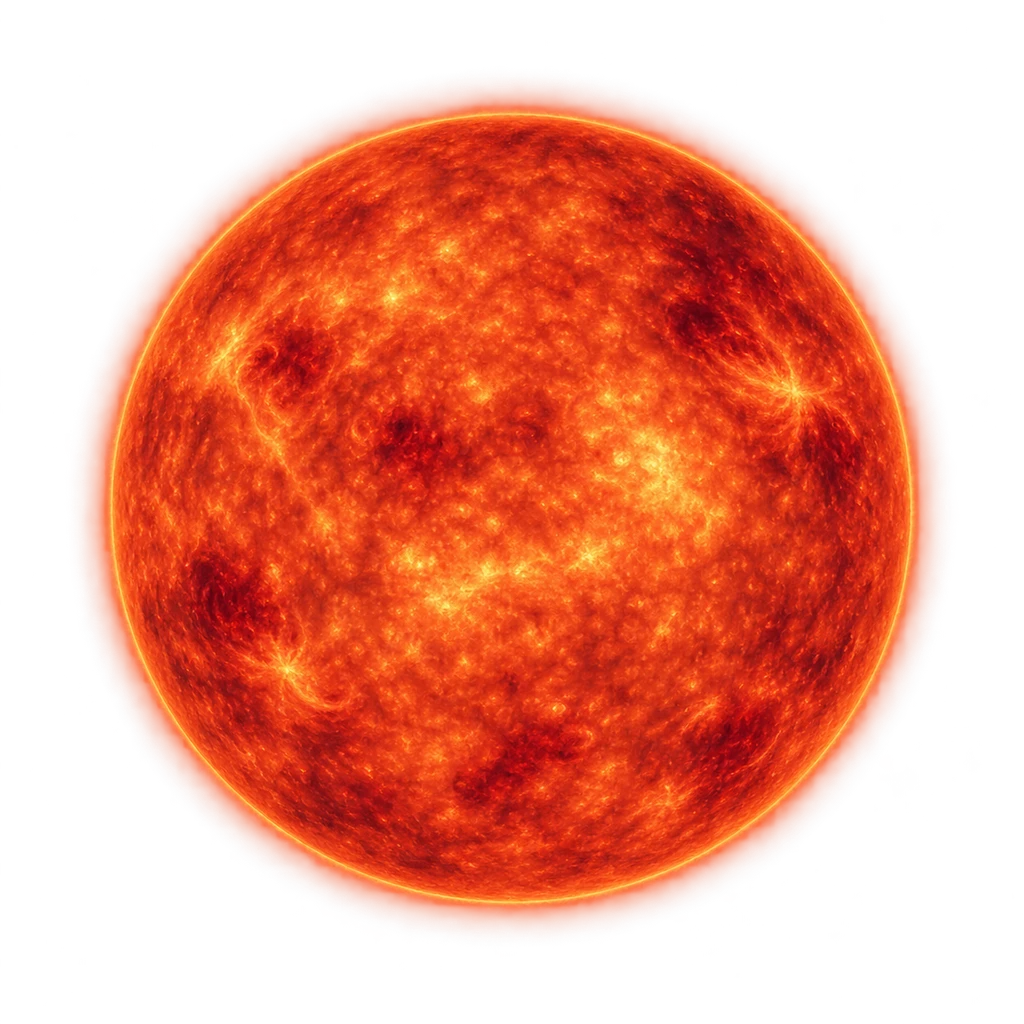
Artist’s impression of Ross 248
M dwarf · main sequence

A distant light on Voyager’s horizon.

Stellar conditions ↗

02
EFFECTIVE TEMPERATURE2,930 K

A cooler stellar glow.

Ross 2482,930 K
Sol5,770 K
Shared scale 0–10,000 K · effective, not core temperature

Evolution ↗

03
CURRENT PHASE

A long-lived small star.

  1. NOWHydrogen fusion
  2. INTERIORDeep convection
  3. OUTLOOKLong main sequence
The broad low-mass stellar picture, not a measured age or countdown.
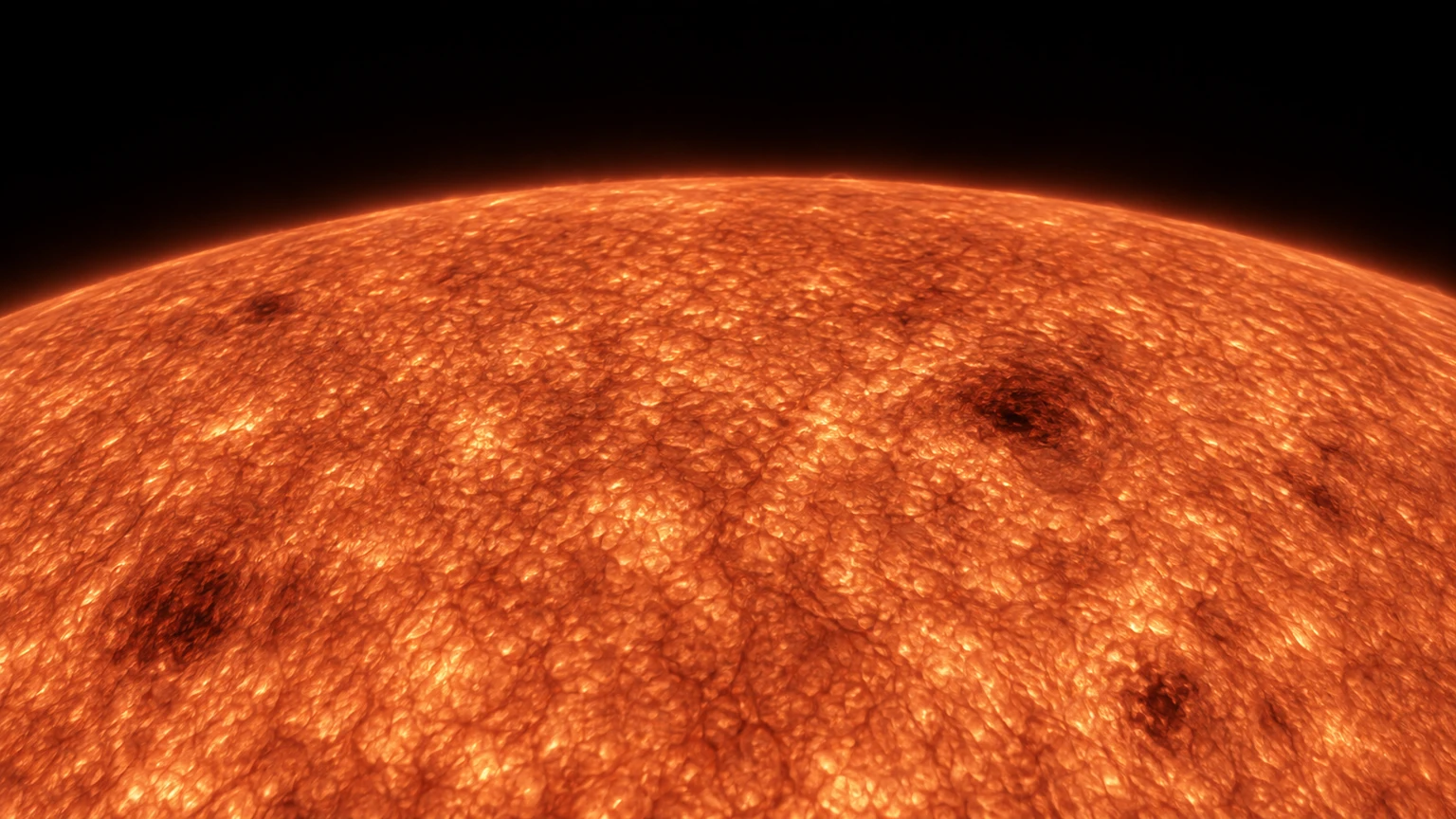
An imagined approach to Ross 248’s photosphere. Fine gas texture and darker magnetic patches are inspired by solar physics, not an observed map. Warm filtered colors and reduced exposure make the luminous layers visible.Above the copper glow ↗ ARTIST’S IMPRESSION · 3 VIEWS

Diameter comparison ↗

06
0.1894 × Sol
ROSS 248

Instrument detail

Artist’s impression of Ross 248

Artist’s impression · structure and color are illustrative.

A star on a smaller scale.

Ross 248 also appears in research as Gliese 905. Its diameter is roughly one fifth of Sol’s, with a much lower effective temperature. Astronomers can estimate that size from the star’s emitted light, temperature and distance without photographing its edge. The comparison above uses those inferred dimensions, with the published uncertainty rather than a claim of exact size.

The glow is gas all the way down.

Like other main-sequence red dwarfs, Ross 248 is powered by hydrogen fusion in its interior. The photosphere is the layer from which visible light escapes, not a crust. Our close-up translates that idea into bright gas and darker magnetic regions. There are no continents beneath the glow and no horizon a visitor could stand on.

A field revealed through light.

Ross 248 was included in a survey of magnetic activity in cool dwarfs. Magnetic fields can alter spectral lines, letting researchers investigate activity without resolving individual spots. Different methods did not agree on this star’s field strength, so a single precise number would hide an important uncertainty. Our magnetic-region image conveys the physics, not a measured surface pattern.

Forty thousand years down the road.

NASA estimates that Voyager 2 will pass within about 1.7 light-years of Ross 248 in roughly 40,000 years. Even that encounter leaves an enormous gap: this is a distant passage, not a rendezvous or planned observing mission. It gives this modest star a human connection, while showing just how slowly a real journey between the stars unfolds.

A star in perspective.

DIAMETER / SOL0.189 ×

About 18.9% of our Sun’s diameter.

Circles compare diameter, not mass or luminosity. Radius 0.1894 ± 0.0079 solar radii, derived from flux, temperature and distance by Mann et al. (2015), table 5, Gl 905. This is not a directly imaged stellar disk.

EFFECTIVE TEMPERATURE

A cooler stellar glow.

  • Ross 248≈ 2,930 K
  • Sol≈ 5,770 K

Shared scale: 0–10,000 K. Effective temperature describes total emitted energy per unit surface area; it is not the core temperature. Adopted effective temperature: 2,930 ± 60 K from the same study.

LIFE PHASE

A long-lived small star.

  1. NOWHydrogen fusion
  2. INTERIORDeep convection
  3. OUTLOOKLong main sequence

The broad low-mass stellar picture, not a measured age or countdown.

Research · size and temperature ↗
LIFE & HUMAN SURVIVAL / THE STAR ITSELF
POSSIBILITY FOR LIFEIncompatible with known life

Cooler than Sol still means incandescent gas. The star itself cannot support known life; that assessment does not establish conditions on hypothetical orbiting worlds.

WITHOUT PROTECTIONNot survivable

No breathable air or solid surface. Heat and stellar radiation make a close approach unsurvivable without protection. A single survival timer would depend on an arbitrary location.

NASA · stellar structure and evolution ↗

A long-lived small star.

  1. NOWHydrogen fusion
  2. INTERIORDeep convection
  3. OUTLOOKLong main sequence

The broad low-mass stellar picture, not a measured age or countdown.

Research ↗

How much energy leaves the star?

≈ 0.00239 × Sol

This compares total radiant power across all wavelengths, not just visible light or apparent brightness in our sky. The beams on the dashboard share a linear length scale.

The estimate combines this log’s diameter ratio (0.1894 × Sol) and effective temperature (2,930 K): luminosity scales with radius squared and temperature to the fourth power. It is derived from rounded values, not an independent luminosity measurement.

Radius 0.1894 ± 0.0079 solar radii, derived from flux, temperature and distance by Mann et al. (2015), table 5, Gl 905. This is not a directly imaged stellar disk.

Adopted effective temperature: 2,930 ± 60 K from the same study.

Swinburne University · Stefan–Boltzmann law ↗

A star on a smaller scale.

Ross 248 also appears in research as Gliese 905. Its diameter is roughly one fifth of Sol’s, with a much lower effective temperature. Astronomers can estimate that size from the star’s emitted light, temperature and distance without photographing its edge. The comparison above uses those inferred dimensions, with the published uncertainty rather than a claim of exact size.

The glow is gas all the way down.

Like other main-sequence red dwarfs, Ross 248 is powered by hydrogen fusion in its interior. The photosphere is the layer from which visible light escapes, not a crust. Our close-up translates that idea into bright gas and darker magnetic regions. There are no continents beneath the glow and no horizon a visitor could stand on.

A field revealed through light.

Ross 248 was included in a survey of magnetic activity in cool dwarfs. Magnetic fields can alter spectral lines, letting researchers investigate activity without resolving individual spots. Different methods did not agree on this star’s field strength, so a single precise number would hide an important uncertainty. Our magnetic-region image conveys the physics, not a measured surface pattern.

Forty thousand years down the road.

NASA estimates that Voyager 2 will pass within about 1.7 light-years of Ross 248 in roughly 40,000 years. Even that encounter leaves an enormous gap: this is a distant passage, not a rendezvous or planned observing mission. It gives this modest star a human connection, while showing just how slowly a real journey between the stars unfolds.

An imagined approach to Ross 248’s photosphere. Fine gas texture and darker magnetic patches are inspired by solar physics, not an observed map. Warm filtered colors and reduced exposure make the luminous layers visible.

Above the copper glow

An imagined approach to Ross 248’s photosphere. Fine gas texture and darker magnetic patches are inspired by solar physics, not an observed map. Warm filtered colors and reduced exposure make the luminous layers visible.

A hypothetical close view of a cooler magnetic region amid glowing gas. The location and filament pattern are artistic choices, not resolved features on Ross 248. The dark area is not a crater or a solid surface.

A darker region in the light

A hypothetical close view of a cooler magnetic region amid glowing gas. The location and filament pattern are artistic choices, not resolved features on Ross 248. The dark area is not a crater or a solid surface.

An artistic view of Ross 248 against space. The luminous disk and fine gaseous texture are illustrative; color and exposure are adjusted for visibility, not a resolved stellar photograph.

The star against space

An artistic view of Ross 248 against space. The luminous disk and fine gaseous texture are illustrative; color and exposure are adjusted for visibility, not a resolved stellar photograph.

Stellar images are artistic interpretations, not resolved photographs of this star.