A Voyager discovery.
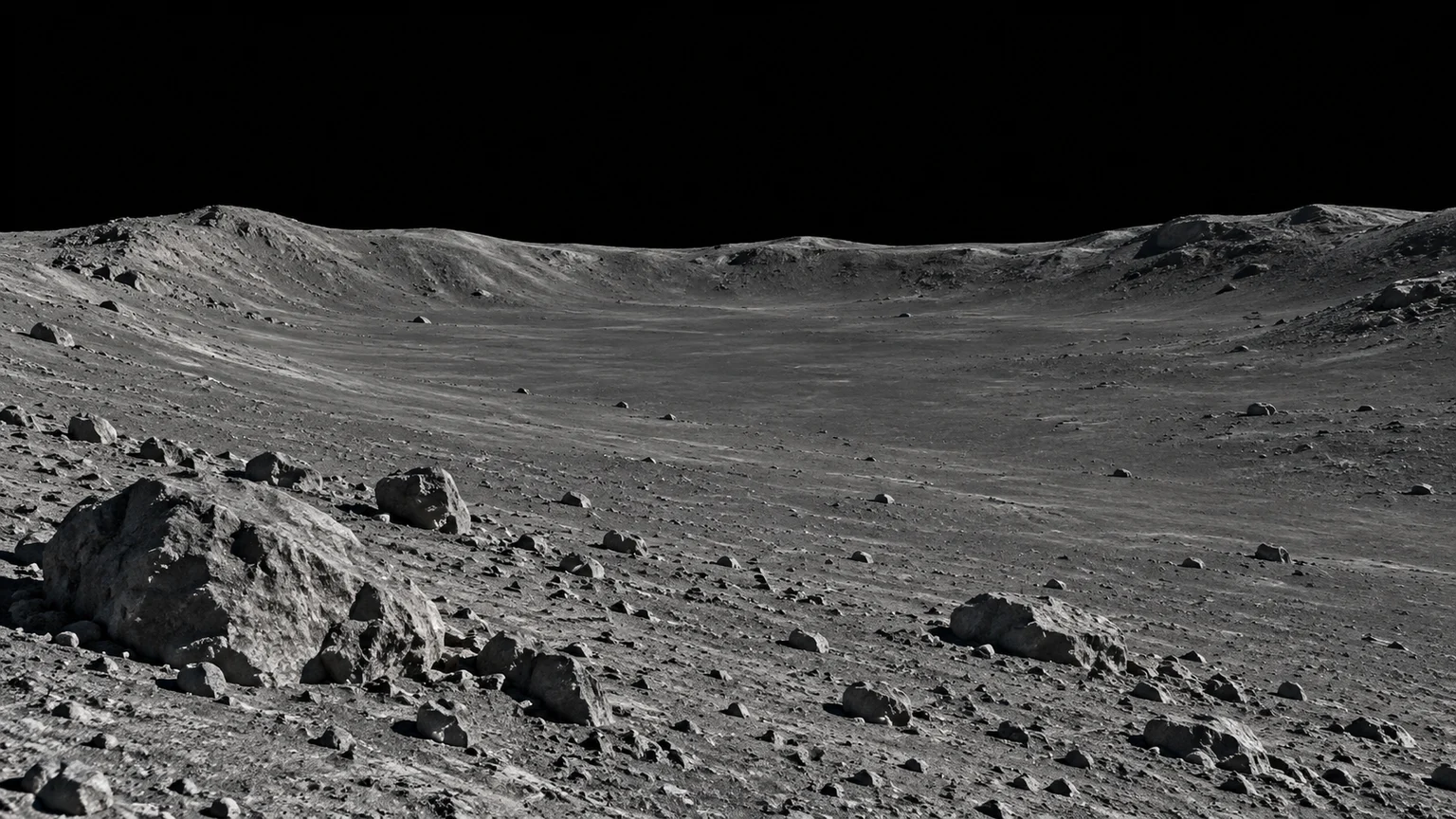
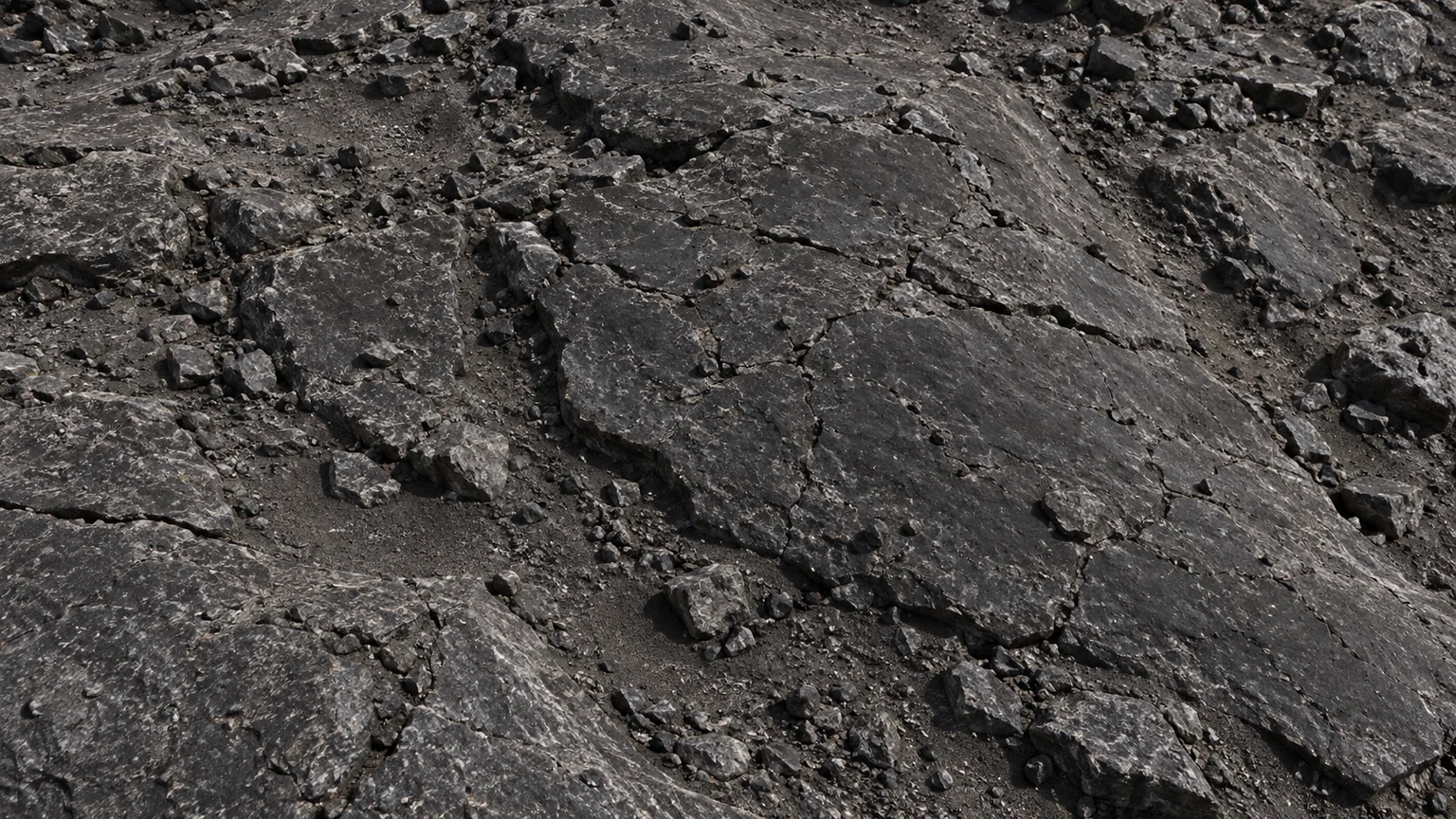
Despina was identified by the Voyager 2 science team in July 1989. It belongs to the compact family of small moons close to Neptune. Spacecraft observations provide limited surface detail, so the illustrated ground-level views are reconstructions.
Within Neptune’s faint rings.
Despina moves in the same direction as Neptune’s rotation and remains close to the equatorial plane. Its orbit lies within the planet’s faint ring system. The orbital instrument shows the moon’s mean path without a simulation of ring particles.
A size estimate, an uncertain mass.
The adopted mean diameter is 148 kilometers. JPL’s nominal mass parameter has an uncertainty larger than the value itself, so this dossier leaves numerical gravity unassigned. Surface appearance and size do not resolve separate internal layers or a liquid reservoir.
An eight-hour circuit.
The adopted mean orbital scale is 52,500 kilometers from Neptune’s center, with a period of 0.334656 Earth days. Eccentricity rounds to zero in the source table. The rotation comparison uses an approximately synchronous model.