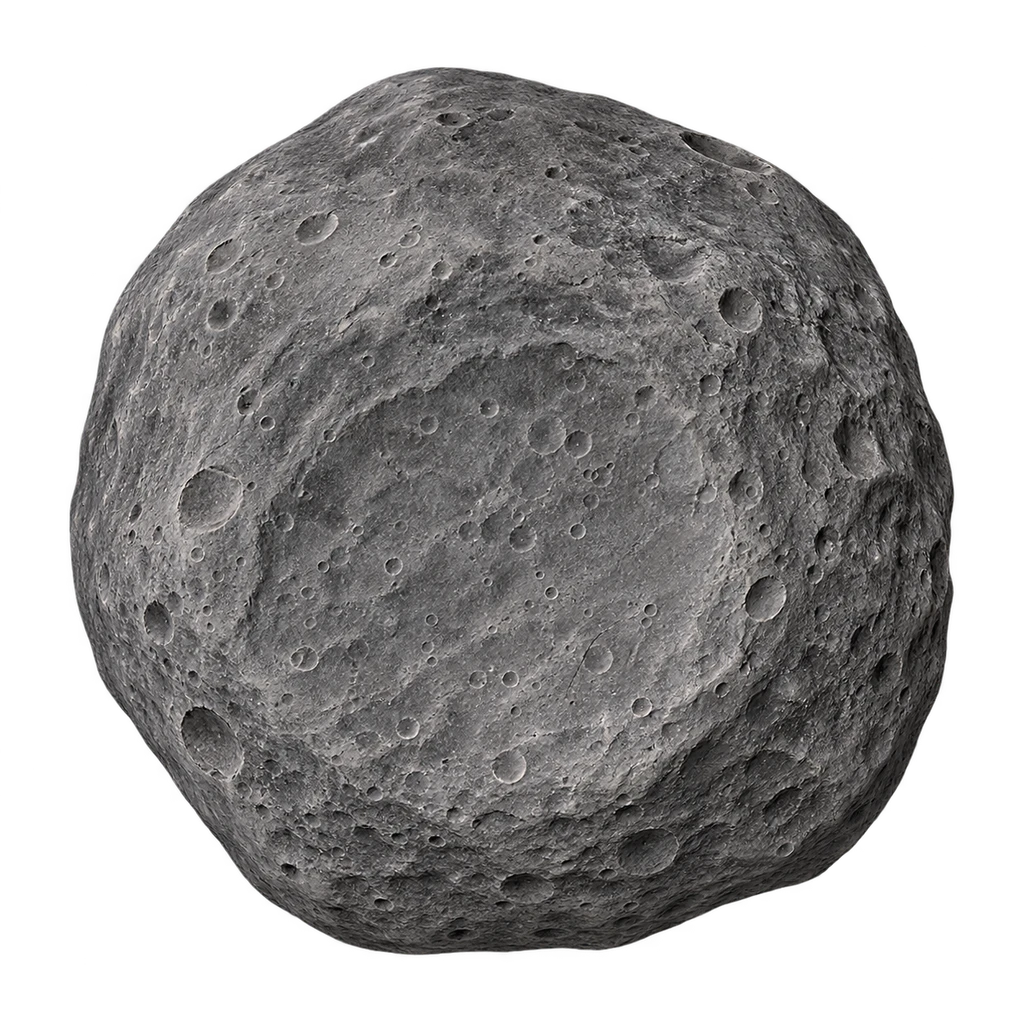
A moon with uneven edges.
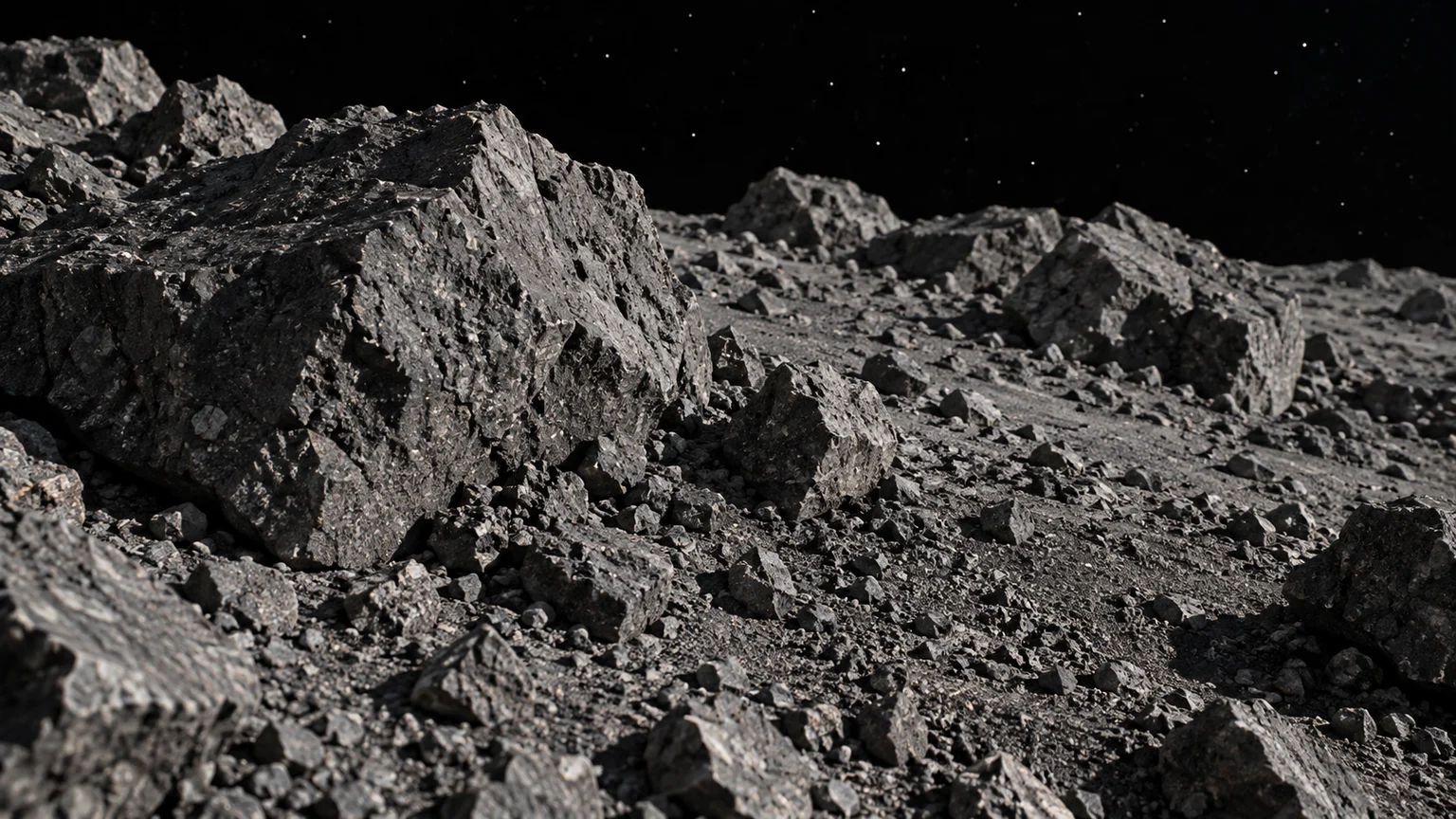
Voyager 2 discovered Proteus in 1989. Its dark surface and proximity to Neptune had made it difficult to see from Earth. Craters crowd a body with broad uneven faces and softened corners, rather than the smooth outline of a larger spherical moon.
A collision that may have made a neighbor.
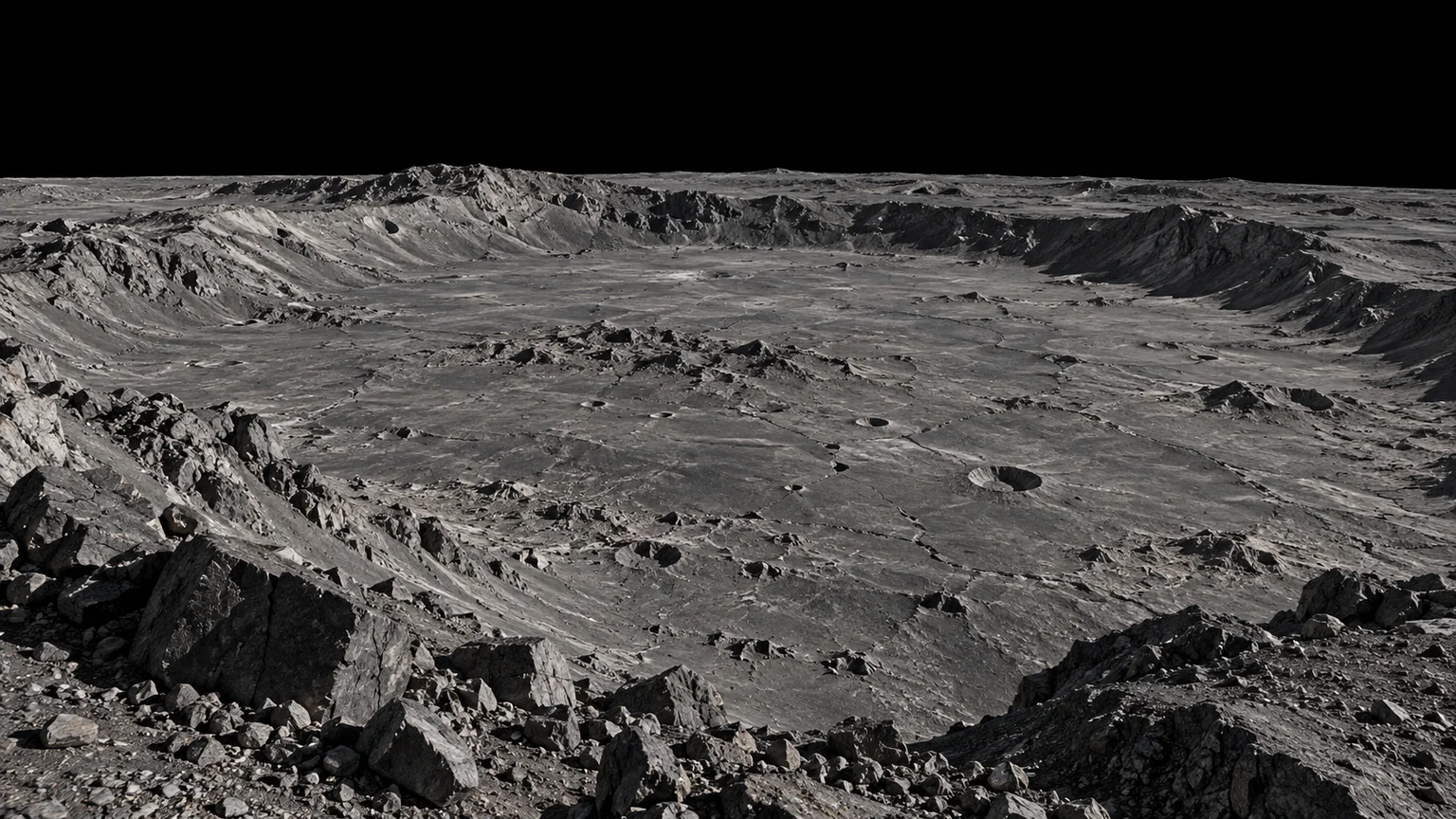
A giant impact scar records a collision that nearly disrupted Proteus. Researchers have proposed that debris from an impact on this moon helped form nearby Hippocamp. That possible family connection is an explanation supported by their orbital arrangement and the scar, not a directly witnessed event.
The surface leaves the inside unresolved.
Spacecraft images reveal large-scale topography, but do not provide a map of internal layers. Proteus’s mass is poorly constrained, so even the gravity comparison is only a nominal estimate. A present-day ocean or a habitable interior has not been established.
A close, regular circuit.
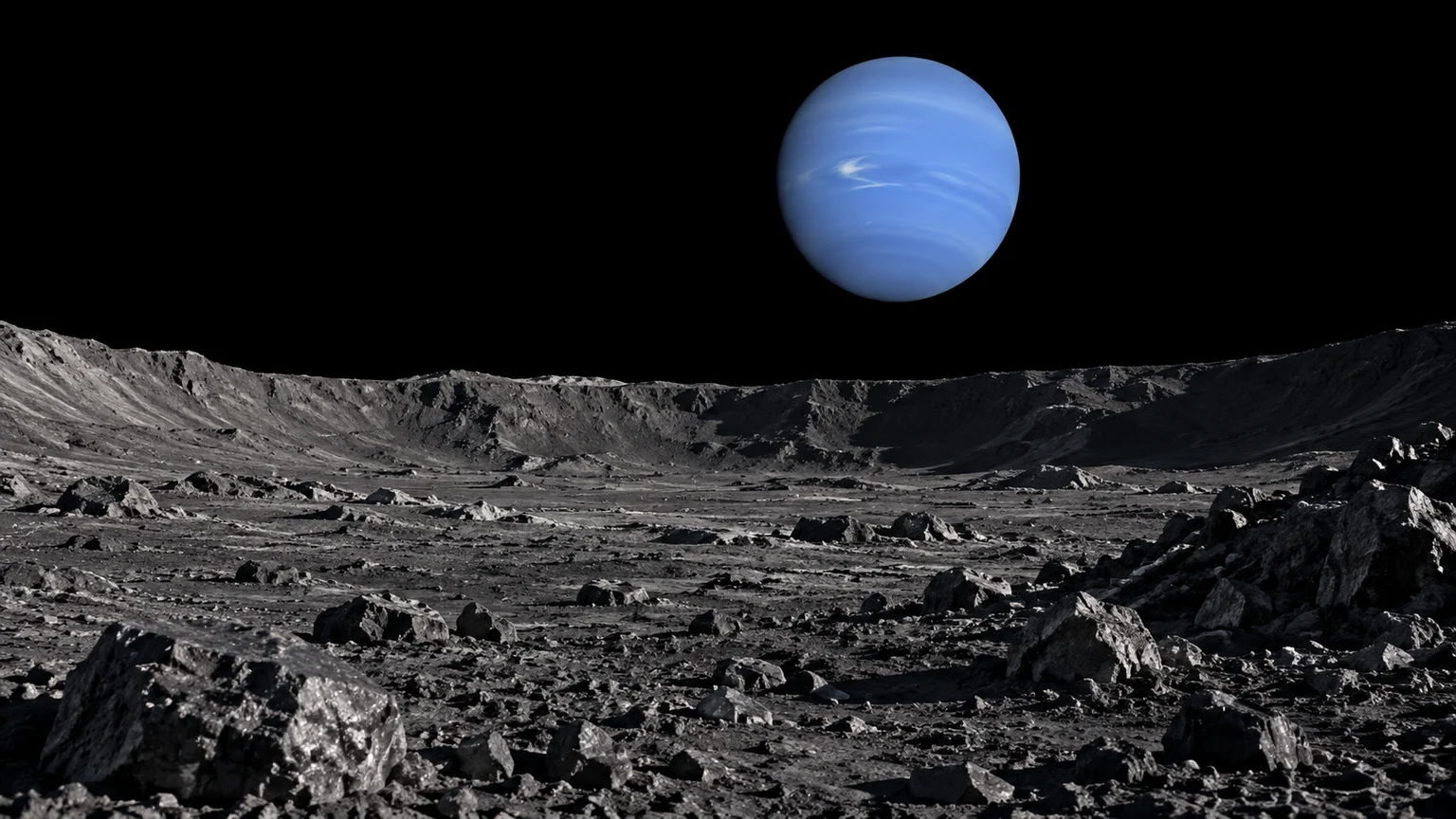
Proteus travels roughly 117,600 kilometers from Neptune’s center and completes an orbit in about 1.1223 Earth days. Its nearly circular path follows Neptune’s rotation, unlike Triton’s retrograde orbit. The rotation model treats Proteus as synchronous, with approximately the same face toward Neptune.