Five days make a year.
Proxima d moves around its star in just over five Earth days, on an orbit inside that of b. The red dwarf is dim, yet moving this close increases the energy the planet receives. Its orbital setting lies inward of the conventional habitable zone. That is a statement about incoming starlight, not a measured surface temperature or a guarantee of a molten landscape.
A signal smaller than a walking pace.
The original ESPRESSO analysis detected a tiny repeated change in Proxima’s radial velocity. Separating such a signal from the star’s own activity is demanding. Later work combining NIRPS with other measurements strengthened the evidence for d. It is a discovery made through careful measurements of starlight, not a photograph showing a resolved planetary disk.
Lightweight, with an important qualifier.
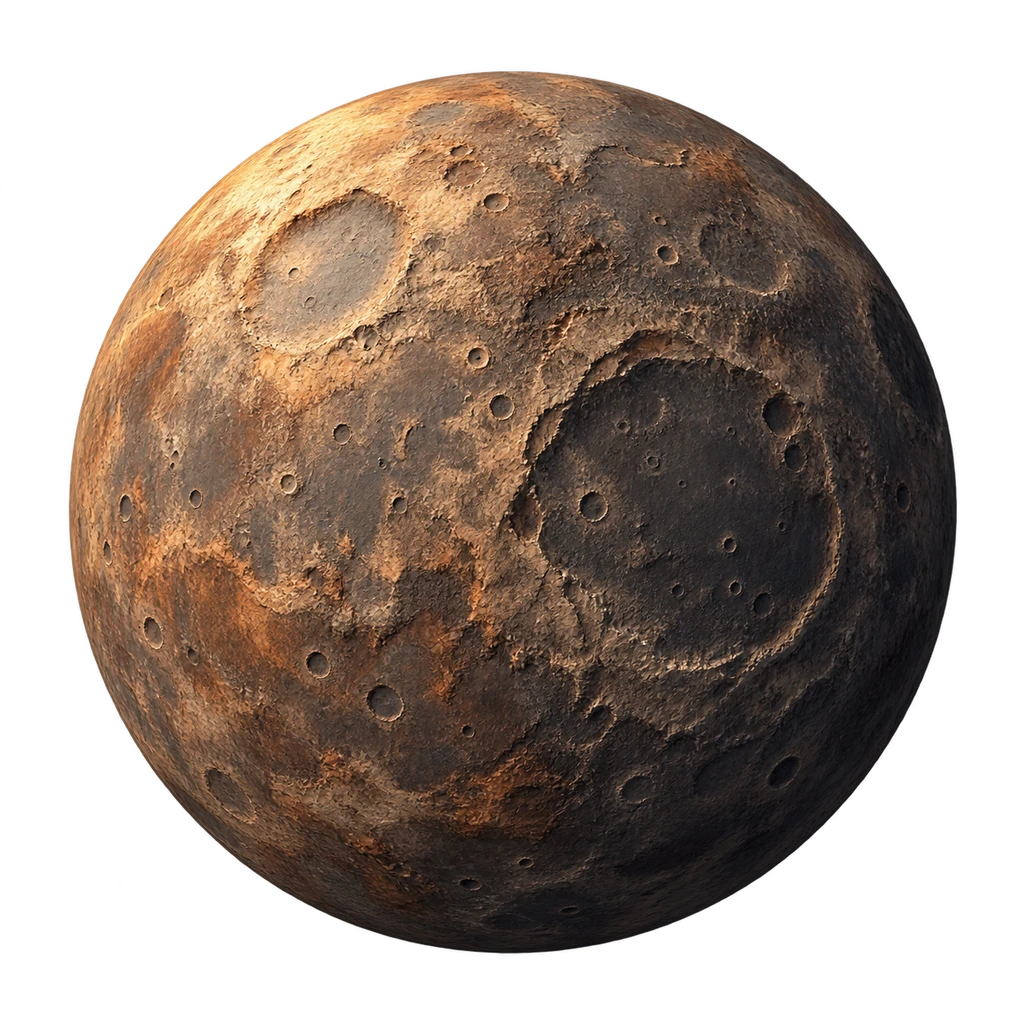
The comparison above shows the minimum mass inferred in the cited ESPRESSO study. The unknown orbital tilt means the real mass can be larger. Mass alone cannot tell us the radius, density or gravity felt at the surface. A small rocky world is a plausible interpretation, but assigning an exact size would require assumptions about what the planet is made of.
A landscape built from possibilities.
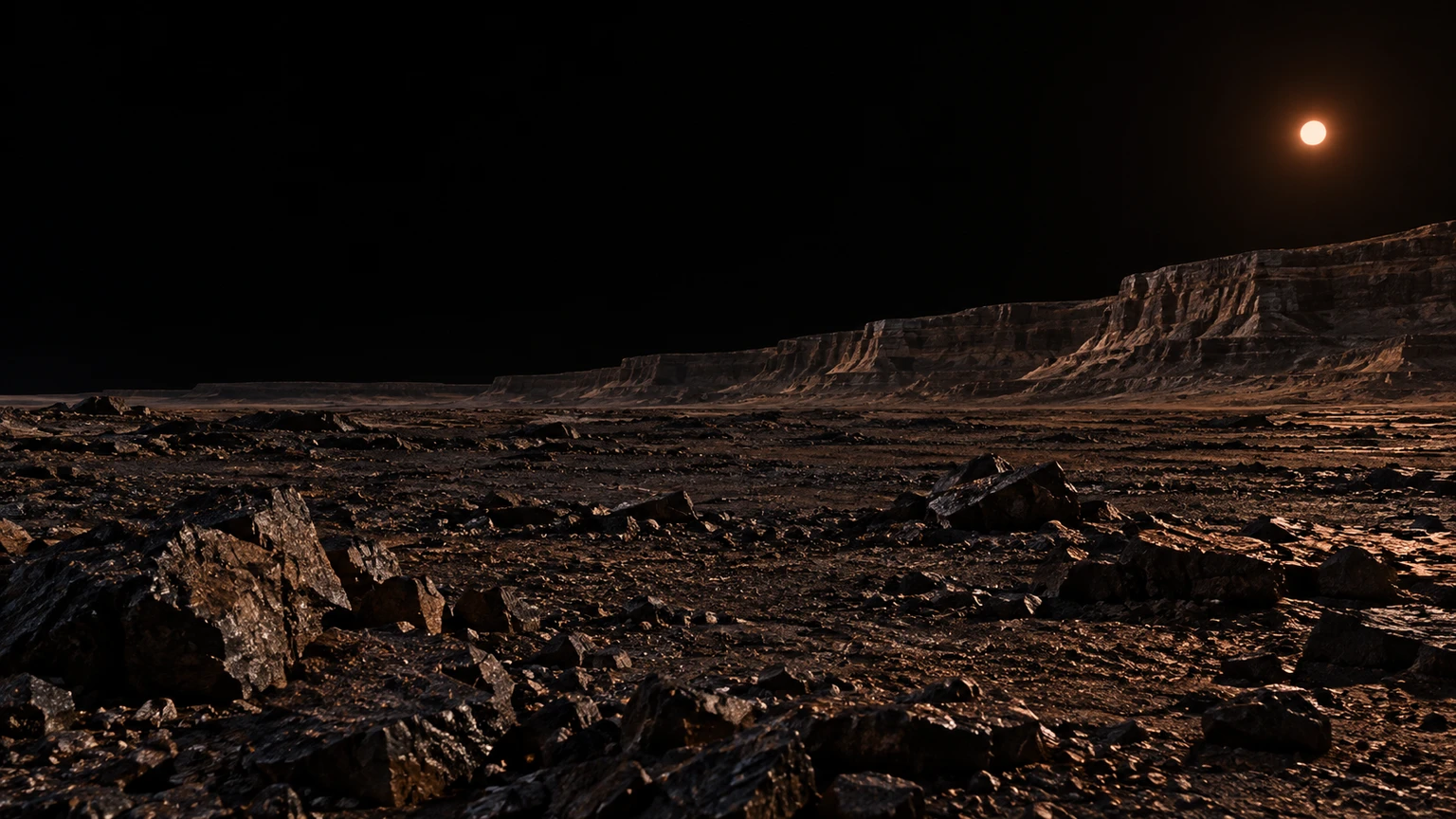
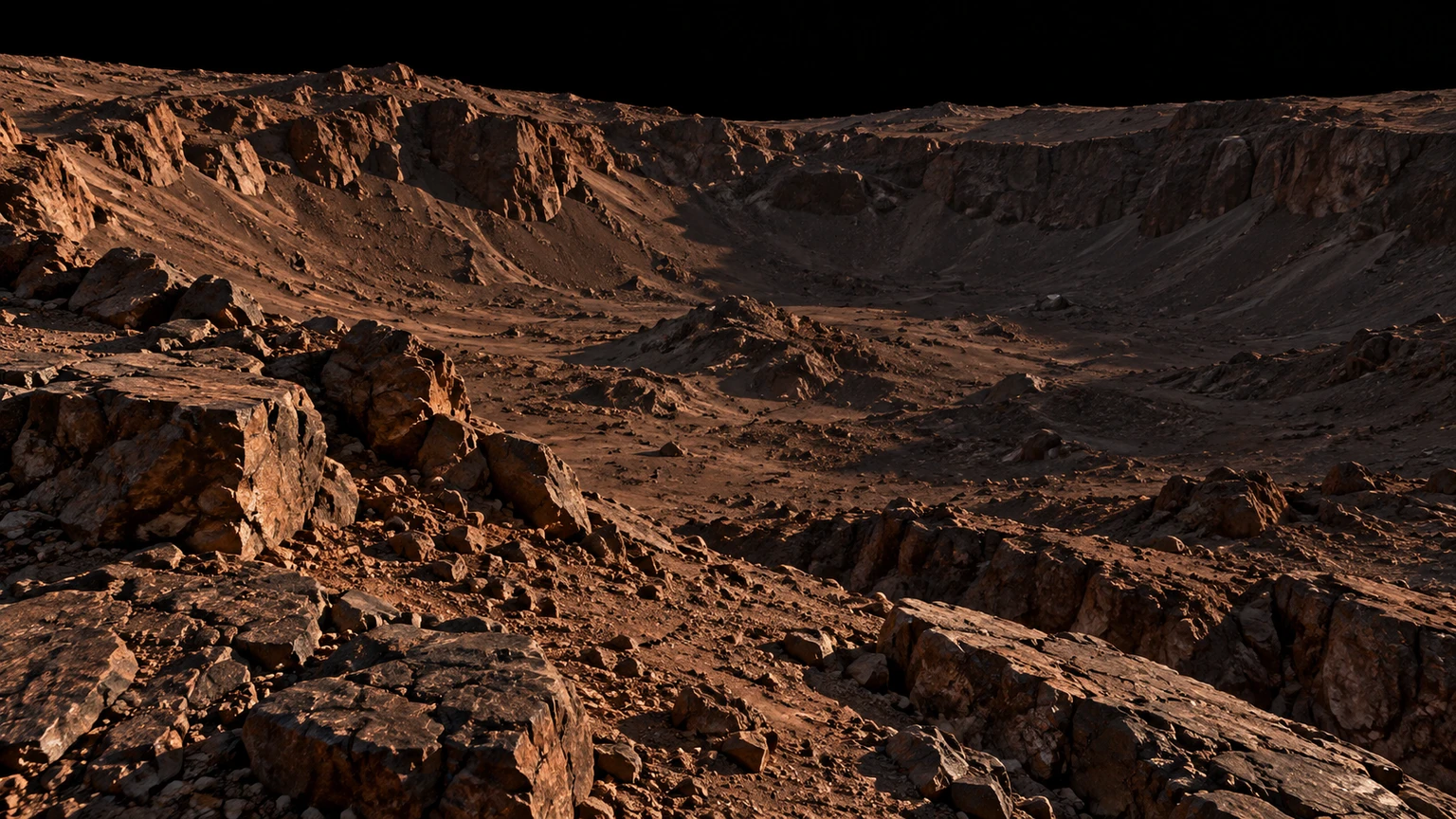
These scenes imagine dry rock with no substantial atmosphere, allowing hard shadows beneath a black sky. That choice is an illustration scenario, not an atmospheric detection. Clouds, gas, pressure and the detailed thermal environment remain unconstrained here. The sharp rocks make the view tangible, while the profile keeps the boundary between what is measured and what is imagined visible.