Brighter than its neighbors.
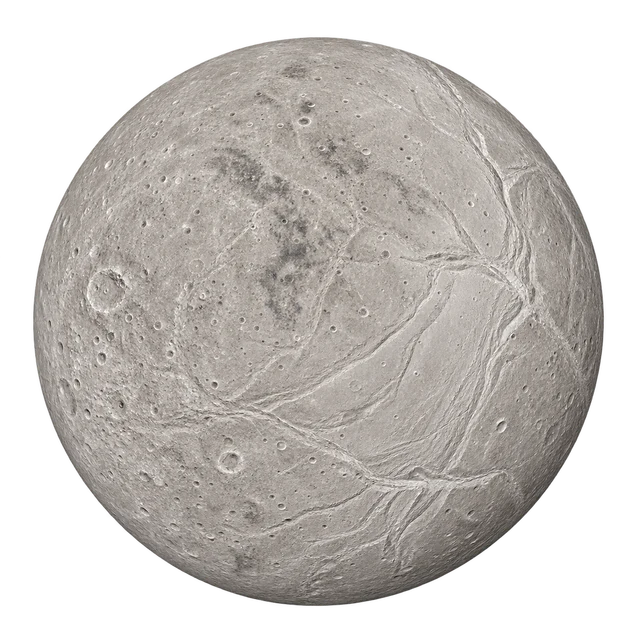
Ariel has the brightest surface of Uranus’s five major moons. Water ice and rock make up this small world, whose exterior carries many small craters and relatively few large ones. Carbon dioxide has also been detected on the surface.
Valleys cut across older terrain.
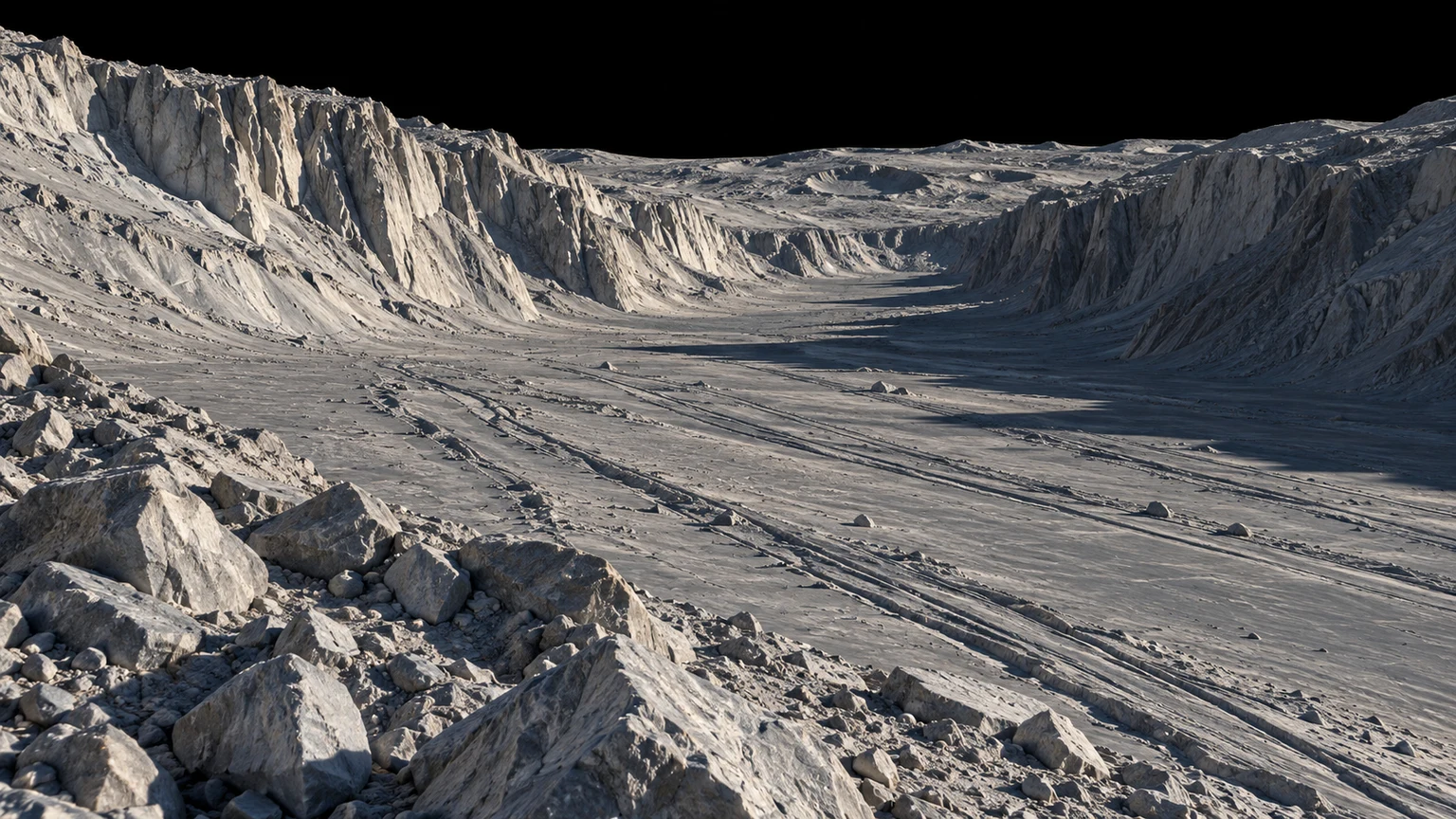
Long grabens—valleys bounded by faults—cross Ariel’s surface. Its terrain suggests a history of resurfacing and comparatively recent geological activity among the major Uranian moons. Those scars preserve evidence of movement and internal heating, rather than a world shaped by impacts alone.
A possible ocean remains a question.
Thermal models allow Ariel to retain liquid water beneath its icy exterior. Insulating material and substances that lower water’s freezing point could help preserve a buried reservoir. This is a model-based possibility: neither an ocean nor its habitability has been confirmed.
A close circuit around Uranus.
Ariel orbits about 190,929 kilometers from Uranus’s center, completing a circuit in roughly 2.5204 Earth days. Its nearly circular path lies outside Miranda’s and inside Umbriel’s. Synchronous rotation keeps approximately the same hemisphere facing Uranus.