URANUS SYSTEM / SATELLITE DOSSIER

Titania

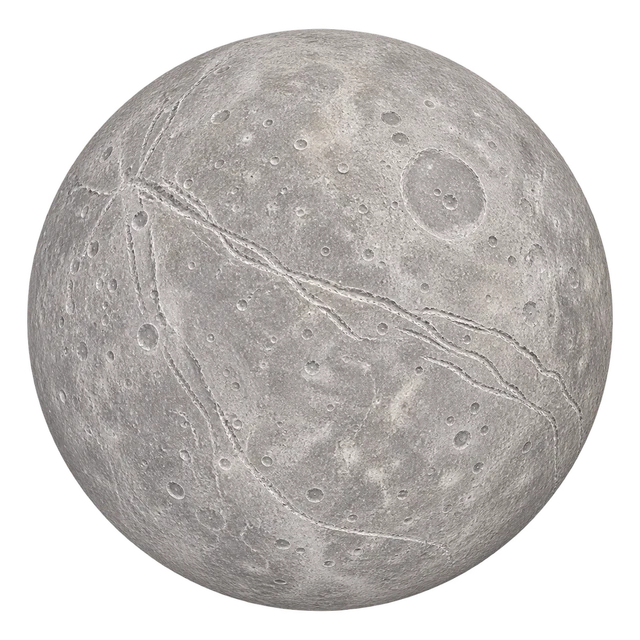
Titania is Uranus’s largest moon, with long fault valleys across its icy, cratered surface.

Artist’s impression of Titania

Uranus’s largest moon carries long fault valleys across an ancient icy surface, with deeper questions beneath.

DIAMETER / EARTH0.12×
EARTHTITANIA
ATMOSPHERE
No substantial atmosphere detectedEffectively airless
SURFACE TEMPERATURE
Deeply cold outer-system surface
SURFACE PRESSURE
Effectively airless
HABITABILITYPossible ocean
UNPROTECTED HUMANSNot survivable

Interior ↗

03
Unresolvedinternal structure

Moon system ↗

04
Uranus moon orbitsSelected moons, ordered outward. Orbit sizes and positions are schematic; relative periods are preserved.URANUSCORDELIAOPHELIABIANCACRESSIDADESDEMONAJULIETPORTIAROSALINDCUPIDBELINDAPERDITAPUCKMABMIRANDAARIELUMBRIELTITANIAOBERON
TITANIA

Instrument detail

Titania orbitElliptical orbit viewed along the orbital axis, relative to Uranus. Motion is accelerated, not a live position. Distances are center to center.URANUSTITANIA≈ 436,298 km
ONE ORBIT8.7059 Earth days around Uranus
Closest to Uranus
435,425 km
Farthest from Uranus
437,171 km

Titania circles Uranus. Distances are measured between the centers of the two bodies.

Titania rotationEqual elapsed time, with sidereal rotation rates and directions. Axial tilt and relative sizes are not shown.TITANIA8.7 daysEARTH23.9 hours
ONE ROTATION8.7 days

One turn per orbit

Titania turns once in each orbit, so roughly the same hemisphere faces Uranus. The spin period is 8.7059 Earth days; this is not the interval between sunrises.

Satellite atlasMoons
Uranus moon orbitsSelected moons, ordered outward. Orbit sizes and positions are schematic; relative periods are preserved.URANUSCORDELIAOPHELIABIANCACRESSIDADESDEMONAJULIETPORTIAROSALINDCUPIDBELINDAPERDITAPUCKMABMIRANDAARIELUMBRIELTITANIAOBERON
FEATURED MOONS18
  1. 01Cordelia ↗0.3347 days
  2. 02Ophelia ↗0.3764 days
  3. 03Bianca ↗0.4347 days
  4. 04Cressida ↗0.4639 days
  5. 05Desdemona ↗0.4736 days
  6. 06Juliet ↗0.4931 days
  7. 07Portia ↗0.5132 days
  8. 08Rosalind ↗0.5583 days
  9. 09Cupid ↗0.6125 days
  10. 10Belinda ↗0.6236 days
  11. 11Perdita ↗0.6382 days
  12. 12Puck ↗0.761833 days
  13. 13Mab ↗0.9229 days
  14. 14Miranda ↗1.41 days
  15. 15Ariel ↗2.5204 days
  16. 16Umbriel ↗4.1442 days
  17. 17Titania8.7059 days
  18. 18Oberon ↗13.4632 days

Faint rings and a family of moons surround Uranus. Many of those moons take their names from characters in Shakespeare and Alexander Pope. One journey around the Sun lasts about 84 Earth years.

Titania gravityEqual launches at 2 m/s; shared metre scale; air resistance ignored.0 m2 m4 m6 mEARTH9.80 m/s²TITANIA0.36 m/s²
TITANIA / EARTH GRAVITY0.04 ×

Same push, different gravity

Both balls launch at 2 m/s, using the same height and time scales. Weaker gravity gives a higher jump and a longer time in the air. Air resistance is ignored. This idealized comparison uses constant spherical gravity GM/r²; local terrain, tides and rotation are excluded.

Earth · height / airtime
0.20 m / 0.41 s
Titania · height / airtime
5.49 m / 10.97 s
Unresolvedinternal structure

Beyond the surface

Models allow an ice shell above a possible ocean and rock-rich interior. An ocean and the depths of internal boundaries have not been confirmed.

    Artist’s impression of Titania

    Fractures on a planetary scale.

    Titania is the largest moon of Uranus. Voyager 2 revealed long fault valleys cutting its gray surface, some extending roughly 1,600 kilometers. The pattern records stretching of the crust: a frozen exterior that has changed, rather than an untouched shell.

    A steady companion to a tilted planet.

    Titania follows a nearly circular path about 436,298 kilometers from Uranus’s center. Each orbit takes about 8.706 Earth days. Its orbit lies close to the planet’s equatorial plane, carrying it through the unusual geometry of the tilted Uranian system.

    An ocean is a possibility, not a sighting.

    Thermal models suggest that Titania could retain liquid beneath its ice. Internal heat and substances that lower water’s freezing point may help an ocean persist. The proposed reservoir has not been confirmed, and neither its depth nor its suitability for life is established.

    A world seen only in part.

    Voyager 2’s 1986 encounter revealed the southern terrain of Uranus’s major moons, while their northern hemispheres were largely hidden from view. Titania’s fractures are clues from an incomplete survey. New close-up observations would be needed to map the missing landscapes and investigate the possible ocean.
    DIAMETER / EARTH0.12×
    EARTHTITANIA
    EARTH
    12,742 km
    TITANIA
    1,577.8 km
    Mean diameters · circles share one scale
    ATMOSPHERE
    No substantial atmosphere detectedEffectively airless

    Titania has no known substantial atmosphere. Surface ice is not evidence of breathable air or weather.

    SURFACE TEMPERATURE
    Deeply cold outer-system surface
    SURFACE PRESSURE
    Effectively airless
    HABITABILITYPossible ocean

    Models allow a buried ocean, but liquid water and habitable conditions have not been confirmed. No life has been detected.

    UNPROTECTED HUMANSNot survivable

    The cold, exposed surface offers no breathable air. Pressure protection, oxygen and thermal control would be essential.

    Planet and landscape images are artistic interpretations.

    • NASA ↗
      • Classification and orbital data
      • Landscape
    • NASA / JPL ↗
      • GM and mean radius; spherical gravity estimate GM/r²
      • Size, physical data and atmospheric constraints
    • NASA / JPL ↗
      • Mean orbital dimensions; distances from parent center
      • Orbit
    • NASA ↗
      • Rotation and internal structure constraints
      • Natural conditions and human survival
      • Interior
    • ntrs.nasa.gov ↗
      • Exploration
    An imagined ground-level view inspired by Titania’s long fault valleys. The fractured icy terrain is research-informed, but this viewpoint, local cliffs and individual blocks are artistic reconstructions.

    Where the crust opened

    An imagined ground-level view inspired by Titania’s long fault valleys. The fractured icy terrain is research-informed, but this viewpoint, local cliffs and individual blocks are artistic reconstructions.

    An artist’s reconstruction of cratered terrain on Titania’s Uranus-facing hemisphere. The local geography, lighting and appearance of Uranus are illustrative, not a recorded surface view.

    Under a distant blue world

    An artist’s reconstruction of cratered terrain on Titania’s Uranus-facing hemisphere. The local geography, lighting and appearance of Uranus are illustrative, not a recorded surface view.

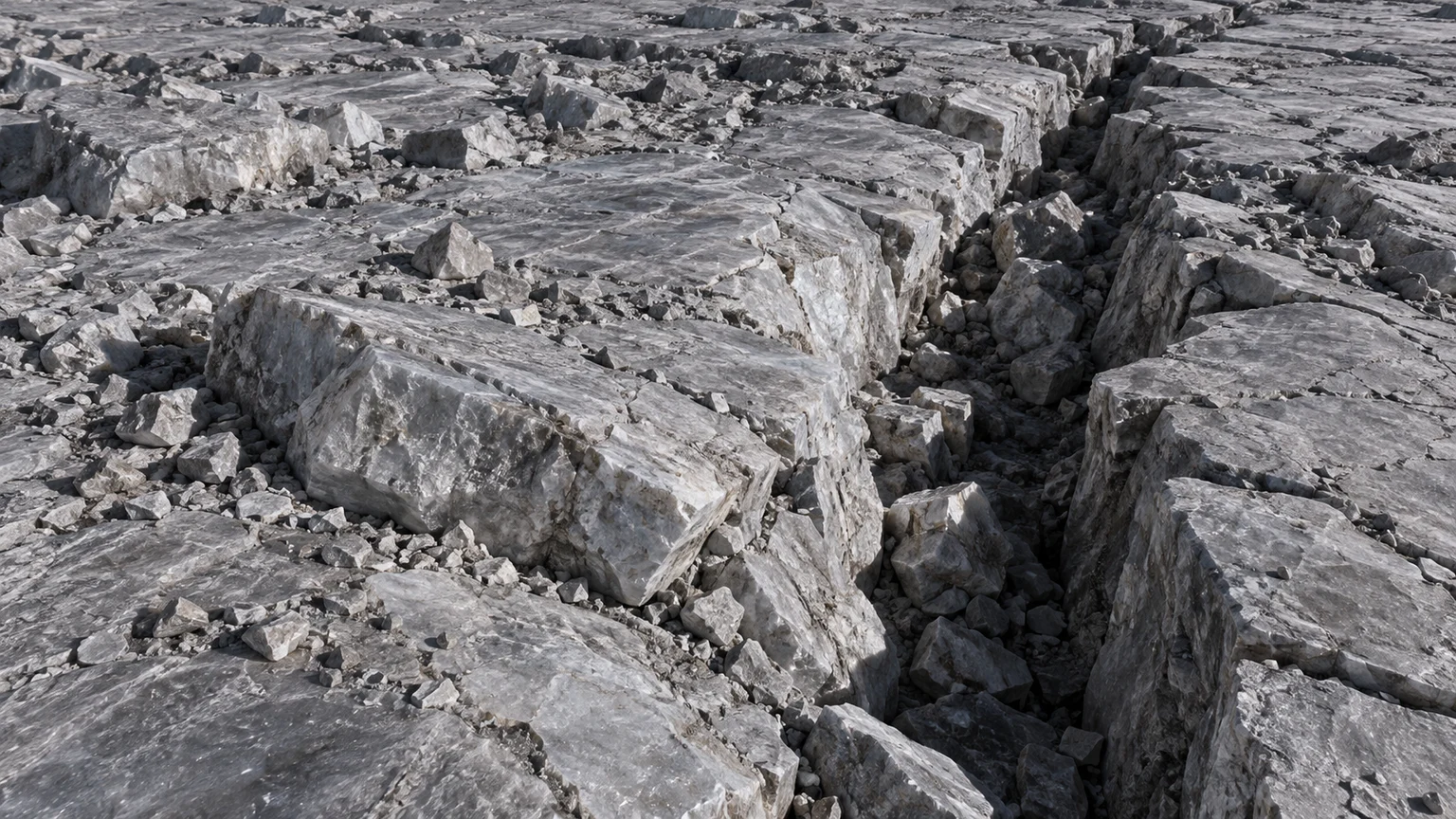
    Fragmented gray ice-rich slabs beside a narrow shadowed fault line. An artistic reconstruction of Titania; local detail, lighting and viewpoint are imagined.

    Debris along an ancient fault

    Fragmented gray ice-rich slabs beside a narrow shadowed fault line. An artistic reconstruction of Titania; local detail, lighting and viewpoint are imagined.