URANUS SYSTEM / SATELLITE DOSSIER

Desdemona

Desdemona is a small elongated inner moon of Uranus, moving between the orbits of Cressida and Juliet.

Artist’s impression of Desdemona

Desdemona is a small elongated inner moon of Uranus, moving between the orbits of Cressida and Juliet.

DIAMETER / EARTH0.0050×
EARTHDESDEMONA
ATMOSPHERE
No substantial atmosphere detectedEffectively airless
SURFACE TEMPERATURE
Cold exposed surface
SURFACE PRESSURE
Effectively airless
HABITABILITYNo life detected
UNPROTECTED HUMANSNot survivable

Interior ↗

03
Unresolvedinternal structure

Moon system ↗

04
Uranus moon orbitsSelected moons, ordered outward. Orbit sizes and positions are schematic; relative periods are preserved.URANUSCORDELIAOPHELIABIANCACRESSIDADESDEMONAJULIETPORTIAROSALINDCUPIDBELINDAPERDITAPUCKMABMIRANDAARIELUMBRIELTITANIAOBERON
DESDEMONA

Instrument detail

Desdemona orbitElliptical orbit viewed along the orbital axis, relative to Uranus. Motion is accelerated, not a live position. Distances are center to center.URANUSDESDEMONA≈ 62,663 km
ONE ORBIT0.4736 Earth days around Uranus
Closest to Uranus
62,224 km
Farthest from Uranus
63,102 km

Desdemona circles Uranus. Distances are measured between the centers of the two bodies.

This URA184 mean-element path omits inclination, precession, ring dynamics and perturbations. It is not a live position prediction.

Desdemona rotationEqual elapsed time, with sidereal rotation rates and directions. Axial tilt and relative sizes are not shown.DESDEMONA11.4 hoursEARTH23.9 hours
ONE ROTATION11.4 hours

An approximately synchronous model

The standard orientation model is approximately synchronous, with one turn per orbit in the direction of Uranus’s rotation. This rate comparison omits axial tilt and small orientation variations.

Satellite atlasMoons
Uranus moon orbitsSelected moons, ordered outward. Orbit sizes and positions are schematic; relative periods are preserved.URANUSCORDELIAOPHELIABIANCACRESSIDADESDEMONAJULIETPORTIAROSALINDCUPIDBELINDAPERDITAPUCKMABMIRANDAARIELUMBRIELTITANIAOBERON
FEATURED MOONS18
  1. 01Cordelia ↗0.3347 days
  2. 02Ophelia ↗0.3764 days
  3. 03Bianca ↗0.4347 days
  4. 04Cressida ↗0.4639 days
  5. 05Desdemona0.4736 days
  6. 06Juliet ↗0.4931 days
  7. 07Portia ↗0.5132 days
  8. 08Rosalind ↗0.5583 days
  9. 09Cupid ↗0.6125 days
  10. 10Belinda ↗0.6236 days
  11. 11Perdita ↗0.6382 days
  12. 12Puck ↗0.761833 days
  13. 13Mab ↗0.9229 days
  14. 14Miranda ↗1.41 days
  15. 15Ariel ↗2.5204 days
  16. 16Umbriel ↗4.1442 days
  17. 17Titania ↗8.7059 days
  18. 18Oberon ↗13.4632 days

Faint rings and a family of moons surround Uranus. Many of those moons take their names from characters in Shakespeare and Alexander Pope. One journey around the Sun lasts about 84 Earth years.

GRAVITY UNKNOWNMASS UNCERTAIN
SURFACE GRAVITYUnknown

Mass remains uncertain

The cited mass estimate assumes a density. No measured mass is adopted, so the numerical gravity comparison is omitted.

Unresolvedinternal structure

Beyond the surface

Desdemona’s interior remains unresolved. The available observations do not establish distinct layers or a present-day ocean.

    Artist’s impression of Desdemona

    Revealed during Voyager’s approach.

    Voyager 2 images led to Desdemona’s discovery on January 13, 1986. It joined the group of small satellites found during the spacecraft’s Uranus encounter.

    An elongated outline, an uncertain interior.

    The adopted equivalent diameter is about 64 kilometers. An irregular body cannot be fully described by one diameter; its longest dimension is larger. No distinct internal layers are established.

    A journey lasting less than twelve hours.

    The mean-element period is 0.4736 Earth days at an orbital scale of 62,663 kilometers. This view omits mutual perturbations and makes no prediction of future close encounters.

    From a Venetian tragedy to Uranus.

    First called S/1986 U6, Desdemona was named for Othello’s wife in Shakespeare’s play. The surface scenes are imagined studies, not panoramas recorded by Voyager.

    DIAMETER / EARTH0.0050×
    EARTHDESDEMONA
    EARTH
    12,742 km
    DESDEMONA
    64 km
    Mean diameters · circles share one scale

    Approximately 64 km, derived from the ellipsoidal volume in French et al. (2024), Table 3; not the longest dimension.

    ATMOSPHERE
    No substantial atmosphere detectedEffectively airless

    Desdemona is effectively airless. No substantial atmosphere is known.

    SURFACE TEMPERATURE
    Cold exposed surface
    SURFACE PRESSURE
    Effectively airless
    HABITABILITYNo life detected

    No life has been detected, and a habitable environment has not been established.

    UNPROTECTED HUMANSNot survivable

    The exposed surface requires oxygen, pressure protection and thermal control.

    Planet and landscape images are artistic interpretations.

    • NASA ↗
      • Classification and orbital data
      • Rotation and internal structure constraints
      • Natural conditions and human survival
      • Discovery
      • Name
    • arxiv.org ↗
      • Mass and gravity constraints
      • Size, physical data and atmospheric constraints
      • Scale
    • NASA / JPL ↗
      • Mean orbital dimensions; distances from parent center
      • Orbit
    • naif.jpl.nasa.gov ↗
      • Rotation model and synchronous or independent spin
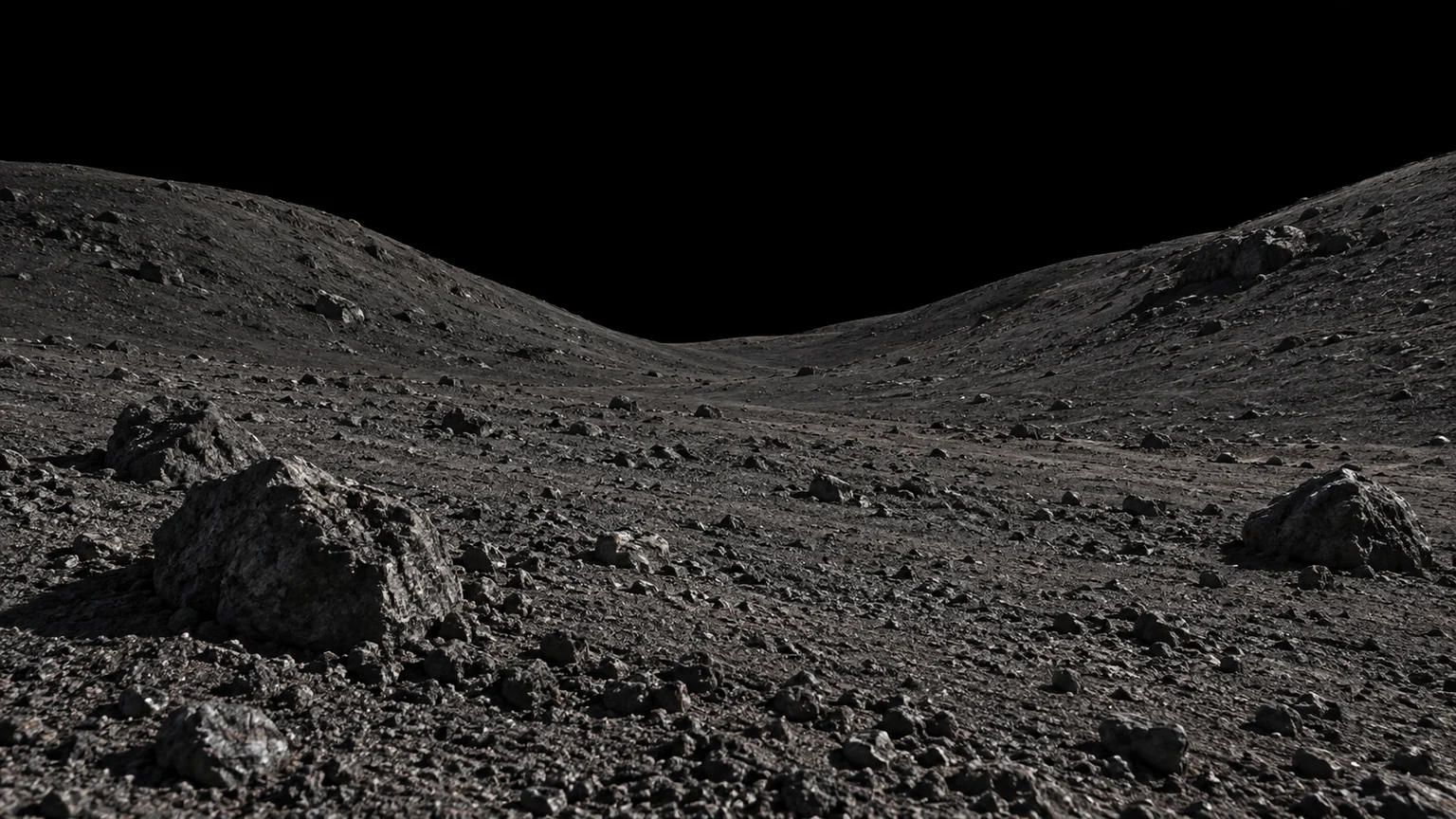
    A speculative ground-level view on Desdemona. The fragments, depressions and distant relief are artistic reconstructions.

    Across an imagined hollow

    A speculative ground-level view on Desdemona. The fragments, depressions and distant relief are artistic reconstructions.

    An imagined landscape on Desdemona. Neither local terrain nor illumination reproduces a spacecraft panorama.

    Along a low rise

    An imagined landscape on Desdemona. Neither local terrain nor illumination reproduces a spacecraft panorama.

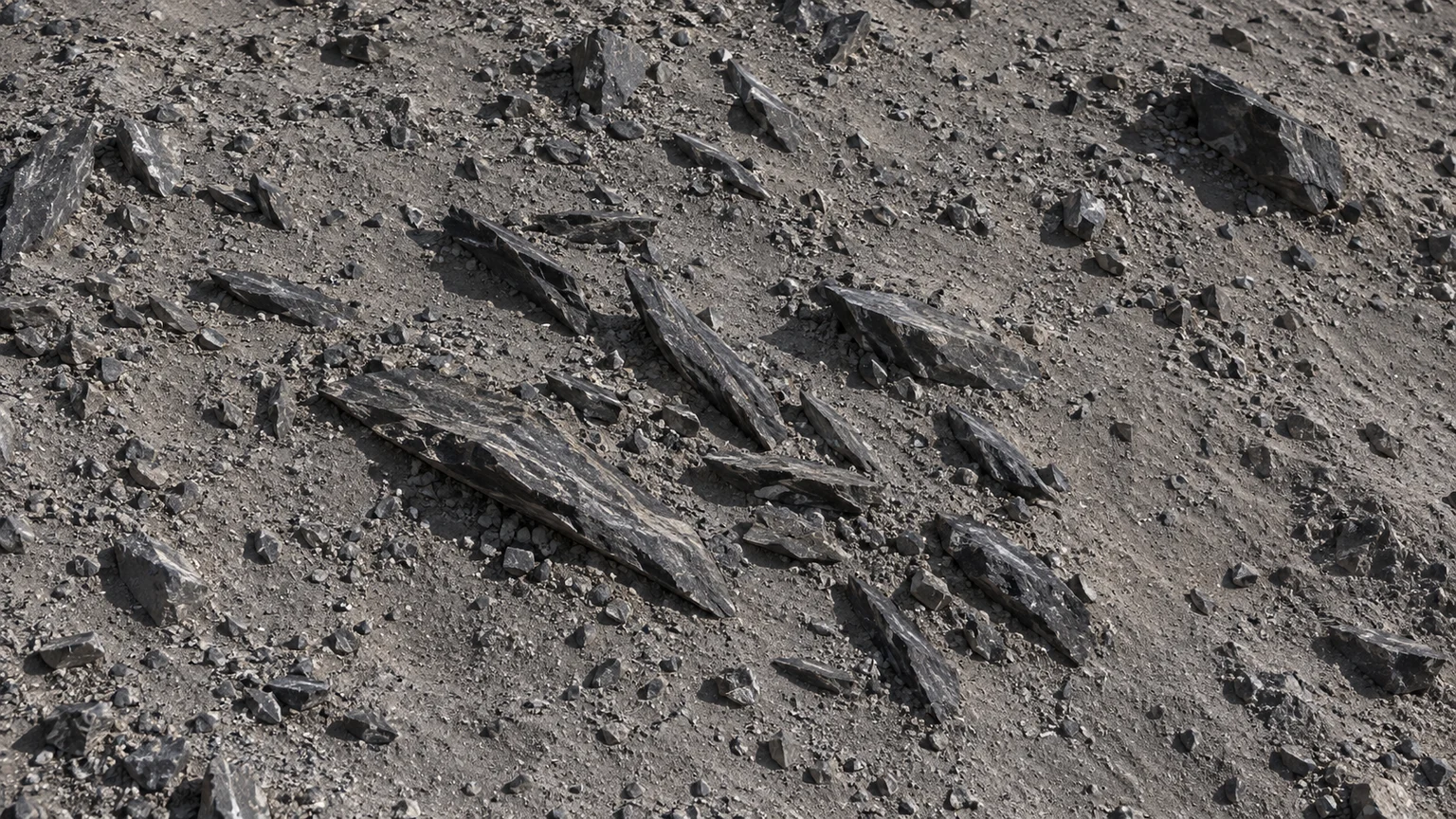
    A cluster of slender dark rock fragments resting flat on dusty ground. An artistic reconstruction of Desdemona; local detail, lighting and viewpoint are imagined.

    Surface fragments in close view

    A cluster of slender dark rock fragments resting flat on dusty ground. An artistic reconstruction of Desdemona; local detail, lighting and viewpoint are imagined.