JUPITER SYSTEM / SATELLITE DOSSIER

Adrastea

Adrastea is a tiny irregular moon beside Jupiter’s main ring, orbiting just beyond Metis.

Artist’s impression of Adrastea

Adrastea is a tiny irregular moon beside Jupiter’s main ring, orbiting just beyond Metis.

DIAMETER / EARTH0.0013×
EARTHADRASTEA
ATMOSPHERE
No substantial atmosphere detectedEffectively airless
SURFACE TEMPERATURE
Cold exposed surface
SURFACE PRESSURE
Effectively airless
HABITABILITYNo life detected
UNPROTECTED HUMANSNot survivable

Interior ↗

03
Unresolvedinternal structure

Moon system ↗

04
Jupiter moon orbitsSelected moons, ordered outward. Orbit sizes and positions are schematic; relative periods are preserved.JUPITERMETISADRASTEAAMALTHEATHEBEIOEUROPAGANYMEDECALLISTOLEDAHIMALIALYSITHEAELARA
ADRASTEA

Instrument detail

Adrastea orbitElliptical orbit viewed along the orbital axis, relative to Jupiter. Motion is accelerated, not a live position. Distances are center to center.JUPITERADRASTEA≈ 129,000 km
ONE ORBIT0.298260 Earth days around Jupiter
Closest to Jupiter
129,000 km
Farthest from Jupiter
129,000 km

Adrastea circles Jupiter. Distances are measured between the centers of the two bodies.

This mean circular path omits ring interactions, orbital inclination and perturbations. It is not a live position prediction.

Adrastea rotationRotation period unresolved. Static portrait, not an orientation prediction.PERIOD UNCERTAINNO UNIQUE PERIOD ADOPTED
ROTATION STATEUncertain

Rotation remains uncertain

The cited NASA overview does not give a measured rotation period for Adrastea. This static portrait makes no assumption about a fixed spin rate or orientation; an uncertain period does not imply chaotic tumbling.

Satellite atlasMoons
Jupiter moon orbitsSelected moons, ordered outward. Orbit sizes and positions are schematic; relative periods are preserved.JUPITERMETISADRASTEAAMALTHEATHEBEIOEUROPAGANYMEDECALLISTOLEDAHIMALIALYSITHEAELARA
FEATURED MOONS12
  1. 01Metis ↗0.294779 days
  2. 02Adrastea0.29826 days
  3. 03Amalthea ↗0.499918 days
  4. 04Thebe ↗0.676105 days
  5. 05Io ↗1.77 days
  6. 06Europa ↗3.55 days
  7. 07Ganymede ↗7.15 days
  8. 08Callisto ↗16.69 days
  9. 09Leda ↗240.3264 days
  10. 10Himalia ↗249.909 days
  11. 11Lysithea ↗258.5035 days
  12. 12Elara ↗258.8861 days

Io is volcanic, while the other Galilean moons are icy worlds that may conceal oceans. Each has its own environment; Jupiter’s atmospheric conditions do not describe its moons.

GRAVITY UNKNOWNMASS UNCERTAIN
SURFACE GRAVITYUnknown

Mass remains uncertain

JPL lists GM = 0.00014 ± 0.00020 km³/s². The uncertainty exceeds the nominal value, so numerical surface gravity and the jump comparison are not shown.

Unresolvedinternal structure

Beyond the surface

Adrastea’s internal structure is unresolved. Limited imagery and uncertain bulk properties do not establish a layered core, mantle, ice shell or present-day ocean.

    Artist’s impression of Adrastea

    A small signal in Voyager’s survey.

    Adrastea was discovered by the Voyager science team in July 1979. It is the smallest of the four inner moons Metis, Adrastea, Amalthea and Thebe. Its size and uneven outline offer only a limited guide to the surface depicted here.

    Small moon, dusty surroundings.

    Adrastea and Metis supply material to Jupiter’s main ring. Both travel around the planet faster than Jupiter rotates. The thin, dusty ring environment is distinct from the broad bright rings familiar from Saturn.

    Gravity remains unassigned.

    The adopted mean diameter is 16.4 kilometers. The published mass parameter is smaller than its own uncertainty. A precise-looking jump animation would overstate that evidence, so the gravity panel remains unquantified and the interior unresolved.

    Just over seven hours.

    The mean orbital scale is 129,000 kilometers from Jupiter’s center, with a period of 0.298260 Earth days. The adopted table rounds eccentricity to zero. The rotation period is not treated as measured; the separate rotation panel explains the uncertainty.

    DIAMETER / EARTH0.0013×
    EARTHADRASTEA
    EARTH
    12,742 km
    ADRASTEA
    16.4 km
    Mean diameters · circles share one scale

    16.4 km is the adopted JPL mean diameter. The irregular outline and radius uncertainty make this an approximate equivalent-size comparison.

    ATMOSPHERE
    No substantial atmosphere detectedEffectively airless

    Adrastea is effectively airless. No substantial atmosphere is known to provide breathable air or surface pressure.

    SURFACE TEMPERATURE
    Cold exposed surface
    SURFACE PRESSURE
    Effectively airless
    HABITABILITYNo life detected

    No life has been detected, and a habitable environment has not been established.

    UNPROTECTED HUMANSNot survivable

    The exposed surface requires oxygen, pressure protection and thermal control.

    Planet and landscape images are artistic interpretations.

    • NASA ↗
      • Classification and orbital data
      • Rotation model and synchronous or independent spin
      • Rotation and internal structure constraints
      • Natural conditions and human survival
      • Discovery
      • Rings
    • NASA / JPL ↗
      • Mass and gravity constraints
      • Size, physical data and atmospheric constraints
      • Interior
    • NASA / JPL ↗
      • Mean orbital dimensions; distances from parent center
      • Orbit
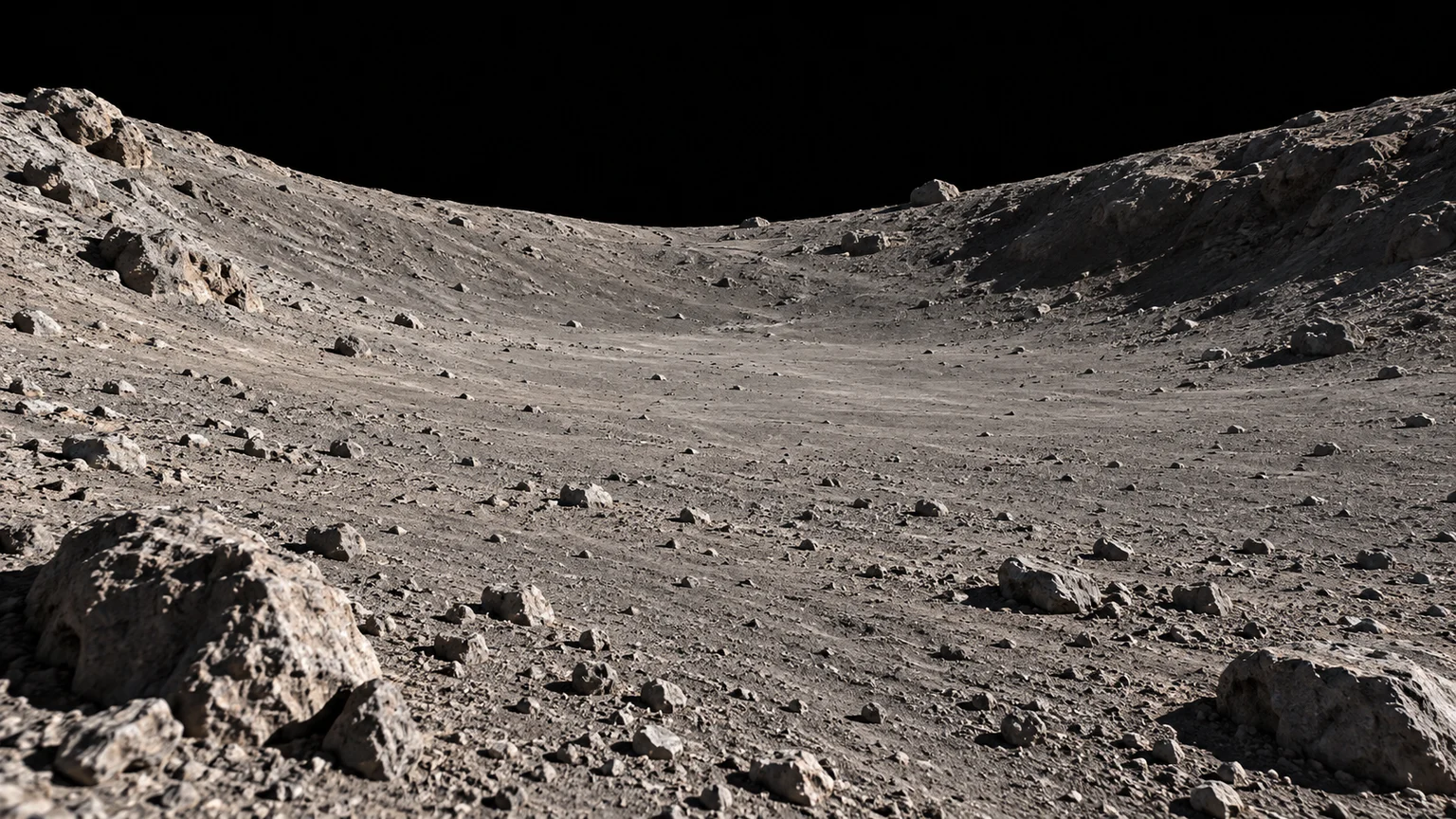
    A reconstruction of Adrastea’s unresolved local surface. Dust deposits, shallow depressions and individual pebbles are imagined.

    Across an imagined scoop

    A reconstruction of Adrastea’s unresolved local surface. Dust deposits, shallow depressions and individual pebbles are imagined.

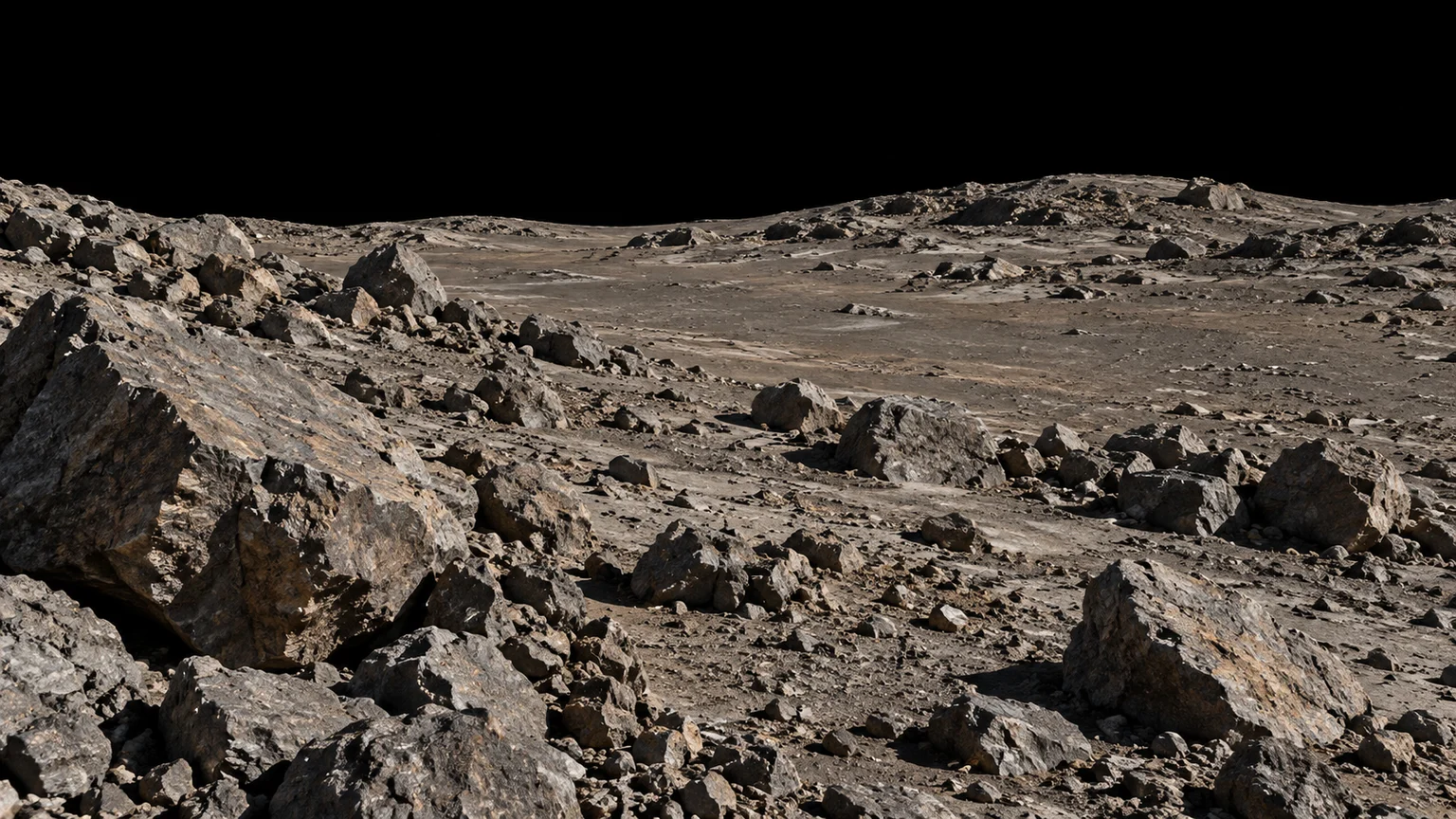
    An artistic landscape on Adrastea. The horizon, fragments and local relief are not mapped spacecraft features.

    Along an uneven shoulder

    An artistic landscape on Adrastea. The horizon, fragments and local relief are not mapped spacecraft features.

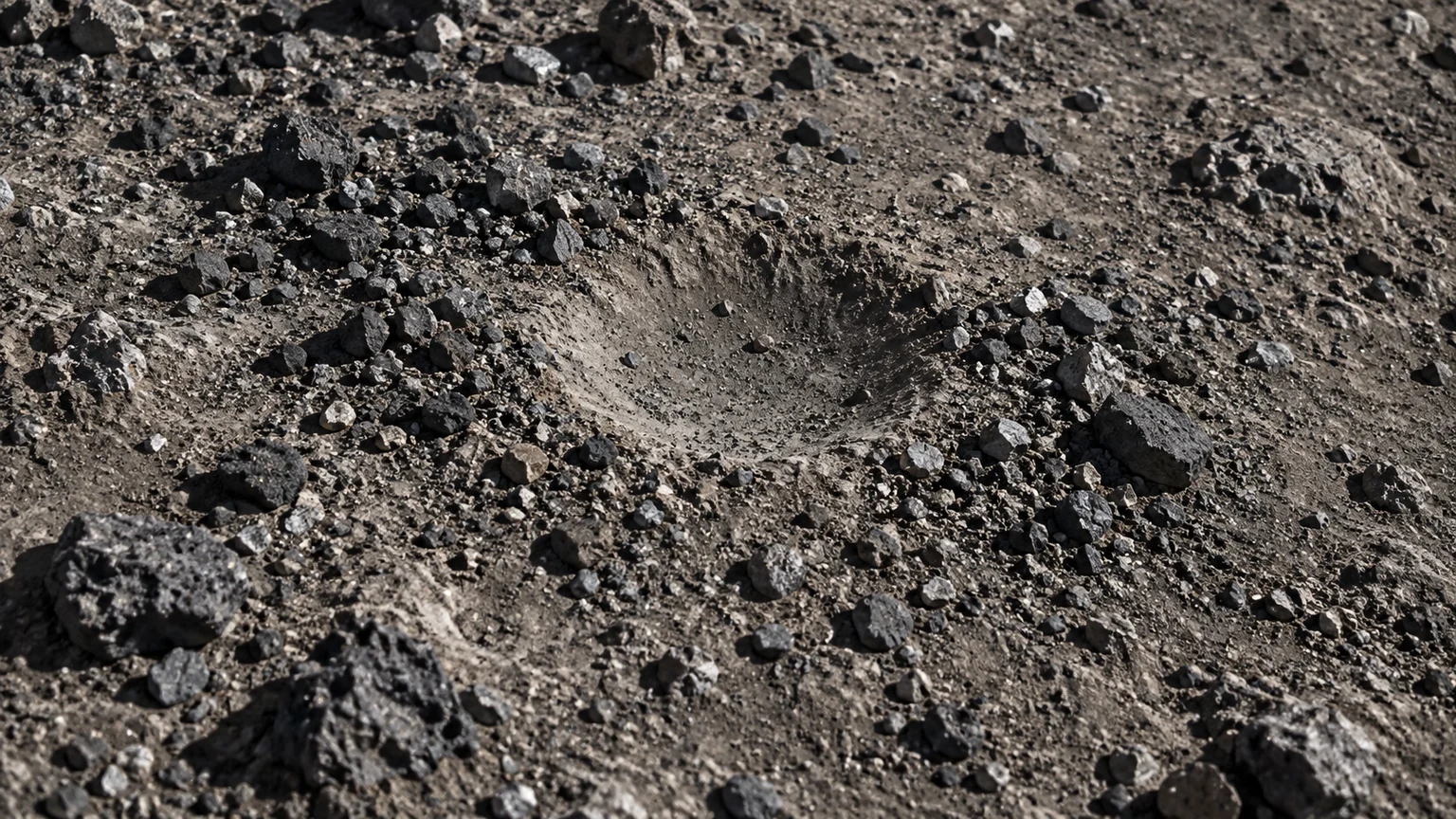
    A tiny shallow impact pit surrounded by dark pebble-sized fragments. An artistic reconstruction of Adrastea; local detail, lighting and viewpoint are imagined.

    Surface fragments in close view

    A tiny shallow impact pit surrounded by dark pebble-sized fragments. An artistic reconstruction of Adrastea; local detail, lighting and viewpoint are imagined.