Found in Voyager’s images.
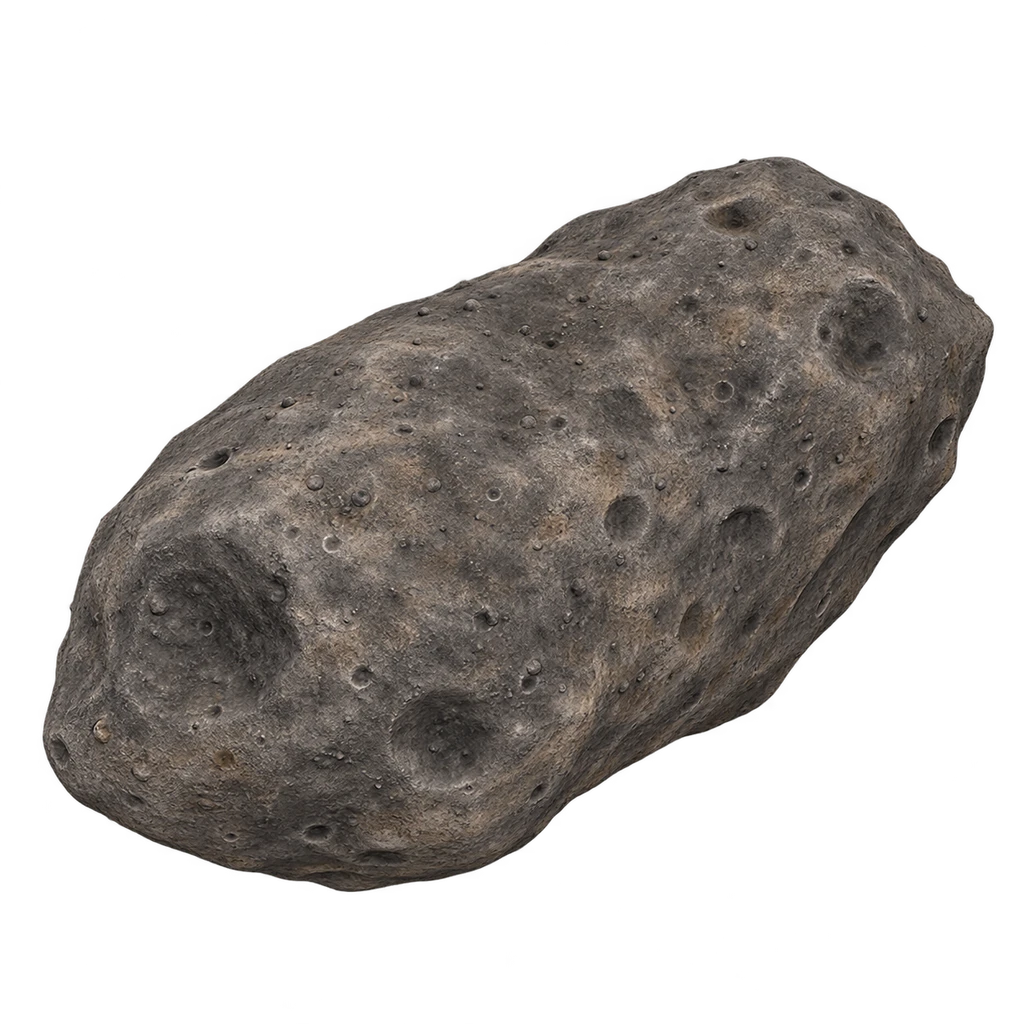
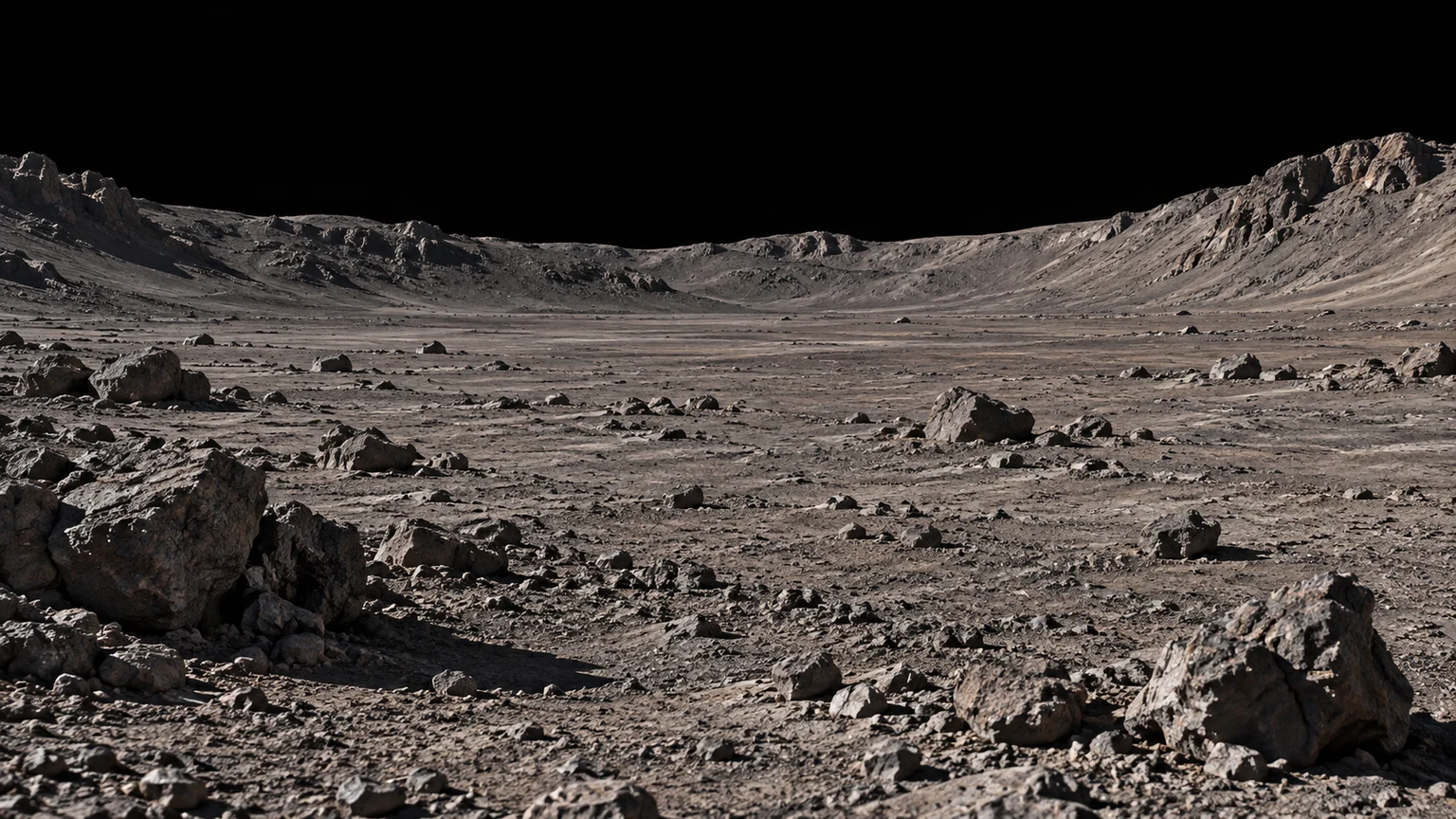
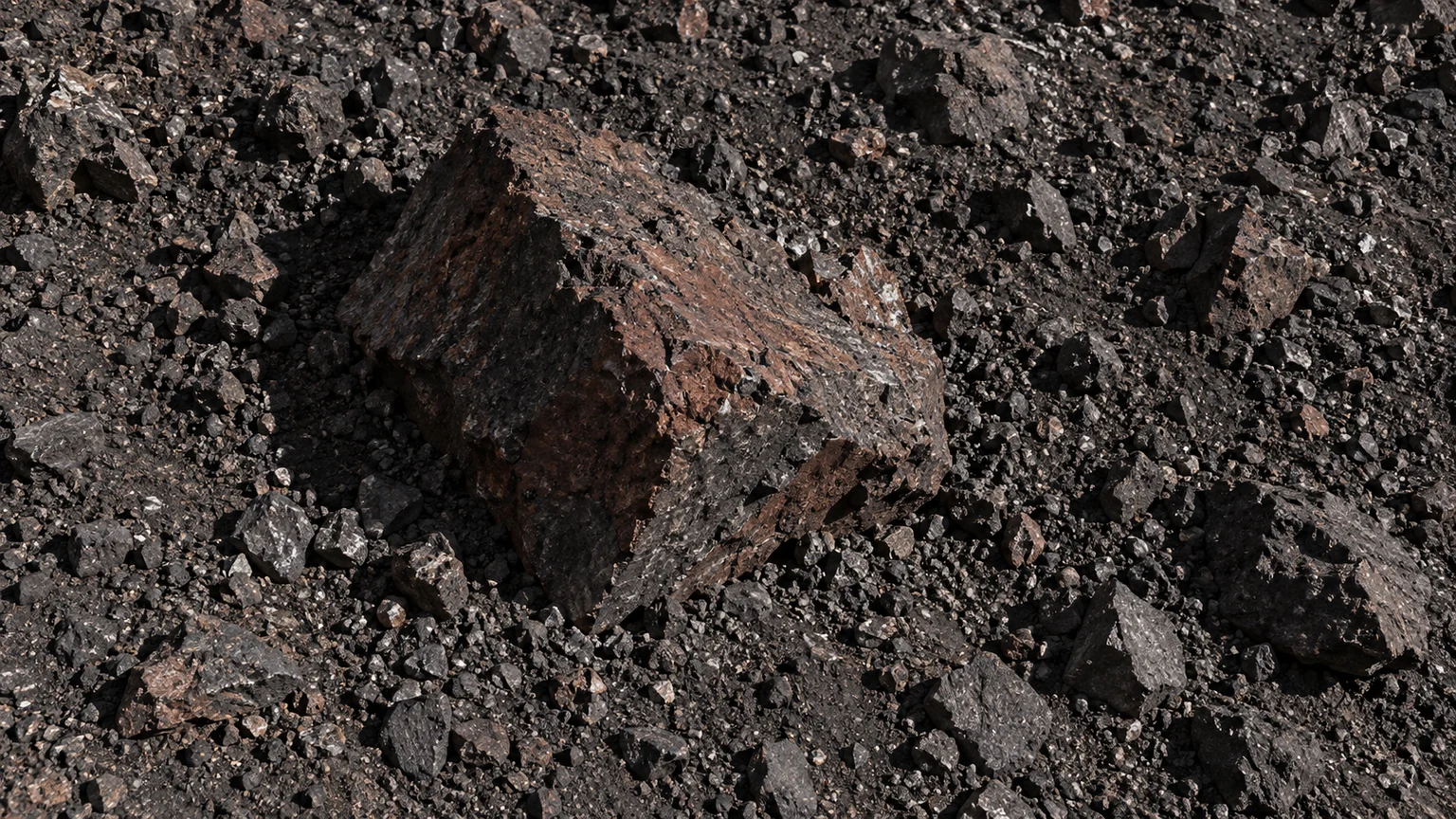
The Voyager science team discovered Metis in March 1979. Later Galileo images revealed an uneven body rather than a miniature spherical world. The landscape studies imagine local terrain beyond the detail resolved by spacecraft.
A source of the main ring.
Metis and nearby Adrastea contribute material to Jupiter’s faint main ring. These small inner companions occupy a very different neighborhood from the large Galilean moons. The illustration shows the solid body; it does not attempt to trace individual dust grains.
A small body with uncertain mass.
The adopted mean diameter is 43 kilometers. Mass and radius uncertainties make the displayed spherical gravity an approximate comparison. The available bulk measurements do not establish separate internal layers or an ocean.
Faster than Jupiter turns.
The adopted mean path lies 128,000 kilometers from Jupiter’s center and takes 0.294779 Earth days, about 7.07 hours. Eccentricity rounds to zero in the reference table. The instrument omits ring dynamics and orbital perturbations.