JUPITER SYSTEM / SATELLITE DOSSIER

Lysithea

Lysithea follows a prograde path far from Jupiter, sharing the broad orbital neighborhood of Himalia and Elara.
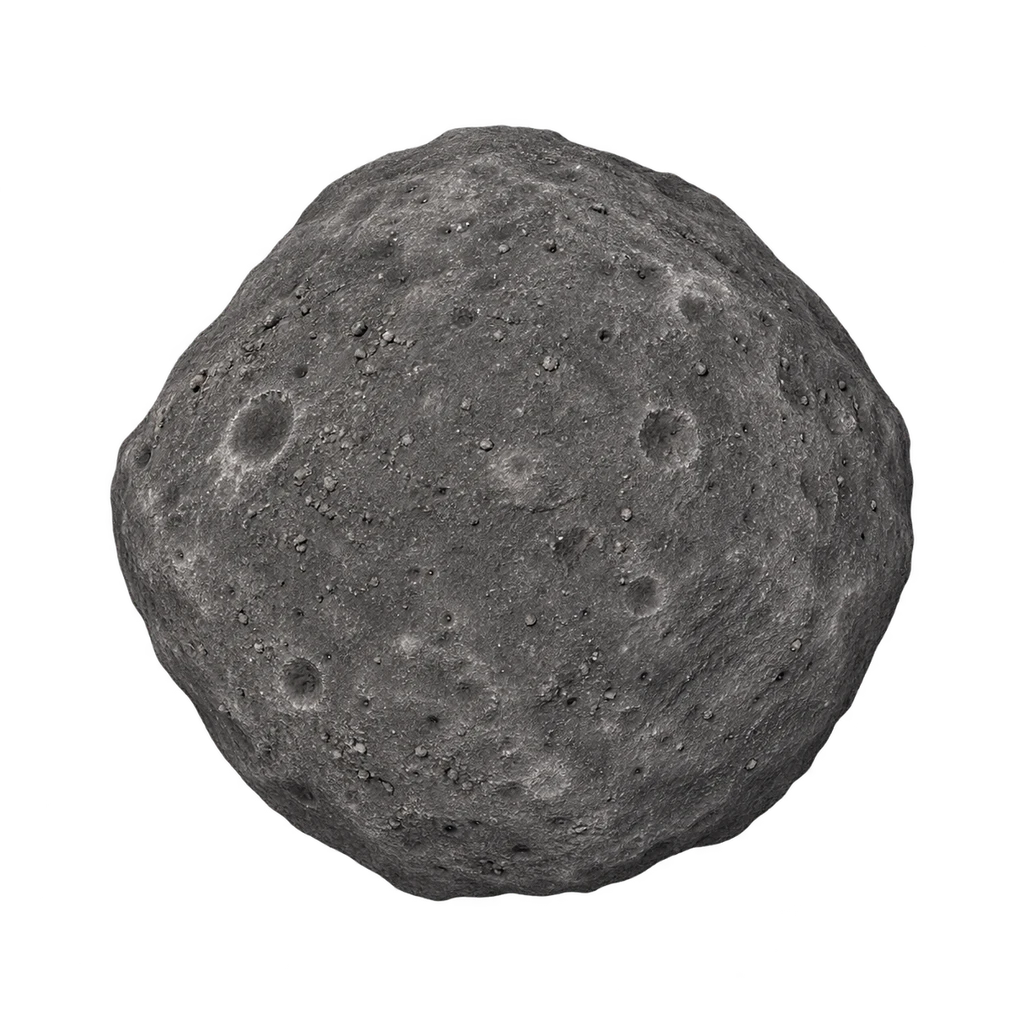
Artist’s impression of Lysithea

Lysithea follows a prograde path far from Jupiter, sharing the broad orbital neighborhood of Himalia and Elara.

DIAMETER / EARTH0.0028×
EARTHLYSITHEA
ATMOSPHERE
No substantial atmosphere detectedEffectively airless
SURFACE TEMPERATURE
Cold exposed surface
SURFACE PRESSURE
Effectively airless
HABITABILITYNo life detected
UNPROTECTED HUMANSNot survivable
Interior ↗

03
Unresolvedinternal structure

Moon system ↗

04
Jupiter moon orbitsSelected moons, ordered outward. Orbit sizes and positions are schematic; relative periods are preserved.JUPITERMETISADRASTEAAMALTHEATHEBEIOEUROPAGANYMEDECALLISTOLEDAHIMALIALYSITHEAELARA
LYSITHEA

Instrument detail

Lysithea orbitElliptical orbit viewed along the orbital axis, relative to Jupiter. Motion is accelerated, not a live position. Distances are center to center.JUPITERLYSITHEA≈ 11,699,100 km
ONE ORBIT258.5035 Earth days around Jupiter
Closest to Jupiter
10,330,305 km
Farthest from Jupiter
13,067,895 km

Lysithea circles Jupiter. Distances are measured between the centers of the two bodies.

This JPL mean-element path omits inclination, precession and perturbations. It is not a live position prediction.

Lysithea rotationRotation period unresolved. Static portrait, not an orientation prediction.PERIOD UNCERTAINNO UNIQUE PERIOD ADOPTED
ROTATION STATEUncertain

Rotation remains uncertain

A preliminary synodic period near 12.8 hours was reported from limited photometry. Its reliability remains uncertain, so this portrait stays static rather than presenting a precise rate or orientation. Uncertainty alone does not imply chaotic tumbling.

Satellite atlasMoons
Jupiter moon orbitsSelected moons, ordered outward. Orbit sizes and positions are schematic; relative periods are preserved.JUPITERMETISADRASTEAAMALTHEATHEBEIOEUROPAGANYMEDECALLISTOLEDAHIMALIALYSITHEAELARA
FEATURED MOONS12
  1. 01Metis ↗0.294779 days
  2. 02Adrastea ↗0.29826 days
  3. 03Amalthea ↗0.499918 days
  4. 04Thebe ↗0.676105 days
  5. 05Io ↗1.77 days
  6. 06Europa ↗3.55 days
  7. 07Ganymede ↗7.15 days
  8. 08Callisto ↗16.69 days
  9. 09Leda ↗240.3264 days
  10. 10Himalia ↗249.909 days
  11. 11Lysithea258.5035 days
  12. 12Elara ↗258.8861 days

Io is volcanic, while the other Galilean moons are icy worlds that may conceal oceans. Each has its own environment; Jupiter’s atmospheric conditions do not describe its moons.

GRAVITY UNKNOWNMASS UNCERTAIN
SURFACE GRAVITYUnknown

Mass remains uncertain

No measured mass is adopted. A numerical gravity comparison would require additional assumptions and is omitted.

Unresolvedinternal structure

Beyond the surface

Lysithea’s interior remains unresolved. The available observations do not establish distinct layers or a present-day ocean.

    Artist’s impression of Lysithea

    Found through the Hooker telescope.

    Seth Barnes Nicholson discovered Lysithea in July 1938 with the 100-inch Hooker telescope at Mount Wilson Observatory. It remains a small, distant target whose local geology is unresolved.

    An estimate shaped by reflectivity.

    NASA’s overview gives a nominal radius of 18 kilometers assuming four-percent reflectivity, equivalent to a diameter of roughly 36 kilometers. This adopted estimate should not be read as a precise terrain or shape measurement.

    Orbits carry clues to an earlier world.

    Lysithea belongs to the Himalia group. Similar orbital properties support a possible common parent that broke apart. The timing of disruption relative to capture by Jupiter is not established here.

    Close in orbital scale to Elara.

    The adopted mean orbital scale is 11,699,100 kilometers with eccentricity 0.117 and period 258.5035 Earth days. Similar periods do not mean the moons stay beside each other; the simplified diagram is not a live position map.

    DIAMETER / EARTH0.0028×
    EARTHLYSITHEA
    EARTH
    12,742 km
    LYSITHEA
    36 km
    Mean diameters · circles share one scale

    Approximate diameter 36 km, using NASA’s nominal radius with an assumed albedo of 0.04; not a resolved shape model.

    ATMOSPHERE
    No substantial atmosphere detectedEffectively airless

    Lysithea is effectively airless. No substantial atmosphere is known.

    SURFACE TEMPERATURE
    Cold exposed surface
    SURFACE PRESSURE
    Effectively airless
    HABITABILITYNo life detected

    No life has been detected, and a habitable environment has not been established.

    UNPROTECTED HUMANSNot survivable

    The exposed surface requires oxygen, pressure protection and thermal control.

    Planet and landscape images are artistic interpretations.

    • NASA ↗
      • Classification and orbital data
      • Mass and gravity constraints
      • Rotation and internal structure constraints
      • Size, physical data and atmospheric constraints
      • Natural conditions and human survival
      • Discovery
      • Scale
      • Family
    • NASA / JPL ↗
      • Mean orbital dimensions; distances from parent center
      • Orbit
    • tilmanndenk.de ↗
      • Rotation model and synchronous or independent spin
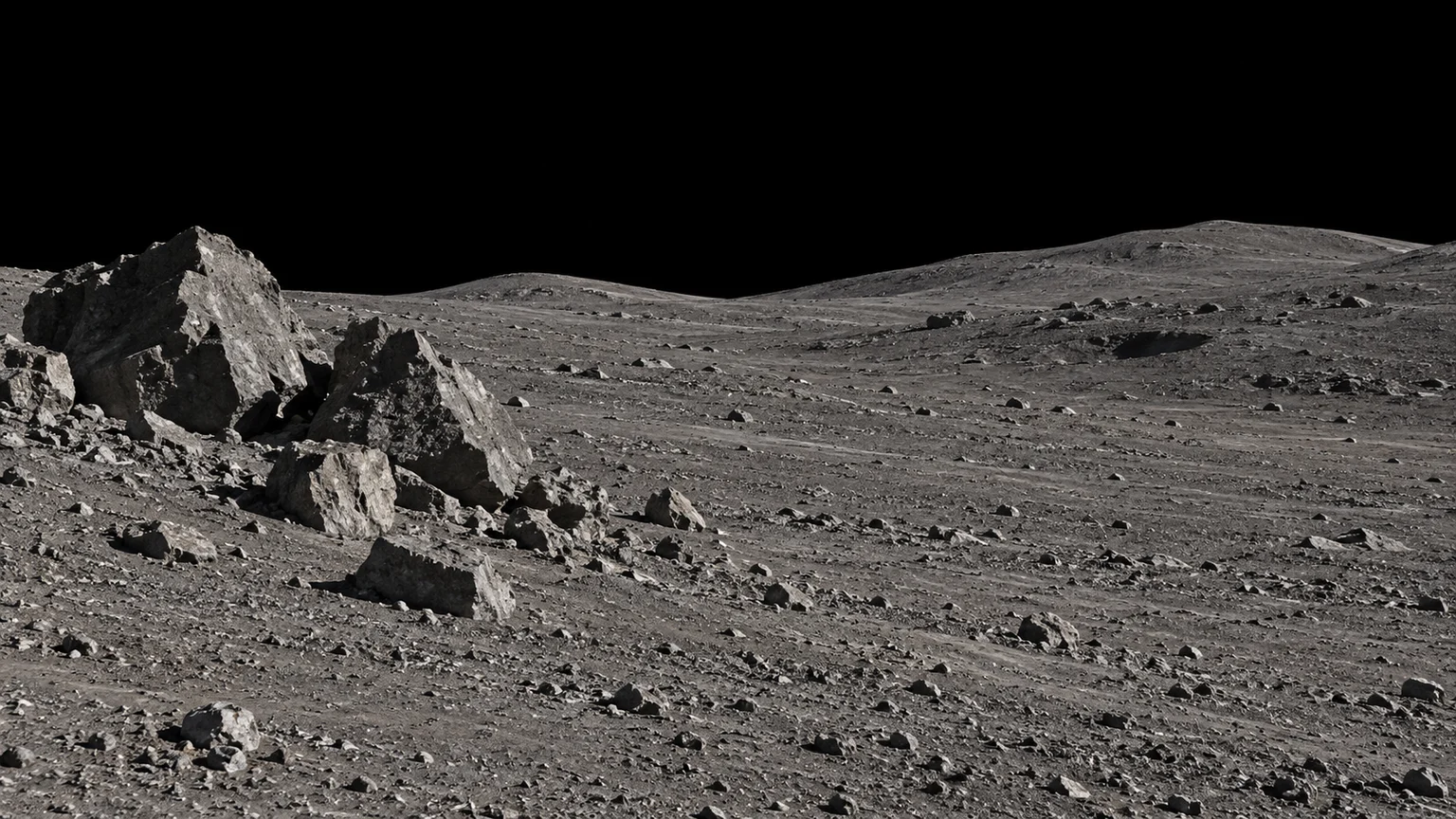
    A speculative ground-level view on Lysithea. The depressions, fragments and horizon are artistic interpretations.

    Across an imagined hollow

    A speculative ground-level view on Lysithea. The depressions, fragments and horizon are artistic interpretations.

    An imagined landscape on Lysithea. No resolved surface map supports these local details.

    Along a low rise

    An imagined landscape on Lysithea. No resolved surface map supports these local details.

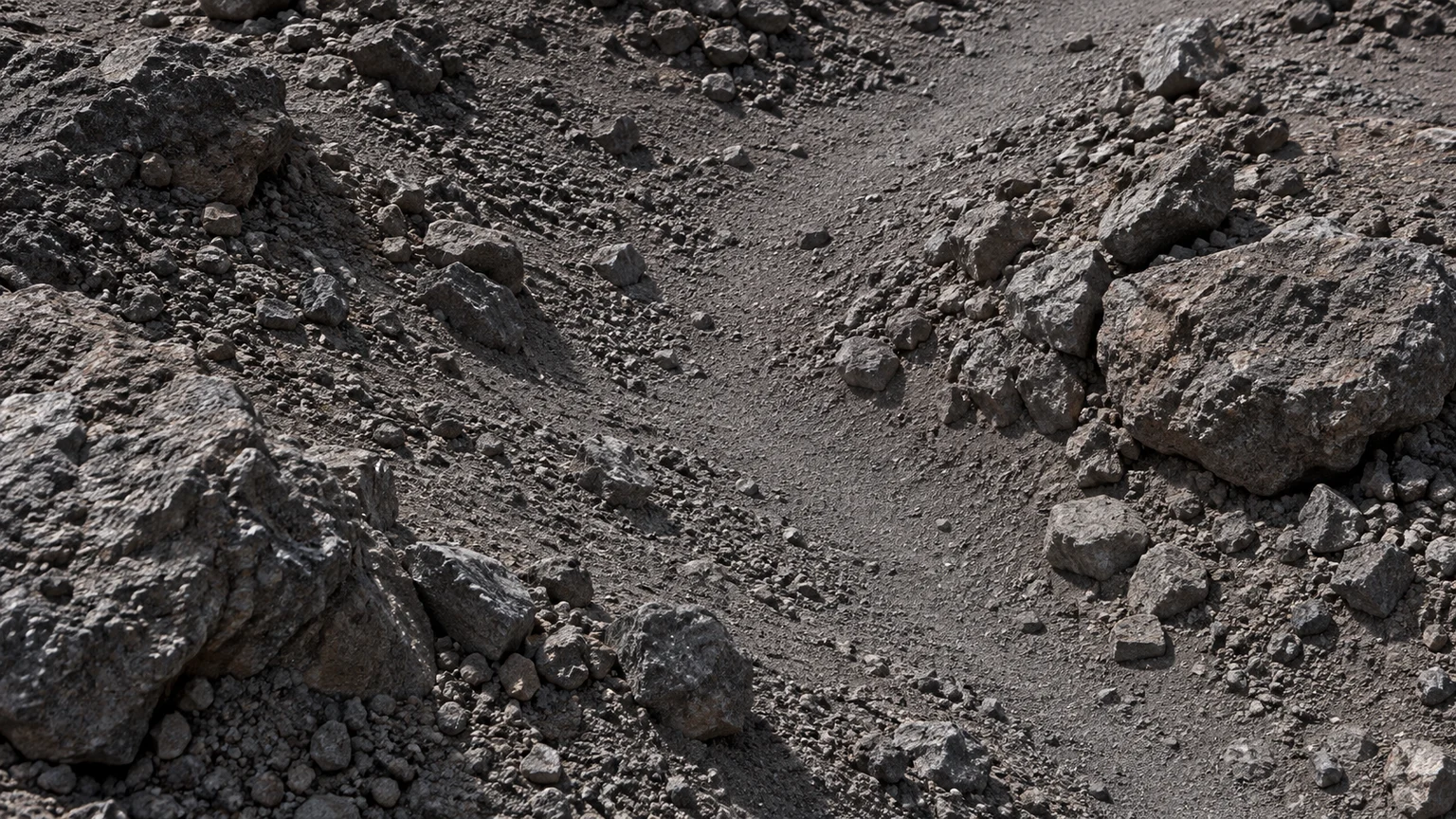
    A narrow patch of fine gray-brown regolith winding between low stones. An artistic reconstruction of Lysithea; local detail, lighting and viewpoint are imagined.

    Surface fragments in close view

    A narrow patch of fine gray-brown regolith winding between low stones. An artistic reconstruction of Lysithea; local detail, lighting and viewpoint are imagined.