JUPITER SYSTEM / SATELLITE DOSSIER

Leda

Leda is a small prograde member of Jupiter’s Himalia group, discovered on photographic plates in 1974.

Artist’s impression of Leda

Leda is a small prograde member of Jupiter’s Himalia group, discovered on photographic plates in 1974.

DIAMETER / EARTH0.0016×
EARTHLEDA
ATMOSPHERE
No substantial atmosphere detectedEffectively airless
SURFACE TEMPERATURE
Cold exposed surface
SURFACE PRESSURE
Effectively airless
HABITABILITYNo life detected
UNPROTECTED HUMANSNot survivable
Interior ↗

03
Unresolvedinternal structure

Moon system ↗

04
Jupiter moon orbitsSelected moons, ordered outward. Orbit sizes and positions are schematic; relative periods are preserved.JUPITERMETISADRASTEAAMALTHEATHEBEIOEUROPAGANYMEDECALLISTOLEDAHIMALIALYSITHEAELARA
LEDA

Instrument detail

Leda orbitElliptical orbit viewed along the orbital axis, relative to Jupiter. Motion is accelerated, not a live position. Distances are center to center.JUPITERLEDA≈ 11,145,200 km
ONE ORBIT240.3264 Earth days around Jupiter
Closest to Jupiter
9,339,678 km
Farthest from Jupiter
12,950,722 km

Leda circles Jupiter. Distances are measured between the centers of the two bodies.

This JPL mean-element path omits inclination, precession and perturbations. It is not a live position prediction.

Leda rotationRotation period unresolved. Static portrait, not an orientation prediction.PERIOD UNCERTAINNO UNIQUE PERIOD ADOPTED
ROTATION STATEUncertain

Rotation remains uncertain

The cited overview gives no measured spin period. This static portrait assumes no fixed rate or orientation; uncertainty alone does not imply chaotic tumbling.

Satellite atlasMoons
Jupiter moon orbitsSelected moons, ordered outward. Orbit sizes and positions are schematic; relative periods are preserved.JUPITERMETISADRASTEAAMALTHEATHEBEIOEUROPAGANYMEDECALLISTOLEDAHIMALIALYSITHEAELARA
FEATURED MOONS12
  1. 01Metis ↗0.294779 days
  2. 02Adrastea ↗0.29826 days
  3. 03Amalthea ↗0.499918 days
  4. 04Thebe ↗0.676105 days
  5. 05Io ↗1.77 days
  6. 06Europa ↗3.55 days
  7. 07Ganymede ↗7.15 days
  8. 08Callisto ↗16.69 days
  9. 09Leda240.3264 days
  10. 10Himalia ↗249.909 days
  11. 11Lysithea ↗258.5035 days
  12. 12Elara ↗258.8861 days

Io is volcanic, while the other Galilean moons are icy worlds that may conceal oceans. Each has its own environment; Jupiter’s atmospheric conditions do not describe its moons.

GRAVITY UNKNOWNMASS UNCERTAIN
SURFACE GRAVITYUnknown

Mass remains uncertain

No measured mass is adopted. A numerical gravity comparison would require additional assumptions and is omitted.

Unresolvedinternal structure

Beyond the surface

Leda’s interior remains unresolved. The available observations do not establish distinct layers or a present-day ocean.

    Artist’s impression of Leda

    Three nights of photographs.

    Charles Thomas Kowal identified Leda in September 1974 on plates taken with the Schmidt telescope at Mount Palomar. The observations revealed another faint companion in Jupiter’s outer satellite system.

    Only about twenty kilometers across.

    The adopted diameter is approximately 20 kilometers, based on NASA’s nominal radius and assumed reflectivity of four percent. Its actual outline and local surface features remain unresolved in this dossier.

    A reluctant choice from mythology.

    Kowal favored numbered designations but suggested Leda if the moon was to receive a name. The name comes from Greek mythology and follows the naming pattern for Jupiter’s outer prograde moons.

    Inside Himalia’s mean orbital scale.

    JPL’s adopted mean elements place Leda at a scale of 11,145,200 kilometers, eccentricity 0.162 and period 240.3264 Earth days. Its inclined prograde orbit is represented here by a simplified planar ellipse.

    DIAMETER / EARTH0.0016×
    EARTHLEDA
    EARTH
    12,742 km
    LEDA
    20 km
    Mean diameters · circles share one scale

    Approximate diameter 20 km, using NASA’s nominal radius with an assumed albedo of 0.04; not a resolved shape model.

    ATMOSPHERE
    No substantial atmosphere detectedEffectively airless

    Leda is effectively airless. No substantial atmosphere is known.

    SURFACE TEMPERATURE
    Cold exposed surface
    SURFACE PRESSURE
    Effectively airless
    HABITABILITYNo life detected

    No life has been detected, and a habitable environment has not been established.

    UNPROTECTED HUMANSNot survivable

    The exposed surface requires oxygen, pressure protection and thermal control.

    Planet and landscape images are artistic interpretations.

    • NASA ↗
      • Classification and orbital data
      • Mass and gravity constraints
      • Rotation model and synchronous or independent spin
      • Rotation and internal structure constraints
      • Size, physical data and atmospheric constraints
      • Natural conditions and human survival
      • Discovery
      • Scale
      • Name
    • NASA / JPL ↗
      • Mean orbital dimensions; distances from parent center
      • Orbit
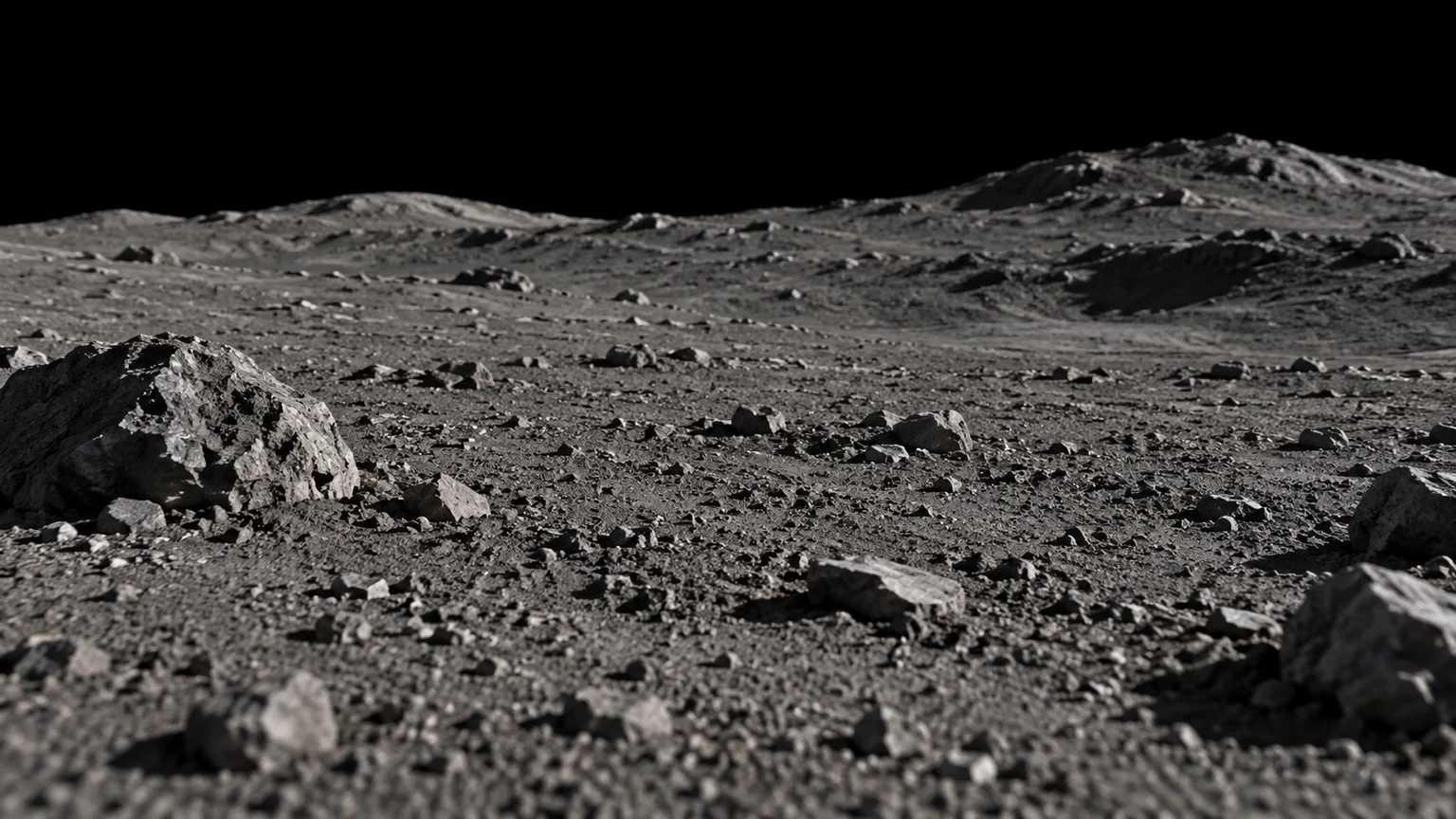
    A speculative ground-level view on Leda. The depressions, fragments and horizon are artistic interpretations.

    Across an imagined hollow

    A speculative ground-level view on Leda. The depressions, fragments and horizon are artistic interpretations.

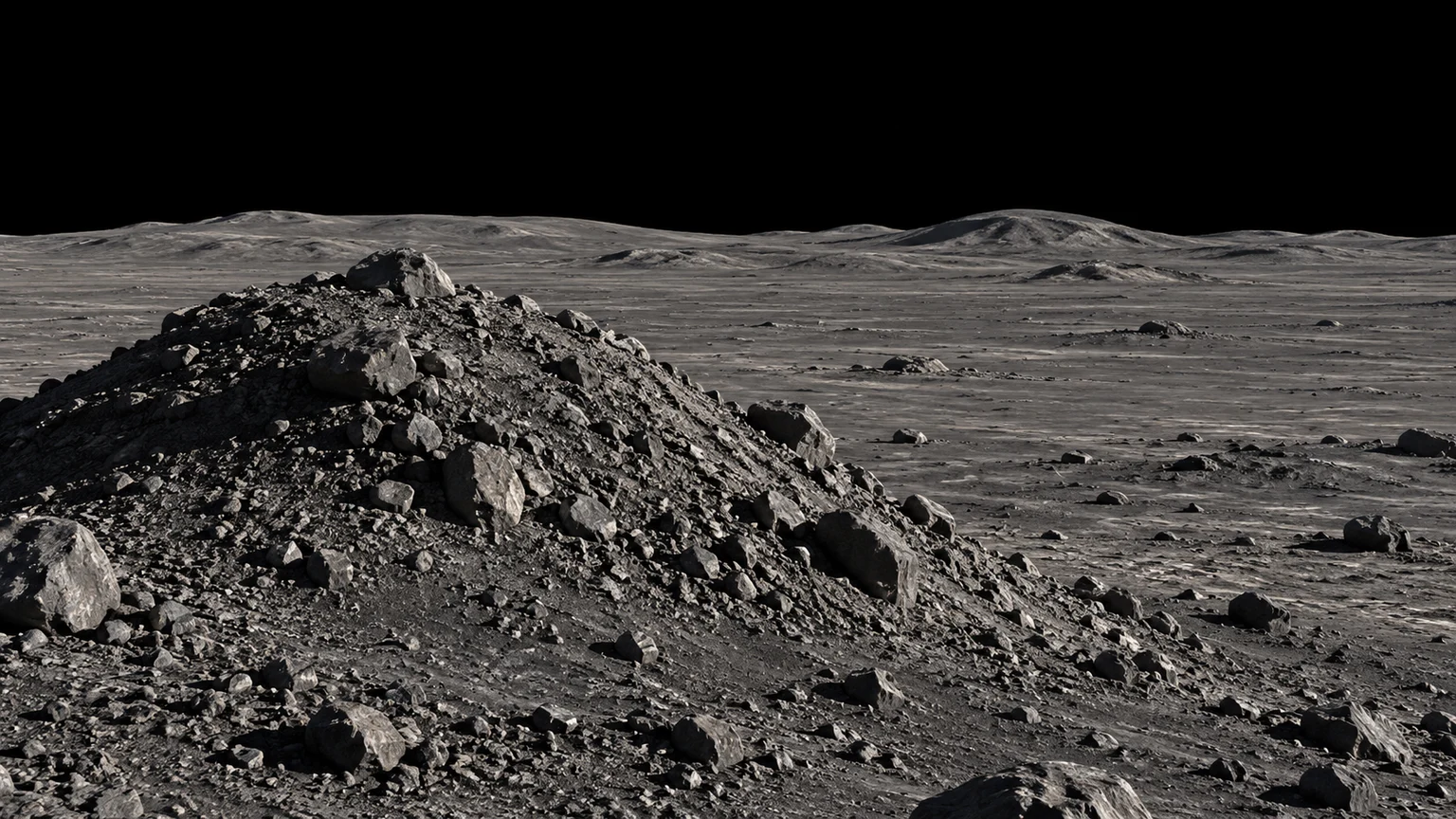
    An imagined landscape on Leda. No resolved surface map supports these local details.

    Along a low rise

    An imagined landscape on Leda. No resolved surface map supports these local details.

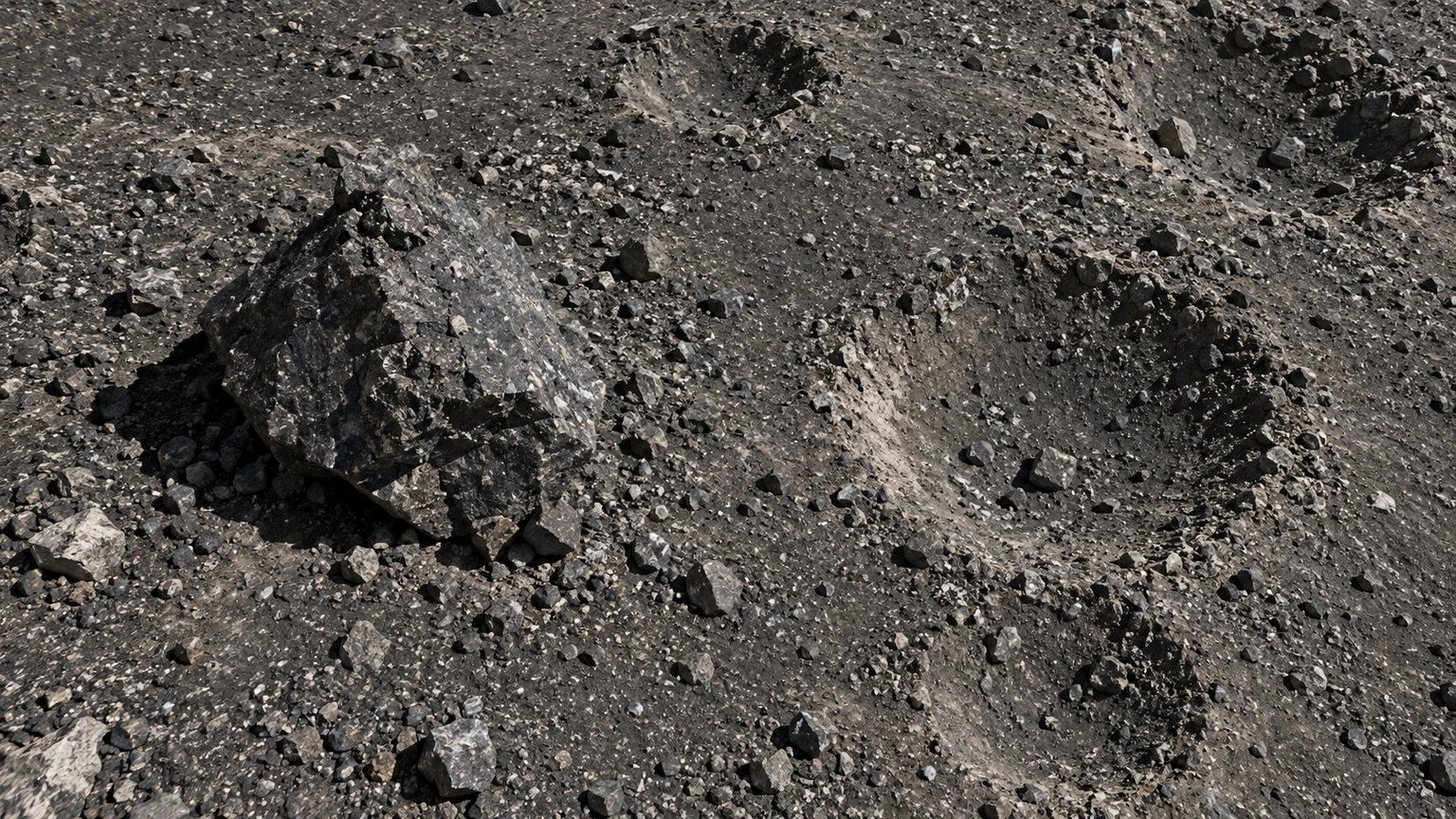
    A small dark irregular block beside several shallow impact-shaped pits. An artistic reconstruction of Leda; local detail, lighting and viewpoint are imagined.

    Surface fragments in close view

    A small dark irregular block beside several shallow impact-shaped pits. An artistic reconstruction of Leda; local detail, lighting and viewpoint are imagined.